
In This Article
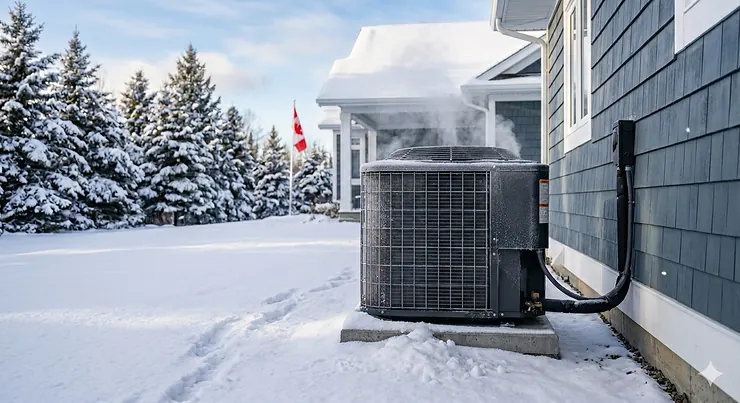
Picture this: it’s -22°C on a January evening in Winnipeg, you’re still on electric baseboards from 1987, and your hydro bill is climbing faster than the snow on your roof. Sound familiar? For millions of Canadian homeowners, this is the winter reality — and ductless heat pump installation is rapidly becoming the answer. Unlike central HVAC systems that demand expensive ductwork, a ductless (mini-split) system connects a slim outdoor compressor to one or more sleek indoor air handlers with nothing more than a refrigerant line and an electrical connection through a small wall penetration. No tearing up ceilings. No invasive renos. Just efficient, zoned comfort in days.
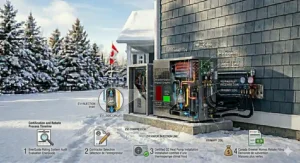
What exactly is ductless heat pump installation? In simple terms, it’s the process of mounting a wall-hung indoor air handler, placing an outdoor condensing unit on a bracket or pad, and connecting them via a refrigerant line set run through a 7–8 cm (3 in.) hole in the wall. The system then provides both heating and cooling from a single unit — moving heat rather than generating it, which is why modern cold-climate models can be 250–400% efficient even in sub-zero Canadian temperatures. According to Natural Resources Canada, over 286,000 new heat pumps were installed with federal support since 2020, a clear signal that Canadians are embracing this technology at scale.
What drives this surge? Old houses without ductwork, rising energy costs, and increasingly generous government rebates have combined to make ductless heating for old houses not just practical but financially compelling. Whether you’re retrofitting a century home in Ottawa, heating a new addition in Calgary, or finally bringing comfortable warmth to a basement suite in Vancouver — this guide covers the seven best products available on Amazon.ca right now, plus everything you need to make a confident, Canadian-informed decision.
Prices throughout this article are in CAD unless otherwise noted.
Quick Comparison: Top 7 Ductless Heat Pumps on Amazon.ca
| Product | Capacity | SEER2 | Zones | Best For | Price Range (CAD) |
|---|---|---|---|---|---|
| Senville LETO Series | 9,000–24,000 BTU | 20.8–21.5 | Single | Budget-conscious retrofit | $700–$1,400 |
| Senville AURA Series | 9,000–24,000 BTU | 20+ | Single | Cold-climate performance | $900–$1,600 |
| Senville SENA-36HF/D | 36,000 BTU | 18+ | Dual | Two-room retrofit | $1,800–$2,400 |
| COSTWAY 24,000 BTU Airtural | 24,000 BTU | 21 | Single | Open-concept living | $900–$1,200 |
| DELLA Serena 12,000 BTU | 12,000 BTU | 22 | Single | Bedroom/home office | $700–$1,000 |
| DELLA Motto Series 12,000 BTU | 12,000 BTU | 19 | Single | Budget starter unit | $600–$900 |
| ExploreHorizon 24,000 BTU | 24,000 BTU | 19 | Single | Large room with smart home | $850–$1,150 |
📊 Reading the table: The SEER2 ratings above tell you cooling efficiency, but for Canadian winters what truly matters is the HSPF2 (heating efficiency) rating — check each product listing on Amazon.ca for this figure. The Senville AURA stands out in cold-climate performance, while the DELLA Serena edges out competitors on raw cooling efficiency at its price tier. Budget buyers will notice the DELLA Motto delivers solid specs for the lowest price point, but it sacrifices some efficiency that adds up on long Canadian heating seasons. Always factor in operating costs, not just purchase price.
💬 Just one click — help others make better buying decisions too! 😊
✨ Don’t Miss These Exclusive Deals!
🔍 Take your ductless heat pump installation to the next level with these carefully selected products. Click on any highlighted item to check current pricing and availability on Amazon.ca. These picks will help you create the comfortable, efficient home your family deserves!
Top 7 Ductless Heat Pumps for Canada: Expert Analysis
1. Senville LETO Series Mini Split Air Conditioner Heat Pump
The Senville LETO is the gateway drug of Canadian mini-splits — and I mean that as a compliment. This Montreal-founded brand has been building ductless systems tailored for North American climates since 2005, and the LETO series remains their most accessible entry point for homeowners tackling their first ductless heat pump installation. Available in 9,000, 12,000, 18,000, and 24,000 BTU configurations on Amazon.ca and shipped directly from Senville Canada, it covers rooms from roughly 23–65 m² (250–700 sq. ft.).
The inverter compressor is what makes this unit worth understanding beyond its spec sheet. Rather than cycling on and off like a traditional system, the inverter modulates speed continuously — meaning it reaches your target temperature quickly and then whispers along at a fraction of its capacity to maintain it. In practice, this translates to noticeably quieter nights and electricity bills that don’t spike every time the compressor kicks on. The 20.8 SEER2 rating is competitive in its price class, and while it’s not a dedicated cold-climate unit (rated to about -15°C), it handles Canadian transitional seasons — those brutal spring-and-fall shoulder months — with impressive reliability.
For a homeowner in, say, a 1960s bungalow in London, Ontario, with electric baseboards in the bedrooms and no budget for multi-zone, the LETO 12,000 BTU is the logical starting point. Canadian reviewers frequently praise the straightforward installation and the quality of the included line set kit. One caveat: Senville includes a 5-year parts and compressor warranty, but labour is not covered — factor in a licensed HVAC technician’s time, especially important for CSA compliance under the Canadian Electrical Code.
✅ Pros:
- Shipped and sold by Senville Canada directly via Amazon.ca
- Inverter compressor for quiet, efficient operation
- Alexa/Google Home compatible for smart thermostat integration
❌ Cons:
- Not a dedicated cold-climate unit (limited below -15°C)
- Labour warranty not included
💰 Available in the $700–$1,400 range depending on BTU size — solid value for a single-zone retrofit.
2. Senville AURA Series Mini Split Air Conditioner Cold-Climate Heat Pump
If the LETO is Senville’s everyday driver, the AURA is their winter-ready workhorse — and for most Canadian homeowners heating through a Manitoba or Ontario winter, this distinction matters enormously. The AURA Series is Energy Star certified, carries a 20+ SEER2 rating, and is explicitly engineered for cold-climate performance, operating effectively at temperatures well below -20°C. That 4–5°C difference in operational floor temperature might not sound dramatic on paper, but on a February night in Sudbury it can be the difference between your system running efficiently and your backup baseboards picking up the slack.
The WiFi module is built in (not a pricey add-on like some competing brands), so you can preheat your home before you leave the office — a legitimately useful feature when you’re commuting in a Canadian winter and want to step into a warm house at 5:30 p.m. The indoor unit is among the quietest in its class at approximately 32 dB on low, which is roughly the ambient noise of a library. For bedrooms and home offices, that matters far more than most buyers realize until their first night of interrupted sleep with a louder competitor.
Who is this for? This is the unit I’d steer a homeowner in Edmonton, Saskatoon, or anywhere that regularly sees -25°C towards. Canadian reviews consistently highlight its cold-weather performance as the standout attribute. Prime-eligible on Amazon.ca, which means most urban Canadian buyers get it in 1–2 business days — a genuine advantage when you’re racing a cold snap.
✅ Pros:
- Cold-climate rated for harsh Canadian winters
- Built-in WiFi — no extra module required
- Energy Star certified, potentially qualifying for provincial rebates
❌ Cons:
- Higher price point than LETO series
- Single-zone only; multi-room requires additional units
💰 In the $900–$1,600 CAD range — worth every dollar for Prairie or Northern Ontario homeowners.
3. Senville SENA-36HF/D Dual Zone Mini Split Air Conditioner Heat Pump
The moment you need to heat two separate rooms efficiently — say, a living room and a master bedroom in an older home without ductwork — a single-zone unit stops making financial sense. This is exactly where the Senville SENA-36HF/D enters the conversation. At 36,000 BTU total capacity split across two indoor air handlers, it lets you control two zones from a single outdoor condensing unit, cutting both the installation cost and outdoor footprint compared to running two separate systems.
What most buyers overlook about multi-zone systems is the zoning intelligence. Each indoor head has its own remote and thermostat — meaning the person who sleeps cold in the bedroom can run 22°C while the night-owl in the living room keeps it at 19°C. That’s a level of multi-zone temperature control that central heating systems simply cannot match without expensive smart zone dampers. The outdoor unit also runs quieter than two separate compressors, which matters if your outdoor unit is near a bedroom window or neighbour’s property line.
For a family retrofitting a 1970s split-level in suburban Halifax or a semi-detached in Toronto’s east end, the SENA-36HF/D hits a sweet spot between multi-zone capability and installation simplicity. The unit ships from Amazon.ca and has a strong review profile from Canadian buyers who highlight the dual-zone functionality as transformative for older homes. Works with Alexa for voice control integration.
✅ Pros:
- True dual-zone with independent temperature control per room
- Single outdoor unit reduces installation complexity and cost
- Works with Alexa and smart home ecosystems
❌ Cons:
- Higher upfront cost than single-zone options
- Requires licensed installation to maintain warranty and CSA compliance
💰 In the $1,800–$2,400 CAD range — significantly cheaper than two separate single-zone systems.
4. COSTWAY 24,000 BTU Mini Split Air Conditioner, Airtural Series
COSTWAY has built a reputation in Canada for delivering respectable performance at prices that make established HVAC brands sweat, and the Airtural Series 24,000 BTU unit is a confident example of that approach. At 21 SEER2 and Energy Star rated, this unit covers open-concept living spaces up to approximately 139 m² (1,500 sq. ft.) — think the main floor of a typical Canadian suburban home, an open-concept kitchen-dining-living combo that’s the bane of baseboard heaters.
The practical interpretation of 21 SEER2 at this price point? You’re getting efficiency that exceeds the minimum federal Energy Star threshold while paying significantly less than premium brands. Remote control, Alexa compatibility, and a 24-hour timer are included — no stripped-down feature set to justify the price. The inverter compressor is variable-speed, handling partial loads efficiently rather than cycling on and off, which is the single biggest factor in both comfort consistency and energy savings over a Canadian heating season.
Where COSTWAY trails the Senville AURA is in verified cold-climate performance documentation — the Airtural Series is better suited as a primary unit in milder Canadian climates (Metro Vancouver, Southern BC, Southern Ontario) or as a supplemental system in colder regions. Canadian buyers in the GTA have praised its value-to-performance ratio enthusiastically, noting dramatically reduced hydro bills compared to electric baseboard in open living areas.
✅ Pros:
- 21 SEER2 efficiency at a very competitive price
- Covers large open-concept Canadian main floors
- Alexa + Google Home compatible
❌ Cons:
- Not specifically cold-climate rated — best for milder Canadian regions
- Customer support can be slower than brand-specific Canadian operations
💰 In the $900–$1,200 CAD range — outstanding value per BTU for open-concept retrofits in moderate climates.
5. DELLA Serena 22 SEER2 12,000 BTU Mini Split Heat Pump
If you’re a Canadian homeowner with a single problematic room — that north-facing bedroom that never quite warms up, the basement rec room that your furnace forgets exists, or the home office where you’re layering sweaters until March — the DELLA Serena is precisely calibrated for you. At 22 SEER2, it carries the highest cooling efficiency rating of any unit on this list at its price tier, which also correlates with better heating efficiency and lower operating costs over the course of a Canadian winter.
The 12,000 BTU capacity (approximately 1 ton of cooling) heats and cools rooms up to roughly 51 m² (550 sq. ft.) effectively. The spec sheet won’t tell you this, but what that means in a Canadian context is that you’re getting comfortable warmth in a room that previously required a portable electric heater drawing 1,500W constantly — the Serena achieves the same comfort at roughly one-third of that energy draw, often less. It comes pre-charged with refrigerant and includes a 16.4-ft (5 m) installation kit, reducing what your HVAC technician needs to bring to the job.
Energy Star certified and Alexa-compatible, the Serena has garnered positive feedback from Canadian buyers who highlight its whisper-quiet operation and reliable performance through the first cold season. Available on Amazon.ca with Prime shipping available to most Canadian addresses.
✅ Pros:
- Highest SEER2 rating (22) in this price category
- Pre-charged refrigerant simplifies installation
- Whisper-quiet — ideal for bedrooms and offices
❌ Cons:
- Limited to single zone, 550 sq. ft. coverage
- Not cold-climate rated for extreme Prairie winters
💰 In the $700–$1,000 CAD range — the efficiency leader at the budget tier.
6. DELLA Motto Series 12,000 BTU Mini Split AC with Heat Pump
The DELLA Motto is the entry point for Canadian buyers who need functional, reliable ductless heating on the tightest possible budget — and it delivers without embarrassing itself. At 19 SEER2, it trails the Serena by three efficiency points (a difference of roughly 5–10% on annual energy costs), but it compensates with WiFi and Alexa integration baked in and a complete 16.4 ft (5 m) installation kit included. For a homeowner who just wants a working ductless unit in a single room without complexity, this is a perfectly honourable choice.
Where the Motto earns its keep in a Canadian context is as a supplemental unit in rooms that a primary heating system undercooks. Think of the garage workshop in suburban Mississauga where you spend winter weekends, or the above-garage bonus room in a Kelowna home that the central forced-air system never quite reaches. In those applications, the Motto’s lower upfront cost matters more than the efficiency delta, because the unit isn’t running as a primary heat source for the whole heating season.
Canadian buyers note the installation clarity is good for homeowners comfortable with basic DIY, though CSA compliance still requires a licensed refrigerant technician to handle the line set connection. Covers up to 51 m² (550 sq. ft.).
✅ Pros:
- Most affordable entry point on this list
- WiFi + Alexa included, no premium for smart features
- Full installation kit included
❌ Cons:
- 19 SEER2 trails premium units on long-term operating costs
- Better suited for supplemental than primary heating in cold climates
💰 In the $600–$900 CAD range — the most accessible starting point for first-time mini-split buyers.
7. ExploreHorizon 24,000 BTU Mini Split 19 SEER2 with Complete Installation Kit
The ExploreHorizon 24,000 BTU unit is the dark horse on this list — a newer entrant that punches well above its price in the large-room category. At 19 SEER2 with 208–230V compatibility and coverage up to approximately 139 m² (1,500 sq. ft.), it targets the same open-concept main floor or oversized master suite that the COSTWAY Airtural covers, but with a complete installation kit and WiFi + Alexa integration included out of the box.
What stands out from a practical Canadian standpoint is that the ExploreHorizon comes with a comprehensive installation kit — a genuine advantage when you’re paying a licensed HVAC technician by the hour. Every metre of included line set and every pre-assembled fitting is time your technician doesn’t spend sourcing materials, which in Canadian labour markets ($85–$120/hour in major cities) adds up quickly. The unit ships from Amazon.ca fulfillment, and Prime members across most Canadian provinces can expect standard delivery timelines.
The trade-off is brand maturity. ExploreHorizon doesn’t yet have the track record of Senville or DELLA in Canada, and Canadian-specific reviews are fewer in number. That said, early adopter feedback highlights reliable performance and solid build quality. A good choice for budget-conscious buyers in Southern Ontario, BC, or Quebec who want large-room coverage without multi-zone complexity.
✅ Pros:
- Full installation kit included — reduces technician labour cost
- WiFi + Alexa out of the box
- Competitive pricing for 24,000 BTU class
❌ Cons:
- Newer brand with limited Canadian review history
- 19 SEER2 is the lowest efficiency rating on this list
💰 In the $850–$1,150 CAD range — strong value for large-room coverage including smart home features.
How to Install a Ductless Heat Pump: A Practical Canadian Guide
Installation day is where theory meets your actual walls, and for most Canadian homeowners, understanding the process makes the difference between a smooth one-day job and a costly do-over. Here’s what ductless heat pump installation actually involves in practice — and what your licensed HVAC technician will be doing while you make coffee.
Step 1: Site Assessment and Electrical Check Before anyone touches a drill, your technician should assess your electrical panel. Most mini-splits require a dedicated 208–240V circuit (some 9,000 BTU units run on 110–120V). Older Canadian homes — particularly pre-1970s construction — frequently have 60-amp or 100-amp panels that may need upgrading. Budget $800–$2,500 for a panel upgrade if required; ignoring this step is the most common expensive mistake in Canadian ductless installations.
Step 2: Indoor Unit Mounting The indoor air handler mounts on an exterior wall (ideally), with the refrigerant lines running through a 7–8 cm core hole to the outside. Height placement matters — too low and the airflow pattern is ineffective; the standard is approximately 15–20 cm from the ceiling. For Canadian climates, avoid mounting directly above a frequently opened door or window where cold drafts will confuse the thermostat sensor.
Step 3: Outdoor Unit Placement The outdoor condenser needs a stable, level surface — either a concrete pad or a wall-mounted bracket. In Canada, elevation matters: mount the unit high enough that it stays above typical snow accumulation in your region. In Québec City or Fredericton, that might mean 40–60 cm of clearance for heavy snowfall winters. Ensure adequate airflow around all sides per the manufacturer’s specifications.
Step 4: Line Set Connection and Pressure Testing This step requires a licensed refrigerant technician in Canada under the Canadian Environmental Protection Act and provincial regulations. They’ll connect the refrigerant lines, pressure-test for leaks (typically with nitrogen), and verify refrigerant charge. Do NOT skip this step or hire anyone without a proper refrigerant handling certification — leaks mean both system failure and environmental liability.
Step 5: Electrical Connection and Commissioning Final electrical connections are made, the system is powered up, and the technician runs through heating and cooling modes to verify operation. A proper commissioning also verifies that the drain line (which removes condensate) flows correctly — a frozen or clogged drain line is one of the most common Canadian winter service calls for mini-splits installed without adequate attention to this detail.
Step 6: CSA Compliance Check In Canada, electrical installations must comply with the Canadian Electrical Code (CEC). Ensure your installer pulls the required permit — not just for compliance, but because unpermitted HVAC work can affect your homeowner’s insurance and complicate a future home sale. In Ontario, BC, and Alberta especially, inspectors do check mini-split installations.
Real Canadian Homeowner Scenarios: Which Unit Fits Your Life?
Let me put this in concrete terms, because “best for your home” means something very different depending on whether you’re in a Montréal triplex or an acreage outside Saskatoon.
Scenario 1: The Toronto Condo Dweller — Sarah, 34, 65 m² (700 sq. ft.) unit, east-facing, currently electric baseboard Sarah’s unit was built in 1998 — no central AC, baseboards that cost her $180+/month in winter. Her building allows mini-splits on exterior walls but restricts outdoor unit placement to the balcony. For Sarah, the Senville LETO 9,000 BTU (around $700 CAD) is ideal: compact outdoor unit, efficient inverter operation, and Alexa integration so she can preheat before arriving home. Her energy savings should recover the equipment cost within 2–3 heating seasons.
Scenario 2: The Rural New Brunswick Family — The Martins, oil-heated 1960s farmhouse, switching to electric The Martins heat with oil — expensive and carbon-intensive. Under the federal Oil to Heat Pump Affordability Program, they may qualify for up to $10,000 in upfront grants to switch to an electric heat pump. Their best match is the Senville AURA Series — cold-climate rated, Energy Star certified (required for rebate eligibility), and available on Amazon.ca. The combination of federal rebate and lower annual operating costs makes this an almost no-brainer financial decision.
Scenario 3: The Calgary Basement Suite Owner — David, adding a legal suite to a 1975 bungalow David’s detached suite has no ductwork connection to the main house. He needs an independent heating and cooling system for the 74 m² (800 sq. ft.) basement apartment. The COSTWAY 24,000 BTU Airtural covers the space comfortably with energy-efficient inverter cooling for summer and reliable heating for Calgary’s cold snaps. At around $1,000 CAD for the unit plus $1,500–$2,500 for professional installation, David’s total is well under the cost of extending ductwork — and his tenant controls their own comfort independently.
How to Choose the Right Ductless Heat Pump for Your Canadian Home
Navigating the mini-split market without a framework is how Canadians end up with undersized units that struggle in February or oversized units that short-cycle and fail to dehumidify in summer. Here’s how to approach it systematically:
1. Calculate Your BTU Requirement First The general Canadian rule is approximately 22–30 BTU per square foot for standard insulated spaces, but older Canadian homes with poor insulation, many windows, or north-facing exposure need to push toward the higher end. Don’t size down to save money on the unit — an undersized heat pump that maxes out at -10°C is expensive to supplement and shortens compressor life.
2. Assess Your Cold-Climate Needs If your postal code regularly sees temperatures below -15°C — which covers most of Canada east of the Rockies and north of the 49th parallel — you need a cold-climate rated unit (look for HSPF2 rating and confirmed operational temperatures in the spec sheet). The Senville AURA and similar cold-climate models are worth the price premium; a standard mini-split struggling below its rated temperature runs at dramatically reduced efficiency.
3. Count Your Zones Do you need one room or two? A dual-zone system like the Senville SENA-36HF/D costs more upfront but significantly less than two separate single-zone installations. If you anticipate needing three or more zones, get professional quotes for a multi-head system rather than stacking multiple single-zone units.
4. Verify Amazon.ca Availability and Warranty Cross-border warranty headaches are real in Canada. Confirm that the unit you’re buying ships from a Canadian seller (check the “Sold by” field on Amazon.ca) and that warranty service is available in Canada. Units labelled “Ships from and sold by [Brand] Canada” offer the simplest warranty experience.
5. Check Provincial Rebate Eligibility Before purchasing, spend 20 minutes on your provincial energy authority’s website. BC, Ontario, Quebec, Nova Scotia, and New Brunswick all have active rebate programs in 2026. In some cases, rebate eligibility depends on specific model numbers being on an approved list — meaning you need to choose the rebate-eligible model before buying, not after.
6. Factor in Total Installation Cost in CAD The unit price on Amazon.ca is only part of your budget. Add: licensed technician labour ($600–$1,500 for a single zone in most Canadian cities), electrical panel work if needed ($800–$2,500), permits ($100–$400 depending on municipality), and any line set or mounting hardware not included with the unit.
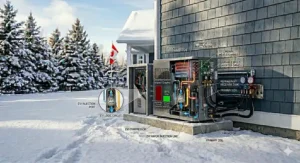
Ductless vs Central Heating: The Real Canadian Comparison
This question comes up constantly, and the honest answer is more nuanced than most HVAC marketing lets on. Let me break it down without the sales spin.
Ductless wins when: Your home doesn’t have ductwork (or has ductwork in poor condition), you’re heating a specific zone or addition, you want independent room-by-room temperature control, or you’re retrofitting an older Canadian home where adding ductwork would cost $8,000–$15,000 in wall and ceiling repairs. Nova Scotia has the highest per-capita adoption of ductless mini-splits in Canada for exactly this reason — older Maritime housing stock makes ductwork retrofits impractical.
Central heating wins when: You already have a modern, well-sealed duct system in good condition and want to heat the entire home uniformly. In that case, a ducted air-source heat pump using your existing infrastructure typically delivers lower per-room installation cost and better whole-home air distribution.
| Feature | Ductless Mini-Split | Central Ducted Heat Pump |
|---|---|---|
| Retrofit cost (no existing ducts) | $3,500–$7,500 per zone | $12,000–$25,000 (inc. ductwork) |
| Zone control | Excellent (per room) | Limited (zone dampers needed) |
| Installation disruption | Minimal (1 day) | Significant (2–5 days) |
| Cold-climate performance | Excellent (AURA class) | Excellent |
| Suitable for old houses | ✅ Ideal | ❌ Often impractical |
| Energy efficiency | Very high (SEER2 18–22+) | High (SEER2 16–20) |
Analysis: For Canadian homes built before 1980 — which make up a significant portion of the housing stock in cities like Halifax, Hamilton, and Winnipeg — ductless heating for old houses is simply the more practical and cost-effective path. The table above shows that without existing ductwork, a ductless multi-zone system covering three rooms can be installed for less than it costs to add ductwork alone to an older home. That’s the comparison that matters.
Multi-Zone Ductless Heat Pump Cost in Canada (2026 Real Numbers)
Let’s talk actual Canadian money, because the range published elsewhere is frustratingly vague. Here’s what you should realistically budget for multi-zone ductless heat pump cost in Canada in 2026, based on current contractor pricing data:
Single-Zone (1 outdoor unit, 1 indoor head):
- Equipment (Amazon.ca): $600–$1,600 CAD
- Professional installation: $1,200–$2,500 CAD
- Total installed: $1,800–$4,100 CAD (before rebates)
Dual-Zone (1 outdoor unit, 2 indoor heads):
- Equipment: $1,800–$2,800 CAD
- Professional installation: $2,000–$4,000 CAD
- Total installed: $3,800–$6,800 CAD (before rebates)
Three-Zone System:
- Equipment + installation: $6,000–$12,000+ CAD
- After rebates (provincial + federal): often $3,000–$8,000 net
Canadian pricing runs 15–25% higher than equivalent US pricing due to exchange rates and import duties — but when you factor in avoiding cross-border shipping fees, customs brokerage, and the warranty complexity of US-sourced equipment, buying through Amazon.ca is the rational choice for most Canadians.
For homeowners switching from oil heat, the Oil to Heat Pump Affordability Program from Natural Resources Canada can provide up to $10,000 upfront — dramatically shifting the math on even a premium multi-zone installation.
Best Ductless Heat Pump Brands in Canada: What the Market Tells Us
Brand reputation in the Canadian mini-split market isn’t just about marketing — it’s about parts availability, warranty honouring, and whether a local HVAC technician has actually worked on the unit before. Here’s an honest assessment:
Senville — The Canadian benchmark. Headquartered in Montreal with warehousing across Canada, Senville units ship from Amazon.ca (sold by Senville Canada), parts are widely stocked, and Canadian HVAC technicians are familiar with their systems. The 5-year parts and compressor warranty is among the strongest in the Amazon.ca mini-split category. For peace of mind, they’re the default recommendation.
DELLA — A solid American brand with strong Canadian Amazon.ca availability. The Serena and Motto series represent genuine value, particularly for budget-conscious buyers. Canadian reviewer feedback is positive, though parts availability in smaller markets can be slower than Senville.
COSTWAY — Known for competitive pricing, COSTWAY has built growing Canadian brand recognition through Amazon.ca. Their units perform well in moderate Canadian climates. Warranty service is handled through Amazon and the brand’s own support channels.
Mitsubishi Electric & Daikin — These premium brands (referenced by multiple Canadian HVAC contractors as top performers) are typically purchased through certified HVAC dealers rather than Amazon.ca, with installed pricing of $4,000–$8,000+ per zone. If budget is not a constraint and you want the highest cold-climate reliability and the longest track record, these are the industry gold standard. They’re what BC HVAC professionals typically recommend for the Lower Mainland’s climate.
According to data from Natural Resources Canada, heat pump installations have more than quadrupled since 2020 in Canada — and competition among brands has kept Amazon.ca prices more accessible than ever.
Common Mistakes Canadian Homeowners Make with Ductless Heat Pump Installation
I’ve seen the same errors repeat across Canadian HVAC forums and retailer Q&A sections. Avoid these and you’ll save yourself hundreds or thousands in corrective costs.
Mistake 1: Ignoring the electrical panel Mini-splits need dedicated circuits. A 100-amp panel in a 1960s Canadian home may be maxed out before you add a 30-amp circuit for a new heat pump. Always get your electrician to assess panel capacity before purchase, not after. Surprise panel upgrades are a very expensive unpleasant discovery.
Mistake 2: Buying a standard unit for a cold-climate Canadian location A non-cold-climate unit installed in Timmins, Ontario will struggle below -15°C. You’ll end up running expensive electric backup heat for exactly the months when you most need your heat pump working. The cold-climate premium is genuinely worth it in most Canadian climates.
Mistake 3: DIY refrigerant line connection In Canada, handling refrigerants requires certification under the Canadian Environmental Protection Act and provincial regulations. Connecting lines yourself (without recovering and recharging refrigerant legally) voids warranties and can result in system failure and fines. Hire a licensed technician for this step.
Mistake 4: Ignoring drain line placement The condensate drain line must slope consistently to its outlet. In Canadian winters, an improperly installed drain line freezes, causing water backup into the unit and potential ceiling damage. Your technician should account for this during installation — it’s worth confirming explicitly before they leave.
Mistake 5: Not checking rebate eligibility before purchase You cannot retroactively qualify for most Canadian provincial and federal heat pump rebates. The model must be on the approved list, installed by a certified contractor, and in some cases an EnerGuide assessment must occur before installation. Do your rebate homework before ordering anything.
Long-Term Cost & Maintenance in Canada: The Real ROI
Let’s crunch the numbers that actually matter for a Canadian homeowner deciding between a mini-split and maintaining their current system. These are ballpark figures based on 2026 Canadian utility rates and installation costs.
Annual operating cost comparison for a typical 93 m² (1,000 sq. ft.) main floor:
- Electric baseboard: $1,800–$2,400/year (at $0.13–$0.17/kWh average Canadian rate)
- Natural gas furnace: $1,200–$1,800/year (including equipment amortization)
- Ductless heat pump (mini-split): $600–$1,100/year — due to the COP (coefficient of performance) of 2.5–4.0, meaning you get 2.5–4 units of heat for every unit of electricity consumed
For a homeowner replacing electric baseboards with a $3,500 installed single-zone mini-split, the annual savings of $700–$1,300 means the system pays for itself in 3–5 years — and then runs for 15–20 years with routine maintenance.
Maintenance Schedule for Canadian Conditions:
- Monthly (heating season): Check and clean the indoor filter — a clogged filter is the single biggest efficiency killer in a Canadian winter
- Seasonal (spring and fall): Clear debris from the outdoor unit; check for ice buildup
- Annual: Book a professional refrigerant check and coil cleaning — approximately $150–$300 CAD for a service call; cheaper than the efficiency loss of a neglected system
- After major snowfall: Ensure outdoor unit isn’t buried and has airflow clearance; this is a Canada-specific maintenance reality most product manuals bury in small print
For more context on Canadian heat pump energy performance, Natural Resources Canada’s Office of Energy Efficiency publishes EnerGuide rating tools that help homeowners benchmark their heat pump’s expected efficiency.
As a useful reference, Wikipedia’s overview of heat pump technology provides a solid technical foundation on how refrigerant-cycle heating works — worth understanding before your installation appointment so you can have an informed conversation with your technician.
✨ Don’t Miss These Exclusive Deals!
🔍 Ready to transform your home’s comfort? Click on any of the highlighted products above to check current pricing and availability on Amazon.ca. Prime members get free shipping on most units directly to their door, making ductless heat pump installation more accessible than ever for Canadian homeowners!
FAQ: Ductless Heat Pump Installation in Canada
❓ How much does ductless heat pump installation cost in Canada?
❓ Can a ductless heat pump work in Canadian winters below -20°C?
❓ Are there government rebates available for ductless heat pump installation in Canada in 2026?
❓ Is ductless heat pump installation suitable for old Canadian houses without ductwork?
❓ Do I need a licensed technician to install a mini-split in Canada?
Conclusion: Make Your Home a Year-Round Comfort Zone
Ductless heat pump installation isn’t a niche upgrade anymore — it’s become one of the most practical and financially sound home improvements a Canadian homeowner can make in 2026. The combination of increasingly capable cold-climate mini-splits available on Amazon.ca, generous federal and provincial rebate programs, and the hard economic reality of rising energy costs has created a compelling case that’s hard to argue with.
The Senville AURA Series leads our list for most Canadian buyers who need reliable cold-climate performance with Energy Star certification and rebate eligibility. Budget-conscious homeowners will find excellent value in the Senville LETO or DELLA Serena, while the Senville SENA-36HF/D is the logical choice when two rooms need independent multi-zone temperature control. Whatever your home’s unique character — Victorian in Hamilton, ranch-style in Lethbridge, or townhouse in Burnaby — there’s a ductless solution that fits both your space and your budget in CAD.
Start by assessing your electrical panel, confirming your BTU needs, and checking your provincial rebate program’s approved product list before ordering. Then let Amazon.ca’s Canadian fulfillment network do the heavy lifting — and enjoy your first truly comfortable Canadian winter without dreading the hydro bill.
✨ Don’t Miss These Exclusive Deals!
🔍 Check current pricing and availability on all seven products highlighted in this guide — right now on Amazon.ca. Click any highlighted product to see the latest Canadian pricing, Prime eligibility, and customer reviews. Your warmest Canadian winter ever is one smart purchase away!
Recommended for You
- Best Cold Climate Heat Pump -25°C in Canada 2026: 7 Top Picks That Actually Work
- Best EPA Certified Wood Stove in Canada 2026: 7 Top Picks
- Pellet Stove vs Wood Stove: 7 Best Picks for Canadian Homes in 2026
Disclaimer: This article contains affiliate links. As an Amazon Associate, I earn from qualifying purchases. If you purchase products through these links, we may earn a small commission at no additional cost to you.
✨ Found this helpful? Share it with your friends! 💬🤗
