
In This Article
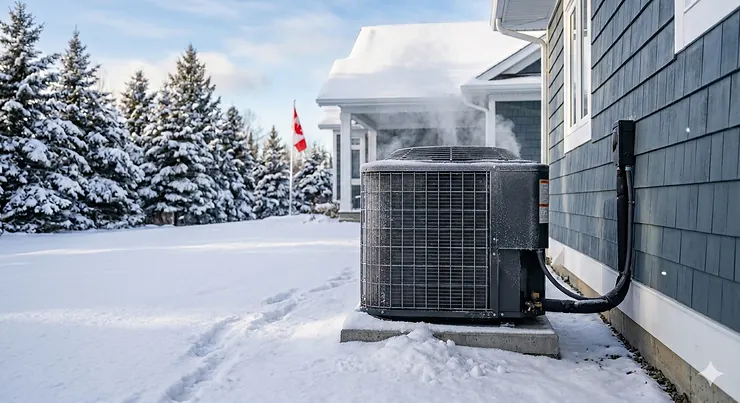
“Heat pumps don’t work in Canadian winters.” I’ve heard that myth more times than I care to count — usually from someone standing beside a gas furnace they’ve been dutifully feeding all winter, watching their energy bill creep toward eye-watering territory. Here’s the truth: the old version of that myth was accurate, but that was twenty years ago. Today’s cold climate heat pump -25C technology has completely rewritten the rulebook.
Modern cold climate heat pumps use advanced Enhanced Vapour Injection (EVI) compressors and inverter-driven systems to pull usable heat from outdoor air even when temperatures plunge to -25°C, -30°C, and beyond. In plain terms, a cold climate heat pump -25C is a ductless or ducted air-source system specifically engineered with variable-speed compressors, intelligent defrost cycles, and base pan heaters to deliver reliable warmth when Canadian winters are at their most brutal — without surrendering efficiency or demanding constant backup heat.
For Canadian homeowners, that’s a genuine game-changer. With rising natural gas costs, expanding federal rebate programs through Natural Resources Canada’s Canada Greener Homes initiative, and a growing need to reduce household carbon footprints, the best heat pump for Canadian winter isn’t a luxury upgrade anymore — it’s becoming the practical choice from Halifax to Calgary.
In this guide, I’ve researched seven real mini-split and ductless heat pump systems currently available on Amazon.ca that are built for Canada’s harshest conditions. I’ll give you honest commentary on what each one actually delivers, help you navigate CAD pricing and federal rebates, and show you how to pick the right unit for your specific home and province. Let’s get into it.
Quick Comparison: Cold Climate Heat Pumps at a Glance
| Product | Min. Operating Temp | Capacity | Best For | Price Range (CAD) |
|---|---|---|---|---|
| Senville AURA 18,000 BTU | -25°C | 18,000 BTU | Mid-size rooms, energy-conscious buyers | Mid-$1,000s |
| Senville LETO 24,000 BTU | -15°C | 24,000 BTU | Larger open-concept spaces | Low-to-mid $1,000s |
| Senville 28,000 BTU Dual Zone | -30°C | 28,000 BTU | Whole-home zoned comfort | Mid-$2,000s |
| Pioneer WYS012 Diamante | -15°C | 12,000 BTU | Small rooms, DIY installers | Low $1,000s |
| MRCOOL DIY 4th Gen 18,000 BTU | -13°C | 18,000 BTU | True DIY installation, mild winters | Mid $1,000s |
| Cooper & Hunter Sophia 18,000 BTU | -22°C | 18,000 BTU | Budget cold-climate option | Low-to-mid $1,000s |
| Costway 12,000 BTU Mini Split | -10°C | 12,000 BTU | Budget single-room, shoulder-season use | Under $1,000 |
The comparison above reveals a clear spectrum from true cold-climate performers to shoulder-season units. If you’re in Manitoba, Saskatchewan, or Northern Ontario — where -25°C nights are routine — the Senville AURA and Dual Zone models are your realistic options from this Amazon.ca lineup. The MRCOOL and LETO serve British Columbia’s Lower Mainland and Southern Ontario admirably, but buyers in Alberta or Quebec should look beyond -15°C minimum ratings. The price gap between budget and cold-climate models is real, but so is the performance gap when the mercury drops.
💬 Just one click — help others make better buying decisions too! 😊
✨ Don’t Miss These Exclusive Deals!
🔍 Take your home comfort to the next level with these carefully selected cold-climate heat pumps. Click on any highlighted product to check current pricing and availability on Amazon.ca. These systems will help you stay warm and save energy through even the harshest Canadian winters!
Top 7 Cold Climate Heat Pumps for Canada: Expert Analysis
1. Senville AURA Series 18,000 BTU Cold Climate Heat Pump
The Senville AURA 18,000 BTU is, in my view, the standout Amazon.ca pick for Canadian buyers who genuinely need a cold climate heat pump -25C that won’t disappoint in mid-winter. Shipped and sold directly by Senville Canada, this is a unit built with the Canadian market explicitly in mind — not an American model grudgingly offered with a metric sticker slapped on.
The AURA operates down to -25°C and carries a 20 SEER (Seasonal Energy Efficiency Ratio) rating, which means it delivers meaningful heating capacity even when temperatures hit the kind of lows that shut down lesser units entirely. Its inverter compressor modulates output continuously rather than cycling on and off — think of it like cruise control vs. constantly flooring the accelerator. The result is quieter operation, more consistent room temperature, and significantly lower electricity consumption. For an 18,000 BTU unit covering roughly 700–850 sq. ft. (65–79 m²), that efficiency edge translates directly into lower monthly bills.
What most Canadian buyers overlook about this model is the WiFi and Alexa integration — genuinely useful when you want to warm your Edmonton home before you even step inside from -20°C weather. The unit carries ENERGY STAR certification, which is your ticket to federal and provincial rebates. Sold by Senville Canada directly, Prime shipping is available, and the brand offers 5-year parts + 5-year compressor warranty, which is competitive at this price point.
Canadian reviewers consistently note solid cold-weather performance, though a handful from Quebec and Alberta mention that installation complexity requires hiring a certified HVAC technician (mandatory in Canada for refrigerant handling under Environment and Climate Change Canada regulations).
✅ 20 SEER efficiency — real electricity savings across Canadian winters
✅ Operates to -25°C — handles most Canadian climates reliably
✅ WiFi/Alexa control — preheat before you arrive home
❌ Professional installation required (add $500–$1,500 CAD to budget)
❌ 18,000 BTU suits one large room, not whole-home heating
Price range: Mid-$1,000s CAD — excellent value for a true cold-climate performer at this capacity.
2. Senville LETO Series 24,000 BTU Mini Split Heat Pump
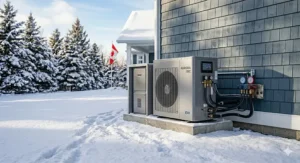
The Senville LETO 24,000 BTU is Senville’s high-volume workhorse, and for good reason: it balances capacity, reliability, and affordability better than almost anything else on Amazon.ca. With over 1,800 Canadian customer reviews and a strong 4.7-star average, this is a product that earns its reputation the hard way — through years of real-world Canadian use.
At 24,000 BTU, the LETO covers approximately 1,000–1,200 sq. ft. (93–111 m²) of open-concept space — think a main-floor kitchen/living/dining combination in a typical Canadian bungalow or semi-detached. Its 18 SEER rating is solid, and the DC inverter compressor delivers smooth, quiet operation at around 55 dB. Where the LETO differs from the AURA is its minimum operating temperature: rated to -15°C rather than -25°C. In practice, that means the LETO is an excellent choice for BC’s Lower Mainland, Southern Ontario, and Atlantic Canada — but buyers in Alberta, Saskatchewan, or the Prairies should step up to the cold-climate AURA or Dual Zone instead.
The spec sheet won’t tell you this, but what makes the LETO stand out for Canadian homes is the included 16-ft (4.9 m) line set — enough for most standard installations where the outdoor unit sits within reasonable distance of the interior wall. Its sleep mode and auto-restart function are surprisingly important for Canadian life: when the power flickers during a winter storm (and in rural Ontario, it will), the LETO restores its last settings automatically.
Canadian reviewers love the value-to-performance ratio, though a few note the included remote’s bilingual display could be clearer — a minor point but worth knowing given Canada’s bilingual labelling requirements.
✅ 4.7 stars from 1,800+ Canadian customers — proven track record
✅ 24,000 BTU — handles large open-plan spaces
✅ 18 SEER — good efficiency for moderate Canadian climates
❌ -15°C minimum rating — not suitable for Prairie or Northern winters
❌ Installation requires certified HVAC technician
Price range: Low-to-mid $1,000s CAD — arguably the best value-per-BTU on Amazon.ca for mild-to-moderate climates.
3. Senville 28,000 BTU Dual Zone Mini Split Heat Pump (SENA-28MO/D)
If the AURA is a sharp single-shot espresso, the Senville 28,000 BTU Dual Zone is a full French press — deeper, more complex, built for serious comfort. This dual-zone system pairs one outdoor unit with two independent indoor air handlers, allowing separate temperature control in two rooms simultaneously. It’s rated to -30°C, making it the most extreme-cold-capable unit in Senville’s Amazon.ca lineup.
The cold-weather performance at -30°C is the headline, but the dual-zone feature is what makes this genuinely useful for Canadian homes. Picture a two-storey in Saskatoon: upstairs bedroom tends to overheat, main floor loses heat through older windows. With dual-zone control, you set each room independently — no more compromises. The DC inverter compressor scales output across both zones dynamically, which is far more efficient than running two separate single-zone units.
At 28,000 BTU split across two zones, this covers two rooms of approximately 500–600 sq. ft. (46–56 m²) each. The outdoor unit is compact, and Senville Canada ships it with everything needed for a standard installation — though the included 16-ft line sets may need extending for multi-storey homes, which adds minor cost. Amazon.ca Prime eligibility makes delivery fast even to urban centres, though buyers in remote northern communities should expect slightly longer lead times.
What most buyers miss: this unit is Senville’s best argument for replacing two separate window AC units and an electric baseboard heater in a two-bedroom condo — one system, one outdoor unit, half the visual clutter, and far better efficiency.
✅ -30°C rating — the toughest cold-climate performer on Amazon.ca
✅ Dual-zone independent control — right for two-bedroom condos or split-level homes
✅ Single outdoor unit — cleaner install, less exterior equipment
❌ Higher upfront cost — mid-$2,000s range
❌ More complex installation — two indoor units require careful placement
Price range: Mid-$2,000s CAD — significant outlay, but replacing two separate systems justifies the investment quickly.
4. Pioneer WYS012-17 Diamante Series 12,000 BTU Mini Split
The Pioneer Diamante is a solid entry-level cold climate option for Canadian buyers with smaller spaces — a home office, master bedroom, garage workshop, or finished basement. At 12,000 BTU, it covers approximately 450–550 sq. ft. (42–51 m²) and delivers a 17 SEER efficiency rating with a minimum operating temperature around -15°C.
Where Pioneer earns its stripes is installation accessibility. Compared to some competing brands, the Diamante’s wiring layout and included installation kit are noticeably beginner-friendlier — though I want to be clear: in Canada, refrigerant line connections must still be made by a licensed HVAC technician holding an F-gas certificate. What you can DIY in Canada is the mounting bracket, electrical wiring to the disconnect box (if you’re comfortable with electrical), and running the line set through the wall — but refrigerant work requires a pro.
Pioneer units are popular in the Vancouver Island and BC Gulf Islands market, where the mild coastal climate rarely dips below -10°C, making the -15°C rating more than adequate. For buyers in Ontario’s Golden Horseshoe or Quebec’s southern corridor, this unit covers most winter nights comfortably.
Canadian buyers note the quieter-than-expected operation (around 40 dB indoor) and the responsive customer support for warranty claims — Pioneer’s parts availability in Canada is reasonable, though not as robust as Senville’s direct-Canada setup.
✅ 17 SEER efficiency — good for the price point
✅ Quieter operation — 40 dB indoor suits bedrooms
✅ Good for smaller spaces — ideal single-room solution
❌ -15°C rating — limited to milder Canadian climates
❌ Smaller parts network in Canada compared to Senville
Price range: Low $1,000s CAD — a capable entry point for mild-climate buyers with a single room to heat.
5. MRCOOL DIY 4th Generation 18,000 BTU Mini Split
The MRCOOL DIY 4th Generation is the product that makes HVAC professionals nervous and homeowners excited — and honestly, both reactions are fair. It’s the only mini-split system on this list specifically engineered for true homeowner installation, using pre-charged “Quick Connect” line sets that eliminate the need for a refrigerant-licensed technician for the refrigerant connection itself. In Canada, this is genuinely significant given that certified HVAC labour can run $500–$1,500 CAD per installation.
The 4th Generation 18,000 BTU unit delivers an 18 SEER2 rating and operates to -13°C (-22°F) — which makes it suitable for Southern BC, Southern Ontario, and Atlantic Canada but marginal for Prairie winters. The built-in WiFi and app control are excellent, and the system’s “SmartHVAC” features include compatibility with Google Home and Amazon Alexa.
What the spec sheet doesn’t reveal is the installation reality: MRCOOL’s Quick Connect system works very well in straightforward wall penetrations. Where Canadians run into trouble is multi-storey installations or situations where the outdoor unit needs to be elevated on a bracket for snow clearance — at this point, getting professional help becomes practical anyway. I’d also note that while refrigerant connections are DIY-able with this system, most Canadian municipalities still require a building permit for any fixed AC/heating installation, and some require inspection.
The MRCOOL’s limitation for Canada’s harshest climates is real: this is not a Prairies-and-Yukon unit. But for a summer cottage in Muskoka being winterised for shoulder-season use, or a condo in Victoria, it’s a compelling, cost-saving option.
✅ True DIY-installable — saves $500–$1,500 CAD in labour
✅ Smart home integration — Google Home, Alexa compatible
✅ 18 SEER2 efficiency
❌ -13°C minimum — not for Prairie or Northern Ontario winters
❌ Check local permit requirements — some municipalities require inspection regardless
Price range: Mid-$1,000s CAD — the labour savings make this price very competitive for mild-climate buyers.
6. Cooper & Hunter Sophia Series 18,000 BTU Mini Split
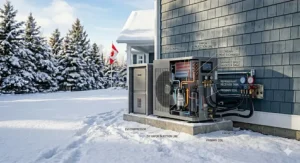
Cooper & Hunter is a brand that doesn’t advertise as loudly as Senville or MRCOOL, but its Sophia Series has quietly built a solid reputation among Canadian HVAC installers for reliable cold-weather performance. The 18,000 BTU Sophia operates down to approximately -22°C, placing it firmly in cold-climate territory — capable of handling most winter nights across Ontario, Quebec, and the Atlantic provinces, and surviving Alberta’s average cold snaps without shutting down.
The Sophia’s advantage over same-price Senville LETO units is primarily the colder minimum operating temperature. At -22°C vs. -15°C, you’re gaining roughly 7°C of useful operating range — meaningful in a city like Ottawa, where January nights regularly hit -20°C. The system’s 19 SEER rating is competitive, and its low-noise indoor operation (around 38 dB) makes it genuinely bedroom-compatible.
The spec sheet also won’t tell you that Cooper & Hunter’s anti-corrosion coating on the outdoor coil is particularly relevant for Canadian coastal buyers — Vancouver Island, the Fundy shore, and Nova Scotia’s coastline all expose outdoor HVAC equipment to salt air that degrades standard coils faster than inland conditions. This isn’t a marketing gimmick; it’s a real differentiator for coastal Canadians.
Where the Sophia falls slightly short is brand recognition. Warranty claims and parts sourcing require a bit more legwork than with Senville, which has Canadian-facing support infrastructure. That said, at this price point for the cold-climate performance on offer, it’s hard to argue with the value.
✅ -22°C operating temperature — real cold-climate credibility
✅ 19 SEER — solid efficiency rating
✅ Anti-corrosion coating — bonus for Canadian coastal environments
❌ Less brand recognition in Canada — warranty service can be slower
❌ Fewer Canadian dealer touchpoints than Senville
Price range: Low-to-mid $1,000s CAD — strong cold-climate value that punches above its price class.
7. Costway 12,000 BTU Mini Split Air Conditioner and Heat Pump
Let’s be transparent: the Costway 12,000 BTU is on this list as an honest budget option, not as a cold climate heat pump -25C performer. Its minimum operating temperature sits around -10°C, which in Canadian terms means this unit is a shoulder-season workhorse — excellent from May through October, and usable through November and March in milder regions, but not your primary winter heater in January.
Where the Costway earns its place is in specific Canadian use cases: the finished garage workshop that needs to be comfortable for autumn projects, the three-season sunroom, the rental suite in Vancouver that needs basic heat and cooling on a tight landlord budget, or the basement home office that’s occupied selectively. At under $1,000 CAD, the barrier to entry is genuinely low.
The unit includes turbo mode, iFEEL temperature sensing, and a wider timer range than most competitors at this price — features that suggest genuine attention to usability. But the spec sheet will tell you everything you need to know about the cold-weather limitation: at -10°C, this unit’s heating output drops significantly and it may struggle to maintain comfortable temperatures during a proper Canadian cold snap.
My honest recommendation: if you’re in Southern BC or you’re buying this for a space you don’t need heated below -10°C, the Costway offers real value. If you’re in any other province and planning to rely on this as a primary winter heat source, save up for the AURA or the Cooper & Hunter Sophia. A backup electric baseboard paired with this unit in shoulder seasons is a reasonable strategy for budget-minded buyers.
✅ Under $1,000 CAD — lowest barrier to entry on this list
✅ Turbo and iFEEL modes — good comfort features for the price
✅ Suitable for mild-climate/shoulder-season use
❌ -10°C minimum — NOT a true cold climate heat pump for Canadian winters
❌ Not suitable as primary winter heat in most Canadian provinces
Price range: Under $1,000 CAD — honest value for its limitations; go in with realistic expectations.
How to Install and Maximise Performance in Canadian Conditions
Getting the unit is half the battle. Here’s what most Amazon.ca listings won’t tell you about making your cold climate heat pump actually perform through a Canadian winter.
Step 1: Site the outdoor unit carefully. Snow accumulation is the biggest Canadian-specific threat to mini-split performance. Mount the outdoor unit at least 60 cm (24 inches) above your typical snowpack level — this varies dramatically from 30 cm in Victoria to 120 cm or more in parts of Quebec and Northern Ontario. Use a purpose-built elevated wall bracket or a sturdy ground stand (Senville sells compatible stands separately on Amazon.ca).
Step 2: Don’t skip the base pan heater. Higher-end cold climate units like the Senville AURA include a base pan heater to prevent ice buildup on the outdoor coil during defrost cycles. If your chosen unit doesn’t include one, ask your HVAC installer about adding an aftermarket pan heater — it costs relatively little and prevents the most common cause of reduced winter efficiency.
Step 3: Size correctly for your climate zone. The general rule in Canada is to add 10–15% to your BTU calculation if you’re in ASHRAE Climate Zone 6 or 7 (most of Prairie Canada, Northern Ontario, Quebec, Labrador). A room that needs 12,000 BTU in Toronto likely needs 13,500–14,000 BTU in Calgary. Use Natural Resources Canada’s home sizing guidelines or consult a certified HVAC professional.
Step 4: Pre-set for cold snaps. Unlike gas furnaces that respond instantly, heat pumps heat most efficiently when maintaining a temperature rather than recovering from a deep chill. Before a forecasted -25°C overnight, set your unit to hold a consistent temperature through the night rather than letting the space drop and demanding a recovery. Your electricity meter will thank you.
Step 5: Know your defrost cycle. All cold climate mini-splits run defrost cycles in extreme cold — you may hear the outdoor fan stop briefly and see some steam rising from the outdoor unit. This is completely normal. However, if defrost cycles seem extremely frequent or your indoor unit is blowing cool air for prolonged periods, have a technician check refrigerant charge and coil condition.
Maintenance in a Canadian climate: Annual coil cleaning before winter is essential — not optional. Road salt carried in snowmelt and spring runoff is corrosive to outdoor units within 5 km (3 miles) of salted roadways. Rinse the outdoor coil with fresh water each spring, and consider a coil-cleaning spray in autumn. A well-maintained cold climate heat pump can last 15–20 years in Canadian conditions; a neglected one may struggle at year eight.
Real Canadian Buyer Profiles: Which Unit Is Right for You?
Let me map three common Canadian scenarios to the right product from this list.
Profile A — The Calgary Suburb Family. Three-bedroom home, -25°C average winter lows, existing forced-air ductwork. This family wants to reduce their natural gas bill meaningfully. A single Amazon.ca mini-split won’t cover their whole home — they’re better served by a professional install of a Mitsubishi Zuba Central (not Amazon.ca, through HVAC dealers), a Napoleon NS18, or, as a DIY-supplemental approach, installing a Senville AURA 18,000 BTU in the most-used living space and letting the gas furnace handle the rest. Budget for installation: $1,200–$2,500 CAD including materials.
Profile B — The Vancouver Island Condo Owner. One-bedroom, 550 sq. ft. (51 m²), rarely drops below -7°C. This buyer is mainly concerned with summer cooling and shoulder-season heating. The Pioneer WYS012 Diamante or Senville LETO 12,000 BTU covers this perfectly. The MRCOOL DIY is tempting for the labour savings, but condo strata councils often have rules about penetrating exterior walls — check before purchasing.
Profile C — The Northern Ontario Cabin Winteriser. 700 sq. ft. (65 m²) three-season cabin being converted to year-round use, with electric baseboard backup. Temperatures to -30°C on worst nights. The Senville 28,000 BTU Dual Zone handles this well — one handler in the main living area, one in the primary bedroom — and the -30°C rating provides the margin needed. Budget: mid-$2,000s CAD for the unit, plus $1,500–$2,500 CAD for professional installation in a remote location (remote premiums are real in Ontario’s cottage country).
Heat Pump Efficiency in Cold Weather: What the Numbers Actually Mean
Heat pump efficiency in cold weather is measured by the Heating Seasonal Performance Factor (HSPF or the updated HSPF2 standard) — a number that tells you how much heat energy the system produces per unit of electricity consumed. A higher HSPF2 is better. According to Natural Resources Canada’s EnerGuide guidelines, a cold climate heat pump with an HSPF2 of 7.5 or higher qualifies for rebate programs.
Here’s what that means in practice for a Canadian homeowner:
| HSPF2 Rating | COP Equivalent | Real-World Meaning |
|---|---|---|
| 6.0–7.0 | ~1.75–2.0 | Budget entry-level; adequate for mild climates |
| 7.5–8.5 | ~2.2–2.5 | Qualifies for most Canadian rebates; solid cold-climate performer |
| 9.0–10.0+ | ~2.6–2.9 | Premium efficiency; maximum rebate eligibility; 5+ year payback |
What this table tells you is that even a midrange heat pump (HSPF2 7.5) delivers roughly 2.2 units of heat for every unit of electricity — compared to a standard electric baseboard heater’s 1:1 ratio. In an Ontario home spending $2,400 CAD annually on electric baseboard heating, upgrading to a mid-efficiency cold climate mini-split could cut that bill to roughly $1,100 CAD. Over five winters, that’s $6,500 CAD in savings. At a unit and installation cost of $3,000–$4,500 CAD (minus rebates), the economics are compelling.
The key insight most buyers miss: cold climate heat pumps don’t become inefficient at low temperatures — they become less efficient. Even at -25°C, a well-designed EVI compressor system still delivers 1.5–1.8x more heat per unit of electricity than direct electric resistance heating. Understanding heat pump thermodynamics helps make the investment decision clearer. Wikipedia’s heat pump overview provides a solid primer on the underlying physics if you want to go deeper.
How to Choose a Cold Climate Heat Pump in Canada: 6 Expert Criteria
1. Match the minimum operating temperature to your climate zone, not your average. Design for your worst 10 days of winter, not your average January. If Edmonton averages -15°C but regularly sees -30°C cold snaps, choose a unit rated to -30°C.
2. Verify ENERGY STAR Canada certification. ENERGY STAR–certified cold climate heat pumps qualify for federal rebate programs. Check the ENERGY STAR Canada product list before purchasing to confirm eligibility — not every listing on Amazon.ca clearly states this.
3. Calculate your actual space requirement in metric. Use 65–80 watts per square metre as a rough Canadian rule of thumb for well-insulated modern homes; 90–110 watts/m² for older or poorly-insulated homes. A poorly insulated 70 m² (750 sq. ft.) main floor in an older Ottawa house may genuinely need 24,000 BTU, not 18,000 BTU.
4. Budget honestly for installation. Amazon.ca handles the unit cost. Installation by a licensed HVAC technician — mandatory in Canada for refrigerant work — typically runs $700–$1,500 CAD for a standard single-zone mini-split in urban centres, and $1,200–$2,500 CAD for dual-zone or complex installs. Add permit costs where required.
5. Investigate rebate eligibility before you buy. The Canada Greener Homes Loan offers interest-free financing of up to $40,000 CAD for qualifying energy retrofits. The Oil to Heat Pump Affordability Program (OHPA) offers up to $10,000 CAD for Atlantic Canada and rural Quebec homeowners converting from oil heat. British Columbia’s CleanBC program provides up to $6,000 CAD in grants. Apply before purchasing, as most programs require a pre-retrofit EnerGuide assessment.
6. Consider the full five-year cost of ownership. A unit that costs $400 CAD more upfront but delivers 20% greater efficiency in Canadian conditions will typically pay back that premium within two heating seasons. Don’t optimise for sticker price; optimise for five-year total cost including electricity, installation, and maintenance.
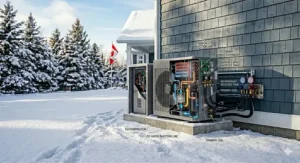
Heat Pump vs. Gas Furnace: The Real Canadian Comparison
The most common question I get from Canadian homeowners: “Should I replace my gas furnace with a heat pump?” The honest answer depends on your province, your electricity rate, and your climate zone.
| Factor | Cold Climate Heat Pump | Gas Furnace |
|---|---|---|
| Heating + Cooling | ✅ Both in one system | ❌ Heating only (need separate AC) |
| Efficiency | 150–300% (COP 1.5–3.0) | 80–98% (combustion efficiency) |
| Carbon footprint | Low (if grid is clean) | Moderate to high |
| Operating cost (ON/QC) | Lower — clean electricity | Higher — rising gas prices |
| Operating cost (AB/SK) | Comparable to higher (coal grid) | Lower in very cold snaps |
| Upfront install cost | $3,000–$15,000 CAD | $3,000–$7,000 CAD |
| Federal rebate eligible | ✅ Up to $10,000 CAD | ❌ Generally no |
The table makes the case clearly for Ontario, Quebec, and BC — provinces with relatively clean electricity grids and high gas prices, where heat pump economics are compelling. In Alberta and Saskatchewan, where electricity is more carbon-intensive and natural gas is domestically produced and cheaper, a hybrid system (heat pump for mild weather, gas backup for extreme cold) is often the most practical Canadian solution.
One angle buyers often overlook: a cold climate heat pump provides air conditioning in summer at zero additional capital cost. That Albertan homeowner replacing a gas furnace for $10,000 CAD with a heat pump is also eliminating a future $3,000–$5,000 CAD central AC installation. Factor that into your total cost comparison.
Common Mistakes When Buying a Cold Climate Heat Pump in Canada
Ignoring the minimum operating temperature. This is the single biggest error Canadian buyers make. A -15°C unit will work fine in Victoria; it will be useless as primary heat in Winnipeg. Read the minimum operating temperature specification — not the “recommended operating temperature,” but the true lower limit.
Buying for square footage only. A poorly insulated 70 m² house needs more BTUs than a well-insulated 90 m² house. Insulation quality, ceiling height, window area, and air sealing all matter more than floor space alone.
Underestimating installation complexity. That $1,200 CAD mini-split on Amazon.ca is only part of the budget. Professional installation adds $700–$1,500 CAD, permits add another $100–$300 CAD in many municipalities, and if your electrical panel needs an upgrade to support a 208/240V circuit, that’s another $500–$1,200 CAD. Budget for the complete installed cost, not the unit price.
Skipping the rebate process. The most expensive mistake Canadian buyers make is purchasing and installing before applying for rebates. Most federal and provincial programs require a pre-retrofit EnerGuide home energy assessment before any work begins. Missing this step means forfeiting thousands of dollars in grants or loan eligibility.
Choosing a brand without Canadian service infrastructure. Some attractive-looking mini-split brands on Amazon.ca have minimal Canadian dealer or service networks. When a compressor needs warranty replacement in Sudbury, you want a brand whose parts can be sourced in Canada within a week — not shipped from a US warehouse over the border with customs delays.
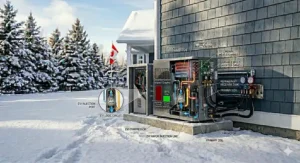
FAQ: Cold Climate Heat Pumps in Canada
❓ Can a cold climate heat pump -25C work as the sole heat source in a Canadian home?
❓ What rebates are available in Canada for heat pump installation in 2026?
❓ What is the best heat pump for Canadian winter in a ductless setup?
❓ How much does heat pump installation cost in Canada in 2026?
❓ Does a mini split heat pump -30C rated unit work as efficiently at -30°C as it does at -10°C?
Conclusion: The Canadian Case for Going Cold-Climate
Here’s the bottom line: if you’re a Canadian homeowner still relying solely on electric baseboards or a gas furnace, you’re paying more than you need to, and leaving federal rebate money on the table. The best heat pump for Canadian winter in 2026 isn’t some exotic, impossible-to-install technology — it’s an available, well-supported system that can be ordered on Amazon.ca this week.
For most Canadians, the right entry point is the Senville AURA Series 18,000 BTU for single-zone cold-climate heating (rated to -25°C), or the Senville 28,000 BTU Dual Zone for two-room coverage in the harshest climates. Budget-conscious buyers in milder provinces will find genuine value in the Senville LETO 24,000 BTU or the MRCOOL DIY 4th Gen for its DIY-friendly installation savings.
Whatever you choose, do three things before clicking “Add to Cart”: confirm the unit’s minimum operating temperature against your coldest winter nights, verify ENERGY STAR Canada certification for rebate eligibility, and budget honestly for professional installation costs in CAD. Done right, a cold climate heat pump is one of the smartest home investments a Canadian can make in 2026.
✨ Don’t Miss These Exclusive Deals!
🔍 Ready to make the switch? Click on any highlighted product above to check current pricing and availability on Amazon.ca. Remember to verify rebate eligibility at NRCan before purchasing — Canadian federal and provincial programs could offset thousands of dollars from your total cost!
Recommended for You
- Best EPA Certified Wood Stove in Canada 2026: 7 Top Picks
- Pellet Stove vs Wood Stove: 7 Best Picks for Canadian Homes in 2026
- 7 Best Wood Stove for Off-Grid Cabin in Canada 2026
Disclaimer: This article contains affiliate links. As an Amazon Associate, I earn from qualifying purchases. If you purchase products through these links, we may earn a small commission at no additional cost to you.
✨ Found this helpful? Share it with your friends! 💬🤗
