
In This Article
Let’s be honest — Canadian winters don’t play around. Whether you’re scraping ice off your windshield in Winnipeg at -35°C or bracing for a damp Halifax cold snap, your home heating system is not an afterthought. It’s survival. And yet, so many Canadians are still relying entirely on a single-fuel furnace, leaving serious money — and comfort — on the table.
That’s where a hybrid heat pump system changes everything.
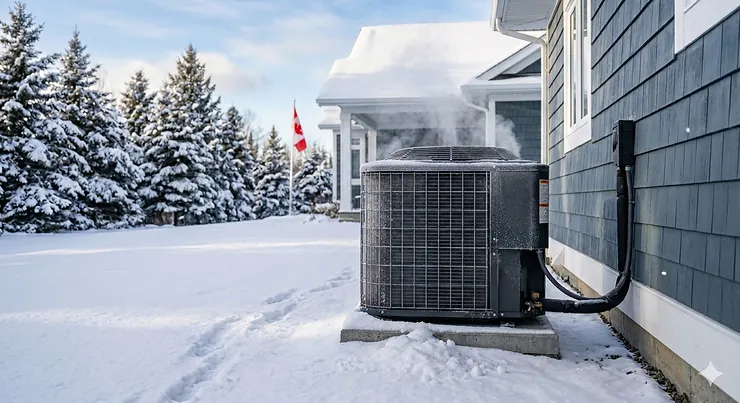
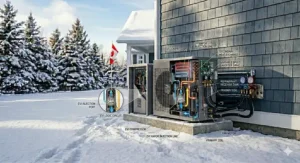
A hybrid heat pump system is a dual-fuel heating setup that pairs an electric air-source heat pump with a gas or propane furnace backup. In simple terms: the heat pump does the heavy lifting during mild and moderately cold weather — and when temperatures plunge past the efficiency threshold (usually around -15°C to -20°C), the furnace kicks in automatically. No manual switching. No chilly nights. Just seamless, intelligent comfort.
According to Natural Resources Canada, air-source heat pumps have a minimum outdoor operating temperature between -15°C and -25°C, making hybrid systems an ideal solution for a country where “cold” is a lifestyle. The result? You capture the efficiency of a heat pump for 80–90% of your heating season, while keeping the raw thermal output of a furnace for those brutal February nights.
In my experience working through Canadian HVAC options, the hybrid approach is the smartest middle ground for most homeowners — especially those upgrading from an existing gas furnace. You don’t have to rip anything out. You don’t have to bet the house on a single system. You get the best of both worlds, and in 2026, government rebates make the financial case stronger than ever.
In this guide, I’ll walk you through 7 top-rated heat pump systems and components available in Canada, break down real installation costs in CAD, explain automatic fuel switching, and show you exactly how to claim hybrid heating energy savings through provincial and federal rebate programs. Let’s get into it. 🇨🇦
Quick Comparison: Top Hybrid Heat Pump Systems for Canada 2026
| Product | Type | Cold-Climate Rating | Best For | Price Range (CAD) |
|---|---|---|---|---|
| Mitsubishi Zuba-Central | Ducted Central | -30°C | Whole-home, existing ductwork | $14,000–$20,000 installed |
| Daikin Fit DX20VC + Gas Furnace | Ducted Hybrid | -25°C | Mid-size homes, dual fuel | $12,000–$17,000 installed |
| Bosch IDS 2.0 BHP (BOVA) | Ducted Central | -20°C | Value-focused whole-home | $10,000–$15,000 installed |
| Fujitsu Halcyon XLTH (AOU Series) | Ductless/Multi-Zone | -25°C | Homes without ductwork | $8,000–$14,000 installed |
| Napoleon Central HP (Packaged) | Ducted Central | -20°C | Canadian-made preference | $9,000–$14,000 installed |
| Ecojay SmartHeat Mini-Split | Ductless Single-Zone | -15°C | Supplemental/zone heating | $1,500–$3,500 on Amazon.ca |
| Senville SENL Series | Ductless Single-Zone | -20°C | Garages, additions, cottages | $800–$2,200 on Amazon.ca |
Installation costs include labour, permits, and standard refrigerant line sets. All prices in CAD. Check current pricing on Amazon.ca for available units — prices change frequently.
A note on purchasing: Major central heat pump systems (Mitsubishi, Daikin, Bosch, Fujitsu) are sold through licensed HVAC contractors and wholesalers rather than directly on Amazon.ca. However, ductless mini-split units, smart thermostats, and accessories ARE available on Amazon.ca. I’ve included both contractor-installed systems (which represent the core of a hybrid setup) and Amazon.ca-available options throughout this guide, so you have a complete picture.
💬 Just one click — help others make better buying decisions too! 😊
The table above shows a clear split between contractor-installed central systems and DIY-friendly ductless units. For most homeowners replacing a gas furnace, the contractor route offers the best whole-home efficiency and rebate eligibility. Budget-conscious buyers or those adding supplemental heat to a garage, basement, or cottage should look seriously at the Senville and Ecojay mini-splits available directly on Amazon.ca.
Top 7 Hybrid Heat Pump Systems: Expert Analysis
1. Mitsubishi Electric Zuba-Central Heat Pump (PUZ-HA/SUZ-KA Series)
If there’s one system that Canadian HVAC professionals recommend more than any other for cold-climate performance, it’s the Mitsubishi Zuba-Central. This ducted central heat pump is engineered specifically for Canadian conditions — not adapted from a southern-climate design as an afterthought.
The Hyper-Heat Plus (H2i+) technology delivers 100% rated heating capacity at -20°C and continues operating (at reduced but still functional capacity) down to -30°C. What does that mean in practice? Even on a January night in Ottawa that would freeze your pipes, this unit is still running efficiently while your neighbours’ lesser heat pumps have long since handed off to emergency electric resistance backup. The variable-speed VCSi compressor adjusts output continuously rather than cycling on and off, which translates to more even temperatures, quieter operation, and lower electricity consumption.
The Zuba-Central is the right choice for Ontario, Quebec, and Prairie homeowners who want to use a heat pump as their primary heating source and keep the gas furnace strictly as a last-resort backup. In a hybrid configuration, many Zuba users report running the heat pump for 90–95% of the heating season — dramatically reducing gas consumption. The 12-year extended warranty (with a certified MEQ installer) is rare in this industry and reflects genuine confidence in the hardware.
Customer feedback from Canadian homeowners is overwhelmingly positive, with frequent praise for the whisper-quiet indoor operation and consistent temperatures across rooms. Common critique: it’s expensive, and installation requires a certified Mitsubishi technician.
✅ Operates to -30°C with no capacity cliff
✅ 12-year extended parts and compressor warranty
✅ Eligible for up to $7,500 in Ontario rebates (Home Renovation Savings Program)
❌ Among the highest upfront costs in the market
❌ Must be installed by MEQ-certified contractor
Price range: $14,000–$20,000 CAD installed. For its cold-climate performance and long-term reliability, the premium is justified for any Canadian home with existing ductwork.
2. Daikin Fit DX20VC + 96% AFUE Gas Furnace (Dual Fuel System)
Daikin’s hybrid offering is the slickest “plug-and-play” dual fuel system for Canadian homes with existing ductwork. The DX20VC heat pump is a variable-speed inverter unit rated to -25°C, and when paired with a Daikin 96% AFUE gas furnace, the two communicate through a unified control system that makes automatic fuel switching genuinely seamless — no jerky handoffs, no temperature swings.
What most Canadian buyers overlook about the Daikin Fit platform is how compact the outdoor unit is. Traditional heat pumps require significant clearance around the unit; the Fit’s vertical design takes up roughly 40% less footprint. For the typical Canadian home where the HVAC unit is tucked against the house under a low eave or on a narrow side yard, this is a practical advantage, not a marketing bullet point.
The built-in “balance point” temperature controller allows you to set the exact outdoor temperature at which the furnace takes over — typically programmed around -15°C to -18°C for most Ontario or Quebec homes. Below that point, natural gas is often cheaper per unit of heat in Canada anyway, so the switchover is both practical and economical.
Canadian reviewers praise the Daikin Fit’s quiet outdoor operation (as low as 56 dB) and the simple Daikin One+ smart thermostat integration.
✅ Compact vertical outdoor unit — great for tight Canadian lots
✅ Seamless automatic fuel switching with unified controls
✅ 96% AFUE furnace minimizes gas waste during switchover events
❌ Daikin-certified installation required for full warranty
❌ Smart thermostat sold separately (add $300–$500 CAD)
Price range: $12,000–$17,000 CAD installed. Outstanding value for homeowners who want a turnkey dual fuel system from a single brand.
3. Bosch IDS 2.0 BHP Series (BOVA) Heat Pump
Bosch doesn’t have the name recognition in HVAC that it does in power tools, but the IDS 2.0 BHP is a serious contender that punches well above its price point. It operates efficiently down to -20°C and is one of the few systems in its price range to use a DC inverter scroll compressor — a technology that reduces energy consumption during partial-load operation (which is most of your heating season).
The spec sheet won’t tell you this, but the Bosch BOVA system is notably easier to commission than Mitsubishi or Daikin equivalents. Most licensed HVAC contractors in Ontario and BC can install and certify it without brand-specific training, which often translates to lower labour costs and a wider choice of installers — important when you’re in Sudbury or Red Deer and certified techs aren’t abundant.
In a hybrid configuration with a gas furnace, the Bosch IDS 2.0 handles Canadian shoulder seasons (March–April, October–November) with impressive efficiency. Its HSPF2 rating of 9.5+ means for every unit of electricity consumed, you’re getting roughly 3x the heat output — a compelling argument for running the heat pump as long as possible before switching to gas.
Canadian users cite the build quality and reliability as standouts. The downside: Bosch’s warranty service network is thinner in rural Canada than Mitsubishi’s or Daikin’s.
✅ DC inverter scroll compressor for exceptional part-load efficiency
✅ Broader installer base — lower labour costs in many Canadian markets
✅ ENERGY STAR® certified and eligible for most Canadian rebate programs
❌ Warranty service network sparser in rural and northern Canada
❌ -20°C rating means Prairie homeowners will rely on furnace backup more heavily
Price range: $10,000–$15,000 CAD installed. The sweet spot for budget-conscious Ontario and BC homeowners who still want a whole-home solution.
4. Fujitsu Halcyon XLTH AOU Series (Multi-Zone Ductless)
For Canadian homes without central ductwork — think older brick homes in Toronto’s Annex, Vancouver character houses, or heritage properties in Montreal — the Fujitsu Halcyon XLTH is the gold standard in ductless cold-climate performance. Rated to operate at -25°C, this multi-zone system can connect up to 5 indoor heads to a single outdoor unit, giving you zone-by-zone temperature control throughout the house.
The practical benefit for Canadian buyers is substantial: you’re not heating the whole house when only the bedroom and living room are occupied. Each zone operates independently, which is transformative for energy bills in a 1,500-square-foot bungalow where the basement is rarely used. Unlike central ducted systems, installation is less invasive — no major construction, no ductwork, just a small hole through the wall per indoor unit.
In a hybrid configuration, the Fujitsu XLTH handles primary heating while a wall-mounted or baseboard heater serves as backup for extreme cold. Some Canadian homeowners pair it with a propane wall furnace for the coldest nights — a configuration particularly popular in rural BC and Atlantic Canada where propane is readily accessible.
Fujitsu’s Canadian customer reviews are strong, with particular praise for how quietly the indoor units operate in bedrooms. Ceiling cassette models are available for living rooms with aesthetic considerations.
✅ -25°C operation — handles most Canadian winters as a standalone primary system
✅ Zone-by-zone control reduces energy waste in partially occupied homes
✅ No ductwork required — ideal for older Canadian homes and additions
❌ Higher per-zone cost than a central ducted system for large homes
❌ Each indoor unit requires wall penetration — some strata/condo restrictions apply
Price range: $8,000–$14,000 CAD installed (2-zone system). The right choice for ductless retrofits in Ontario, BC, and Quebec.
5. Napoleon Central Heat Pump Package (Canadian-Made)
Here’s one for the “buy Canadian” crowd — and it’s not a compromise pick. Napoleon, headquartered in Barrie, Ontario, produces cold-climate central heat pump packages rated to -20°C that are engineered and assembled with Canadian winters as the design benchmark, not an afterthought. Their packages include all major components (outdoor condenser, air handler, and refrigerant line set) and are available through Canadian HVAC wholesalers and specialty retailers like BPH Sales across the country.
What distinguishes Napoleon’s hybrid setup from the import brands is the company’s understanding of Canada’s diverse climate zones. Their engineering team accounts for the freeze-thaw cycles, humidity swings, and road salt exposure that Canadian outdoor units face — conditions that accelerate corrosion on inferior units. The cabinet construction reflects that regional expertise.
For a family in suburban Calgary, Napoleon’s central heat pump package makes strong sense as the primary heating component in a hybrid system. The heat pump covers autumn, winter shoulder periods, and late spring efficiently; the existing natural gas furnace handles the -25°C and below stretches in January and February. Over a full heating season, this combination typically reduces gas consumption by 60–70%.
Canadian dealers report consistently positive feedback on Napoleon’s support team — being domestic means actual Canadian-hours customer service, not offshore support.
✅ Canadian-engineered and assembled — built for our climate, not adapted to it
✅ Full technical support from a domestic company with Canadian-hours availability
✅ Compatible with any existing gas furnace for a hybrid configuration
❌ Less widely known than Mitsubishi or Daikin — fewer independent reviews
❌ Available through specialty dealers, not mass-market retail
Price range: $9,000–$14,000 CAD installed. Strong choice for buyers who prefer to support Canadian manufacturing and want a system designed for our conditions.
6. Ecojay SmartHeat Mini-Split (Available on Amazon.ca)
Now we get into the Amazon.ca-available options — and this is where things get interesting for cottage owners, garage heaters, and homeowners adding supplemental heat to a basement or home office. The Ecojay SmartHeat is a CSA-certified ductless mini-split heat pump sold directly on Amazon.ca, making it accessible without going through a contractor for the unit purchase.
The 12,000 BTU model handles spaces up to roughly 46 m² (500 sq.ft.) and operates down to -15°C — fine for a garage workshop, a seasonal cottage near Kingston, or a basement suite in Victoria. What sets the Ecojay apart from the no-name grey-market units flooding Amazon.ca is the CSA certification, which means it’s been tested to Canadian safety standards. This matters for insurance claims and building permit compliance.
The inverter compressor technology provides variable output rather than blunt on/off cycling, which is noticeably more comfortable in smaller spaces. Installation requires a certified HVAC technician for the refrigerant line connections, but the unit itself can be purchased at a fraction of the cost of a contractor-supplied system.
Canadian reviewers highlight the solid construction and effective heating down to -12°C to -15°C in practice — consistent with the rated specification.
✅ CSA-certified — meets Canadian safety standards for insurance and permits
✅ Inverter compressor for precise temperature control and energy savings
✅ Available directly on Amazon.ca with Prime shipping to most provinces
❌ -15°C limit means it’s a supplemental, not primary, heating source in most of Canada
❌ Refrigerant connections still require a licensed HVAC technician
Price range: $1,500–$3,500 CAD on Amazon.ca (unit only; installation extra). Excellent value for supplemental heating in detached spaces or mild-climate zones.
7. Senville SENL Series Mini-Split Heat Pump (Available on Amazon.ca)
The Senville SENL is one of the best-reviewed ductless mini-splits available on Amazon.ca for Canadian buyers, and it earns that reputation through a combination of surprising cold-weather capability and competitive pricing. The SENL series is rated to -20°C — genuinely rare for a unit in this price category — making it a credible primary heating source for well-insulated spaces in BC’s Lower Mainland, Southern Ontario, and Atlantic Canada.
Available in 9,000 BTU and 12,000 BTU configurations on Amazon.ca, the SENL operates on 110V (standard household outlet), which means no electrical panel upgrades for most Canadian homes. That’s a hidden cost saving of $500–$1,500 CAD that doesn’t show up in the unit price. The built-in dehumidification function is a genuine quality-of-life feature for humid coastal markets like Vancouver or Halifax.
What most buyers overlook about the Senville SENL is its suitability as a hybrid heating partner in a propane or electric baseboard home — you run the Senville as your primary heat source during the -5°C to -20°C range (which covers 80–85% of Canadian heating hours), and fall back to your existing system only for extreme cold. The result is a DIY-approachable efficiency upgrade that can cut heating costs by 30–40% in the right climate.
Prime-eligible shipping is available to most Canadian provinces; northern and remote areas may see extended delivery times.
✅ -20°C operation — primary heating viability for coastal and southern Canadian markets
✅ 110V operation — no electrical panel upgrade needed in most homes
✅ Built-in dehumidification for coastal and Atlantic Canada humidity
❌ Smaller brand — fewer certified service technicians in rural Canada
❌ Not eligible for most major Canadian rebate programs due to brand/model registration
Price range: $800–$2,200 CAD on Amazon.ca (unit only; installation extra). Best value ductless option available directly from Amazon.ca for Canadian buyers.
✨ Don’t Miss These Exclusive Deals!
🔍 Take your home heating to the next level with these carefully selected products. Click on any highlighted item to check current pricing and availability on Amazon.ca. These systems will help you achieve real hybrid heating energy savings your family will feel all winter long!
How to Set Up Your Hybrid Heating System: A Practical Canadian Guide
So you’ve chosen your heat pump. Now what? The setup process for a proper hybrid heat pump system involves more than just bolting the units in place — it requires intelligent configuration so the automatic fuel switching actually works the way it’s supposed to. Here’s what to expect, and what most Canadian installers won’t tell you unless you ask.
Step 1: Set Your Balance Point Temperature
The balance point is the outdoor temperature at which your system switches from heat pump to furnace. This is the single most important setting in your hybrid system, and most homeowners leave it at the factory default of -10°C — which is almost always wrong for Canada.
In practice, the economic balance point (the temperature where gas heating becomes cheaper per unit of heat than electric heat pump operation) varies by province. In Quebec, where hydro electricity rates are among the lowest in the world, you can keep the heat pump running profitably to -20°C or colder. In Alberta, where electricity rates are higher and natural gas is relatively cheap, the balance point might be -10°C or -15°C. Have your installer calculate this based on your current utility rates, not a generic default.
Step 2: Install a Dual-Fuel Smart Thermostat
A standard thermostat cannot coordinate a heat pump and a furnace properly. You need either a dual-fuel thermostat or a smart thermostat specifically programmed for dual-fuel operation. The Ecobee Premium (available on Amazon.ca) and Honeywell Home T10 Pro (also on Amazon.ca) both support dual-fuel configurations and work with most Canadian heat pump brands. Budget around $150–$350 CAD for the thermostat. It will pay for itself in the first winter by ensuring your furnace doesn’t fire unnecessarily.
Step 3: Cold-Weather Commissioning and Defrost Settings
Here’s something Canadian winters expose quickly: defrost cycles. Heat pumps periodically need to defrost their outdoor coils, and during this cycle, the heat pump briefly reverses to push heat outside — which means a few minutes of reduced indoor heating. A properly configured hybrid system fires the furnace burner during defrost cycles to maintain comfort. If your installer doesn’t set this up, you’ll notice cold blasts every 45–90 minutes on cold days. Ask specifically: “Is the furnace configured to run during heat pump defrost cycles?”
Step 4: Outdoor Unit Placement and Snow Management 🇨🇦
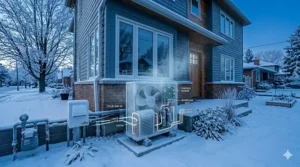
This is the most Canada-specific installation consideration — and the most overlooked. Heat pump outdoor units need clearance for airflow and must be elevated above your typical snow accumulation line. In Winnipeg or Ottawa, that means mounting the unit on a wall bracket or elevated pad so it sits at least 30–45 cm (12–18 inches) above the ground. Snowdrifts blocking the outdoor unit coil will cause efficiency drops and potential damage. Your installer should account for this at placement.
Step 5: Annual Spring Maintenance
After the first winter, have a technician verify refrigerant charge, clean the outdoor coil, and inspect the condensate drain. Road salt and grit stirred up by plowing accumulates on outdoor coil fins during Canadian winters and reduces airflow. A $100–$150 CAD annual maintenance visit keeps your system at peak efficiency and catches small issues before they become expensive repairs.
Canadian Buyer Profiles: Which System Is Right for You?
Not every Canadian home is the same — and not every hybrid heat pump system is the right fit for every situation. Here’s how I’d match three common Canadian buyer profiles to the systems in this guide.
Profile 1: The Toronto Suburban Family
Situation: A family of four in a 2,000-square-foot detached home in Mississauga. Existing forced-air gas furnace (7 years old), central ductwork in good condition. Annual heating bill around $2,200 CAD. Goal: reduce gas bills and qualify for Enbridge and federal rebates.
Best match: Daikin Fit DX20VC + 96% AFUE Furnace (dual fuel system). The existing ductwork makes a central ducted system the obvious choice. The Daikin’s automatic fuel switching handles the GTA’s variable winters — heat pump for October through February’s moderate days, furnace for the -15°C stretches. Stack the Enbridge Home Efficiency Rebate ($2,000–$5,000) with the federal Greener Homes Loan (up to $40,000 interest-free) and the Ontario Home Renovation Savings Program (up to $7,500) and you’re looking at a substantial reduction in your net install cost.
Profile 2: The Vancouver Island Cottage Owner
Situation: A couple with a 700-square-foot seasonal cottage near Nanaimo. Currently heated with baseboard electric heaters. No ductwork. Open May–October, occasional winter visits. Budget: under $3,000 CAD for the unit.
Best match: Senville SENL 12,000 BTU (Amazon.ca). Vancouver Island rarely sees sustained temperatures below -10°C, which is well within the Senville’s operating range. The 110V operation means no panel upgrade at the cottage. In a hybrid configuration, the existing baseboard heaters serve as backup during the rare cold snap. Buy the unit on Amazon.ca, hire a local HVAC tech for the refrigerant connection (half a day’s work), and you’ve got a heating and cooling solution for roughly $1,500–$2,500 CAD all-in.
Profile 3: The Calgary New Build Buyer
Situation: A professional buying a newly built detached home in Calgary’s southeast. The builder has roughed in ductwork. Client wants the best performance money can buy and intends to stay 15+ years. Budget: flexible up to $20,000 CAD installed.
Best match: Mitsubishi Zuba-Central in hybrid configuration with a 96% AFUE high-efficiency gas furnace. Calgary’s winters regularly hit -30°C, and no electric-only heat pump handles that reliably. The Zuba’s -30°C operating capability means the gas furnace only kicks in for the genuinely extreme nights — maybe 10–15 nights per year — rather than throughout January and February. Long-term gas savings are substantial, and the 12-year Mitsubishi warranty provides peace of mind over that 15-year ownership horizon.
How to Choose a Hybrid Heat Pump System in Canada: 7 Key Criteria
Shopping for a hybrid heat pump system in Canada is fundamentally different from shopping in the US or Europe because our climate demands are more extreme and our rebate landscape is uniquely layered. Here’s how to evaluate your options without getting sold on specs that don’t matter in practice.
1. Cold-Climate Rating (-25°C or Better for Most Canadians)
This is the first filter, full stop. Any heat pump rated only to -10°C or -15°C is a partial solution in most of Canada. Look for HSPF2 ratings above 9.0 and a rated heating capacity at -15°C that covers at least 70% of your home’s design heat load. The system should be listed on Natural Resources Canada’s cold-climate heat pump product list to qualify for federal rebates.
2. COP at -15°C (Not Just COP at 8.3°C)
Manufacturers love to advertise COP (Coefficient of Performance) at mild outdoor temperatures. Ask your contractor specifically for the COP at -15°C — which is the Canadian winter reality. A good cold-climate heat pump maintains a COP of 2.0–2.5 at -15°C. Below 1.5, you’re approaching the efficiency of electric resistance heat, and the economics of running the heat pump over the gas furnace become unfavourable.
3. Dual-Fuel Thermostat Compatibility
Some heat pumps use proprietary communication protocols that only work with the brand’s own thermostat. If you want to use an Ecobee or Honeywell smart thermostat for better scheduling and remote control, confirm compatibility before purchasing. Most Canadian homeowners benefit enormously from smart thermostat scheduling — especially for setback temperatures during the workday.
4. Rebate Eligibility (This Changes the Math Significantly)
Not all heat pumps qualify for all rebate programs. The Canada Greener Homes Loan (up to $40,000 CAD, interest-free) requires the equipment to be on NRCan’s approved product list. Provincial programs like Ontario’s Home Renovation Savings (up to $7,500) and BC’s CleanBC (up to $19,000) have their own equipment lists. Always confirm rebate eligibility before signing a contract, not after installation.
5. Installer Network in Your Area
A Mitsubishi Zuba-Central is the best heat pump in Canada — if there’s a certified MEQ installer within a reasonable distance. If you’re in a smaller city or rural area, a Bosch IDS or Daikin system with a broader installer network might actually perform better for you in practice because maintenance and warranty service are more accessible.
6. Existing Fuel Infrastructure
If you have a natural gas line and a relatively new high-efficiency furnace, a dual fuel heat pump system is almost always the right answer — you’re not abandoning infrastructure that still has useful life. If you’re currently heating with oil or propane, the math changes: the Oil to Heat Pump Affordability Program (OHPA) offers up to $10,000 CAD for households switching from oil, making a full electric heat pump system potentially more economical long-term.
7. Warranty and Service Coverage in Canada
Cross-border warranty issues are real. Some US-marketed heat pump brands provide excellent warranty coverage in the US but have thin Canadian dealer networks. Mitsubishi, Daikin, Fujitsu, and Napoleon all have genuine Canadian support infrastructure. Always ask: “If the compressor fails in year 3, who services this in my city?” Get a name and phone number, not a URL.
Hybrid Heat Pump vs. Traditional Gas Furnace: An Honest Canadian Comparison
| Feature | Hybrid Heat Pump System | Traditional Gas Furnace Only |
|---|---|---|
| Annual heating cost (avg. Canadian home) | $900–$1,400 CAD | $1,800–$2,800 CAD |
| Carbon emissions | 40–60% lower | Baseline |
| Performance at -30°C | Heat pump + furnace backup | Full capacity |
| Installation cost | $10,000–$20,000 CAD | $4,000–$8,000 CAD |
| Available rebates (2026) | Up to $12,000+ CAD | Minimal |
| Cooling capability | Yes (heat pump) | No (separate AC needed) |
| System life | 15–20 years | 20–25 years |
| Best For | Energy savings + comfort | Budget install, extreme cold focus |
The comparison above tells a nuanced story that deserves interpretation. The hybrid system’s higher installation cost looks daunting until you factor in two things: the rebates (which can cut net cost by $5,000–$12,000 CAD in provinces like Ontario and BC) and the elimination of a separate central air conditioner (which would typically add $3,000–$6,000 CAD to a furnace-only setup). On a true all-in basis, a hybrid system often costs less than the combined furnace + AC alternative — while delivering substantially lower operating costs over its lifetime.
For a typical Ontario family spending $2,200 CAD annually on gas heat today, the hybrid system’s projected annual cost of $950–$1,200 CAD represents savings of $1,000–$1,250 CAD per year. At that rate, after rebates, a hybrid system pays for itself in 6–9 years — and then runs for another decade in pure savings territory.
✨ Don’t Miss These Exclusive Deals!
🔍 Ready to upgrade your home heating? Click on any highlighted product to check current pricing and availability on Amazon.ca for ductless mini-splits, smart thermostats, and accessories. Start saving on your heating bills this Canadian winter!
What to Expect: Real-World Hybrid Heating Performance in Canadian Conditions
Here’s what the spec sheets don’t communicate: how a hybrid heat pump system feels to live with through a full Canadian heating cycle.
Autumn (October–November): This is where hybrid systems shine brightest. Temperatures in the 0°C to 10°C range are peak heat pump efficiency territory. The heat pump runs almost continuously at low capacity, delivering gentle, consistent warmth. Your gas furnace doesn’t fire once. Energy bills drop noticeably compared to a furnace that cycles on and off. The transition from cooling to heating is seamless — the same system that was providing air conditioning in September is now providing heat with zero changeover required.
Early Winter (December–January mild periods): The heat pump continues as the primary source. Modern cold-climate units like the Mitsubishi Zuba or Daikin Fit maintain strong efficiency down to -15°C. You might notice the system working harder on particularly cold nights — slightly more fan noise, more frequent defrost cycles — but comfort is maintained. The automatic fuel switching occasionally brings the furnace in for 15–20 minute top-up cycles on the coldest days.
Deep Winter (-20°C and below): This is where the hybrid system’s dual-fuel design earns its keep. At extreme temperatures, the heat pump’s efficiency advantage over gas narrows or disappears, and the system automatically hands primary heating over to the furnace. You won’t notice this handoff — the thermostat handles it invisibly. What you will notice is that your home stays warm in conditions that might stress an electric-only heat pump. This is the night a heat pump-only home owner is anxiously watching the temperature gauge; in a hybrid home, you’re sleeping soundly.
Spring (March–April): The heat pump reclaims primary heating duties as temperatures moderate. In Canada, this shoulder season can be frustratingly unpredictable — 15°C one week, -5°C the next. The hybrid system handles these swings automatically, always choosing the most efficient heat source for current conditions without any input from you.
The practical takeaway: a properly configured hybrid heat pump system is less work to live with than a furnace alone. You stop thinking about heating because it just works, adapting to Canadian conditions without asking anything of you.
Hybrid Heating Energy Savings: The Real Canadian Numbers
Let’s talk dollars — in CAD, specific to Canadian conditions, because the American numbers you’ll find in most articles don’t apply here.
A typical Ontario detached home (circa 2000, 175 m² / 1,880 sq.ft., mid-efficiency gas furnace) spends approximately $2,000–$2,600 CAD annually on home heating. That breaks down to roughly:
- October–November: $180–$250
- December–February: $900–$1,400
- March–April: $200–$300
Install a hybrid heat pump system, set the balance point at -15°C, and configure a dual-fuel smart thermostat. The new breakdown looks approximately like:
- October–November: $70–$110 (heat pump, high efficiency)
- December–February: $550–$850 (mix of heat pump and gas)
- March–April: $80–$120 (heat pump)
Total annual savings: $800–$1,300 CAD per year, depending on your local gas and hydro rates.
In Alberta, where electricity costs more relative to gas, the savings are more modest — perhaps $400–$700 CAD annually. In Quebec or BC, where hydro is cheaper, savings can exceed $1,500 CAD per year.
Over a 15-year system life, at $900 average annual savings, that’s $13,500 CAD in cumulative savings — before accounting for rebates that reduce your upfront cost. The hybrid system isn’t just an environmental choice in 2026; it’s a financially sound one.
Heat Pump Rebates Canada 2026: The Complete Funding Picture
This is the section you want to bookmark. The Canadian rebate landscape in 2026 is the most generous it’s ever been — and properly stacking these programs can dramatically reduce your net cost.
Federal Programs
Canada Greener Homes Loan: The Greener Homes Grant’s successor, offering interest-free financing of up to $40,000 CAD over a 10-year term for qualifying energy retrofits including heat pump installations. Requires a pre- and post-retrofit EnerGuide evaluation. Available to owner-occupied homes across Canada. Details at nrcan.gc.ca.
Oil to Heat Pump Affordability Program (OHPA): Up to $10,000 CAD for homeowners in Atlantic Canada and rural Quebec switching from oil heating to a heat pump. This is a grant, not a loan — no repayment required.
Provincial Programs
Ontario: The Home Renovation Savings Program (HRSP) offers up to $7,500 CAD for cold-climate air-source heat pumps and up to $12,000 for ground-source systems. The Enbridge Home Efficiency Rebate adds $2,000–$5,000 for natural gas customers. Combined with the federal Greener Homes Loan, Ontario homeowners can access over $12,000 CAD in stacked incentives.
British Columbia: CleanBC provides up to $19,000 CAD for heat pump installations, with income-qualified tiers and bonus amounts for switching from gas or oil. BC also offers a “top-up” for participating municipalities. FortisBC has historically offered over $10,000 in rebates for dual fuel system installations.
Quebec: LogisVert through Hydro-Québec covers heat pump installations. Rénoclimat addresses related insulation upgrades. Check hydroquebec.com for current amounts as these programs update frequently.
Atlantic Canada: Nova Scotia Power offers $1,000–$2,500 in rebates. The OHPA is particularly valuable in NB, NS, PEI, and Newfoundland where oil heating is prevalent.
Prairie Provinces: Alberta, Saskatchewan, and Manitoba have fewer provincial programs, but the federal Greener Homes Loan applies everywhere. Some municipalities offer additional incentives — check with your local utility.
⚠️ Program availability and amounts change frequently. Always verify current eligibility at nrcan.gc.ca and your provincial utility website before committing to an installation.
Common Mistakes Canadian Buyers Make with Hybrid Heat Pump Systems
After reviewing hundreds of Canadian HVAC projects, these are the mistakes I see most often — and the ones that cost the most to fix after the fact.
Mistake 1: Buying a Non-Cold-Climate Rated Heat Pump This happens when buyers find a deal on a heat pump rated to -10°C and assume it will work fine in their Ontario or Alberta home. Below its rated temperature, the unit either shuts down or operates at such reduced capacity that the furnace runs almost constantly anyway — defeating the purpose. Always verify the rated operating temperature, not just the advertised “cold climate” branding.
Mistake 2: Ignoring the Balance Point Setting Leaving the balance point at the factory default (often -10°C or -12°C) means your gas furnace fires up earlier than necessary. In Quebec, where hydro is cheap, this unnecessarily increases gas consumption. Have the installer calculate your economic balance point based on your specific utility rates.
Mistake 3: Skipping the EnerGuide Pre-Retrofit Evaluation To access the Canada Greener Homes Loan and most provincial programs, you need a pre-retrofit EnerGuide evaluation before any work begins. Homeowners who skip this step — usually to save the $400–$600 evaluation fee — disqualify themselves from programs worth thousands. The evaluation fee itself is partially reimbursed by most programs. Do it first.
Mistake 4: Choosing an Installer Without Cold-Climate Experience An HVAC contractor who primarily installs central air conditioners may not correctly size or configure a cold-climate heat pump for Canadian conditions. Ask specifically: “How many hybrid heat pump systems have you installed, and do you have references in my climate zone?” A good cold-climate installer in Ottawa or Calgary will have immediate, confident answers.
Mistake 5: Neglecting Outdoor Unit Placement for Canadian Winters As covered in the setup guide above — elevating the outdoor unit above snow accumulation lines is essential in most of Canada. An improperly mounted unit sitting in a February snowdrift loses significant efficiency and risks coil damage. This is a $50 installation decision that saves hundreds in efficiency losses over the system’s life.
FAQ: Hybrid Heat Pump Systems in Canada
❓ What is a hybrid heat pump system in Canada?
❓ How much does it cost to install a hybrid heat pump in Canada?
❓ What heat pump rebates are available in Canada in 2026?
❓ Can a heat pump work in Canadian winters at -30°C?
❓ Are mini-split heat pumps from Amazon.ca eligible for Canadian rebates?
Conclusion: The Smart Canadian Heating Choice for 2026
The case for a hybrid heat pump system in Canada has never been stronger than it is in 2026. The technology has matured to the point where cold-climate operation is reliable — not a marketing promise, but an engineering reality that homeowners from Halifax to Calgary are experiencing firsthand. The rebate programs have never been more generous. And with gas prices trending upward and electricity increasingly generated from renewable sources, the long-term trajectory of operating costs favours the heat pump side of the equation.
The decision isn’t really whether to move toward a hybrid system — it’s when and which one. For most Canadian homeowners with existing gas furnaces and ductwork, a ducted hybrid system (Mitsubishi Zuba-Central, Daikin Fit, or Bosch IDS) delivers the best combination of performance, rebate eligibility, and long-term operating cost. For homes without ductwork, or for supplemental heating in garages and cottages, ductless options from Fujitsu, Senville, or Ecojay — with the latter two available directly on Amazon.ca — provide accessible, effective entry points.
Start with the rebates. Book an EnerGuide evaluation before doing anything else — it’s the key that unlocks federal and most provincial funding. Then get three quotes from licensed installers with cold-climate experience. You’ll make a better decision with competing bids in hand.
Your home heating system is one of the most significant investments you’ll make as a Canadian homeowner. In 2026, a well-chosen hybrid heat pump system isn’t just the environmentally responsible choice — it’s the financially intelligent one. 🇨🇦
✨ Don’t Miss These Exclusive Deals!
🔍 Take your home comfort to the next level. Click on any highlighted product in this article to check current pricing and availability on Amazon.ca. Your winter-ready, energy-efficient home starts with a single click!
Recommended for You
- Ductless Heat Pump Installation: 7 Best Picks for Canada (2026)
- Best Cold Climate Heat Pump -25°C in Canada 2026: 7 Top Picks That Actually Work
- Best EPA Certified Wood Stove in Canada 2026: 7 Top Picks
Disclaimer: This article contains affiliate links. As an Amazon Associate, I earn from qualifying purchases. If you purchase products through these links, we may earn a small commission at no additional cost to you.
✨ Found this helpful? Share it with your friends! 💬🤗
