
In This Article
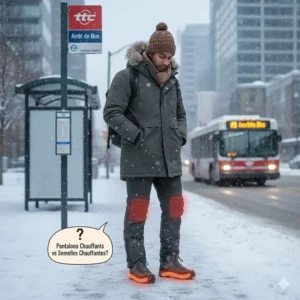
If you’ve ever stood at a frigid bus stop in Winnipeg during a -40°C wind chill, or watched the Northern Lights in Yellowknife while your legs went numb, you know the struggle is real. Traditional winter layers can only do so much when Canadian temperatures plummet to extremes that make even polar bears reconsider their life choices.
The heated pants vs heated insoles debate has become increasingly relevant as technology advances and more Canadians discover the benefits of battery-powered warmth. According to Health Canada, exposure to extreme cold can lead to hypothermia and frostbite, with wind chill values below -27 significantly increasing health risks. With over 125 cold-related deaths occurring annually in Canada, staying warm isn’t just about comfort—it’s about safety.
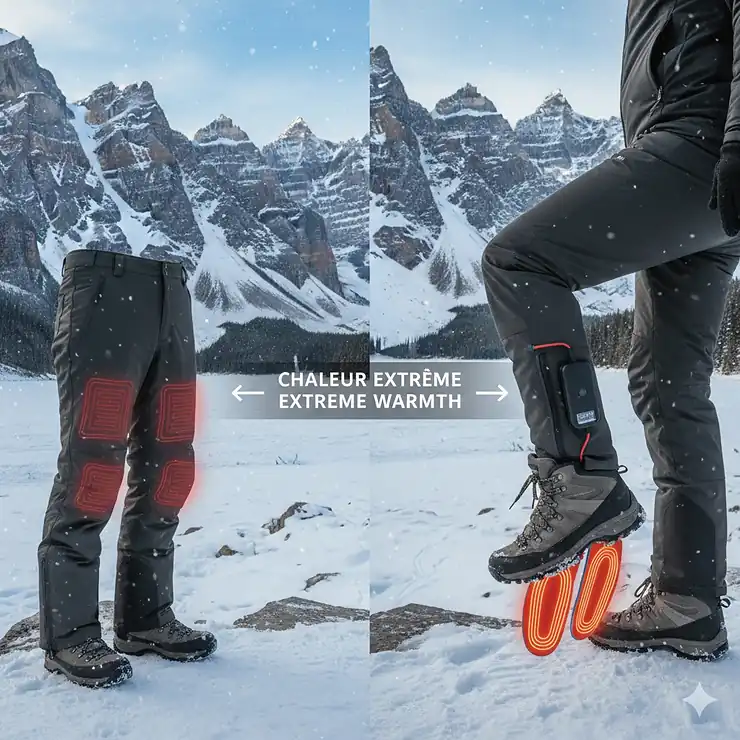
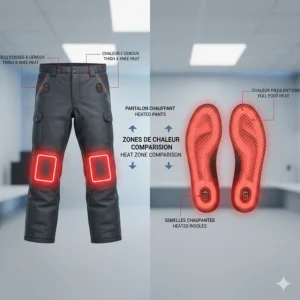
So which solution truly delivers? Heated pants provide comprehensive lower body warmth through carbon fiber heating elements woven into the fabric, while heated insoles focus specifically on keeping your feet toasty from the ground up. Both have their merits, and choosing between heated pants vs heated insoles depends on your specific needs, budget, and typical winter activities. In this comprehensive guide, I’ll break down everything you need to know to make the smartest choice for Canadian winters, complete with real product recommendations available on Amazon.ca, detailed comparisons, and insider tips you won’t find anywhere else.
Quick Comparison: Heated Pants vs Heated Insoles at a Glance
| Feature | Heated Pants | Heated Insoles |
|---|---|---|
| Coverage Area | Full lower body (thighs, knees, seat) | Feet and toes only |
| Average Price (CAD) | $120-$280 | $40-$90 |
| Battery Life | 2-6 hours depending on setting | 3-8 hours depending on model |
| Best For | Outdoor workers, ice fishing, skiing | Daily commuters, office workers, hunters |
| Portability | Bulkier, worn as outer/mid layer | Ultra-portable, fits in any footwear |
| Versatility | Limited to winter activities | Works with all shoes/boots year-round |
| Maintenance | Machine washable (battery removed) | Spot cleaning, some models washable |
💬 Just one click – help others make better buying decisions too!😊
Top 7 Heated Pants and Insoles: Expert Analysis for Canadians
1. DEWBU Heated Pants with 12V Battery Pack
The DEWBU stands out as a premium choice for serious outdoor enthusiasts facing brutal Canadian winters. These softshell pants feature fleece lining and strategically placed heating zones across the thighs, knees, and seat area.
Key Specifications:
- 12V rechargeable battery system (higher voltage = more heat)
- 3 temperature settings (High: 55°C, Medium: 45°C, Low: 35°C)
- Water-resistant softshell exterior
Price Range: $210-$250 CAD on Amazon.ca
Canadian buyers consistently praise the DEWBU’s ability to handle extreme prairie winters. One Edmonton reviewer mentioned wearing them for 8-hour ice fishing sessions at -35°C with remarkable comfort. The 12V system provides noticeably more heat than standard 7.4V models.
✅ Pros:
- Superior heating power for extreme cold
- Durable construction withstands rough outdoor use
- Long battery life (4-6 hours on medium)
❌ Cons:
- Higher price point
- Battery pack adds slight bulk
2. FERNIDA Heated Pants USB Powered
For Canadians seeking budget-friendly warmth, the FERNIDA Heated Pants deliver impressive value. Made from a spandex-polyester blend, these thickened fleece pants work as both base layers and casual winter trousers.
Key Specifications:
- 8 carbon fiber heating pads for extensive coverage
- USB 5V power bank compatible (not included)
- 3 adjustable temperature levels with indicator lights
Price Range: $70-$95 CAD
Reviews from Toronto and Vancouver users highlight the versatility—they work equally well under ski pants or as lounge wear during power outages (a growing concern in Canadian winters). The 5V USB system means you can use any standard power bank you already own.
✅ Pros:
- Excellent value for money
- Compatible with common USB power banks
- Stylish enough for everyday wear
❌ Cons:
- Power bank sold separately
- Less heating power than 12V models
3. ActionHeat 5V Battery Heated Insoles with Remote
Moving to the insole category, the ActionHeat Rechargeable Heated Insoles represent the gold standard. These feature built-in batteries and wireless remote control, eliminating the need for external battery packs.
Key Specifications:
- 3V signal technology with integrated rechargeable battery
- 3 heat settings controlled via remote or back-of-insole button
- Cut-to-fit sizing for custom fit
Price Range: $85-$95 CAD on Amazon.ca
Calgary construction workers and Montreal transit users rave about the convenience—no wires, no external batteries, just slip them in your boots and go. The remote control is particularly handy when you’re bundled up and don’t want to remove your boots to adjust temperature.
✅ Pros:
- Wireless remote is incredibly convenient
- No external battery pack to manage
- Fits most footwear styles
❌ Cons:
- Shorter battery life than wired models (4-6 hours)
- Higher price for insoles
4. Dr.Warm Heated Insoles Rechargeable
The Dr.Warm Heated Insoles offer exceptional battery life and are particularly popular among Canadian hunters and winter hikers who need all-day warmth.
Key Specifications:
- 2200mAh lithium batteries (one per insole)
- Wireless Bluetooth app control
- 3-7 hours battery life depending on heat setting
Price Range: $70-$90 CAD
Saskatchewan hunters appreciate the 7+ hour runtime on low settings, perfect for dawn-to-dusk expeditions. The Bluetooth app lets you monitor battery levels and adjust heat without bending down—crucial when you’re in a deer blind.
✅ Pros:
- Excellent battery life
- Smart app integration
- Good heat distribution under toes
❌ Cons:
- App connectivity occasionally glitches in extreme cold
- Slightly thicker than some competitors
5. CYCYHEAT Heated Pants for Outdoor Work
Designed specifically for outdoor workers, the CYCYHEAT Heated Pants combine durability with practical features that matter on Canadian job sites.
Key Specifications:
- 7.4V battery system (sweet spot between power and efficiency)
- Reinforced knees and seat
- 4-zone heating (thighs, knees)
Price Range: $155-$180 CAD
Reviews from construction workers in Ottawa and roofers in Halifax highlight the reinforced construction that stands up to daily work wear while keeping legs warm during breaks. The 7.4V battery strikes a good balance—more powerful than USB models but more efficient than 12V systems.
✅ Pros:
- Work-tough construction
- Balanced power-to-efficiency ratio
- Practical pocket placement for tools
❌ Cons:
- Less stylish than casual models
- Heating zones don’t extend to lower legs
6. Thermacell ProFLEX Heated Insoles
The Thermacell ProFLEX insoles revolutionized the heated insole market with their unique heat pod system that clips to your boot laces, keeping batteries away from moisture.
Key Specifications:
- External battery pack clips to laces
- 5 hours on high, 9+ hours on low
- Durable for outdoor use
Price Range: $88-$110 CAD
Ice anglers across Ontario and Alberta consistently rank these as the most reliable for wet environments. The external battery placement means even if you step in slush, your heat source stays dry. The longer battery life is achieved through efficient heat distribution.
✅ Pros:
- Battery protected from moisture
- Industry-leading battery life
- Very durable construction
❌ Cons:
- External battery clip can be awkward with some boot styles
- Pricier than basic models
7. SNOW DEER Heated Insoles Budget Pick
For Canadians just testing heated insoles or needing backup warmth, the SNOW DEER Heated Insoles provide solid performance at an accessible price.
Key Specifications:
- USB rechargeable (5V)
- 3 temperature levels
- Basic but functional design
Price Range: $40-$60 CAD on Amazon.ca
Students in Quebec City and budget-conscious commuters appreciate having a reliable heated option that doesn’t break the bank. While they lack advanced features, they deliver on the core promise: warm feet in Canadian winters.
✅ Pros:
- Very affordable entry point
- Simple, reliable operation
- USB charging (use your phone charger)
❌ Cons:
- Shorter battery life (3-4 hours)
- Less sophisticated heat distribution
Understanding the Technology: How Heated Gear Actually Works
The magic behind heated pants vs heated insoles lies in carbon fiber heating technology, which has revolutionized cold-weather apparel. Carbon fiber heating elements are ultra-thin filaments—stronger than steel yet flexible like fabric—that generate heat through electrical resistance.
When electric current from a rechargeable battery flows through these carbon fibers, they heat up in 10-30 seconds thanks to the Joule effect. This same principle powers everything from your electric stove to spacecraft components. The carbon fibers in heated clothing typically reach temperatures between 35°C and 55°C, depending on your selected setting.
Why Carbon Fiber Beats Traditional Heating Methods:
Modern heated apparel uses carbon fiber rather than metal wires for several compelling reasons. Carbon fiber heating elements weigh approximately 80% less than equivalent metal alternatives while delivering superior performance. The thermal conversion rate reaches up to 98%, meaning almost no energy is wasted as the battery power becomes heat. Unlike rigid metal wires that can break with repeated bending, carbon fibers move naturally with your body and withstand hundreds of heating and cooling cycles without degradation.
The heating zones in pants are strategically positioned across major muscle groups—thighs, knees, and seat—following the body’s thermal map to maximize warmth while conserving battery power. Heated insoles concentrate heating elements under the toes and forefoot, where cold sensitivity is highest and where heat can radiate through the entire foot.
Most heated products use 5V, 7.4V, or 12V battery systems. The voltage determines heating power: 5V systems are safe, efficient, and use common USB power banks; 7.4V systems offer the best balance of power and battery life for most users; while 12V systems provide maximum heat output for extreme conditions. All operate well below the 50-volt threshold that poses electrical safety concerns, making them completely safe even in wet conditions.
Heated Pants vs Heated Insoles: Which Solves YOUR Cold Problem?
When Heated Pants Are Your Best Choice
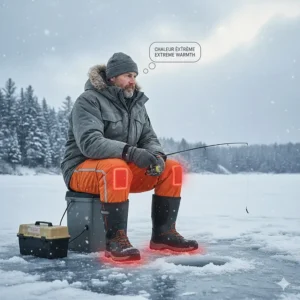
Choose heated pants when you need full lower body protection or engage in stationary cold-weather activities. Ice fishing, hunting from a blind, construction work with extended outdoor exposure, skiing or snowboarding (warmth during lift rides), or attending outdoor sporting events all benefit more from heated pants.
I watched my brother-in-law transform his ice fishing experience after switching to heated pants. Instead of calling it quits after 3-4 hours due to numb legs, he now comfortably fishes all day in Manitoba’s brutal cold. The comprehensive warmth from thigh to knee makes a massive difference when you’re sitting relatively still for hours.
Heated pants excel in extreme cold (below -20°C) where your entire lower body needs protection, situations where you’re mostly stationary, activities requiring weatherproof outer layers, and when maximum coverage justifies the higher cost.
When Heated Insoles Make More Sense
Opt for heated insoles when foot warmth is your primary concern or you need maximum versatility. Daily commuting (standing at transit stops), office work (cold feet at desk), winter hiking where upper body stays warm, hunting while walking/moving, and year-round cold foot issues all favour insoles.
My colleague suffers from Raynaud’s syndrome, making her feet perpetually cold even in heated offices. Heated insoles changed her life—she can wear them discreetly in professional shoes at work, then switch them to winter boots for her commute. This versatility is impossible with heated pants.
Heated insoles shine when you’re already moving (generating body heat), need discreet warmth solution, want to use them with multiple types of footwear, or have chronic cold feet year-round.
The Hybrid Approach: Why Not Both?
For serious outdoor enthusiasts, combining heated pants vs heated insoles isn’t overkill—it’s smart layering. The Canadian Centre for Occupational Health and Safety emphasizes that protecting extremities and core body temperature together provides the best cold injury prevention.
Consider the hybrid approach if you regularly face extreme cold (below -30°C), engage in multi-hour outdoor activities, work outdoors professionally, or have medical conditions affecting circulation. Many Canadian ice anglers and backcountry skiers swear by the combination, especially during the coldest months of January and February.
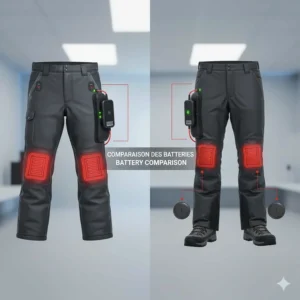
Cost Comparison: Heated Pants vs Insulated Alternatives
Breaking Down the Real Investment
| Solution | Initial Cost (CAD) | Battery Replacement | 5-Year Total Cost |
|---|---|---|---|
| Premium Heated Pants | $200-$280 | $50/2 years | $330-$430 |
| Budget Heated Pants | $70-$120 | $30/2 years | $130-$210 |
| Premium Heated Insoles | $85-$110 | $40/3 years | $125-$170 |
| Budget Heated Insoles | $40-$60 | $25/3 years | $65-$110 |
| Traditional Insulated Pants | $100-$300 | None | $100-$300 |
| Wool Base Layers + Insulated Pants | $150-$250 | Minimal | $160-$280 |
While heated options have higher upfront costs and ongoing battery expenses, they offer benefits traditional insulation cannot match. You can actually reduce insulation bulk (wearing lighter layers overall), adjust warmth on demand for changing conditions, and maintain warmth even when wet or stationary.
The Hidden Savings
Canadian outdoor workers report interesting economic benefits beyond the purchase price. Reduced sick days from cold exposure, extended outdoor work hours (getting more done per day), and lower heating costs at home (staying active outdoors instead of hiding inside) all contribute to long-term value.
One Yukon carpenter calculated that his heated pants paid for themselves in one winter through increased productivity—he could work outdoor framing jobs 2-3 hours longer per day, completing projects faster and taking on more contracts.
Are Heated Pants Better Than Traditional Layers?
The heated pants vs traditional insulation debate involves more nuance than simple “better” or “worse.” Each approach has distinct advantages depending on your situation.
Advantages of Heated Pants Over Traditional Layers
Active temperature control is the game-changer. With traditional insulation, you’re locked into whatever warmth level you dressed for. Start moving and generate body heat? You overheat and sweat, which then makes you colder when you stop. Heated pants let you dial down when active, dial up when stationary—eliminating the sweating problem that plagues traditional layering systems.
Reduced bulk means better mobility. Achieving equivalent warmth with traditional insulation requires multiple layers of wool, fleece, and insulated pants. This bulk restricts movement—try climbing into an ice fishing hut or kneeling to work on equipment while wearing 4 layers on your legs. Heated pants provide similar or better warmth with half the bulk.
Performance when wet separates heated from traditional. According to the Canadian Red Cross, wet clothing is a leading cause of hypothermia because water rapidly absorbs body heat. Traditional insulation loses 90% of its effectiveness when wet. Heated pants keep generating warmth even with damp fabric, maintaining your core temperature when traditional layers have already failed you.
When Traditional Layers Still Win
However, traditional insulation retains important advantages. No batteries mean no charging, no dead batteries at inconvenient moments, and no additional weight from battery packs. Traditional gear is generally more durable and requires less maintenance—no electrical components to fail or waterproof. For activities where weight matters (like winter backpacking), eliminating battery weight can be significant.
Traditional insulation also offers unlimited duration. Heated pants run 2-8 hours depending on battery and setting, but quality insulated pants work indefinitely. For multi-day backcountry trips without power access, traditional layers are more reliable.
The Smart Hybrid Strategy
Most experienced Canadian outdoor enthusiasts don’t choose one over the other—they use both strategically. Base layers and mid-layers provide passive insulation and wick moisture, while heated pants add controllable warmth for stationary periods. This combination gives you the reliability of traditional insulation plus the adaptability of active heating.
Think of heated pants as supplemental heating, not complete replacement. They excel at keeping you comfortable in situations where traditional layers alone would leave you cold, but you still need proper base layers and insulation as your foundation.
Heated Clothing Brands Canada: Who Makes the Best Gear?
Top Brands Available on Amazon.ca
DEWBU leads the premium heated pants category in Canada, known for durable construction and powerful 12V systems. Their products consistently receive 4+ star ratings from Canadian buyers and show up frequently in ice fishing and construction worker reviews. Price range typically falls between $180-$280 CAD.
ActionHeat dominates the heated insole market with their innovative wireless remote systems and integrated batteries. Used by U.S. and Canadian military personnel, their gear balances performance with user-friendly features. Expect to pay $85-$110 CAD for their insole products.
FERNIDA and CYCYHEAT represent the best mid-range heated pants options. Both offer solid carbon fiber heating technology at accessible prices ($70-$180 CAD), making heated gear available to budget-conscious Canadians without sacrificing too much quality.
Dr.Warm specializes in heated insoles with exceptional battery life and smart connectivity. Their Bluetooth-enabled models appeal to tech-savvy users who want to monitor and control their warmth via smartphone app. Products range $70-$90 CAD.
Emerging Canadian Brands to Watch
While most heated gear sold in Canada comes from international manufacturers, a few Canadian companies are entering the market with products designed specifically for our climate. Fieldsheer Canada offers premium Bluetooth-enabled heated insoles designed for harsh Canadian conditions, with local customer service and warranty support.
The advantage of supporting Canadian brands extends beyond patriotism—warranty claims, returns, and customer service become much simpler when dealing with companies based in Canada rather than international sellers on Amazon.
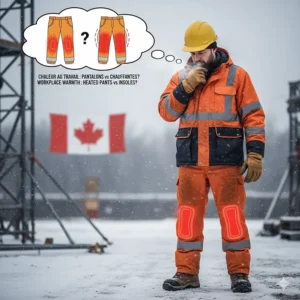
Battery Life Reality Check: How Long Does the Warmth Last?
Understanding Real-World Battery Performance
Manufacturer claims and real-world performance often diverge, especially in extreme Canadian cold. Batteries perform worse in frigid temperatures—a lithium-ion battery at -20°C delivers approximately 20-30% less capacity than at room temperature.
Realistic Battery Life Expectations:
5V USB systems (heated insoles, budget pants) deliver 2-4 hours on high, 4-6 hours on medium, and 5-8 hours on low. However, at -30°C actual performance drops to roughly 1.5-3 hours, 3-4.5 hours, and 4-6 hours respectively.
7.4V systems (mid-range heated pants) provide 3-5 hours on high, 5-7 hours on medium, and 7-10 hours on low under normal conditions. In extreme cold, expect 2.5-4 hours, 4-5.5 hours, and 5.5-7.5 hours.
12V systems (premium heated pants) offer 2-4 hours on high, 4-6 hours on medium, and 6-9 hours on low. Cold weather reduces this to approximately 1.5-3 hours, 3-5 hours, and 5-7 hours.
Maximizing Battery Performance in Canadian Winters
Keep batteries warm before use—store them inside your jacket or in a pocket until you’re ready to activate heating. Cold batteries start with reduced capacity. Pre-warm them against your body for 10-15 minutes before use to maximize performance.
Start on medium, not high. You’ll extend battery life significantly and often find medium provides adequate warmth once your body adjusts. Save high setting for extreme moments when you really need it.
Carry backup batteries for extended outdoor sessions. Most manufacturers sell additional batteries ($30-$60 CAD), and having a spare in your inside jacket pocket (kept warm) means you can swap out and continue heating all day.
Charge batteries to 100% before cold exposure and recharge as soon as possible after use to maintain battery health. Store batteries at 40-50% charge if not using for extended periods to maximize lifespan.
Heated Gear vs Traditional Winter Wear: The Comfort Factor
Beyond temperature specifications and battery life, the subjective comfort experience separates heated gear from traditional winter wear in ways that matter tremendously during long cold exposures.
The Psychological Warmth Advantage
Knowing you can adjust your warmth level creates mental comfort that’s hard to quantify but very real. When you’re committed to a 6-hour outdoor hockey tournament in Fort McMurray and wearing only traditional layers, the nagging worry “what if I get too cold” affects your enjoyment. With heated pants, you have a backup plan—dial up the heat if needed. This psychological security improves the entire experience.
Mobility and Flexibility Differences
Traditional heavy insulation restricts movement in ways you don’t fully appreciate until you’ve tried heated alternatives. Ice fishing in bulky insulated bibs means awkward waddling and difficulty bending. Heated pants with lighter outer layers feel liberating by comparison—you can move naturally while staying equally warm.
One Manitoba ice fisher described the difference perfectly: “With my old setup, I felt like the Michelin Man. With heated pants and a single fleece layer, I can actually move around my ice hut without bumping into everything.”
Moisture Management Reality
The Canada Safety Council emphasizes that wet clothing dramatically increases hypothermia risk. Here’s where heated gear shows its biggest practical advantage over traditional layers.
Traditional insulation works by trapping warm air. But this same trapped air holds moisture from sweat. Once you stop moving and stop generating body heat, that trapped moisture turns from minor annoyance to serious problem. Heated pants generate warmth regardless of moisture level—even slightly damp carbon fiber elements still heat effectively.
✨ Don’t Miss These Exclusive Deals!
🔍 Take your winter warmth to the next level with these carefully selected products available in Canada. Click on any highlighted item to check current pricing and availability on Amazon.ca. These tools will help you create authentic comfort your family will love!
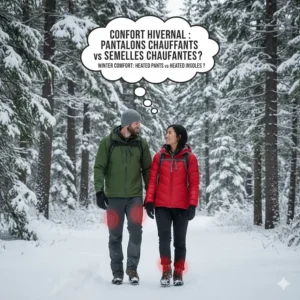
Safety Considerations for Heated Clothing in Canada
Understanding Electrical Safety
A common worry about heated pants vs heated insoles involves electrical safety, particularly given Canadian winter conditions often include snow, slush, and moisture. The good news: modern heated clothing is remarkably safe.
All heated apparel sold in Canada operates at low voltages—5V, 7.4V, or 12V maximum. For context, it takes roughly 50 volts to potentially cause harm to humans under worst-case scenarios. Even the most powerful 12V heated pants deliver less than one-quarter of that voltage. You cannot be electrocuted by properly functioning heated clothing, even if wearing it in rain or snow.
The heating elements are insulated and waterproofed according to IPX4 or higher standards (resistant to water splashing from any direction). Battery compartments feature sealed connections and water-resistant zippers. While you shouldn’t submerge your heated pants with batteries installed, normal winter precipitation poses zero electrical hazard.
Preventing Burns and Overheating
While electrical shock isn’t a concern, overheating is something to monitor. Heated clothing typically maxes out at 55-60°C—warm but well below burn temperatures. However, problems can occur if you fall asleep wearing heated gear on high settings or if you have reduced sensation due to diabetes, neuropathy, or other medical conditions.
Start on low or medium settings and increase only if needed. High settings are for extreme cold exposure, not continuous use. Never use heated clothing while sleeping unless specifically designed for that purpose. People with diabetes, circulatory issues, or reduced skin sensation should consult their doctor before using heated apparel and should avoid high heat settings.
Regularly inspect heating elements and wiring for damage—frayed wires or torn fabric exposing heating elements should be repaired before further use. Damaged electrical components can create hot spots that might burn fabric or skin.
Canadian Winter-Specific Risks
The Public Health Agency of Canada reports that cold-related injuries have increased between 2011 and 2023, with hypothermia and frostbite being the most common. Over-reliance on heated gear without proper backup layers poses risks if batteries die unexpectedly.
Never depend solely on heated clothing as your only protection against cold. Always wear appropriate base layers and insulation. Think of heated gear as supplemental warmth, not your primary defense against hypothermia. If your heated pants battery dies during a backcountry ski tour, you need enough traditional insulation to safely return to shelter.
Washing and Maintenance: Keeping Your Heated Gear Working
Proper Washing Procedures
Both heated pants and heated insoles require more careful cleaning than traditional clothing, but it’s not complicated if you follow the right steps.
For Heated Pants:
Always remove batteries and battery packs before washing—this is non-negotiable. Water will permanently damage battery cells. Disconnect all electrical connectors and seal them with provided protective caps to keep moisture out.
Most heated pants are machine washable on gentle cycle with cold water. Use mild detergent and avoid fabric softeners, which can coat carbon fiber elements and reduce heating efficiency. Place pants in a mesh laundry bag to protect wiring and heating elements from snagging.
Air dry only—never use a dryer, which can damage heating elements and shrink fabric around wiring. Hang pants in a well-ventilated area away from direct heat. Ensure completely dry before reconnecting batteries (24-48 hours drying time is typical).
For Heated Insoles:
Most insoles require spot cleaning rather than full washing. Wipe down surfaces with damp cloth and mild soap, then air dry thoroughly. Some models claim to be machine washable, but hand cleaning is gentler and extends lifespan.
Remove insoles from boots after each use to allow complete drying—this prevents bacterial growth and odour while also extending battery life (moisture damages electronics over time).
Battery Care for Canadian Climates
Battery maintenance significantly affects the lifespan and performance of heated gear. Lithium-ion batteries degrade faster when stored at temperature extremes.
Store batteries at room temperature when not in use. Don’t leave them in your garage, car, or shed during winter—freezing temperatures permanently reduce battery capacity. Equally, don’t store near heat sources like radiators.
Charge batteries to 40-50% for long-term storage (more than two weeks without use). Fully charged or fully depleted batteries degrade faster over time. Recharge every 3-4 months during off-season to maintain battery health.
Replace batteries showing significantly reduced runtime (less than 60% of original performance). Trying to squeeze extra seasons from dying batteries leaves you with unreliable warmth when you need it most. Most heated clothing batteries last 300-500 charge cycles with proper care—roughly 2-4 winter seasons of regular use.
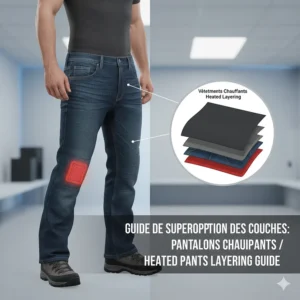
FAQ: Your Heated Pants vs Heated Insoles Questions Answered
❓ Are heated pants worth it for Canadian winters?
❓ How long do heated insoles last on one charge in extreme cold?
❓ Can you wash heated pants in a washing machine?
❓ What voltage heated clothing is best for Canadian winters?
❓ Are heated pants safe to wear in wet snow and rain?
Conclusion: Making Your Choice in the Heated Pants vs Heated Insoles Debate
After examining everything from carbon fiber technology to real-world Canadian user experiences, the heated pants vs heated insoles question doesn’t have a single universal answer—it depends on your specific needs, typical winter activities, and budget.
Choose heated pants if you regularly face extreme cold below -20°C, engage in stationary outdoor activities like ice fishing or hunting, work outdoors professionally, or want comprehensive lower body warmth during activities like skiing. The higher investment ($120-$280 CAD) makes sense when full leg protection is non-negotiable. Brands like DEWBU and CYCYHEAT deliver reliable performance that Canadian winters demand.
Choose heated insoles if you primarily need warm feet during commutes, suffer from chronic cold feet, want versatile warmth that works with multiple footwear types, or prefer a more budget-friendly option ($40-$110 CAD). Products like ActionHeat and Dr.Warm insoles offer excellent performance and convenience that fits seamlessly into daily Canadian life.
For serious winter warriors facing the worst that Canadian weather can throw at you, the hybrid approach combining both heated pants and insoles provides unbeatable protection. While the combined investment approaches $300-$400 CAD, the ability to dial in perfect comfort at any temperature makes harsh winter conditions actually enjoyable rather than merely survivable.
Remember that heated gear supplements—never replaces—proper base layers and traditional insulation. As Health Canada emphasizes, protecting yourself from extreme cold requires multiple strategies working together. Use heated technology as your secret weapon against Canadian winter’s fiercest assaults, but always maintain backup warmth through traditional layers.
Whatever you choose, the technology has matured to the point where heated clothing is no longer experimental gear for extreme athletes—it’s practical, reliable equipment that makes Canadian winters more comfortable for everyone. With proper care, your heated pants or insoles will serve you faithfully through many winters, turning brutal cold into manageable conditions with the press of a button.
Recommended for You
- 7 Best Heated Snowboard Pants Canada 2026
- Best Heated Snowmobile Pants Canada 2026: Top 7 Reviews & Guide
- 7 Best Heated Leggings Canada 2026 | Battery & USB Reviews
Disclaimer: This article contains affiliate links to Amazon.ca. If you purchase products through these links, we may earn a small commission at no additional cost to you.
✨ Found this helpful? Share it with your friends! 💬🤗
