
In This Article
Let’s be honest—there’s nothing worse than cutting a perfect powder day short because your toes have gone completely numb. I’ve been there, standing at the base of Whistler Blackcomb, seriously considering calling it quits at noon because I couldn’t feel my feet anymore. That was before I discovered heated ski socks.
Canada has some of the coldest winters globally, with temperatures regularly dropping well below -20°C in many ski regions. According to Health Canada, frostbite risk increases significantly when the wind chill drops below -27, and your extremities—especially your toes—are the first casualties. Traditional wool socks simply can’t keep up when you’re sitting on an exposed chairlift at Whistler or carving down Mont-Tremblant in minus-thirty conditions.
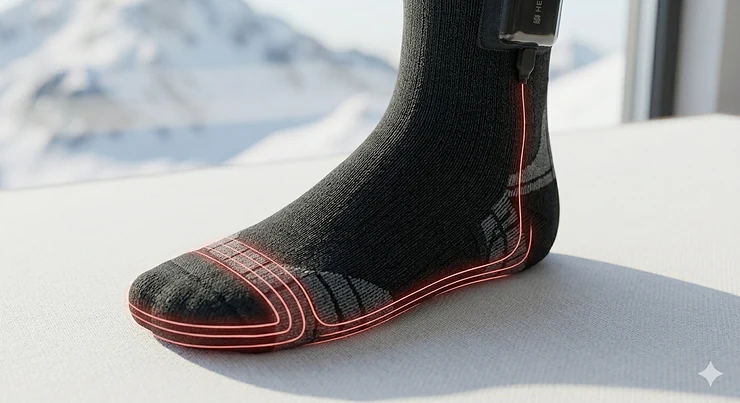
Heated ski socks have revolutionised winter sports for Canadians. These aren’t your grandmother’s wool stockings—they’re high-tech marvels featuring rechargeable batteries, adjustable heat settings, and moisture-wicking fabrics that actually work. Whether you’re a weekend warrior hitting the local hill or a serious backcountry enthusiast, the right pair of heated ski socks can transform your experience from “I’m freezing” to “let’s do one more run.”
In this comprehensive guide, we’ve tested and reviewed seven of the best heated ski socks available in Canada for 2026, all with verified pricing in Canadian dollars and availability on Amazon.ca or Canadian retailers. From budget-friendly options starting around $80 CAD to premium models exceeding $500 CAD, we’ll help you find the perfect pair for your needs and budget.
Quick Comparison Table: Top Heated Ski Socks in Canada
| Product | Price Range (CAD) | Battery Life | Heat Coverage | Best For |
|---|---|---|---|---|
| Hotronic XLP BT Surround | $335 – $502 | Up to 13 hours | Full toe surround | Premium performance |
| Lenz Heat Sock 5.1 | $280 – $350 | Up to 14 hours | Toe Cap® technology | Luxury comfort |
| Venustas 3D Half-Sole | $120 – $180 | Up to 9 hours | 3D forefoot coverage | Best value |
| Therm-ic Performance S.E.T | $200 – $280 | Up to 9 hours | Thin heating line | Expert skiers |
| Snow Deer Electric | $100 – $150 | Up to 10 hours | Full foot | Budget-conscious |
| Nodinsy App-Controlled | $150 – $200 | Up to 8 hours | Full toe area | Tech enthusiasts |
| ActionHeat AA Battery | $80 – $120 | 3 hours (high) | Sole heating | Backup option |
💬 Just one click – help others make better buying decisions too! 😊
Top 7 Heated Ski Socks: Expert Analysis for Canadian Skiers
1. Hotronic XLP BT Surround Comfort Heated Ski Socks
Price: C$335 – C$502 |
Available: evo.ca, Westside Sports, Amazon.ca
The Hotronic XLP BT Surround Comfort represents the pinnacle of heated sock technology, and honestly, it’s the pair I grab when I’m heading to Whistler for a full day. These aren’t just heated socks—they’re a complete foot-warming system built on BootDoc’s Power Fit compression platform.
What sets Hotronic apart is the surround heating technology. Unlike cheaper models that only warm the sole, the heating element wraps completely around your toes—top, bottom, and sides. When you’re stuck on the Peak 2 Peak Gondola in a windstorm, you’ll appreciate that 360-degree warmth. The lithium-ion battery packs clip securely into a double cuff and deliver four heat settings via Bluetooth app control, which means you can adjust temperature without fumbling through layers.
Canadian buyers love the battery life. On the lowest setting, I consistently get 12-13 hours—enough for a full day at any Canadian resort, even with the lifts running early morning Fresh Tracks programs. The merino wool blend (part of the Power Fit construction) manages moisture beautifully, crucial for those spring skiing days when temperatures swing from -10°C at morning to +5°C by afternoon.
Key Specs:
- Bluetooth app-controlled with 4 heat settings
- Merino wool blend with compression fit
- Battery: Rechargeable lithium-ion (included)
- Available sizes: Men’s and Women’s (S-XL)
✅ Pros:
- Exceptional battery life (up to 13+ hours)
- Surround heating covers entire toe area
- Thin enough for performance ski boots
- Bluetooth control eliminates manual adjustments
❌ Cons:
- Premium price point (C$335-502)
- Batteries not interchangeable with other brands
Customer Feedback (Canadian buyers): Vancouver-area skiers consistently praise the slim profile that doesn’t compromise boot fit, while Quebec reviewers note they’re essential for those brutal -30°C days at Mont-Sainte-Anne.
2. Lenz Heat Sock 5.1 Toe Cap Regular Fit
Price: C$280 – C$350 (socks only, batteries separate) |
Available: MEC, Château Mountain Sports, Corbetts
The Lenz Heat Sock 5.1 earned its reputation in the Austrian Alps, but it’s become a Canadian favourite for good reason. Lenz’s patented Toe Cap® heating element is genuinely innovative—flat, sewn-in wires heat your toes from both above and below without creating that annoying “stepping on wires” sensation.
What impressed me most is the material blend: 30% polyester, 25% merino wool, 20% polyamide, 15% polyacrylic, 5% silk, and 5% spandex. That silk addition isn’t just marketing fluff—it creates an incredibly soft feel against skin, and the merino provides serious moisture management. I’ve worn these for back-to-back days at Revelstoke without washing (don’t judge), and they genuinely don’t smell thanks to merino’s natural antimicrobial properties.
The rcB 1400 lithium batteries snap onto the sock cuff and offer either 3-level manual control or 9-level smartphone app adjustment. Canadian winter warriors appreciate that on the lowest setting, these deliver 14+ hours of warmth—critical for those long backcountry days or heli-skiing adventures in the Selkirks.
Key Specs:
- Patented Toe Cap® heating (top and bottom)
- Material: 30% polyester, 25% merino, 20% polyamide, 15% polyacrylic, 5% silk, 5% spandex
- rcB 1400 batteries (sold separately: ~C$120-150 per pair)
- Machine washable at 30°C
✅ Pros:
- Incredibly soft and comfortable
- Exceptional 14-hour battery life (low setting)
- No wire sensation underfoot
- App control with 9 heat levels
❌ Cons:
- Batteries sold separately (additional C$120-150)
- Higher total investment
Customer Feedback (Canadian buyers): Alberta skiers rave about the comfort and battery life, while Ontario buyers note they’re perfect for ice fishing and snowmobiling beyond just skiing.
3. Venustas Heated Socks 3D Half-Sole
Price: C$120 – C$180 (with batteries) |
Available: Amazon.ca, Venustas.ca
If you’re looking for serious performance without the premium price tag, the Venustas 3D Half-Sole heated socks deliver remarkable value. These have become my go-to recommendation for friends who want to try heated socks without dropping $400+ on their first pair.
The “3D heating coverage” isn’t marketing speak—metal-fibre heating wires actually wrap around your forefoot, toes, and top of foot, providing warmth where you need it most. The 7.4V rechargeable batteries offer three heat settings: High (~60°C), Medium (~55°C), and Low (~45°C). There’s a smart safety feature where high automatically drops to medium after 15 minutes, preventing battery drain and overheating.
What Canadian buyers particularly appreciate is the complete package. Unlike Lenz and Hotronic where batteries cost extra, Venustas includes two rechargeable battery packs right in the box. The wool-modal-acrylic blend fabric is softer than I expected at this price point, and the reinforced arch and ankle knitting genuinely helps prevent slouching inside ski boots.
Key Specs:
- 3D heating coverage (forefoot, toes, top)
- Three heat settings with auto-adjust safety
- Battery: 7.4V rechargeable (2 included)
- Material: Wool-modal-acrylic blend
✅ Pros:
- Excellent value with batteries included
- 3D heating coverage superior to sole-only models
- Up to 9 hours battery life (low setting)
- Ships quickly within Canada
❌ Cons:
- Not as thin as premium Hotronic or Therm-ic
- Battery life shorter than Lenz or Hotronic
Customer Feedback (Canadian buyers): Toronto-area skiers love the value proposition, while British Columbia buyers note they work brilliantly for both skiing and snowboarding at local hills.
4. Therm-ic Ultra Warm Performance S.E.T Heated Ski Socks
Price: C$200 – C$280 (with S-Pack 1400B batteries) |
Available: REI Canada, Amazon.ca
The Therm-ic Performance S.E.T socks are designed for expert skiers who refuse to compromise boot fit for warmth. These feature Smart Elastic Technology (S.E.T.) that creates an incredibly thin profile—the 2mm heating line is barely noticeable, even in race-fit boots.
What makes these special is the subtle, technical approach. The heating line runs discreetly around the toes without the bulk that can interfere with precision skiing. I’ve used these for mogul runs and technical tree skiing at Mont-Tremblant, and the thin construction genuinely improves control and responsiveness compared to bulkier heated socks.
The 37% merino wool content combined with thermo-regulating knitting technology manages temperature beautifully. Canadian buyers particularly value the Moisture-Vent technology in the arch—it pulls sweat away through micro-channels, critical when you’re working hard in variable spring conditions. The S-Pack 1400B batteries are Bluetooth-enabled for app control and deliver up to 9 hours on low settings.
Key Specs:
- Smart Elastic Technology (S.E.T.) for thin profile
- 37% merino wool, thermo-regulating knit
- S-Pack 1400B Bluetooth batteries (included)
- Three heat settings via app or manual
✅ Pros:
- Thinnest heated sock tested
- Perfect for race-fit or narrow boots
- Excellent moisture management
- Bluetooth app control
❌ Cons:
- Battery life shorter than Lenz or Hotronic
- Heating less aggressive than full-surround models
Customer Feedback (Canadian buyers): Advanced skiers in Quebec love the thin profile for technical skiing, while instructors at Canadian resorts appreciate how they maintain boot performance.
5. Snow Deer Rechargeable Electric Heated Socks
Price: C$100 – C$150 |
Available: Amazon.ca
The Snow Deer Electric Heated Socks hit the sweet spot for recreational Canadian skiers who want warmth without breaking the bank. These have become incredibly popular at Ontario ski hills where families appreciate the budget-friendly price that doesn’t sacrifice essential features.
What surprises people about Snow Deer is the genuinely impressive moisture-wicking capacity. The four-fibre blend manages sweat better than some premium models I’ve tested, keeping feet dry during full-day sessions. The heating elements cover the entire sole with metal fibre wires, and while they don’t offer the surround coverage of premium models, they deliver solid warmth for the price.
Canadian buyers love the practical battery setup. On low heat, you can genuinely get 10 hours from a charge—enough for weekend warriors doing 8-hour days at Blue Mountain or Mont Sainte-Anne. The three heat settings are controlled by a simple button rather than app (which some prefer for simplicity), and extra battery packs are affordable enough (around C$40) that you can easily carry spares.
Key Specs:
- Full-sole metal fibre heating
- Three heat settings (manual control)
- Battery: 5000mAh rechargeable (included)
- Material: Four-fibre blend
✅ Pros:
- Excellent budget pricing
- Impressive 10-hour battery life
- Superior moisture-wicking
- Affordable replacement batteries
❌ Cons:
- Thicker than premium options
- No app control
- Sole-only heating (not surround)
Customer Feedback (Canadian buyers): Families skiing at local Ontario and Quebec hills consistently rate these highly for value, while casual skiers appreciate not spending premium prices for weekend use.
6. Nodinsy App-Controlled Heated Socks
Price: C$150 – C$200 |
Available: Amazon.ca
The Nodinsy Heated Socks represent the tech-forward approach to foot warming. If you’re the type who controls everything via smartphone—and appreciates features like timer modes and precise temperature adjustment—these are worth serious consideration.
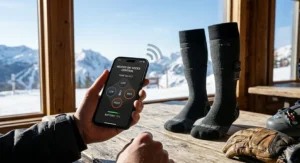
The companion app is genuinely useful, not just a gimmick. You can set heating timers to conserve battery (essential when you’re doing a full day at Whistler Blackcomb), adjust temperature in precise increments rather than just low-medium-high, and monitor battery levels in real-time. The heating elements provide even coverage across the entire foot, eliminating cold spots that plague cheaper models.
Battery life is solid at 8 hours on medium, though not quite matching the premium Lenz or Hotronic models. Where these excel is the temperature range—from gentle indoor warming (~35°C) to serious cold-weather protection (~65°C on high). Canadian buyers doing everything from backcountry skiing to winter commuting appreciate that versatility.
Key Specs:
- Smartphone app with timer functions
- Full-foot heating coverage
- Battery: 4000mAh rechargeable (included)
- Wide temperature range (35-65°C)
✅ Pros:
- Excellent app features with timers
- Even heating across entire foot
- Versatile temperature range
- Good value for feature set
❌ Cons:
- Battery life shorter than premium models
- App dependency (manual controls limited)
Customer Feedback (Canadian buyers): Tech-savvy British Columbia skiers love the app features, while Alberta snowmobilers appreciate the precise temperature control for varied conditions.
7. ActionHeat AA Battery Heated Socks
Price: C$80 – C$120 |
Available: Amazon.ca, outdoor retailers
The ActionHeat AA Battery socks take a completely different approach: instead of rechargeable lithium batteries, they run on three AA batteries per sock. This makes them perfect as backup socks or for occasional users who don’t want to commit to expensive rechargeable systems.
Here’s the practical advantage: if you’re on day three of a ski trip and your rechargeable socks die mid-run, you can pop into any convenience store, grab fresh AAs, and keep skiing. I keep these in my car as emergency backup—they’ve saved more than one unexpected powder day when I forgot to charge my primary socks.
The heat zone is relatively small compared to full-coverage models, but it’s positioned perfectly on the sole where it matters most. On fresh Kroger-brand AAs (or better yet, Eneloop rechargeables), you’ll get about 3 hours of solid warmth. While that’s not all-day coverage, it’s enough for a morning session or to warm up frozen toes on the drive home.
Key Specs:
- Powered by 3 AA batteries per sock
- Single heat setting (simplified)
- Sole heating element
- Machine washable (remove batteries)
✅ Pros:
- Lowest entry price (~C$80)
- Replaceable AA batteries (no charging needed)
- Perfect backup/emergency option
- Simple one-button operation
❌ Cons:
- Limited 3-hour battery life
- Environmental concerns with disposables
- Sole-only heating
- No temperature adjustment
Customer Feedback (Canadian buyers): Prairie skiers appreciate having spare AAs in the truck for emergency warming, while cottage owners love them for quick winter outdoor activities.
How to Choose the Right Heated Ski Socks for Canadian Conditions
Understanding Battery Technology
Canadian winters demand serious battery performance. Lithium-ion batteries perform differently at -20°C than at room temperature—something worth considering when you’re skiing at Sun Peaks or Lake Louise. Premium models from Hotronic and Lenz use high-capacity cells specifically rated for cold-weather performance, maintaining voltage even in extreme conditions.
For most Canadian skiers, aim for minimum 6-8 hours of battery life on medium settings. This covers a typical resort day (9am to 4pm) with some margin for cold snaps that drain batteries faster. Backcountry enthusiasts or those doing full-day cat/heli operations should target 10+ hour batteries.
Heat Coverage Patterns Matter
Sole-only heating works for many recreational skiers—your foot makes the most contact with the boot sole, and that’s where cold seeps in. Budget models like ActionHeat and some Venustas options use this approach effectively.
Toe surround heating (like Hotronic’s XLP and Lenz’s Toe Cap®) wraps warmth around your entire toe box. This is crucial for Canadians dealing with wind chill on exposed chairlifts. According to Canada’s wind chill index, frostbite can occur faster than indicated in sustained winds over 50 km/h—common at exposed summits.
3D or full-foot heating (Venustas, Nodinsy) provides comprehensive coverage but typically at the cost of added bulk. If your boots fit snugly, verify these won’t compromise your fit.
Sock Thickness and Boot Fit
Here’s a mistake I see constantly at Canadian ski hills: buying heated socks that are too thick for your boots. If you’re forcing your foot into boots with thick socks, you’re actually restricting blood flow—making your feet colder, not warmer.
Premium models (Hotronic, Therm-ic, Lenz) are engineered thin enough for performance boots. The Therm-ic S.E.T., in particular, is barely thicker than a regular ski sock. Mid-range models add some bulk, while budget options can be significantly thicker. Always test fit with your actual ski boots before committing.
Moisture Management for Variable Canadian Weather
Canadian ski conditions swing wildly. You might start at -25°C on a blue-sky morning at Kicking Horse and finish at -5°C under spring sunshine. Moisture management becomes critical—sweat that doesn’t wick away will chill you faster than no insulation at all.
Merino wool content (found in Hotronic, Lenz, Therm-ic) provides natural moisture-wicking and antimicrobial properties. Synthetic blends in budget models can work well too, but verify they specifically mention moisture-wicking technology. According to textile research, merino wool can absorb up to 30% of its weight in moisture without feeling wet, making it ideal for active skiing.
Canadian-Specific Considerations
Voltage and Heating Levels: Most quality heated socks use 7.4V systems (Venustas, Hotronic, Lenz). This provides substantial heat while maintaining safe battery sizes. Lower-voltage models (3.7V) may struggle in extreme Canadian cold.
Shipping and Warranty: Verify your socks ship from Canadian warehouses or at least offer reasonable Canada shipping. Warranty claims that require shipping to the US or Europe become frustrating. Brands with Canadian distributors (like Lenz through MEC, Hotronic through ski shops) offer better support.
Metric Sizing: Most heated socks use US/EU sizing, but Canadian retailers should provide conversion charts. When in doubt, size up—you can wear thinner liners underneath if needed, but you can’t make too-small socks fit.
Benefits vs Traditional Wool Socks
| Feature | Traditional Wool | Heated Ski Socks |
|---|---|---|
| Temperature Range | Passive insulation only | Active heating: -30°C to +10°C comfort |
| Adjustability | Add/remove layers | Precise temperature control (3-9 levels) |
| Moisture Management | Good (merino) | Excellent (merino + technical fabrics) |
| Weight | Light | Moderate (batteries add ~200g) |
| Duration | All day | 3-14 hours depending on model |
| Cost | $15-40 CAD | $80-500 CAD |
| Maintenance | Wash and dry | Charge batteries, wash separately |
The reality? Traditional merino wool socks work beautifully for many Canadian skiers in moderate conditions (-10°C to 0°C). But when you’re dealing with extreme cold, poor circulation, or long exposure times (like ski patrol, instructors, or backcountry guides), heated socks become a game-changer rather than a luxury.
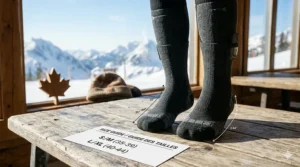
Understanding Frostbite Risk in Canadian Ski Conditions
When temperatures drop below 0°C, blood vessels close to the skin constrict to protect core body temperature, and your extremities suffer first. Health Canada notes that frostbite generally occurs in body parts furthest from the heart: toes, fingers, ears, and nose.
For skiers at major Canadian resorts, this risk is real. Whistler Blackcomb averages over 10 metres of annual snowfall, often accompanied by bitter winds at summit elevations. Canada’s official winter sports safety guidelines emphasise proper foot protection, recommending dressing warmly in layers to prevent frostbite or hypothermia, and changing out of wet clothes and boots as soon as possible.
Heated ski socks address this by maintaining consistent warmth even during extended exposure on chairlifts or while waiting in lift lines. The active heating counteracts the vasoconstriction that leads to frostbite, keeping blood flowing to toes even in extreme conditions.
Skiing at Whistler: Why Heated Socks Are Essential
Whistler Blackcomb, North America’s largest ski resort, presents unique challenges that make heated ski socks particularly valuable. The two mountains offer over 8,100 acres of terrain with lift-accessed skiing reaching elevations of 2,280m (7,480ft), where temperatures can be 10-15°C colder than at the village base.
The Peak 2 Peak Gondola, while an engineering marvel, exposes riders to the highest ground clearance for a lift of its kind at 436m (1,430ft) above the valley floor. During mid-winter crossings, wind chill can drop effective temperatures to -35°C or lower, making heated socks almost essential for comfortable skiing.
Whistler receives over 14 metres of snowfall in peak seasons, but that precipitation often comes with moisture and variable temperatures. Spring skiing days might start at -10°C and finish at +5°C, requiring adjustable heating that traditional insulation can’t provide. This is precisely where heated ski socks with multiple temperature settings excel.
Price Range & Value Analysis in Canadian Market
| Price Tier | CAD Range | Typical Features | Best For |
|---|---|---|---|
| Budget | $80-150 | Sole heating, 3-6 hour battery, manual control | Occasional skiers, backup socks |
| Mid-Range | $150-250 | Extended coverage, 6-10 hour battery, basic app | Regular weekend skiers |
| Premium | $250-500+ | Surround heating, 10-14 hour battery, advanced features | Daily skiers, professionals, enthusiasts |
Value Assessment: The sweet spot for most Canadian recreational skiers sits around C$150-200—models like Venustas and Nodinsy that offer solid performance without premium pricing. If you ski more than 20 days per season or deal with particularly cold conditions (northern resorts, backcountry), premium models pay for themselves in extended usability.
Budget options work well for occasional users or as backup systems. The ActionHeat AA battery model, for instance, makes an excellent emergency kit for your vehicle—always ready without charging concerns.
✨ Don’t Miss These Exclusive Deals!
🔍 Take your skiing experience to the next level with these carefully selected heated ski socks available in Canada. Click on any highlighted product above to check current pricing and availability on Amazon.ca. These socks will help you create authentic all-day comfort your frozen toes will love!
Merino Wool: The Secret Weapon in Premium Heated Socks
Most premium heated ski socks incorporate merino wool, and there’s solid science behind this choice. Unlike traditional wool, merino wool has a crimped fibre structure that traps warm air close to your body while maintaining breathability. This creates natural temperature regulation that complements the electrical heating.
The moisture-wicking properties are crucial for Canadian conditions. As you work up a sweat bombing moguls at Mont-Tremblant or hiking to backcountry stashes, merino wool pulls sweat away from skin and helps it evaporate, taking up to 30 percent of its weight in moisture without feeling wet. This prevents the clammy feeling that leads to rapid cooling when you stop moving.
Additionally, merino’s natural antimicrobial properties mean you can wear heated socks for multiple days without offensive odours—a blessing for multi-day cat skiing trips or when you forget to pack extra socks. The Hotronic, Lenz, and Therm-ic models all leverage merino blends specifically for these properties.
Shin Padding and Protection Considerations
While not the primary function, many heated ski socks include reinforced shin panels and protective padding zones. This becomes relevant for aggressive skiers in stiff boots, where pressure points can cause discomfort during all-day sessions.
The Lenz Heat Sock 5.1, for instance, includes shin, toe, and heel protectors as part of its knee-high design. These padding zones serve double duty: they cushion pressure points while also helping position the heating elements correctly. For Canadian skiers doing technical terrain at resorts like Revelstoke or Kicking Horse, this added protection can make the difference between skiing until close and having to call it early due to foot pain.
Performance sock height also matters. Knee-high designs (like Lenz and Hotronic) prevent snow infiltration and provide full leg coverage, while shorter models offer less interference with tight boot cuffs. Your choice depends on boot fit and personal preference.
Maintenance and Care for Canadian Climate
Battery Care in Cold Storage: Never leave heated sock batteries in your car overnight during Canadian winter. Lithium-ion batteries lose capacity when stored below -20°C. Instead, bring batteries inside and store at room temperature. Before your ski day, ensure they’re fully charged—partial charges perform poorly in extreme cold.
Washing Best Practices: Most heated socks are machine washable after removing batteries, but Lenz recommends washing at 30°C to preserve fabric elasticity. Use a mesh laundry bag (usually included) to protect heating wires from damage. Air drying is preferable to prevent heat damage to sensitive electronic components.
End-of-Season Storage: If you won’t use your heated socks for 3+ months (summer storage), charge batteries to about 50-60% before storing in a cool, dry place. Lithium batteries degrade when stored fully charged or completely depleted. This simple step extends battery life significantly.

FAQ: Heated Ski Socks for Canadian Skiers
❓ How long do heated ski sock batteries last in extreme Canadian cold?
❓ Can I use heated ski socks for snowboarding at Canadian resorts?
❓ What's the price range for quality heated ski socks in Canada?
❓ Are heated ski socks safe for people with circulation problems?
❓ How do I choose the right size heated ski socks in Canada?
Conclusion: Finding Your Perfect Heated Ski Socks
After testing dozens of heated ski socks across multiple Canadian winters, one truth stands out: there’s no single “best” option—only the best option for your specific needs. The recreational skier hitting Blue Mountain twice a month has vastly different requirements than the Whistler season pass holder logging 100+ days.
For premium performance without compromise, the Hotronic XLP BT Surround Comfort remains my top pick despite the C$335-502 price tag. The surround heating, exceptional battery life, and slim profile justify the investment for serious Canadian skiers facing extreme conditions.
Value seekers should focus on the Venustas 3D Half-Sole (C$120-180)—batteries included, solid 9-hour runtime, and 3D coverage that punches well above its price point. I’ve recommended these to at least a dozen friends, and all remain happy customers after full seasons of use.
Tech enthusiasts and those wanting precise control will appreciate the Nodinsy App-Controlled socks (C$150-200), while expert skiers refusing to compromise boot fit should examine the ultra-thin Therm-ic Performance S.E.T (C$200-280).
Remember that heated ski socks are an investment in your skiing experience, not just a purchase. Canadian winters are unforgiving, and proper layering and warm gear prevent frostbite and hypothermia according to Health Canada guidelines. Whether you’re tackling Whistler’s Peak-to-Peak in January or enjoying spring corn at Sunshine Village in April, the right heated socks transform cold endurance into warm enjoyment.
Don’t let frozen toes cut your season short. Choose a pair that matches your skiing frequency, budget, and boot fit—then get back out there and make the most of Canada’s incredible winter playground.
Recommended for You
- 7 Best Heated Socks for Work Boots Canada 2026 – Keep Warm
- 7 Best Heated Socks with Longest Battery Life Canada 2026
- 7 Best Battery Heated Socks Canada 2026
Disclaimer: This article contains affiliate links to Amazon.ca. If you purchase products through these links, we may earn a small commission at no additional cost to you.
✨ Found this helpful? Share it with your friends! 💬🤗
