

In This Article
When the thermometer drops to -30°C and you’re still waiting for that morning bus in Edmonton, or you’re halfway through a ski run at Whistler and your toes have gone numb, you start questioning your life choices. Cold feet aren’t just uncomfortable—they’re downright miserable. And if you’ve ever tried the old trick of stuffing chemical toe warmers into your boots, you know they’re bulky, inconsistent, and frankly, not that effective.
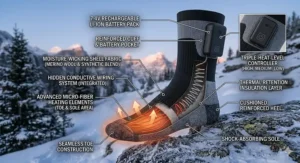
Battery heated socks have revolutionized winter comfort for Canadians. These aren’t your grandmother’s wool socks with a prayer attached. We’re talking about sophisticated wearable technology that wraps your feet in controlled, consistent warmth for hours on end. Whether you’re ice fishing on Lake Simcoe, snowmobiling through the Yukon, or just trying to survive your daily commute in Winnipeg, rechargeable heated socks Canada enthusiasts swear by can transform your winter experience.
According to Health Canada, feet are among the body parts most at risk for frostbite because they lose heat more rapidly and are often in contact with cold surfaces. When temperatures plummet below 0°C for extended periods, blood flow to your extremities becomes severely restricted, making proper foot protection absolutely critical for preventing cold-related injuries.
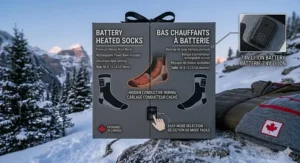
The technology behind battery heated socks combines thin carbon fiber or steel fiber heating elements woven directly into moisture-wicking fabric, powered by lightweight lithium-ion battery packs. Modern versions offer smartphone app control, multiple temperature zones, and battery life extending up to 14 hours on lower settings. For anyone spending significant time outdoors during Canadian winters—from construction workers to outdoor enthusiasts—these socks represent a game-changing solution to an age-old problem.
Quick Comparison Table: Top Battery Heated Socks at a Glance
| Product | Battery Capacity | Runtime | Heat Levels | Price (CAD) | Rating |
|---|---|---|---|---|---|
| Lenz 5.1 Toe Cap | rcB 1400 | Up to 14 hours | 9 via app | $280-$350 | 4.6/5 |
| Snow Deer Rechargeable | 5000mAh | 5-9 hours | 3 levels | $85-$110 | 4.4/5 |
| Venustas Heated Socks | 5000mAh | 3-8 hours | 3 levels | $75-$95 | 4.2/5 |
| MENOLY 2026 App Control | 8500mAh | Up to 13 hours | 4 levels + app | $95-$115 | 4.3/5 |
| Gerbing 7V Ultimate Wool | 7V | 3 hours (high) | 3 levels | $120-$145 | 4.5/5 |
| ActionHeat AA Battery | 3 AA batteries | 3 hours | 1 level | $65-$80 | 4.1/5 |
| GEARS Gen-X4 12V | 12V vehicle/portable | Continuous/6+ hrs | 3 levels | $110-$140 | 4.4/5 |
💬 Just one click – help others make better buying decisions too! 😊
✨ Don’t Miss These Exclusive Deals!
🔍 Take your winter comfort to the next level with these carefully selected products available in Canada. Click on any highlighted item to check current pricing and availability on Amazon.ca. These tools will help you create authentic warmth your family will love!
Top 7 Battery Heated Socks: Expert Analysis
1. Lenz 5.1 Toe Cap Regular Fit Heat Socks – Premium Choice for Serious Winter Athletes
If you’re looking for the Rolls-Royce of battery heated socks, the Lenz 5.1 delivers luxury and performance in equal measure. These Austrian-engineered marvels combine merino wool, silk, and functional fibers into a knee-high sock that feels as good as it performs.
Key Specifications:
- Material: 30% polyester, 25% merino wool, 20% polyamide, 15% polyacrylic, 5% silk, 5% spandex
- Battery: rcB 1400 lithium pack (sold separately)
- Runtime: Up to 14 hours on lowest setting
- Control: Free smartphone app with 9 heating levels or 3 levels on battery pack
The patented Toe Cap technology places a flat, sewn-in heating element specifically around your toes—where you need it most. The system connects via snap buttons to rechargeable lithium packs that weigh just 115 grams, so you barely notice them clipped to your sock cuff. Canadian buyers particularly appreciate the comfort cuff design that accommodates stronger calves without slipping, plus integrated shin protectors and reinforced toe and heel areas.
Price Range: $280-$350 CAD (socks only, batteries sold separately at $150-$200 CAD per pair)
Canadian Customer Feedback: Ontario skiers rave about the app control feature, noting they can adjust heat levels mid-run without removing gloves or fussing with battery buttons. The sophisticated material blend handles moisture beautifully during high-intensity activities.
✅ Pros: Exceptional battery life, premium materials, precise app control, comfortable fit for all calf sizes
❌ Cons: High initial investment, batteries sold separately, premium price point

2. Snow Deer Rechargeable Electric Heated Socks – Best Value for Everyday Use
The Snow Deer Rechargeable Electric Heated Socks hit that sweet spot between affordability and performance that Canadian buyers love. These socks offer gentler heat options perfect for people who find most heated socks uncomfortably warm.
Key Specifications:
- Temperature range: 100-131°F (gentler than most competitors)
- Battery: 5000mAh rechargeable lithium-ion
- Runtime: 5-9 hours depending on heat level
- Heating coverage: Toes and instep areas
The moisture-wicking material blend keeps feet dry even during active use, making these ideal for everything from winter hiking to working outdoors. The battery setup is user-friendly with clear LED indicators showing charge levels. At $85-$110 CAD on Amazon.ca, these represent excellent value for anyone who doesn’t need the absolute highest heat output.
Price Range: $85-$110 CAD
Canadian Customer Feedback: Vancouver outdoor workers appreciate that extra battery packs are affordable ($30-$40 CAD), making all-day use on higher settings economically feasible. The gentler heat range prevents hot spots and overheating complaints common with more aggressive models.
✅ Pros: Great value pricing, gentler heat options, excellent moisture-wicking, affordable replacement batteries
❌ Cons: Lower maximum temperature won’t suit extreme cold conditions, shorter battery life than premium options
3. Venustas Heated Socks – Superior Comfort and Full-Foot Warming
Venustas Heated Socks have earned their reputation through clever design choices that prioritize all-day comfort. The five-material blend feels soft against skin while efficiently managing moisture, and the seamlessly integrated heating wires eliminate that annoying “stepping on wires” sensation cheaper models suffer from.
Key Specifications:
- Material: Premium 5-material breathable blend
- Battery: 5000mAh rechargeable
- Runtime: 3-8 hours across three heat settings
- Heating coverage: Complete foot wraparound (toes, soles, and insteps)
What sets Venustas apart is the heating wire placement—they wrap around your entire foot rather than just concentrating on the bottom. This means every bit of skin gets heated evenly, eliminating cold spots that plague many competitors. The durability impresses too; these socks maintain their shape and heating performance through active use and multiple wash cycles.
Price Range: $75-$95 CAD
Canadian Customer Feedback: Alberta skiers and snowboarders note these socks stay securely in place during aggressive activities. The full-foot heating coverage makes a noticeable difference compared to toe-only heating systems, especially during long days on the slopes.
✅ Pros: Full-foot heating coverage, durable construction, comfortable material blend, stays in place during activity
❌ Cons: Mid-range battery life, temperature range might not satisfy extreme cold seekers
4. MENOLY 2026 Battery Heated Socks with App Control – Cutting-Edge Technology
The MENOLY 2026 represents the latest evolution in heated sock technology. With massive 8500mAh batteries and comprehensive smartphone app integration, these socks bring premium features at mid-tier pricing.
Key Specifications:
- Battery: 8500mAh (largest capacity in this comparison)
- Runtime: Up to 13 hours on low, 5 hours on maximum heat
- Material: 80% cotton, 12% polyester, 8% elastane
- Control: Smartphone app with detailed settings and timers
- Heating zones: Both instep and toe areas
The package includes everything you need: socks, two batteries, Type-C charging cable, washing bag, and comprehensive manual. The heating elements provide comprehensive coverage ensuring no cold spots, and the cotton-heavy material composition offers excellent absorbency and quick-drying properties. For Canadian winters, the app control feature is genuinely useful—no more pulling up pant legs to adjust settings when you’re bundled up.
Price Range: $95-$115 CAD
Canadian Customer Feedback: A Saskatoon ice fisherman reported sitting on frozen lakes for entire afternoons without foot discomfort. The exceptional battery life on low settings makes these perfect for extended outdoor activities where charging isn’t possible.
✅ Pros: Massive battery capacity, excellent runtime, comprehensive package, app control convenience
❌ Cons: Slightly heavier than competitors, cotton blend may not wick moisture as effectively as synthetic alternatives
5. Gerbing 7V Ultimate Wool Heated Socks – Best for Hunting and Outdoor Work
The Gerbing 7V Ultimate Wool socks are purpose-built for serious outdoor use where maximum warmth matters more than runtime. These rank among the warmest socks available, making them ideal for Canadian hunters, ice fishers, and anyone working extended hours in extreme cold.
Key Specifications:
- Material: 32% wool, 31% nylon, 20% acrylic, 12% polyester, 3% spandex, 2% rubber
- Battery: 7V rechargeable system
- Runtime: 3 hours on high heat setting
- Heat output: Among the highest available
The substantial wool content provides natural insulation even when the heating elements are off, and wool’s moisture-management properties keep feet comfortable during temperature fluctuations. These socks get genuinely toasty on the highest setting—perfect for stationary activities like tree stand hunting or ice fishing where you’re not generating body heat through movement.
Price Range: $120-$145 CAD
Canadian Customer Feedback: Ontario hunters appreciate the natural wool insulation working in tandem with electric heating. Even when batteries run low, the wool keeps feet reasonably warm. The high heat output makes these ideal for waiting in cold stands for hours.
✅ Pros: Exceptional heat output, natural wool insulation, excellent for stationary cold-weather activities
❌ Cons: Shorter battery life on high setting, higher price point, bulkier than synthetic alternatives
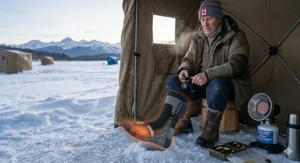
6. ActionHeat AA Battery Powered Heated Socks – Best Budget Option for Hunt Camps
The ActionHeat socks take a different approach—instead of rechargeable battery packs, they use standard AA batteries. This makes them perfect for remote locations like backcountry hunt camps, ice fishing huts, or anywhere without reliable charging access.
Key Specifications:
- Power: 3 AA batteries per sock (not included)
- Runtime: 3 hours on fresh batteries
- Heat level: Single setting (no adjustment)
- Heat zone: Compact toe area coverage
The heating zone is small but delivers heat comparable to hand warmers without the annoying bulge. You won’t feel heating elements underfoot—they’re positioned to warm without interfering with walking comfort. The single-setting simplicity means zero complexity: push the button and enjoy three hours of warm feet.
Price Range: $65-$80 CAD (batteries sold separately)
Canadian Customer Feedback: Quebec hunters and Manitoba ice fishermen love keeping spare AA batteries in their packs. When the heat runs out, pop in fresh batteries and keep going—no waiting for recharges. The recommendation is to invest in rechargeable AA batteries for cost-effectiveness.
✅ Pros: Swappable AA batteries for remote use, simple operation, affordable price, no recharging required in the field
❌ Cons: Limited heat zone, single temperature setting, ongoing battery costs, shorter runtime per battery set
7. GEARS Gen-X4 Electric Heated Socks – Best for Snowmobiling and ATV Use
The GEARS Gen-X4 socks are engineered specifically for powersports enthusiasts who can connect directly to their vehicle’s 12V battery system. For snowmobilers, ATV riders, and motorcyclists, these provide non-stop heat for as long as you’re connected.
Key Specifications:
- Power: 12V direct vehicle connection or portable battery (sold separately)
- Runtime: Continuous when vehicle-powered, 6+ hours with portable battery
- Heat levels: 3 adjustable settings
- Compatibility: Works with Firstgear, Gerbing, Warm & Safe, Tourmaster, and Venture Heat systems
The Gen-X4 socks integrate seamlessly into broader heated clothing systems. If you already own heated jacket liners or pants from compatible brands, these socks connect through the same controller. For Canadian powersports enthusiasts dealing with extended cold-weather rides, the continuous heating capability eliminates range anxiety entirely.
Price Range: $110-$140 CAD (portable battery kit $80-$120 additional)
Canadian Customer Feedback: Ontario snowmobilers praise the reliable heating during all-day trail rides. The ability to use the same battery system across multiple heated garments simplifies winter gear management. Saskatchewan ATV riders appreciate that these work perfectly for early-season hunting trips.
✅ Pros: Continuous heat when vehicle-connected, compatible with multiple heated clothing systems, excellent for powersports
❌ Cons: Requires vehicle connection or separate battery purchase, more complex setup than standalone systems
Understanding Battery Heated Socks Technology
The evolution of battery heated socks represents a fascinating intersection of textile engineering and battery technology. At their core, these products integrate three essential components: heating elements, power sources, and control systems working in perfect harmony to deliver consistent warmth.
Modern heated socks use ultra-thin carbon fiber or steel fiber heating elements woven directly into the sock fabric. These elements are typically concentrated in the toe area—the zone most vulnerable to cold-related injury. Advanced models extend heating coverage across the instep and even around the entire foot. The elements themselves are remarkably thin (often under 1mm), making them virtually undetectable when worn.
The power source is almost universally lithium-ion battery technology, similar to what powers your smartphone or laptop. These batteries operate at safe voltages between 3.7V and 12V—well below the 36V threshold considered hazardous to humans. Battery capacities range from 4000mAh to 8500mAh, with larger capacities providing longer runtimes but adding slight weight.
Control systems have evolved dramatically. Basic models offer simple on/off switches with 2-3 heat levels controlled by buttons on the battery pack. Premium systems now feature smartphone app integration allowing precise temperature control, programmable timers, and battery life monitoring. Some advanced models even include automatic temperature adjustment based on ambient conditions.
The Canadian Centre for Occupational Health and Safety explains that proper thermal protection for extremities is crucial because hands and feet lose heat more rapidly due to their higher surface area-to-volume ratio and are more likely to be in contact with colder surfaces than other body parts. This makes heated socks particularly valuable for Canadian workers and outdoor enthusiasts facing prolonged cold exposure.
Benefits of Battery Heated Socks vs Traditional Alternatives
Traditional cold-weather foot protection relies on passive insulation—thick wool socks, chemical toe warmers, or multiple sock layers. Each approach has limitations that battery heated socks elegantly overcome.
Chemical toe warmers generate heat through oxidation reactions, producing inconsistent temperatures that often peak too hot initially before fading. They’re bulky, creating pressure points in boots that reduce circulation (ironically making feet colder). Once activated, you can’t turn them off, wasting heat energy when you move indoors. Battery heated socks provide adjustable, controlled warmth exactly when and where you need it.
Thick wool socks offer excellent passive insulation but have practical limits. Beyond a certain thickness, they actually reduce circulation by creating too much pressure inside boots. Wet wool loses much of its insulating value, problematic during activities that generate foot sweat. Heated socks maintain warmth independent of moisture levels while using thinner materials that preserve proper boot fit and circulation.
Layering multiple thin socks creates similar circulation problems while still relying entirely on passive insulation. Your feet only stay warm while your body can generate sufficient heat—the moment you stop moving or your core temperature drops, cold feet follow rapidly. Active heating from battery systems maintains warmth regardless of activity level.
According to Public Health Agency of Canada data on cold-related injuries, frostbite represents 60.6% of cold-related hospitalizations in Canada, with nearly half occurring in adults aged 50 years and older. Between 2011-2023, cold-related hospitalizations increased by 7.7%, emphasizing the growing importance of proper winter protection including heated footwear technology.
The versatility also matters. Use them for morning commutes, turn them off at the office, then reactivate for evening activities—something impossible with chemical warmers or fixed insulation approaches.
Comparison Table: Battery Heated Socks vs Traditional Methods
| Method | Warmth Duration | Temperature Control | Adjustability | Reusability | Cost Over Time |
|---|---|---|---|---|---|
| Battery Heated Socks | 3-14 hours | Precise (multiple levels) | Fully adjustable | Unlimited | Low (rechargeable) |
| Chemical Toe Warmers | 3-8 hours | None (fixed peak) | No adjustment | Single-use | High (ongoing purchases) |
| Thick Wool Socks | Passive only | None | No adjustment | Unlimited | Low |
| Multiple Sock Layers | Passive only | Limited (add/remove layers) | Minimal | Unlimited | Low |
How to Choose the Right Battery Heated Socks for Canadian Winters
Selecting the perfect battery heated socks requires evaluating your specific use case against available features. Not all heated socks are created equal, and the premium option isn’t necessarily the best choice for your particular situation.
Activity Type Matters Most
Stationary activities like ice fishing, hunting from stands, or outdoor security work demand maximum heat output and extended battery life. You’re not generating body heat through movement, so the heating system carries the entire warming burden. Models like the Gerbing 7V Ultimate Wool or MENOLY 2026 with high heat output and long runtimes excel here.
Active pursuits like skiing, snowboarding, or winter hiking generate significant body heat through movement. You need moderate warming to supplement your body’s natural heat production without overheating. Models with gentler temperature ranges like the Snow Deer (100-131°F) prevent the uncomfortable hot spots that occur when high-output socks meet active bodies.
Powersports enthusiasts (snowmobiling, ATV riding) benefit from vehicle-connected systems like the GEARS Gen-X4 that provide continuous heating throughout extended rides. The wind chill at speed makes foot warming especially important, and direct vehicle power eliminates battery life concerns.
Battery Life vs Weight Trade-offs
Larger batteries provide longer runtimes but add weight and bulk. An 8500mAh battery might last 13 hours on low settings but weighs noticeably more than a 4000mAh unit. For day trips with charging access, smaller batteries offer better comfort. For multi-day backcountry adventures, invest in larger capacity or carry spare batteries.
Consider the realistic runtime you need. If your typical winter activity lasts 3-4 hours, an expensive 14-hour battery represents over-specification. Match battery capacity to your actual usage patterns.
Temperature Control Preferences
Simple models with 2-3 fixed heat levels offer reliability and easy operation—no fussy apps or complex controls. Ideal for users who want simplicity and don’t mind reaching down to adjust settings.
Smartphone app control adds convenience for users who frequently adjust temperatures or want programmable features. Particularly valuable when wearing multiple clothing layers that make accessing battery controls difficult. The trade-off is app dependency and slightly more complex operation.
Material Composition Considerations
Natural fiber blends (wool, cotton) provide superior comfort and breathability but typically cost more and may require more careful washing. Synthetic blends dry faster and often cost less but can feel less comfortable against skin during extended wear.
For Canadian conditions with extreme temperature swings (warm indoors, frigid outdoors), moisture management becomes critical. Look for materials specifically designed to wick sweat away from skin—trapped moisture dramatically accelerates heat loss even with active heating systems.
Budget Realities
Battery heated socks range from $65 to $350 CAD before considering replacement batteries. Establish your budget ceiling early, but remember that cheaper models often mean compromises in battery life, heating coverage, or material quality. A $85 pair that meets your needs outperforms a $250 pair with features you’ll never use.
Factor in long-term costs: Are replacement batteries affordable and available in Canada? Some premium European brands charge $150+ CAD for replacement battery packs, while others offer sub-$40 options. Check Canadian warranty support—dealing with warranty claims to overseas manufacturers adds frustration and delay.
Battery Pack Placement and Comfort Considerations
The physical integration of battery packs into heated sock systems significantly impacts comfort and usability—yet this aspect often gets overlooked until you’re actually wearing them.
Most battery heated socks position battery packs along the sock cuff, typically on the outside of your calf. This placement keeps batteries away from your foot and ankle where they’d interfere with boot fit and walking comfort. The batteries attach via snap buttons, USB connections, or integrated pockets depending on the design.
Battery pack weight ranges from 115 grams (Lenz) to 200+ grams for high-capacity models. While this might not sound significant, remember you’re carrying this weight on each calf throughout your activity. During active pursuits like hiking or skiing, lighter batteries reduce fatigue and eliminate the slight “tugging” sensation heavier packs can create.
The connection point between battery and heating elements requires attention. Quality designs use secure snap connections that don’t accidentally disconnect during activity. Cheaper models sometimes use loose USB connections that can pull apart when you’re moving vigorously, cutting heating mid-activity—frustrating when you’re halfway through a ski run.
Cable management also matters. The wire running from the battery to the heating elements in the sock should be flexible enough to move with your leg without pulling or creating pressure points. Socks designed for active sports typically route cables along the outside of the calf and ankle where they’re less likely to interfere with movement.
For Canadian winter conditions where you’re wearing boots over your socks, consider how the battery pack height affects boot fit. Some packs sit high enough on your calf to remain outside your boot, while others must fit inside. Packs that must fit inside boots can create pressure points or prevent proper boot closure—test fit with your actual winter boots before committing.
Battery removal for washing deserves consideration too. Snap-button systems (like Lenz) allow quick battery removal before laundering. Models with more complex connection systems add hassle to the washing process. Since you’ll wash these socks regularly, easy battery removal becomes a quality-of-life feature you’ll appreciate hundreds of times over their lifespan.

Temperature Zones and Heating Element Distribution
The strategic placement of heating elements within battery heated socks dramatically affects both warmth effectiveness and comfort. Understanding these design differences helps identify which models best match your needs.
Toe-Only Heating
The most common and economical approach concentrates heating elements exclusively in the toe area—where cold typically strikes first and hardest. Toe-only heating works well for moderate cold conditions and activities where your feet generate some body heat through movement. Models like the ActionHeat use this approach effectively, delivering targeted warmth without the complexity of multi-zone systems.
The advantage is efficiency: focusing all heating energy on the coldest zone maximizes warmth per battery watt. The limitation is obvious—your instep, heel, and ankle remain reliant on passive insulation from the sock material itself.
Toe and Instep Coverage
Mid-range models extend heating elements from toes across the instep (top of foot). This expanded coverage eliminates the common complaint about “warm toes but cold feet elsewhere.” The additional heating area requires more power, typically resulting in shorter battery life compared to toe-only models at equivalent battery capacities.
Models like the Snow Deer and MENOLY 2026 use this approach, striking a balance between comprehensive coverage and reasonable runtime. For Canadian winters where temperatures regularly hit -20°C or below, the extra coverage often justifies the battery life trade-off.
Full-Foot Wraparound
Premium models like the Venustas employ heating elements that literally wrap around your entire foot—toes, sole, instep, and heel. This comprehensive approach eliminates any possibility of cold spots but demands significantly more power to heat the expanded surface area.
The result feels noticeably different from partial-coverage models. Your entire foot experiences consistent warmth rather than hot spots surrounded by merely insulated zones. For extreme cold conditions or users with circulatory issues, full-foot coverage can make the difference between tolerable and genuinely comfortable.
Heat Distribution Uniformity
Beyond placement, the quality of heat distribution within covered zones varies substantially. Cheaper models sometimes create hot spots where heating elements concentrate, surrounded by cooler areas. Quality designs distribute heating elements uniformly across the intended zone, eliminating uncomfortable hot spots while maximizing effective warming.
Carbon fiber heating elements generally provide more uniform heat distribution than steel fiber alternatives, though they typically cost more. The ultra-thin profile of carbon fiber also reduces the “stepping on wires” sensation that plagues some cheaper steel fiber implementations.
Battery Safety and Maintenance Best Practices
Lithium-ion batteries powering heated socks require proper handling to ensure both safety and longevity. While modern batteries include multiple safety features, user practices significantly impact performance and lifespan.
Charging Safety Guidelines
Always use the manufacturer-provided charger designed specifically for your battery model. Off-brand chargers may deliver incorrect voltage or amperage, potentially damaging batteries or creating safety hazards. Charge batteries in well-ventilated areas at room temperature—never in extreme heat or cold. Avoid leaving batteries charging unattended overnight when possible.
Look for UL, CE, or other safety certifications on both batteries and chargers. These certifications indicate compliance with recognized safety standards including overcharge protection, short-circuit protection, and thermal management. Quality manufacturers clearly display these certifications on battery housings and packaging.
The Consumer Product Safety Commission has documented incidents where defective heated clothing batteries have caused fires and burn injuries, emphasizing the importance of purchasing from reputable brands that prioritize safety testing and quality control.
Storage Recommendations
When storing heated socks for extended periods (like during summer months), charge lithium-ion batteries to approximately 50% capacity before storage. Storing fully charged or completely depleted batteries accelerates capacity degradation. Store batteries in cool, dry locations away from direct sunlight and heat sources. Avoid leaving them in vehicles where temperature extremes occur.
Canadian winters mean batteries often spend time in cold vehicles or garages. Lithium-ion batteries lose efficiency in extreme cold—they’ll provide shorter runtimes and may refuse to charge until warmed to reasonable temperatures. Bring batteries indoors to room temperature before charging after cold exposure.
Usage Best Practices
Fully charge batteries before each use rather than relying on partial charges. Battery capacity indicators become less accurate when you repeatedly top up partially discharged batteries. Complete charge/discharge cycles help maintain accurate battery life readings.
Avoid completely draining batteries to zero charge when possible. Lithium-ion batteries tolerate partial discharge cycles better than deep discharges. If your socks’ batteries hit critically low levels during use, recharge at your earliest opportunity rather than storing them depleted.
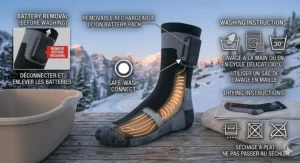
Remove batteries before washing socks—this seems obvious but bears emphasis. Water exposure can damage battery electronics and create serious safety hazards. Most models use snap-button or quick-disconnect systems making battery removal straightforward before laundering.
Recognizing Battery Problems
Warning signs of battery degradation or damage include: swelling or bulging of the battery case, unusual heat during charging or use, dramatically shortened runtime despite full charging, or any signs of leakage. If you observe any of these symptoms, immediately stop using the battery and follow proper disposal procedures for lithium-ion batteries.
Contact your municipality or visit Canada’s EPR Directive website for proper battery disposal guidance. Never dispose of lithium-ion batteries in regular trash or recycling bins—they require specialized handling through hazardous waste collection programs available across Canada.
Extending Battery Lifespan
Quality lithium-ion batteries maintain approximately 80% of their original capacity for 300-500 full charge cycles before noticeable degradation. Following proper storage and charging practices can extend this to 500+ cycles, meaning 2-4 years of regular use. Avoid exposing batteries to temperature extremes (both hot and cold), use manufacturer-approved chargers exclusively, and store properly during off-season months to maximize investment value.
Price Range and Value Analysis: What to Expect in Canada
Understanding the Canadian market pricing landscape for battery heated socks helps set realistic budget expectations and identify genuine value propositions.
Budget Tier ($65-$90 CAD)
Entry-level models like the ActionHeat AA battery socks fall into this category. You’ll typically find basic heating functionality with toe-only coverage, simpler materials, and limited temperature control options. Battery life tends toward the shorter end (3-4 hours maximum), and features like smartphone app control are absent.
Budget options work fine for occasional use or users testing heated sock technology before committing to premium models. They’re not built for daily heavy use or extreme cold conditions, but they’ll keep casual winter activity enthusiasts comfortable during moderate cold exposure.
Mid-Range Tier ($85-$140 CAD)
This category represents the sweet spot for most Canadian users, offering balanced performance without premium pricing. Models like the Snow Deer, Venustas, MENOLY 2026, and GEARS Gen-X4 populate this space with respectable battery capacities (5000-8500mAh), multiple heat levels, and expanded toe-plus-instep coverage.
Material quality improves markedly over budget options, with better moisture-wicking fabrics and more durable construction. Battery life extends to 6-10+ hours on lower settings—sufficient for most day-long activities. Some models include smartphone app control while others stick with simple battery-button operation.
Mid-range socks justify their pricing through features that directly improve user experience: longer battery life means fewer charging interruptions, better materials enhance comfort during extended wear, and expanded heating coverage eliminates cold spots. For regular winter activity participants, mid-range models deliver compelling value.
Premium Tier ($200-$350 CAD)
Premium models led by brands like Lenz target serious winter athletes and professionals spending extended time in extreme cold. Prices often reflect European engineering and manufacturing, though performance differences justify costs for demanding users.
Expect exceptional battery life (10-14+ hours), advanced smartphone app integration with granular temperature control, premium natural fiber blends (merino wool, silk), and comprehensive heating coverage. Build quality and durability exceed mid-range options, with reinforced high-wear zones and professional-grade materials.
The premium tier makes sense for users whose livelihoods or serious recreational pursuits demand absolute reliability. A ski instructor spending 6+ hours daily on slopes, an outdoor worker in northern communities, or a backcountry guide leading multi-day winter trips will appreciate the performance advantages worth the investment. Weekend warriors might find mid-range models meet their needs adequately.
Hidden Costs to Consider
Factor replacement battery costs into your budget planning. Some manufacturers charge $150+ CAD for replacement battery packs, while others offer options under $50 CAD. Over a product’s 3-5 year lifespan, you may replace batteries 1-2 times as capacity degrades. A $90 sock with $40 replacement batteries offers better lifetime value than a $120 sock with $180 replacement batteries.
Shipping costs and times vary significantly. Products shipping from Canadian warehouses arrive quickly with minimal shipping fees. International shipments from European or Asian suppliers may add $20-$40 CAD shipping and 2-4 week delivery times. Check seller locations on Amazon.ca before purchasing.
Warranty support matters too. Canadian-based distributors or brands with established Canadian service centers handle warranty claims efficiently. International brands without Canadian representation may require shipping defective products overseas for evaluation—expensive and time-consuming. Verify warranty terms and Canadian support availability before purchasing premium-priced products.
Canadian Winter Use Cases: Matching Socks to Activities
Different winter activities place distinct demands on heated sock performance. Matching sock characteristics to your specific use case maximizes satisfaction and value.
Skiing and Snowboarding
Downhill enthusiasts need moderate heat output (you’re generating significant body heat through activity) combined with excellent moisture management. Boots create warm, humid environments where sweat accumulates—socks must wick moisture aggressively to prevent the dampness from chilling your feet.
Mid-range models with 3-4 heat levels allow precise temperature matching to conditions and effort level. Battery life of 6-8 hours covers typical full-day mountain sessions. Look for thinner sock profiles that don’t compromise boot fit or circulation.
Models like the Lenz 5.1, Venustas, or Snow Deer work beautifully for alpine skiing, with comfortable cuffs that don’t bunch inside boots and batteries that sit above boot cuffs for easy access.
Ice Fishing
Stationary cold-weather activities demand maximum heat output and extended battery life. You’re sitting relatively motionless for hours in extreme cold—your heated socks are doing all the work to keep feet warm.
High-output models like the Gerbing 7V Ultimate Wool or MENOLY 2026 excel here. The natural wool in Gerbing socks provides passive insulation backing up electric heating. MENOLY’s massive battery capacity ensures warmth throughout marathon fishing sessions without mid-day recharging.
Since you’re seated and not generating body heat through movement, err toward higher heat settings and larger battery capacities. Bring spare batteries for extended sessions—frozen fish aren’t biting on your schedule.
Hunting
Tree stand hunters face similar challenges to ice fishers: extended stationary periods in extreme cold. The Gerbing 7V Ultimate Wool’s high heat output and natural wool insulation make these ideal. The 3-hour runtime on maximum heat aligns well with typical morning or evening hunt periods.
For hunters who also trek to stands, consider models with multiple heat levels so you can reduce heat during active hiking then crank up warmth when settled into your stand. The ActionHeat AA battery socks offer advantages for remote hunt camps lacking electrical outlets—swap batteries rather than waiting for recharges.
Winter Commuting and Daily Wear
Office workers and students commuting in Canadian winters need reliable moderate warmth without excessive bulk. You’re primarily outdoors for short periods (walking to transit, waiting for buses, walking to parking) punctuated by long indoor periods where heated feet become uncomfortable.
Models with easy on/off control and moderate heat outputs work best. The Snow Deer’s gentler temperature range prevents overheating in warm offices while still providing solid warmth during commutes. Battery life of 5-9 hours easily covers morning commute, lunch excursions, and evening return trips on a single charge.
Look for socks comfortable enough for all-day wear—softer materials and thinner profiles that work with dress shoes or everyday footwear rather than bulky outdoor boots.
Snowmobiling and Powersports
High-speed winter travel creates brutal wind chill scenarios where exposed extremities suffer intensely. Snowmobilers and ATV riders benefit enormously from vehicle-connected systems like the GEARS Gen-X4 providing continuous unlimited heat.
The ability to integrate heated socks with heated jacket liners and gloves through unified control systems simplifies operation while riding. You’re already dealing with throttle, brakes, and trail navigation—complex heated clothing controls add unwanted distraction.
For riders without vehicle-integrated heating systems, prioritize long battery life and high heat output. Multi-day trips require either solar charging capability or sufficient spare batteries to cover entire excursions.
Construction and Outdoor Work
Workers spending 8+ hours daily outdoors need bulletproof reliability, extended battery life, and rugged construction. The MENOLY 2026’s 13-hour battery life on low settings covers full work shifts, while the durable materials withstand daily wear in demanding environments.
Consider purchasing multiple pairs for rotation—one wearing, one charging—ensuring fresh dry socks daily while maintaining continuous heated protection. Workers in extreme northern communities (Yukon, Northwest Territories, Nunavut) should err toward premium models with maximum heat output and battery capacity. When your livelihood depends on staying warm enough to work effectively, cutting corners on heated sock quality proves counterproductive.
Washing and Care Instructions for Battery Heated Socks
Proper maintenance extends the lifespan of battery heated socks significantly, protecting your investment while ensuring consistent performance.
Pre-Washing Battery Removal
Always—always—remove batteries before washing. This cannot be emphasized enough. Water exposure damages battery electronics and creates serious safety hazards. Most designs use snap buttons or quick-disconnect systems making battery removal straightforward. Double-check both socks to confirm batteries are completely removed before proceeding.
Inspect the connection points on both the sock and battery for debris or moisture. Clean connection points gently with a dry cloth if needed. Proper connection maintenance ensures reliable heating performance and prevents intermittent operation issues.
Machine Washing Guidelines
Most battery heated socks tolerate gentle machine washing, but always verify manufacturer instructions first. Use cold water exclusively—hot water can damage heating elements or compromise waterproof coatings protecting the wires. Select gentle or delicate cycle settings with slow spin speeds to minimize stress on integrated heating elements.
Place socks inside mesh laundry bags to prevent tangling and reduce wear during the wash cycle. This simple step dramatically reduces the risk of heating wire damage from aggressive machine agitation. Use mild detergent without bleach or fabric softeners—harsh chemicals can degrade sock materials and protective coatings around heating elements.
Hand Washing Alternative
Hand washing represents the gentlest option for cleaning battery heated socks, maximizing lifespan. Fill a basin with cool water and mild detergent. Submerge socks and gently agitate by hand, paying extra attention to toe and cuff areas where sweat and oils accumulate. Rinse thoroughly in cool clean water until no soap residue remains.
Gently squeeze excess water from socks—never wring or twist, which can damage heating elements. The gentle approach requires more time than machine washing but protects your investment in premium heated socks.
Drying Best Practices
Air drying represents the safest approach for all battery heated socks. Lay socks flat on a clean towel or hang them in a well-ventilated area away from direct sunlight or heat sources. Avoid radiators, heating vents, or direct sunlight—excessive heat can damage heating elements or degrade elastic components.
Machine drying remains controversial. Some manufacturers explicitly permit low-heat tumble drying while others prohibit it entirely. When in doubt, air dry—you’ll never regret being too careful with expensive heated socks. If you must machine dry, use the absolute lowest heat setting and remove socks while still slightly damp to finish air drying.
Never dry socks while still connected to batteries, and never attempt to speed drying using hair dryers, heat guns, or other direct heat sources. Patience pays dividends in longevity.
Storage Between Uses
Store heated socks in cool, dry locations away from direct sunlight when not in use. Ensure socks are completely dry before storage to prevent mildew or odors from developing. During summer months or extended storage periods, follow battery storage guidelines (50% charge, cool dry location) and keep socks in breathable fabric storage bags rather than sealed plastic containers.
Periodically inspect stored socks for any signs of wear, particularly around connection points and areas where heating elements integrate into fabric. Early detection of potential issues prevents failures during use when you need the socks most.
Common Problems and Troubleshooting Solutions
Even quality battery heated socks occasionally experience issues. Understanding common problems and solutions helps maximize reliability and user satisfaction.
Uneven Heating or Cold Spots
Problem: One section of sock heats normally while other areas remain cold, or one sock heats while the other doesn’t.
Solutions: First, verify battery connections are secure—loose connections account for most intermittent heating issues. Disconnect and reconnect batteries firmly, ensuring snap buttons or USB connections seat properly. Test again before assuming element failure.
Inspect heating element areas for physical damage—tears, punctures, or excessive creasing can damage internal wires. If damage is visible, contact the manufacturer about warranty coverage or repair options.
Check battery charge levels—depleted batteries sometimes deliver insufficient power for consistent heating across all elements. Fully charge batteries and retest.
If problems persist after verifying connections and battery charge, you likely have heating element damage requiring manufacturer service or replacement.
Rapid Battery Drain
Problem: Batteries that previously lasted 6-8 hours now die after 2-3 hours.
Solutions: Lithium-ion battery capacity naturally degrades over time. If your socks are 2+ years old with regular use, diminished battery life reflects normal aging. Replacement batteries restore original performance.
Extreme cold accelerates battery drain significantly. At -20°C, expect 30-50% shorter runtimes compared to moderate temperatures. This isn’t battery failure—it’s physics. Keep batteries inside insulating layers close to your body when possible to maintain operating temperature.
Verify you’re not accidentally leaving socks on higher heat settings than intended. The difference between low and high settings can triple power consumption, dramatically reducing runtime.
If batteries are relatively new (under 100 charge cycles) and drain rapidly even at moderate temperatures on low settings, you may have defective batteries. Contact the manufacturer about warranty replacement.
Batteries Won’t Charge
Problem: Battery indicator lights don’t activate when connected to charger, or batteries never reach full charge.
Solutions: Confirm you’re using the correct charger designed for your specific battery model. Mismatched chargers may not deliver proper voltage or use incompatible connection types.
Inspect both charger cable and battery connection points for debris or corrosion. Clean contacts gently with a dry cloth or cotton swab. Damaged cables or loose connections prevent proper charging—try a different cable if available.
If batteries have been stored in extreme cold, bring them to room temperature before charging. Lithium-ion batteries refuse to charge when too cold (below approximately 0°C) as a safety precaution.
After 300-500 charge cycles or 2-4 years of use, battery cells may have degraded beyond recovery. If batteries show no signs of life despite proper charging procedures with the correct charger, replacement becomes necessary.
Socks Don’t Heat Adequately
Problem: Heating elements activate but provide insufficient warmth even on maximum settings.
Solutions: Verify expectations align with product capabilities. A mid-range sock rated for moderate cold won’t perform adequately in -35°C conditions regardless of heat setting. Review manufacturer temperature ratings and confirm your use case falls within intended parameters.
Check that you’re wearing socks correctly with heating elements properly positioned against your feet. Some users accidentally wear socks inside-out, placing heating elements against boot interiors rather than feet.
Ensure boots or footwear aren’t so tight they restrict circulation. Overly tight boots force blood vessels to constrict, counteracting heating element effectiveness. Your heated socks can’t overcome circulation problems caused by poor boot fit.
Verify heating elements are clean and not covered by excessive sock wear or pilling that insulates elements from your skin. Inspect element areas—if fabric has worn thin or pilled heavily, heat transfer efficiency decreases.
Connection Problems
Problem: Batteries disconnect from socks during activity, interrupting heating.
Solutions: Inspect snap buttons or connection points for wear or damage. Over time, repeated connect/disconnect cycles can weaken snap button security. Some manufacturers sell replacement connection hardware for this exact issue.
Verify cable routing doesn’t create tension pulling on connections. Properly routed cables move naturally with your leg without pulling on delicate connection points. Adjust how cables run along your calf to eliminate tension.
If using socks with USB connections, ensure connection points aren’t filled with debris preventing full insertion. Clean both male and female connector ends carefully.
For persistent connection issues despite proper cable routing and clean connections, contact manufacturers about warranty coverage. Quality brands stand behind their products and often replace units with chronic connection failures.
Frequently Asked Questions (FAQs)
❓ Can you wear battery heated socks on airplanes in Canada?
❓ How long do battery heated socks last before needing replacement?
❓ Are battery heated socks safe for people with diabetes or circulation problems?
❓ What's the difference between carbon fiber and steel fiber heating elements?
❓ Can battery heated socks help prevent frostbite during Canadian winters?
Conclusion: Choosing Your Perfect Battery Heated Socks
After examining the Canadian market for battery heated socks, several clear conclusions emerge. The technology has matured significantly—quality models deliver reliable, consistent warming that genuinely transforms winter comfort for Canadians facing brutal seasonal conditions.
Your perfect heated sock choice depends primarily on intended use and budget. Occasional users exploring heated sock technology can start confidently with mid-range options like the Snow Deer ($85-$110 CAD) offering excellent value and solid performance. Regular winter activity enthusiasts benefit from investing slightly more in models like the MENOLY 2026 ($95-$115 CAD) with extended battery life and app control conveniences. Serious winter athletes or professionals working in extreme cold should seriously consider premium options like the Lenz 5.1, where the 14-hour battery life and superior materials justify the $280-$350 CAD investment.
For Canadian buyers specifically, prioritize models with established Canadian distribution and warranty support. Products shipping from Canadian warehouses arrive quickly with reasonable shipping costs, and local warranty service eliminates the headaches of international returns. Verify replacement battery availability and pricing—factor these long-term costs into your purchase decision.
Don’t overlook the fundamentals: ensure boots fit properly with heated socks inside, understand realistic battery life expectations in Canadian cold, and follow proper battery charging and storage practices. The best heated socks can’t overcome poor boot fit restricting circulation or battery misuse accelerating degradation.
Canadian winters will continue challenging us with temperatures that regularly dip below -20°C and wind chills making exposed extremities genuinely dangerous. Battery heated socks represent one of the most practical technological advances in winter comfort available today. Whether you’re a ski instructor spending entire days on snowy slopes, an ice fisher sitting motionless on frozen lakes, a construction worker building through winter months, or simply someone tired of suffering through cold commutes, heated socks offer tangible relief from one of winter’s most persistent miseries.
Invest in quality, maintain them properly, and enjoy winters where cold feet no longer dominate your outdoor experience. Your toes will thank you.
✨ Don’t Miss These Exclusive Deals!
🔍 Take your winter comfort to the next level with these carefully selected products available in Canada. Click on any highlighted item to check current pricing and availability on Amazon.ca. These tools will help you create authentic warmth your family will love!
Recommended for You
- 7 Best Touchscreen Heated Gloves Canada 2026 – Stay Warm
- 7 Best Heated Gloves for Oil Field Workers Canada 2026
- 7 Best Heated Snowmobile Gloves Canada 2026
Disclaimer: This article contains affiliate links to Amazon.ca. If you purchase products through these links, we may earn a small commission at no additional cost to you.
✨ Found this helpful? Share it with your friends! 💬🤗
