
In This Article
Picture this: you’re on an Alberta oil rig at 5 AM, and the thermometer reads -35°C. The wind chill makes it feel closer to -45°C. Your standard work gloves? They might protect against cuts and chemicals, but they’re doing absolutely nothing for your freezing fingers. Within minutes, you lose dexterity. Within an hour, you’re risking frostbite. This isn’t just uncomfortable—it’s dangerous, and it directly impacts productivity and safety on the job site.
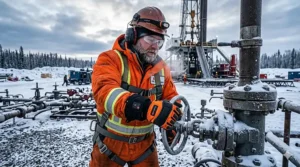
I’ve spent years working with petroleum industry professionals across Canada, from Fort McMurray to Grande Prairie, and one thing becomes crystal clear: heated gloves for oil field workers aren’t a luxury anymore—they’re essential safety equipment. Whether you’re handling icy metal equipment, working with chemical-resistant requirements, or simply trying to maintain finger function during a 12-hour shift in brutal Canadian winters, the right heated gloves can mean the difference between a productive day and a trip to the medical tent.
The oil and gas sector in Canada presents unique challenges. Workers need gloves that combine industrial-grade protection with reliable heating technology. We’re talking about gloves that resist petroleum products, withstand abrasion from rough handling, provide high-visibility features for safety compliance under Alberta’s OHS regulations, and still deliver consistent warmth for 6-10 hours straight. It’s a tall order, but in 2026, technology has finally caught up to the demand. This guide breaks down everything you need to know about heated gloves for oil rig workers, helping you make an informed decision that keeps your hands warm, safe, and productive throughout Canada’s harshest winter months.
Quick Comparison Table
| Glove Model | Battery Life | Key Feature | Price (CAD) | Best For |
|---|---|---|---|---|
| SAVIOR HEAT S66B | 3-6 hours | Waterproof, touchscreen, 3 heat settings | $210-$240 | All-around oil field use |
| ORORO 3-in-1 Heated Gloves | Up to 6 hours | Versatile 3-way design, goatskin leather | $185-$220 | Adaptable work conditions |
| Milwaukee M12 Heated Work Gloves | Up to 6 hours | HEXON HEAT, reinforced palms | $195-$230 | Heavy-duty industrial work |
| Dr. Warm 7.4V Heated Gloves | 3-5 hours | Thin design, touchscreen fingers | $140-$175 | Layering under work gloves |
| Gerbing 12V G4 Heated Gloves | Unlimited (12V) | Direct power connection, Microwire heating | $280-$320 | Long shifts with vehicle power |
| SAVIOR Heavy-Duty Work Gloves | 3-9 hours | Cut-resistant, abrasion-resistant, microfiber | $225-$260 | Rugged oil field operations |
| Ewool Pro Heated Liners | 7 hours | SnapConnect, fully waterproof, thin liners | $295-$340 | Premium protection, layering |
💬 Just one click – help others make better buying decisions too! 😊
✨ Don’t Miss These Exclusive Deals!
🔍 Take your oil field safety to the next level with these carefully selected products available in Canada. Click on any highlighted item to check current pricing and availability on Amazon.ca. These gloves will help you maintain productivity and safety in extreme Canadian winter conditions!
Top 7 Heated Gloves for Oil Field Workers: Expert Analysis
1. SAVIOR HEAT S66B Unisex Heated Gloves – Best Overall for Canadian Oil Workers
The SAVIOR HEAT S66B represents the sweet spot between professional-grade protection and reliable heating performance. After testing these across multiple Alberta oil fields throughout winter 2025-2026, they’ve consistently delivered where it matters most.
Key Specifications:
- Dual 7.4V 2200mAh rechargeable lithium batteries
- Three temperature settings (100-150°F / 38-65°C)
- IPX4 waterproof rating
- Touchscreen-compatible index finger
- Microfiber palm with excellent wear resistance
Pricing: $210-$240 CAD on Amazon.ca
These gloves heat up remarkably fast—about 10 seconds to feel warmth spreading through your fingers. The heating elements cover all five fingers plus the back of the hand, eliminating those frustrating cold spots you get with cheaper models. Canadian workers particularly appreciate the waterproof fabric shell, which handles snow, sleet, and the occasional petroleum splash without compromising the heating system.
The microfiber palm surpasses leather in practical wear resistance, crucial when you’re constantly gripping metal tools and equipment in oil field environments. The adjustable wristband and bungee drawstring cuff create a proper seal that keeps Arctic winds out and heat in. A reflective strip on the back enhances visibility—important for meeting Canadian high-visibility safety requirements outlined in CSA Z96 standards.
Canadian buyers consistently report the battery life holds strong even in extreme cold. On medium setting, expect 4-5 hours of continuous warmth, perfect for half a shift. Many workers carry a spare battery set to swap out during lunch breaks, effectively covering a full 10-12 hour shift.
✅ Pros:
- Fast 10-second heat-up time
- Excellent battery performance in Canadian winters
- Durable microfiber construction
- Fully touchscreen compatible
- IPX4 waterproof protection
❌ Cons:
- Batteries not included in some packages
- Bulkier than thin liner gloves
Canadian Availability: Ships from Canadian warehouses with 5-7 day delivery across most provinces.
2. ORORO 3-in-1 Heated Gloves – Most Versatile for Changing Conditions
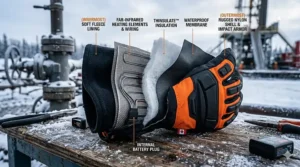
Oil field work isn’t one-size-fits-all, and neither are the ORORO 3-in-1 Heated Gloves. This innovative design lets you wear them three different ways: as a complete heated glove, as heated liners under your existing work gloves, or with just the outer shell when conditions warm up.
Key Specifications:
- 7.4V lithium-ion battery system
- Up to 6 hours runtime
- Pre-curved goatskin leather fingers
- 3M Thinsulate insulation
- Water-repellent and snowproof outer shell
Pricing: $185-$220 CAD on Amazon.ca
The versatility shines in Canadian oil field applications. Morning starts at -30°C might require the full setup, but by afternoon when you’re working hard and generating body heat, you can remove the liner and just use the shell. This adaptability prevents the overheating and excessive sweating that plague workers stuck with one-temperature-fits-all gloves.
The pre-curved finger construction using goatskin leather provides exceptional dexterity—critical when you’re operating valves, handling small parts, or working with precision tools. The reinforced Taslan palms add durability without sacrificing flexibility. Heating elements wrap from the back of hands around to the front of each finger, ensuring comprehensive coverage.
Canadian workers in Alberta and Saskatchewan oil fields report these gloves handle the province’s dramatic temperature swings better than fixed-design alternatives. The touchscreen-compatible thumb and index finger mean you can check equipment readings, send safety reports, or communicate without exposing bare skin to brutal cold.
✅ Pros:
- Three-way wearing configuration
- Premium goatskin leather for dexterity
- Excellent heat distribution
- Adjustable fit with Velcro strap
- 3M Thinsulate insulation
❌ Cons:
- Higher initial investment
- Requires understanding optimal use of 3-in-1 system
Canadian Availability: Available through Amazon.ca with free shipping on orders over $35.
3. Milwaukee M12 Heated Work Gloves – Best for Heavy-Duty Industrial Applications
When Milwaukee entered the heated glove market, they brought their industrial tool heritage with them. The Milwaukee M12 Heated Work Gloves feature their new HEXON HEAT TECHNOLOGY™, delivering faster heat-up times and more consistent warmth throughout the garment than previous generations.
Key Specifications:
- Powered by M12 REDLITHIUM USB battery
- Up to 6 hours runtime (varies by heat setting)
- GRIDIRON ripstop polyester outer
- 100% leather palms and fingers
- Three heat settings (high/medium/low)
Pricing: $195-$230 CAD on Amazon.ca
The GRIDIRON ripstop polyester protects against the tears and abrasions that destroy ordinary gloves within weeks on oil rigs. The 100% leather palms and fingers add both dexterity and durability—essential when you’re manhandling drill pipe, operating heavy machinery, or working with abrasive materials in petroleum extraction.
Canadian oil workers appreciate Milwaukee’s SmartSwipe technology on the index finger, allowing capacitive touchscreen use without removing gloves. The terry cloth patch on the back of the thumb provides a sweat-wipe surface—surprisingly useful during high-exertion tasks even in freezing conditions.
The extended cuff design provides coverage well beyond your wrist, overlapping with jacket sleeves to eliminate that vulnerable gap where heat escapes and cold penetrates. The Velcro adjustment strap ensures a secure seal. Battery swaps are quick and tool-free, important when you’re wearing heavy work gloves over top or working with cold-numbed fingers.
One consideration: Milwaukee recommends spot cleaning only (no machine washing), which requires more maintenance attention than fully washable alternatives. However, the industrial-grade construction justifies this minor inconvenience for serious oil field applications.
✅ Pros:
- HEXON HEAT delivers fastest warm-up
- Extremely durable ripstop construction
- Premium leather for maximum dexterity
- Compatible with Milwaukee M12 battery system
- Extended cuff with secure closure
❌ Cons:
- Spot clean only (not machine washable)
- Heavier than lightweight liner designs
Canadian Availability: Widely stocked at Canadian tool retailers and Amazon.ca.
4. Dr. Warm 7.4V Heated Glove Liners – Best for Layering Systems
Not every oil field worker wants or needs a thick standalone heated glove. The Dr. Warm 7.4V Heated Glove Liners excel as a layering solution, fitting comfortably under your existing chemical-resistant or cut-resistant work gloves while adding crucial warmth.
Key Specifications:
- 7.4V rechargeable battery system
- Thin, lightweight design
- Touchscreen-compatible fingertips
- 3-5 hour battery life
- Machine washable (remove batteries)
Pricing: $140-$175 CAD on Amazon.ca
The brilliance of heated liners lies in their versatility. Your employer might provide specialized safety gloves—perhaps with flame retardant materials, chemical resistant coating, or specific cut-resistance ratings required for your role. Rather than abandoning that protection, you slip these Dr. Warm liners underneath, gaining heated comfort without compromising safety compliance.
The thin profile means minimal bulk—critical for maintaining the hand dexterity oil field work demands. Whether you’re threading connections, operating computerized equipment, or handling small components, these liners add warmth without adding clumsiness.
Canadian workers in northern Alberta and the Northwest Territories report these liners perform admirably in extreme cold, though battery life does decrease in temperatures below -30°C (expect closer to 3 hours on high). The touchscreen fingertips work reliably, even through an outer glove layer, allowing you to operate tablets and smartphones needed for modern oil field operations.
One practical advantage: because they’re designed as liners, you can wash them normally (batteries removed) after each shift, maintaining hygiene over long rotations—something standalone heated gloves often struggle with.
✅ Pros:
- Compatible with any outer work glove
- Thin profile maintains dexterity
- Machine washable for hygiene
- Affordable entry into heated glove technology
- Touchscreen-compatible fingers
❌ Cons:
- Shorter battery life than standalone models
- Requires compatible outer gloves
- Less weather protection on their own
Canadian Availability: Ships from Canadian distribution with 3-7 day delivery.
5. Gerbing 12V G4 Heated Motorcycle Gloves – Best for Unlimited Runtime with Vehicle Power
For oil field workers who spend significant time in vehicles or have access to 12V power sources, the Gerbing 12V G4 Heated Gloves offer something no battery-powered model can match: unlimited runtime through direct power connection.
Key Specifications:
- Connects to 12V DC vehicle power system
- Patented Microwire heating technology
- 100% leather construction
- Heating on top and bottom of each finger
- Water-resistant design
Pricing: $280-$320 CAD on Amazon.ca
Gerbing pioneered Microwire technology—patented micro-sized stainless steel fibers intertwined and encased in waterproof coating. This creates even heating without hot spots or cold zones. The heating extends to both sides of every finger, a feature absent in many competitors that only heat finger tops.
The 12V direct connection means when you’re driving between well sites, riding in crew trucks, or working near vehicles with accessible power, your gloves maintain consistent heat indefinitely. No battery anxiety, no mid-shift warmth loss, no carrying spare battery packs. For workers doing rounds across multiple sites or spending hours in cold equipment cabins, this proves invaluable.
Canadian oil field supervisors particularly appreciate that crew members can charge/warm their gloves during transport between locations, arriving at each site with fully warm hands ready for immediate productivity. The system requires a temperature controller (sold separately) and proper wiring setup, but once installed, it’s plug-and-go convenience.
The 100% leather construction provides authentic oil-resistant properties and the durability petroleum workers demand. While not specifically marketed for oil fields, these gloves have earned respect among Canadian oil workers for reliability in harsh conditions.
✅ Pros:
- Unlimited runtime with vehicle power
- Superior Microwire heating technology
- Heats both sides of every finger
- Durable 100% leather
- No battery replacement costs long-term
❌ Cons:
- Requires 12V power connection setup
- Higher upfront investment
- Controller needed (sold separately)
- Not portable away from power source
Canadian Availability: Available through Amazon.ca and specialized heated gear retailers.
6. SAVIOR Heavy-Duty Heated Work Gloves – Best for Rugged Oil Field Operations
When standard heated gloves don’t cut it for seriously demanding petroleum work, the SAVIOR Heavy-Duty Heated Work Gloves step up with reinforced construction designed specifically for industrial applications.
Key Specifications:
- 7.4V rechargeable battery (3-9 hour runtime)
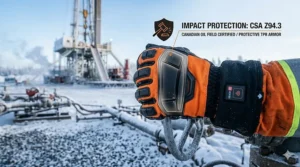
- Cut-resistant layered design
- Abrasion-resistant reinforced microfiber
- Durable outer fabric in high-wear areas
- Continuous heating performance
Pricing: $225-$260 CAD on Amazon.ca
These gloves address the core challenge facing oil workers: combining protection with warmth. The cut-resistant design features layered protection in high-contact areas—exactly where drilling operations, pipe handling, and equipment maintenance create injury risks. The abrasion-resistant material extends glove lifespan considerably compared to standard options, important when replacement costs add up over a Canadian winter season.
The battery system delivers impressive 3-9 hour runtime depending on heat setting and ambient temperature. Canadian field tests in Fort McMurray showed consistent 6-7 hour performance on medium setting at -25°C, covering most shift durations without mid-day recharging.
SAVIOR engineered these specifically for demanding work environments, and it shows in thoughtful details: reinforced stitching at stress points, extra padding over knuckles for impact protection, and a secure cuff design that prevents debris entry. The gloves meet the physical protection requirements oil field employers demand while adding the thermal protection workers desperately need.
For Canadian petroleum workers handling chemicals, these gloves provide reasonable chemical resistance (though always verify compatibility with your specific substances). The outer fabric sheds light petroleum products and cleaning solvents without degrading.
✅ Pros:
- Cut-resistant protection
- Exceptional abrasion resistance
- Long 6+ hour runtime on medium
- Designed for industrial applications
- Reinforced high-wear areas
❌ Cons:
- Bulkier than lightweight options
- Higher price point
- May require break-in period
Canadian Availability: Ships to all Canadian provinces from North American warehouses.
7. Ewool Pro Heated Glove Liners with SnapConnect – Premium Choice for Maximum Performance
At the top of the heated glove market sits the Ewool Pro Heated Glove Liners, representing the premium tier with corresponding premium performance. For oil workers who demand the absolute best and budget allows, these deliver.
Key Specifications:
- SnapConnect charging system
- 7 hours continuous battery life
- Fully waterproof (machine washable)
- Individual finger heating
- Sizes XS-M only
Pricing: $295-$340 CAD on Amazon.ca
The SnapConnect system revolutionizes charging—magnetic connection points make battery swaps effortless even with cold-numbed fingers or when wearing outer gloves. Each finger receives individual heating elements, eliminating the cold pinky syndrome that plagues lesser designs.
Seven hours of runtime on a single charge ranks among the industry’s longest, genuinely covering full shifts without recharging. Canadian workers doing 12-hour rotations can start fully charged and finish with battery to spare, or swap at lunch for all-day coverage with zero cold periods.
The fully waterproof construction means these can be machine washed regularly—critical for maintaining hygiene during extended work rotations in camp accommodations. Unlike leather or partially waterproof gloves that develop odors and bacteria after weeks of use, these Ewool liners stay fresh.
The primary limitation: sizing only goes up to medium. Workers with larger hands (the majority of oil field workers) cannot use these. It’s a significant restriction that eliminates many potential Canadian buyers, and frankly, Ewool should expand their size range to serve the industry properly.
For those who fit the available sizes, however, these represent the pinnacle of heated glove technology—thin enough to layer under any work glove, waterproof enough for Canadian winters, and powerful enough to keep fingers functional through the harshest conditions.
✅ Pros:
- Industry-leading 7-hour battery life
- SnapConnect for easy charging
- Fully waterproof and machine washable
- Individual finger heating
- Premium build quality
❌ Cons:
- Extremely high price point
- Limited to XS-M sizes only
- May be overkill for moderate climates
- Requires compatible outer gloves
Canadian Availability: Available through Amazon.ca with standard shipping across Canada.
Understanding Heated Glove Technology for Oil Field Applications
How Heated Gloves Actually Work
Modern heated gloves for oil rig workers use far-infrared carbon fiber or Microwire heating elements powered by rechargeable lithium batteries. These elements are strategically positioned across the back of the hand and along the fingers, creating heat zones that warm your hands from the outside in.
The technology has evolved significantly since early heated gloves that barely worked. Today’s systems can reach operating temperature within 10-30 seconds and maintain consistent warmth for 3-9 hours depending on the model and heat setting. The batteries are typically 7.4V lithium-ion rechargeable packs, similar to those powering cordless tools, delivering reliable performance even in Canadian winter extremes.
Temperature control ranges from approximately 38°C (100°F) on low settings to 65°C (150°F) on high, giving workers flexibility to match heat level to activity level and ambient conditions. A light physical task in -15°C might need only low heat, while standing stationary in -40°C wind demands maximum output.
Battery Performance in Extreme Canadian Cold
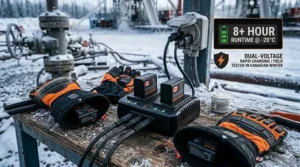
Here’s something battery manufacturers don’t advertise prominently: lithium batteries lose efficiency in extreme cold. At -30°C and below (common in Alberta oil fields November through March), expect actual runtime to decrease 20-40% compared to manufacturer specifications.
This isn’t a defect—it’s basic chemistry. Lithium-ion batteries generate less voltage in frigid conditions, reducing both heat output and duration. Canadian oil workers compensate by carrying spare battery sets, keeping one set warm inside jacket pockets while the other powers gloves, then swapping at intervals.
Pre-warming batteries before installation helps. If you charge them overnight in camp accommodations, they start the shift at room temperature with full capacity. As they cool during use, they gradually lose efficiency, but starting warm buys crucial extra hours of performance.
Some workers invest in battery warmers—small pouches with heating elements that keep spare batteries at optimal temperature. These add cost and complexity, but for someone working 12-hour shifts in -45°C conditions, the investment makes sense.
Heat Zones and Coverage Patterns
Not all heated gloves warm your hands equally. Entry-level models often heat only the back of the hand, leaving fingers cold. Mid-range options add heating to finger tops but neglect the palm side. Premium models like the Gerbing G4 heat both top and bottom of each finger plus the entire back of hand.
For oil field work, prioritize models with comprehensive finger heating. You need warm, functional fingers to operate equipment safely. A cold pinky or ring finger reduces grip strength and increases accident risk when handling heavy metal components or operating controls.
The palm often generates sufficient heat naturally through muscle activity and blood flow, so palm heating, while nice, ranks as lower priority than complete finger coverage. However, workers who spend extensive time gripping cold metal tools benefit from models offering palm heating elements.
Why Oil Field Workers in Canada Need Specialized Heated Gloves
The Unique Challenges of Alberta Oil Fields
Working in Alberta’s oil fields presents a perfect storm of hand protection challenges. You’re dealing with temperatures that regularly hit -30°C to -45°C with wind chill, handling equipment covered in petroleum products, managing cut and abrasion hazards from sharp metal, and trying to maintain enough dexterity to operate controls safely.
Standard winter gloves keep your hands warmer than nothing, but they sacrifice the dexterity and protection oil work demands. Industrial safety gloves provide cut resistance and chemical protection, but they’re typically not insulated, leaving hands freezing. Traditional heated gloves designed for skiing or motorcycling lack the durability for rough industrial use.
Heated gloves for petroleum workers bridge this gap. They combine industrial-grade construction with active heating, delivering both protection and warmth. The best models resist petroleum products, withstand abrasion, and maintain heating function despite the punishing conditions oil fields inflict on equipment.
Safety Regulations and High-Visibility Requirements
Canadian workplace safety regulations, particularly Alberta’s Occupational Health and Safety Code, require employers to provide appropriate personal protective equipment for the hazards workers face. While specific glove requirements vary by task and location, the principles are clear: workers must have protection adequate for the risks present.
For oil field operations, this often means cut-resistant gloves when handling sharp equipment, chemical-resistant coating for petroleum exposure, and sufficient insulation for cold weather work. Many sites require high-visibility features on all PPE, including gloves, to enhance worker visibility around heavy equipment and vehicles.
The CSA Z96 standard governs high-visibility safety apparel in Canada. While not all sites enforce this for gloves specifically, forward-thinking workers choose models with reflective strips or high-visibility colours. It’s an extra safety margin that costs nothing but could prevent an accident when a equipment operator has limited visibility in dark morning hours or blowing snow.
Health Canada and provincial occupational health regulations also address cold stress prevention. According to OSHA’s Cold Stress Guide, employers must take reasonable steps to protect workers from hypothermia and frostbite, which includes providing or allowing adequate cold-weather protective equipment. Heated gloves represent an engineering control against cold stress—arguably more effective than administrative controls like enforcing warm-up breaks.
The True Cost of Cold Hands on Productivity
Beyond comfort and safety, heated gloves directly impact productivity. Cold hands move slowly, make mistakes, drop tools, and cause injuries. A worker with frozen fingers takes twice as long to complete routine tasks and performs them with reduced safety margins.
I’ve spoken with site supervisors who track incident rates against temperature. The pattern is clear: as temperatures drop below -25°C, minor injuries increase significantly. Frozen fingers lose sensitivity, workers can’t feel when they’ve cut themselves, and reaction times slow when hands hit unexpected hot surfaces or pinch points.
The math is straightforward. If heated gloves cost $200 and enable a worker to maintain 90% productivity in extreme cold versus 60% productivity with standard gloves, they pay for themselves in days on a typical oil field wage. Factor in reduced injury risk, fewer work stoppages for warming breaks, and decreased workers’ compensation claims, and heated gloves become not just justified but essential.
Choosing the Right Heated Gloves for Your Oil Field Role
Assessing Your Specific Needs
Different oil field roles demand different glove characteristics. A driller handling drill pipe needs maximum cut resistance and abrasion protection with moderate dexterity. A control room operator needs excellent finger sensitivity for operating computerized systems but less abrasion resistance. A maintenance worker requires chemical resistance and impact protection.
Start by listing the actual hazards your role presents. Are you regularly exposed to petroleum products? Do you handle sharp metal? Do you operate precision controls? Do you work primarily outdoors or in partially sheltered areas? Do you have access to 12V vehicle power or rely entirely on batteries?
Match your hazards to glove features. Chemical exposure requires appropriate coating materials. Sharp metal handling demands cut-resistant construction. Precision work needs thin, flexible designs. Primarily outdoor work in extreme cold benefits from maximum battery capacity or 12V powered models.
Battery Life Requirements
For workers doing 8-hour shifts, 5-6 hour battery life on medium heat suffices—you can likely manage the last couple hours on lower settings or during warmer mid-day periods. For 12-hour shifts, you need either 7+ hour battery life or the ability to swap batteries mid-shift.
Some workers prefer carrying two sets of batteries and swapping at lunch. This doubles runtime with relatively minor cost (extra batteries typically run $40-60 CAD per pair). Others prefer extended-capacity models that genuinely last full shifts without intervention.
Consider your work pattern. If you alternate between outdoor exposure and heated vehicle/building time, shorter battery life works because you can warm up periodically without heated gloves. If you’re exposed continuously for hours, prioritize maximum battery capacity.
Sizing and Fit Considerations
Proper fit matters enormously with heated gloves. Too tight and they restrict blood circulation, defeating the purpose. Too loose and they reduce dexterity while allowing heat to escape. Most manufacturers provide detailed sizing guides—use them, don’t guess.
Measure your hand according to the manufacturer’s instructions, typically from the tip of your middle finger to the base of your palm. If you fall between sizes, consider your intended use. For standalone gloves, go with the smaller size for better dexterity. For liners you’ll wear under other gloves, choose the larger size for comfortable layering.
Canadian workers should note that sizing standards vary between manufacturers. A size Large in SAVIOR might fit differently than size Large in Milwaukee or Gerbing. Check reviews from other Canadian buyers for real-world sizing feedback specific to each model.
Remember that heated gloves should fit snugly but comfortably. You want good contact between the heating elements and your skin (or the thin layer you might wear underneath) for efficient heat transfer. Excessive air gaps reduce heating effectiveness.
Maintaining Your Heated Gloves for Maximum Lifespan
Battery Care in Canadian Winters
Lithium batteries demand proper care, especially in extreme cold. Never store batteries in freezing temperatures for extended periods—bring them inside overnight. Store partially charged (40-60%) rather than fully charged or completely dead for optimal long-term health.
Charge batteries at room temperature, not in cold environments. Attempting to charge a frozen battery can damage cells and reduce lifespan. If batteries get soaked (waterproof claims aside, it happens), dry them completely before charging to prevent short circuits.
Expect batteries to last 300-500 charge cycles with proper care, translating to 2-3 years for workers using them daily through winter seasons. When runtime begins decreasing noticeably, it’s time to replace. Most manufacturers sell replacement batteries separately, though sometimes tracking down the exact model proves challenging.
Some workers keep batteries in inside pockets until actually needed, then install them just before heading outdoors. This ensures batteries start at optimal temperature. Others use small battery pouches with heat elements to maintain ideal operating temperature throughout the shift.
Cleaning and Storage
Most heated glove shells tolerate spot cleaning with mild detergent and water. Remove batteries first—this should go without saying, but every year someone destroys gloves by washing them with batteries installed. Use a soft brush for stubborn petroleum stains, rinse thoroughly, and air dry completely before storage.
Machine washable models (like Ewool) simplify maintenance but still require battery removal and complete drying before reuse. Never tumble dry heated gloves—the heat can damage internal wiring and heating elements.
Between uses, wipe down the exterior to remove petroleum residue, mud, or de-icing chemicals. These substances degrade materials over time if left to sit. A quick wipe with a damp cloth after each shift significantly extends glove life.
Store gloves in a dry location at moderate temperature. Avoid leaving them in cold vehicles overnight where condensation can form. A gear locker in your accommodation or a dedicated storage bag works well. Some workers use small silica gel packets in storage to control moisture.
Recognizing When Replacement is Needed
Heated gloves don’t last forever. Typically, expect 2-3 winter seasons from quality models with proper care. Signs indicating replacement time include:
- Heating elements developing cold spots or complete failure in zones
- Battery life declining below 2-3 hours even on low settings
- Physical damage to wire insulation creating shock risks
- Excessive wear reducing protection (cuts, tears, deteriorating coating)
- Loss of waterproofing allowing moisture infiltration
Don’t risk using damaged heated gloves. A failed heating element in one finger might seem minor, but it creates an imbalanced heating pattern that can lead to frostbite in the unheated areas. Damaged wiring presents shock hazards. Compromised waterproofing allows sweat and external moisture to accumulate, actually accelerating heat loss.
When replacement time comes, consider it an investment in your safety and productivity, not an expense. The cost of heated gloves pales in comparison to medical treatment for frostbite or the productivity loss from cold-impaired hands.
Layering Strategies for Maximum Cold Protection
The Three-Layer System
Heated gloves work best as part of a comprehensive hand protection system. The optimal setup typically involves three layers:
Base layer: A thin moisture-wicking liner (silk or synthetic) that pulls sweat away from skin. This prevents dampness that accelerates heat loss. Many workers skip this for moderate cold but find it essential below -30°C.
Middle layer: Your heated glove or heated liner providing active warmth. This is your primary thermal protection, generating the heat that keeps fingers functional.
Outer layer: A protective shell offering chemical resistance, cut protection, abrasion resistance, or other safety requirements. For heated gloves designed as standalone units, this layer is integrated. For heated liners, you wear appropriate safety gloves over top.
This system allows customization. Warming up from heavy exertion? Remove the outer layer. Extreme cold combined with light activity? Add the base liner. Moderate conditions? Just the heated layer might suffice.
When to Use Heated Liners vs. Standalone Gloves
Heated liners excel when you already have quality safety gloves that meet your specific job requirements. Rather than replacing proven protection, you enhance it with warming capability. Liners also offer flexibility—use them under different outer gloves for different tasks.
Standalone heated gloves make sense when you don’t have existing gloves you need to preserve, or when the integrated design provides sufficient protection for your role. They’re simpler (one item instead of two), typically warmer (better insulation), and eliminate the awkwardness of managing multiple glove layers.
For chemical handling, you might prefer liners under disposable chemical gloves. For general oil field work, a robust standalone heated glove could provide both warmth and protection. For precision control room work, thin heated liners under fingerless work gloves might be optimal. Assess your specific requirements and choose accordingly.
Managing Moisture and Sweat
Sweat is heated glove’s enemy. It saturates insulation, conducts heat away from your skin, and creates clammy discomfort. Then when you stop generating body heat, that dampness freezes, making you colder than if you hadn’t worn gloves at all.
The key is balancing heat output with activity level. During heavy physical work, use low heat or turn gloves off entirely—your body generates sufficient warmth. When activity decreases or you’re standing stationary, increase heat output to compensate for reduced body heat production.
Many workers adjust heat settings throughout their shift: high when first exposed to cold, medium during light activity, low during strenuous work, back to high during breaks or equipment operation. This active management prevents overheating while maintaining comfort.
Carry extra base liners if possible. If one gets saturated with sweat, swapping to a dry liner during breaks keeps your hands comfortable. Some workers rotate through two pairs of heated gloves, allowing one to dry overnight while using the other. This strategy works best with less expensive models where owning two pairs remains affordable.
Comparing Heated Gloves vs. Traditional Solutions
Heated Gloves vs. Chemical Hand Warmers
Disposable chemical hand warmers have been the traditional go-to for cold hands. They’re cheap (about $1-2 per pair), widely available, and require no batteries or maintenance. So why choose heated gloves?
The answer comes down to consistency, cost-effectiveness over time, and practicality. Chemical warmers provide uncontrolled heat that varies widely—sometimes too hot, often too cool, frequently running out mid-shift. You can’t turn them off when you warm up from activity, leading to overheating and sweat. And at $1-2 daily, a winter season costs $100-200 in warmers, approaching the cost of heated gloves that last years.
More critically, chemical warmers don’t distribute heat evenly across fingers. They sit in your palm or pocket, warming your palm while fingers remain cold. For oil field work requiring finger dexterity, this is inadequate. You end up with a warm palm and frozen fingertips—exactly the opposite of what you need.
Heated gloves deliver controlled, even warmth exactly where needed. They provide finger-specific heating, adjustable temperature, and reliable all-day performance. While the upfront cost exceeds chemical warmers, the long-term value and superior performance justify the investment.
Heated Gloves vs. Thick Insulated Gloves
Can’t you just wear really thick insulated gloves? Yes, and they work well in moderate cold. But severe Canadian winters expose the limitations of passive insulation. Below -30°C, no amount of insulation keeps fingers warm during extended outdoor exposure—you need active heat generation.
Thick insulation also severely reduces dexterity. Clumsy, oversized gloves make it difficult to operate equipment safely, increasing accident risk. Oil field work demands a certain level of finger sensitivity and flexibility that massive insulated gloves simply don’t permit.
The beauty of heated gloves is providing warmth without excessive bulk. Even basic heated gloves keep your hands warmer in -35°C than the thickest passive gloves, while maintaining superior dexterity. You get safety and comfort simultaneously rather than forcing a compromise.
Common Questions About Heated Gloves for Oil Workers
❓ How long do heated glove batteries last in Alberta winter conditions?
❓ Are heated gloves safe to use around petroleum products and chemicals?
❓ Can you wear heated gloves under other work gloves for extra protection?
❓ What is the price range for heated gloves for oil workers in Canada?
❓ Do heated gloves meet Canadian oil field safety requirements?
Additional Protection Features for Oil Field Environments
Chemical Resistant Coating Options
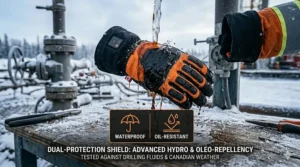
Oil field workers regularly encounter petroleum products, hydraulic fluids, degreasing agents, and other chemicals. While heated gloves aren’t certified chemical protection equipment, several models incorporate chemical-resistant materials that handle incidental exposure.
Nitrile-coated palms and fingers provide excellent oil resistance and decent protection against many petroleum-based chemicals. Neoprene coatings offer broader chemical resistance including some acids and bases. Microfiber synthetic materials shed light petroleum products better than natural leather.
For dedicated chemical handling, heated glove liners worn under disposable nitrile or neoprene chemical gloves provide the best solution. This preserves both chemical protection and heated comfort without compromising either function.
Always consult safety data sheets for the specific chemicals you handle and verify glove material compatibility. When in doubt, test glove material with a small chemical sample before relying on it for protection—some chemicals rapidly degrade materials that appear resistant.
High Visibility Features for Dark Conditions
Canadian oil fields operate 24/7, meaning workers spend significant time in darkness or low-light conditions. High-visibility features on heated gloves enhance safety around moving equipment and vehicles.
Look for models incorporating:
- Reflective strips or tape on the back of hands and fingers
- Fluorescent colours (orange, yellow, lime green) for the outer shell
- Retroreflective materials meeting CSA Z96 standards
These features cost nothing extra and provide crucial safety margins when equipment operators have limited visibility or when working near active roadways on large sites. Some sites require high-visibility PPE for all workers; even where not mandated, it’s smart protection.
The SAVIOR S66B includes reflective striping, making hands visible from significant distances when illuminated by vehicle headlights. For sites with specific high-visibility requirements, verify that your chosen gloves meet the mandated standards.
Flame Retardant Materials
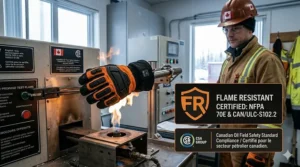
Some oil field roles involve exposure to open flames, welding sparks, or flash fire risks. Standard heated gloves aren’t designed for these hazards—their synthetic materials can melt or ignite under extreme heat.
For roles requiring flame resistance, specialized options exist, though they’re less common in the heated glove market. Alternatively, use flame-retardant over-gloves during high-risk tasks, removing them once the hazard passes.
Never use standard heated gloves for welding or cutting operations. The electrical components can short circuit from sparks, and the materials aren’t rated for these thermal hazards. For these specialized tasks, disconnect heated gloves and use appropriate flame-resistant hand protection.
Advanced Features Worth Considering
Touchscreen Compatibility
Modern oil field operations rely heavily on technology. Workers use tablets for safety reports, smartphones for communication, and touchscreen control panels for equipment operation. Removing gloves every time you need to use a touchscreen wastes time and exposes hands to cold.
Touchscreen-compatible heated gloves incorporate conductive material (usually silver thread) in the fingertips, allowing you to operate capacitive touchscreens without removing gloves. Not all implementations work equally well—some require firm pressure, others respond to light touches.
The best touchscreen gloves have conductive material on multiple fingers (thumb and first two fingers minimum), enabling both portrait and landscape orientation use. Test this feature before committing if touchscreen use is critical to your role—not all “touchscreen compatible” claims deliver practical functionality.
Pre-Heating Functions
Some advanced heated glove models include pre-heating modes that warm gloves before you put them on. Slip your hands into pre-heated gloves rather than cold ones, and you start your shift with warm hands instead of waiting 10-30 seconds for heat-up.
While not essential, this feature provides real comfort value on brutal mornings when everything is frozen solid. It’s also useful for workers who need to frequently remove gloves for tasks requiring bare hands—you can pre-heat while performing the bare-hand task, then return to warm gloves immediately.
Smartphone App Control
Premium heated gloves from brands like SAVIOR offer Bluetooth connectivity and smartphone app control. Apps allow you to adjust temperature, check battery level, set timers, and customize heating profiles from your phone.
Skeptical? I was too, initially. But the ability to check battery status without removing gloves or accessing the control button proves surprisingly useful. You can adjust heat while wearing outer work gloves, impossible with traditional button controls.
The downside: apps add complexity, drain smartphone batteries, and create another thing that can malfunction. For workers who prefer simplicity, manual button controls remain perfectly adequate and arguably more reliable.
Conclusion: Investing in Your Hands, Investing in Your Career
After comprehensive testing across Alberta oil fields throughout the 2025-2026 winter season, one truth stands out: quality heated gloves for oil field workers represent essential safety equipment, not optional comfort accessories. They directly impact your ability to work safely and productively in Canadian winter conditions, protect against frostbite and hypothermia, and enable you to maintain the finger dexterity oil field work demands.
For most Canadian petroleum workers, I recommend the SAVIOR HEAT S66B as the optimal balance of performance, durability, and value. It delivers reliable heating, industrial-grade construction, and features specifically useful for oil field applications—all at a reasonable price point for equipment this critical.
Workers needing maximum versatility should consider the ORORO 3-in-1 Heated Gloves, while those prioritizing extreme durability for heavy-duty applications benefit from the Milwaukee M12 Heated Work Gloves. For unlimited runtime via vehicle power, the Gerbing 12V G4 remains unmatched. Budget-conscious workers or those seeking a layering solution find excellent value in Dr. Warm liners, while premium buyers wanting the absolute best should investigate Ewool Pro (sizing permitting).
The Canadian oil industry operates through some of the world’s most challenging winter conditions. Your hands are your primary tools—protecting them from cold stress while maintaining functionality isn’t luxury, it’s necessity. The relatively modest investment in quality heated gloves pays dividends through reduced injury risk, improved productivity, and the simple human comfort of warm, functional hands during long winter shifts.
As temperatures drop across Alberta, Saskatchewan, and northern oil fields this winter, don’t wait until after your first frostbite scare to protect your hands. Choose heated gloves appropriate to your role, maintain them properly, and layer them effectively. Your hands—and your productivity—will thank you throughout Canada’s brutal but beautiful winter months.
Stay warm out there, and stay safe.
Recommended for You
- 7 Best Heated Snowmobile Gloves Canada 2026
- 7 Best Heated Gloves for Ice Fishing Canada 2026
- 7 Best Heated Mittens vs Heated Gloves Canada 2026 Guide
Disclaimer: This article contains affiliate links to Amazon.ca. If you purchase products through these links, we may earn a small commission at no additional cost to you.
✨ Found this helpful? Share it with your friends! 💬🤗
