
In This Article
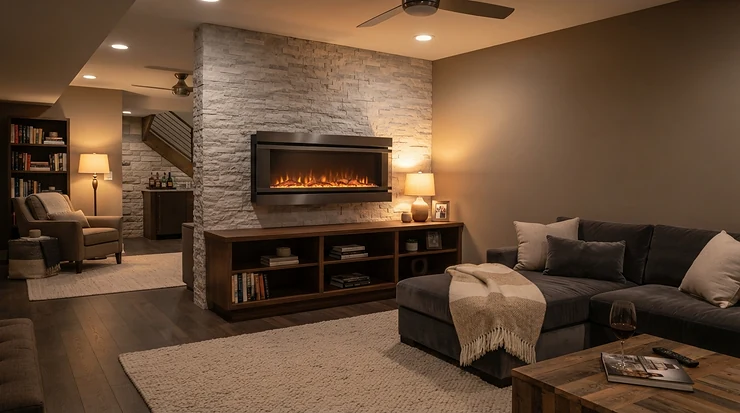
A basement heater for Canadian winter is any electric, fan-forced, infrared or ductless system sized and installed to keep a below-grade space comfortable when outdoor temperatures sit well under zero. The right choice depends on your insulation, floor area, ceiling height and how often you actually use the room.
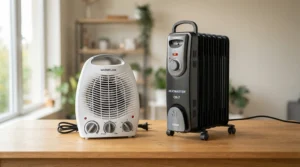
Here’s the awkward truth about basements: they’re the one part of the house that’s half-buried in frozen ground. Natural Resources Canada points out in its Keeping the Heat In basement insulation guide that many basements have little or no insulation. That means heat drains through the walls and slab faster than most people expect. Buy a heater first and insulation second, and you’ll end up paying a little more every month to warm the soil.
So this guide does both jobs. It starts with seven real products: five heaters and two cold-floor fixes. Then it covers basement heating solutions at the system level, basement heater types compared, whole basement heating options, basement insulation, cold floor solutions and heating zone efficiency.
Everything here is analysis built on published specs, retailer listings and aggregated review themes. I haven’t handled these products, and I won’t pretend otherwise. Prices are ranges in Canadian dollars, so always check current pricing on Amazon.ca before you buy.
Quick Comparison: Basement Heating Solutions at a Glance
| Product | Type | Key spec | Price range (CAD) | Best for |
|---|---|---|---|---|
| Stelpro Classic B Baseboard | Hardwired baseboard | 500–750 W, silent convection | Under C$150 (thermostat extra) | Small rooms on a tight budget |
| Stelpro Prima SPR1502W | Compact hardwired baseboard | 1500 W, impact-resistant housing | C$130–C$200 range | Busy family basements |
| Vornado VMHi300 | Plug-in fan heater | 750/1500 W, adjustable thermostat | C$100–C$200 range | Renters and no-electrician setups |
| Heat Storm Phoenix HS-1500-PHX | Infrared wall/floor unit | 1500 W, 5,200 BTU | C$200–C$300 range | Desk, couch or gym zones |
| Dimplex 45-Inch Electric Fireplace Insert | Fireplace heater | Fan-forced, rated for up to about 400 sq ft | Premium tier; check current price | Rec-room focal point |
| DRICORE Subfloor R+ | Insulated subfloor | R-2.7, 1 in thick | C$2.50–C$3.50 per sq ft | Cold concrete on a budget |
| DRICORE Insul-Armor | Premium insulated subfloor | R-4.1, EPS foam | C$3–C$4 per sq ft | Maximum floor warmth |
Looking at the comparison above, the two Stelpro baseboards are the permanent, quiet, set-and-forget answer. The Vornado VMHi300 wins on flexibility, because you can plug it in and carry it to the next room. Meanwhile, the two DRICORE products attack the floor itself, which no wall heater can fix. If your slab is cold, pairing a heater with DRICORE Subfloor R+ often beats simply buying a bigger heater.
💬 Just one click — help others make better buying decisions too!😊
Top 7 Picks: Your Basement Heater for Canadian Winter, Analyzed
1. Stelpro Classic B Baseboard — quiet hardwired budget workhorse
Silent convection is the headline: no fan to hum, rattle or suck basement dust through the elements. This is a surface-mounted, Canadian-made baseboard with pre-drilled mounting holes, offered in 500 W and 750 W versions. The listings I reviewed show no built-in thermostat, so you’ll add a wall thermostat.
In practice, a common sizing guideline is about 10 W per sq ft for a well-insulated room. So 750 W covers roughly 75 sq ft: a small bedroom, a bathroom, an office nook. It will not rescue a 600 sq ft rec room. Think of it as a precision tool for small zones.
Baseboards convert electricity to heat at essentially 100% efficiency. That’s not the same as cheap to run, because a heat pump moves heat instead of making it. Based on the spec comparison, this model suits small, well-sealed rooms where you want zero noise.
Reviewers on a major Canadian retailer describe it as well made, easy to install with basic electrical knowledge, and quiet. The repeat complaint is that the thermostat kit costs almost as much as the heater. The review pool is small, so treat that as a pattern worth checking, not a verdict. The manufacturer’s own Q&A says hardwired units need a certified electrician.
Pros:
- ✅ Silent convection with no fan noise
- ✅ Made in Canada with simple mounting
- ✅ Low entry price for small zones
Cons:
- ❌ Thermostat sold separately and adds real cost
- ❌ Needs a certified electrician to hardwire
Expect the heater itself to land under C$150, with the thermostat extra at the time of research. For small rooms, the value is solid.

2. Stelpro Prima SPR1502W — compact, impact-resistant, built for clutter
Basements are where hockey sticks, laundry baskets and toddlers collide with things, and the Stelpro Prima SPR1502W is built with that in mind. The housing is impact-resistant steel, the heating element is concealed for easy cleaning, and the product copy says it’s about 25% shorter than traditional baseboards. It’s CSA Listed.
At 1500 W, the standard guideline puts it near 150 sq ft in a well-insulated space, or about 125 sq ft if the walls are poorly insulated. The shorter body matters because basement walls are chopped up by windows, ducts and support posts. A shorter unit fits where a 66-inch baseboard like the Stelpro Brava B1502W simply won’t.
My analytical take: this is the pick for permanent basement heating where durability matters more than looks. It isn’t the cheapest per watt. The extra goes toward the sturdier shell.
Review themes at a major Canadian retailer include praise for quiet operation and easy installation, plus one reminder not to overtighten the mounting screws, which can make a baseboard tick. The recurring frustration is thermostat compatibility. Several buyers wanted clearer guidance on which thermostats work. Confirm voltage and thermostat type before ordering.
Pros:
- ✅ Impact-resistant housing survives basement chaos
- ✅ Shorter body fits awkward wall runs
- ✅ CSA Listed with easy-clean design
Cons:
- ❌ Thermostat compatibility confuses some buyers
- ❌ Pricier than basic baseboards
Plan on roughly C$130–C$200 depending on wattage version. That’s good value for the toughness.
3. Vornado VMHi300 — whole-room vortex heat without an electrician
If you rent, or you simply don’t want to open a wall, the Vornado VMHi300 is the plug-in answer. It offers 750 W and 1500 W settings, an adjustable thermostat, tip-over protection, automatic shut-off and a cool-touch metal cabinet. Canadian Tire lists it as ETL Listed with about 5,100 BTU. Several retailers list a five-year warranty, so confirm it on the Canadian unit.
The “vortex” part is a fan pattern that circulates warmed air around the room instead of just toasting whatever sits beside the heater. In a basement, where cold air pools low, that moving air helps. The listed coverage of roughly 250 sq ft assumes decent insulation, so I’d shave that figure for a cold slab.
One practical point: 1500 W at 120 V draws about 12.5 A, which is right at the limit of what a 15 A circuit should carry continuously. Don’t share the circuit with a freezer or dehumidifier.
Customers on a major U.S. electronics retailer say it heats a room quickly and effectively. Some listings for similar Vornado models say they’re certified for U.S. use only, so buy a version sold for the Canadian market.
Pros:
- ✅ Plug-in setup with no electrician
- ✅ Fan circulation reduces cold pooling
- ✅ Two heat settings plus a thermostat
Cons:
- ❌ A fan means some background sound
- ❌ Hogs most of a standard circuit
Budget around C$100–C$200. For flexible, low-commitment heat, the value is strong.
4. Heat Storm Phoenix HS-1500-PHX — floor-free infrared on the wall
Floor space is gold in a small basement, and the Heat Storm Phoenix HS-1500-PHX hangs on the wall or stands on removable feet. It runs at 1500 W (about 5,200 BTU) with a half-power 750 W mode and an auto mode. It adds a thermostat, a remote, a safe-to-touch grill and a one-year limited warranty.
Infrared works differently from convection. It warms people and objects directly instead of heating all the air. That’s useful if you work at a basement desk or sit in one spot. The catch is that you feel cooler outside its line of sight. Manufacturer coverage claims vary from roughly 300 sq ft to 500 sq ft across listings, which is a bold range. I’d treat it as a zone heater, not a whole-basement solution.
Based on the specs, it suits a home office, a gym corner or a TV couch. The wall-mount option also keeps it away from toys and pets. It’s less compelling in a big open rec room.
On review sentiment, the retailer pages I checked had too few reviews to summarize honestly, so I can’t offer a reliable pattern. Read the current Amazon.ca reviews before committing.
Pros:
- ✅ Wall-mount design saves floor space
- ✅ Safe-to-touch grill suits kids and pets
- ✅ Remote, thermostat and half-power mode
Cons:
- ❌ Directional heat, so line-of-sight matters
- ❌ Short one-year warranty
Expect roughly C$200–C$300. Good value for targeted zones, and not much else.
5. Dimplex 45-Inch Electric Fireplace Insert — fan-forced heat with focal-point charm
A basement can feel like a bunker. The Dimplex 45-Inch Electric Fireplace Insert (BF45DXP) turns one wall into a hearth. It has a built-in, fan-forced heater rated by the retailer for supplemental heat up to about 400 sq ft, a realistic log set, and flame and heater controls with a remote.
The important word is “supplemental.” Electric fireplace heaters of this type generally run on a standard outlet, so their output is similar to a plug-in space heater, and you should confirm wattage on the spec sheet. What you’re really buying is ambiance plus a useful heat boost in the seating zone. It doesn’t need venting, so there’s no chimney or CO worry.
For a finished basement with a media wall, it’s an elegant solution. For a bare utility space, it’s an expensive way to buy 1500 W. Framing it into a wall adds carpentry, so budget for that.
Retailer reviews were small in number but warm: Rona showed 4.9 out of 5 from 15 reviewers, and one noted it warms the basement area quickly and that the remote is a nice touch. That’s a limited sample, so don’t over-read it.
Pros:
- ✅ Adds ambiance and supplemental heat together
- ✅ No venting or fuel needed
- ✅ Remote controls flame and heat
Cons:
- ❌ Premium cost for modest heat output
- ❌ Built-in install may need framing work
It sits in the premium tier, so check current pricing. The value depends on whether you want the look.
6. DRICORE Subfloor R+ — warmer, drier floor in an afternoon
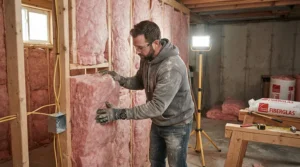
Here’s the pick that makes every other heater work better. DRICORE Subfloor R+ is a 1-inch panel of OSB bonded to closed-cell XPS foam, with an air-gap underside that lets incidental moisture escape. The manufacturer lists an R-value of 2.7 and claims it can raise finished-floor temperature by up to 10°C. It also says a typical 500 sq ft basement installs in an afternoon.
R-2.7 won’t match your wall insulation, but it matters because it creates a thermal break between your feet and a cold slab. A contractor writing about the original DRICORE panels in a Canadian home-reno magazine reported a 3°C bump in his own basement. That’s one account, not a lab test, but it shows the real-world effect is noticeable.
The panels interlock tongue-and-groove, so the install is DIY-friendly. The manufacturer cautions that shims help only minor unevenness, and that you shouldn’t stack panels on top of each other.
I couldn’t find enough independent reviews of this exact model to summarize responsibly. The trade account above is the clearest evidence I found, so check current buyer reviews on Amazon.ca.
Pros:
- ✅ Raises floor feel against cold concrete
- ✅ Air-gap design helps with moisture
- ✅ Interlocking panels suit DIY installers
Cons:
- ❌ Needs a reasonably level slab
- ❌ Lower R-value than the premium option
Plan on about C$2.50–C$3.50 per sq ft. The value verdict is strong for the comfort gain.
7. DRICORE Insul-Armor — R-4.1 premium floor warmth
When you want the warmest floor in the neighbourhood, DRICORE Insul-Armor raises the bar. It uses inorganic EPS foam, a 1-inch profile and an R-value of 4.1, with large 23-1/4 by 47-1/4 inch panels, so there are fewer seams. Each panel weighs under 2 lb and cuts with a knife. It’s rated for 3,650 lb per sq ft and carries a limited 25-year warranty.
Compare DRICORE Insul-Armor with DRICORE Subfloor R+. The jump from R-2.7 to R-4.1 is meaningful under bare feet, and the lighter, larger panels make installation faster. The trade-off is cost and the same need for a reasonably level slab.
Reviews summarized on a major U.S. home-improvement retailer’s page (an automated summary that includes incentivized reviews) report warmer floors in winter, cooler in summer, and easy installation, with a warning that the concrete should be level. Treat that as a theme, not hard proof.
For finished basements with luxury vinyl plank, laminate or engineered hardwood on top, it’s a smart foundation. For a dim utility corner, it’s overkill.
Pros:
- ✅ Highest R-value among these floor options
- ✅ Lightweight panels cut with a knife
- ✅ Long 25-year limited warranty
Cons:
- ❌ Higher cost per square foot
- ❌ Level slab strongly recommended
Budget about C$3–C$4 per sq ft, so roughly C$1,500–C$2,000 for 500 sq ft. It’s premium, and worth it if you’ll live on that floor.
Setting Up Your Basement Heater for Canadian Winter: The First 30 Days
Buying the heater is the easy part. These steps decide whether it works. They’re drawn from manufacturer guidance and standard heating practice, not personal testing.
Week one: find the cold. Hold a tissue near the rim joists, window wells and exterior door. A fluttering tissue marks an air leak. Seal those spots first, because no heater beats an open draft.
Week one: check the circuit. A plug-in unit like the Vornado VMHi300 should have its own 15 A circuit. Hardwired units like the Stelpro Classic B or Stelpro Prima belong to a certified electrician, as the manufacturer’s Q&A states.
Week two: place the heater low and on the cold side. Put baseboards under windows or along exterior walls. Put the Heat Storm Phoenix where the sitting or working area faces it.
Week two: add the thermostat and schedule. A programmable thermostat can drop the setpoint when nobody is down there.
Weeks three and four: manage moisture. A dehumidifier in the warm room keeps basement air drier, so the space feels warmer at the same temperature.
The mistakes people make in the first 30 days: running one huge heater instead of zoned heat, ignoring clearance around the unit, and skipping a CO alarm if any fuel-burning appliance shares the space.

Real-World Scenarios: Matching Heat to Your Basement
These are illustrative profiles, not real customers.
The family rec room (about 500 sq ft, used every evening). A cold slab and kids on the floor call for the combination approach. Start with DRICORE Subfloor R+, then add two or three hardwired Stelpro Prima SPR1502W units along exterior walls. Budget: several hundred dollars in heaters plus the subfloor cost. The floor does half the comfort work.
The home office (about 120 sq ft, used eight hours a day). The occupant mostly sits in one spot. A wall-mounted Heat Storm Phoenix HS-1500-PHX aimed at the desk delivers warmth where it’s needed and wastes less energy heating empty corners. Add the 750 W half-power mode for mild days. Budget: under C$300.
The rented basement suite (can’t modify the building). No electrician, no drilling. A Vornado VMHi300 on its own circuit with a programmable plug-in timer is the pragmatic route. If the landlord allows a rug and foam mats, that helps the floor.
The finished media room (about 350 sq ft, weekend use). Here the Dimplex 45-Inch Electric Fireplace Insert earns its keep as a seating-area heater and visual anchor. Keep a Stelpro Classic B Baseboard or two on the cold walls for background heat.
Problem → Solution: Cold Spots, Damp Air and Tripped Breakers
“The air is warm but my feet are freezing.” That’s the slab. Install DRICORE Insul-Armor or DRICORE Subfloor R+, or at minimum add dense foam mats and area rugs.
“The breaker keeps tripping.” A 1500 W plug-in heater draws about 12.5 A. Move other loads off the circuit, or switch to the 750 W setting of the Vornado VMHi300 while the other appliance runs.
“One corner is always colder.” That’s usually an air leak or an uninsulated rim joist. Seal it and add a baseboard like the Stelpro Classic B Baseboard right under that window.
“The room feels clammy even when heated.” Moisture is the culprit. Fix drainage and sump problems first, then run a dehumidifier. NRCan specifically warns against insulating the inside of a basement that has moisture problems.
“The heater makes ticking noises.” Overtightened screws are one documented cause for baseboards. Loosen the mounting slightly and let the metal expand freely.
How to Choose a Basement Heater for Canadian Winter: 7 Steps
- Measure the zone, not the whole basement. Heat only the space you actually use. That cuts the wattage you need.
- Match watts to insulation. A common guideline is 10 W per sq ft for well-insulated rooms, 12 W for poorly insulated rooms and 15 W for high ceilings. A 150 sq ft room needs about 1500 W, or up to 2250 W if the ceiling is tall.
- Decide permanent or portable. Hardwired baseboards are tidy and quiet. Plug-in units are flexible.
- Check the circuit. A 1500 W plug-in unit takes most of a 15 A circuit.
- Verify certification. Look for CSA or an equivalent Canadian-recognized mark on the product.
- Plan the thermostat. Many baseboards need a separate wall thermostat, so price it in from the start.
- Fix the envelope first. Insulation and floor upgrades lower the wattage you’ll need.
Basement Insulation: The Cheapest Heat You’ll Ever Buy
Insulation is the one purchase that works every hour of every winter day. The Save on Energy basement renovation guide recommends prioritizing it and lists the main types: batt and blanket, blown-in loose fill, rigid foam board and spray foam. It also tells you to consider R-value when selecting.
NRCan’s guide adds an important caveat about where the insulation goes. Interior insulation can fit neatly into a finishing plan. But it makes the foundation walls colder, and you should not insulate from the inside if the basement has leaks, dampness or efflorescence. Fix the sump pump or sewer backup before you begin. Exterior insulation means excavating, which costs more but keeps the foundation warmer.
For most people, the practical path is: air-seal the rim joists, solve moisture, insulate the walls, then use a subfloor. In other words, think of basement insulation as the multiplier on every other product in this guide. A modest heater in a sealed, insulated basement beats a powerful heater in a leaky one.
Cold Floor Solutions: Beyond Slippers and Wishful Thinking
Warm air rises, but cold concrete pulls heat out of your body through contact. That’s why cold floor solutions matter more than people expect. There are three practical layers.
A thermal-break subfloor. DRICORE Subfloor R+ and DRICORE Insul-Armor are the products to compare. The first costs less per square foot, and the second offers higher R-value and larger panels.
Soft finishes. Dense carpet with a thick pad, or foam interlocking mats in a play area, add comfort at a small cost, though they don’t replace insulation.
Electric radiant floor heating. Heated floors distribute heat well within a room, according to a Quebec retailer’s heating guide, and they’re especially popular in bathrooms. They’re usually installed under a finished surface and need an electrician.
If you only do one thing for floors, start with the subfloor. It also protects flooring from moisture, which a rug can’t do.
✨ Don’t Miss These Exclusive Deals!
🔍 Take your basement heater for Canadian winter plan to the next level with these carefully selected products. Click on any highlighted item to check current pricing and availability. These picks will help you create a basement your family will actually want to live in!
Basement Heater Types Compared: Baseboard, Infrared, Fan, Fireplace and Mini-Split
When comparing basement heater types, the real question is what you’re paying for. Is it up-front simplicity, running cost, or comfort?
| Type | Up-front cost | Running cost | Install | Best for |
|---|---|---|---|---|
| Electric baseboard (Stelpro Classic B Baseboard, Stelpro Prima SPR1502W) | Low | High (resistive) | Hardwired | Quiet, permanent zone heat |
| Plug-in fan (Vornado VMHi300) | Low | High (resistive) | None | Renters, flexible rooms |
| Infrared (Heat Storm Phoenix HS-1500-PHX) | Moderate | High (resistive) | Plug-in or wall mount | Desk and couch zones |
| Electric fireplace (Dimplex 45-Inch Electric Fireplace Insert) | Higher | High (resistive) | Built-in or plug-in | Ambiance plus supplemental heat |
| Ductless mini-split | Highest | Lowest | Professional | Whole-basement efficiency |
Looking at the comparison above, every electric resistance option has similar running costs per kilowatt-hour of heat. So pick on convenience and room fit, not on efficiency claims. A Quebec retailer’s guide notes that convectors use about 10% less energy than baseboards and heat rooms faster, which is a small edge. The mini-split is the only type in this table that can fundamentally change running costs, but at a much higher up-front price.
Whole Basement Heating Options: When One Heater Isn’t Enough
Some basements are simply too big or too open for a single heater. These are your whole basement heating options.
Perimeter baseboards. Several hardwired units along cold walls, each on a thermostat. It’s simple, quiet and zoned, and every watt costs the same to run.
Extending the furnace ductwork. A professional can add supply and return runs, but the furnace must have the capacity for the extra load. Don’t assume it does.
A ductless mini-split. This is the efficiency play. NRCan’s performance assessment of a cold-climate mini-split found mini-splits used significantly less energy than the standard system and would save homeowners money versus electric baseboard, fuel oil or propane. The same study noted that, during the coldest periods, mini-split temperatures dropped below the setpoint. In regions with cheap natural gas, operating costs can end up higher.
Published installed-cost estimates vary widely, from about C$4,500 to C$15,000 depending on size and number of heads. Get local quotes and ask about provincial rebates.
Heating Zone Efficiency: Why Heating Less Space Wins
Heating zone efficiency is the simple idea that you shouldn’t heat a room nobody is in. In a basement, that means closing doors, splitting the space into zones and putting each zone on its own thermostat.
NRCan’s mini-split research specifically raises the zoned approach as a way to save energy, and the logic holds for baseboards too. A 750 W Stelpro Classic B Baseboard in a small guest room, set back to a low temperature when empty, costs far less than a single big heater running the whole level. One Canadian heating-cost guide estimates each degree of setback saves roughly 3% on heating costs, though your result will vary.
Use the half-power setting on the Heat Storm Phoenix or the low setting on the Vornado VMHi300 for maintenance heat. Reserve full power for warm-up. Then let the thermostat do the rest.
Long-Term Cost & Maintenance: What a Basement Heater Really Costs
A 1,500 W heater uses 1.5 kWh for every hour at full output. Rates differ by province, so these are illustrative examples based on published figures, not your bill.
| Rate (per kWh) | Cost per hour | Cost per 8-hr evening | Cost per 30 days (8 hrs/day) | Best for |
|---|---|---|---|---|
| C$0.07 | about C$0.11 | about C$0.84 | about C$25 | Low-rate regions: baseboards like Stelpro Prima SPR1502W are viable |
| C$0.13 | about C$0.20 | about C$1.56 | about C$47 | Mid-rate: use zoning and the Heat Storm Phoenix half-power mode |
| C$0.17 | about C$0.26 | about C$2.04 | about C$61 | High-rate: consider a mini-split and a DRICORE Insul-Armor floor |
The table shows how rate drives everything. At higher rates, a resistive heater running every evening adds up fast, which is why insulation and zoning matter so much. Maintenance is cheap: vacuum dust from fins and grills each fall, check thermostat accuracy, and inspect cords on plug-in units like the Vornado VMHi300.
Safety, Regulations and Certification for Basement Heaters
Basements concentrate risk: low ceilings, stored clutter and sometimes a furnace or water heater nearby. Start with the basics.
Choose electric or professionally vented systems. Health Canada’s carbon monoxide guidance says never to use portable fuel-burning equipment indoors, and recommends working CO detectors. In Ontario, CO alarms are legally required in homes with a fuel-burning appliance, fireplace or attached garage.
Respect the electrical code. Canadian electrical work is regulated by the Canadian Electrical Code, and hardwired baseboards should be installed by a certified electrician. NRCan also reminds homeowners to check municipal permit requirements before retrofitting.
Look for certification. Products such as the Stelpro Prima SPR1502W are listed as CSA Listed. Prefer equivalent Canadian-recognized marks on any plug-in heater.
Keep clearances. Keep drapes, cords and furnishings away from every heater, as the Stelpro Prima user guide notes.
Frequently Asked Questions
❓ Can I use a propane or kerosene heater in my basement in Canada?
❓ Do I need a permit to install a hardwired basement baseboard heater?
❓ Why is my basement floor cold when the air feels warm?
❓ What temperature should I set in a basement during winter?
❓ Is a space heater cheaper than a mini-split for a finished basement?
Conclusion
The smartest basement heater for Canadian winter isn’t a single product. It’s a sequence: seal the leaks, fix the moisture, insulate, warm the floor and then add the right heat for each zone.
If you want quiet, permanent warmth, the Stelpro Classic B Baseboard is the budget route and the Stelpro Prima SPR1502W is the tougher choice for busy family space. If you can’t modify the house, the Vornado VMHi300 brings plug-in flexibility. For a desk or couch corner, the Heat Storm Phoenix HS-1500-PHX heats where you actually sit, and the Dimplex 45-Inch Electric Fireplace Insert adds a focal point to a finished media room. Underneath it all, DRICORE Subfloor R+ and DRICORE Insul-Armor deal with the cold floor that no wall heater can fix. If your electricity rate is high and the basement is large, price out a mini-split too.
Check current prices and availability on Amazon.ca, confirm certification and thermostat compatibility, and start with the zone you use most. Your feet will thank you.
Recommended for You
- Basement Heaters Under $150 CAD: 7 Smart Picks For 2026
- Electric Fireplace Insert Vs Freestanding Electric Fireplace 2026
- Mantel Electric Fireplace For Canadian Home: 7 Proven Picks 2026
Disclaimer: This article contains affiliate links. As an Amazon Associate, I earn from qualifying purchases. If you purchase products through these links, we may earn a small commission at no additional cost to you.
✨ Found this helpful? Share it with your friends! 💬🤗
