
In This Article
A dehumidifying heater for humid basement use is any appliance, or deliberate pairing of appliances, that pulls water vapour out of cold, damp air while adding enough warmth to stop that air from sliding back to its dew point. Some units do both jobs in one shell. Others get there through clever physics or a smart two-device combo.
Here’s the thing most product pages won’t tell you: a true all-in-one is rarer than the marketing suggests. What you’ll actually find falls into three camps. There are portable air conditioners with a heat mode and a dehumidify mode, desiccant dehumidifiers that breathe out warm, dry air, and ordinary compressor dehumidifiers that work best when a separate heater keeps the room above roughly 18°C. This guide sorts all three, with real models, honest trade-offs and Canadian context.
Why bother? Health Canada’s guide to addressing moisture and mould recommends keeping relative humidity between 30% and 50%, using a dehumidifier when needed, and cleaning up visible mould whatever the species. Basements make that harder than any other room. Concrete stays cold, summer air arrives warm and soggy, and winter brings its own condensation problems.
I’m going to be straight with you about one more thing. I haven’t personally tested any of these units, so nothing below is a hands-on claim. What you’ll get is analysis built on published specs, independent lab-style reviews, and the recurring themes in genuine user feedback. Think of it as a well-briefed friend with a spreadsheet, minus the dodgy sales pitch.
Quick Comparison: Which Dehumidifying Heater for Humid Basement Fits You?
Before the deep dives, here’s the lay of the land. Prices are ballpark ranges in Canadian dollars at the time of research (October 2026) and will drift, so check current pricing before you commit.
| Product | Type | Coverage | Heat approach | Price range | Best For |
|---|---|---|---|---|---|
| Whynter ARC-14SH | Dual-hose portable AC with heat | Up to 500 sq ft (46 m²) | Dedicated heat mode | C$700-C$950 | Large finished basements |
| Midea DUO 12,000 BTU with Heat | Inverter portable AC with heat | Up to 550 sq ft (51 m²) | Dedicated heat mode | C$800-C$1,100 | Smart-home households |
| SereneLife 10,000 BTU AC with Heater | Portable AC with heat | Up to 450 sq ft (42 m²) | Dedicated heat mode | C$450-C$700 | Budget buyers |
| Ivation 13-Pint Desiccant | Desiccant | Up to 270 sq ft (25 m²) | Warm exhaust air | C$300-C$420 | Cold, small, unheated rooms |
| Ivation 19-Pint Desiccant | Desiccant | Up to 410 sq ft (38 m²) | Warm exhaust air | C$380-C$550 | Mid-size cold basements |
| Frigidaire FFAP5034W1 | 50-pint compressor | Large open basements | Incidental heat from compressor | C$400-C$560 | Big, soggy basements |
| Midea MAD50PS1AWT-C | 50-pint compressor | Large open basements | Incidental heat from compressor | C$380-C$540 | Alternative to the Frigidaire |
The table makes one thing obvious: the combined units cost roughly double what a plain compressor model does, and for that money you’re buying year-round flexibility, not extra water-removal muscle. If your basement is a warm, wet summer problem, a Frigidaire FFAP5034W1 or Midea MAD50PS1AWT-C probably wins on value. If it’s a cold, clammy winter problem, the desiccant Ivation units or a heat-capable portable AC make far more sense. Finished spaces you actually live in tilt toward the Whynter ARC-14SH or Midea DUO.
💬 Just one click — help others make better buying decisions too!😊
Top 7 Dehumidifying Heater for Humid Basement Options: Expert Analysis
1. Whynter ARC-14SH — dual-hose heat for big finished basements
The dual-hose design is the quiet hero here. A single-hose portable unit sucks room air out through its exhaust, which pulls humid air in from every crack to compensate. Two hoses avoid that tug-of-war, which matters in a basement where the replacement air is usually damp.
On paper, this is a 14,000 BTU (ASHRAE) unit, roughly 9,200-9,500 BTU by the stricter SACC measure, with about 13,000 BTU of heat and coverage up to 500 sq ft. Dehumidifying capacity is listed around 71 pints a day (about 34 L), though some retailers print higher figures, so treat the lower number as the safer planning figure. Noise sits below roughly 56 dBA. The spec sheet won’t tell you this, but the real catch is venting: you need a window or another exhaust route, and basement windows are often small.
Reviewers across retailers praise the cooling and general build, with the common complaint being that it runs almost constantly in peak heat. Verified feedback on its basement heating performance is thinner, so I’d treat that side as less proven. It carries a one-year warranty and a three-year compressor warranty, and it’s UL listed, so look for CSA or cUL marking guidance in the manual for Canadian electrical comfort.
Pros:
- ✅ Dual-hose design avoids drawing in humid air
- ✅ Real heat mode plus dehumidify mode
- ✅ Long compressor warranty for the category
Cons:
- ❌ Needs a window or exhaust route
- ❌ Heavy and pricey for a basement-only job
Expect roughly C$700-C$950; strong value only if you’ll use heat, cooling and drying across all seasons.
2. Midea DUO 12,000 BTU with Heat — inverter smarts and app control
Midea’s party trick is the hose-in-hose layout, where one concentric hose moves air both ways so the room isn’t left starved and gulping damp air from elsewhere. It’s a clever fix for the single-hose problem without a second window cut-out.
The heat-capable version is a 4-in-1 (cooling, heating, dehumidifying and fan), covers up to roughly 550 sq ft (51 m²), and uses variable-speed inverter technology that Midea says saves over 40% energy against federal minimums in cooling mode. The SmartHome app lets you schedule runs from the couch, which matters when a basement is the one room you forget about until it smells. The non-heat sibling runs as quietly as 42 dB on low. One caution: heat and cooling-only versions share a name, so confirm the model number includes heat before ordering.
User feedback I could verify centres on quiet running and efficiency, plus the usual portable-AC grumbles about bulk. Heating performance reports in actual unheated basements are limited, so I’d stay measured.
Pros:
- ✅ Hose-in-hose design limits infiltration
- ✅ Wi-Fi scheduling and voice control
- ✅ Efficient inverter operation and quiet low speed
Cons:
- ❌ Heat and non-heat versions look alike
- ❌ Highest price in this lineup
Plan on about C$800-C$1,100; the premium buys convenience and efficiency rather than raw drying power.
3. SereneLife 10,000 BTU AC with Heater — cheapest route to four modes
If the Whynter and Midea feel like overkill, this is the budget-conscious entry. It offers cooling, heating, dehumidifying and fan modes on rolling wheels, with a slim body that tucks beside a furnace.
It covers up to about 450 sq ft (42 m²), which suits a laundry-plus-storage basement better than an open-concept rec room. Here’s what the spec sheet glosses over: at this price, expect modest heating output. Treat it as a chill-chaser for a room you’re already insulating, not a replacement for baseboards. Check the hose design and window kit sizing before buying, because a single exhaust hose can pull humid air in through cracks.
I couldn’t find enough credible independent review data on this specific model to summarise sentiment responsibly, so I won’t pretend otherwise. Read recent verified buyer comments on the listing, paying attention to noise and heating complaints.
Pros:
- ✅ Four modes at a lower price
- ✅ Wheels make it easy to relocate
- ✅ Suits smaller basement rooms
Cons:
- ❌ Limited independent review evidence
- ❌ Modest heat compared with dedicated heaters
Aim for roughly C$450-C$700; decent value for small, occasionally used spaces, shaky for anything bigger.
4. Ivation 13-Pint Desiccant — warm, dry air in cold rooms
Desiccant dehumidifiers swap the refrigerated coil for a moisture-absorbing wheel, which is why they keep working when compressor models ice over. A side effect is warm exhaust, and in a cold basement that’s a bonus rather than a flaw.
The numbers: 13 pints per day (about 6 L) at 68°F/60% RH, an operating range of 33°F to 104°F (roughly 1°C to 40°C), coverage up to 270 sq ft (25 m²), and power draw of 470 W on high and 280 W on low. It weighs about 14 lb, so shifting it between rooms won’t wreck your back. Reviewers note the exhaust runs about 8-10°F warmer than the room, which helps a chilly storage nook, but the 0.5-gallon tank fills fast, so use the supplied continuous drain hose.
The recurring review themes: great in cold, quiet on low, and underpowered for large basements. Higher electricity use per pint than compressor units is also a genuine trade-off.
Pros:
- ✅ Works down to near-freezing temperatures
- ✅ Warm exhaust air takes the edge off
- ✅ Light, with a continuous drain hose included
Cons:
- ❌ Small coverage area of 270 sq ft
- ❌ Costlier to run per pint than compressors
Count on about C$300-C$420; excellent for cold closets, crawlspaces and utility rooms, poor value for open basements.
5. Ivation 19-Pint Desiccant — the bigger cold-basement sibling
Same cold-weather engineering, more muscle. This is the one I’d shortlist for a basement that sits near 5-10°C for months and still needs real drying.
It removes about 19 pints a day (around 9 L), covers up to 410 sq ft (38 m²), runs from 33°F to 104°F, and adds an LCD display, sleep mode and continuous drain. The step-up in capacity over the 13-pint model matters more than it sounds: at 410 sq ft you can cover a typical two-room basement without running the machine flat out. The caveat is the same as its sibling’s: desiccant units exhale warm air, which is lovely in January and counterproductive when you’re fighting a July heat wave with an air conditioner upstairs.
Review themes echo the smaller unit: reliable in cold, comparatively quiet, low-maintenance with no compressor to fail. Expect higher power consumption per litre removed, and note that capacity ratings are lab-condition figures; real-world output in a 5°C basement will differ.
Pros:
- ✅ Larger 410 sq ft coverage
- ✅ No compressor to fail or ice up
- ✅ Sleep mode and LCD controls
Cons:
- ❌ Warm exhaust is a summer liability
- ❌ Higher energy use per litre removed
Budget roughly C$380-C$550; good value for cold, mid-sized basements where heat is welcome.
6. Frigidaire FFAP5034W1 — the heavyweight for soggy open basements
RTINGS named this its top basement dehumidifier, scoring it 8.6 for basement use. It’s a 50-pint ENERGY STAR model with a built-in pump and three fan speeds, which makes it the closest thing to a set-and-forget workhorse here.
Fifty pints is about 24 L a day at test conditions, and the pump means you can send water to a sink or sump without hauling buckets. Noise is rated near 47 dB. RTINGS also notes it emits quite a bit of heat, which is physics rather than a design choice: every watt a dehumidifier draws ends up as warmth in the room. That’s why a compressor unit plus a separate CSA-certified heater makes a credible, cheap alternative to a combined unit, provided the room stays above roughly 18°C, the threshold at which Natural Resources Canada suggests a low-temperature model.
Retail reviewers describe it as a quiet, effective workhorse in basements. Confirm the Canadian listing, warranty and low-temperature behaviour before buying.
Pros:
- ✅ Top-ranked basement performer in independent testing
- ✅ Built-in pump for hands-off drainage
- ✅ ENERGY STAR certified
Cons:
- ❌ Struggles below roughly 18°C without help
- ❌ Bulkier than small-room units
Typically C$400-C$560; superb value for large basements that stay reasonably warm.
7. Midea MAD50PS1AWT-C — the credible Frigidaire alternative
Think of this as the Frigidaire’s close rival. RTINGS rates it 8.5 for basements versus the Frigidaire’s 8.6, a gap small enough to call a draw, though one comparison page declared the Midea the better overall dehumidifier while another found no major basement differences.
It’s a 50-pint model aimed at large spaces, and RTINGS lists its review as early access, so treat conclusions as provisional. The Frigidaire still moves more air through big open areas, which can matter in an L-shaped basement. Where the Midea might pull ahead is general refinement and brand support, though I’d want to read recent Canadian warranty terms before leaning on that.
Review sentiment is thinner here simply because the independent review is newer. That’s an honest gap, not a flaw: check verified buyer comments from the last few months for noise and pump reliability.
Pros:
- ✅ Near-identical basement score to the Frigidaire
- ✅ Canadian-market model suffix suggests local support
- ✅ Large 50-pint capacity
Cons:
- ❌ Independent review still in early access
- ❌ Less airflow than the Frigidaire in big rooms
Roughly C$380-C$540; sensible value, especially if it undercuts the Frigidaire on the day you shop.
Top 7 at a Glance
| Product | Capacity / Output | Operating note | Review themes | Price range | Best For |
|---|---|---|---|---|---|
| Whynter ARC-14SH | ~71 pints/day; 13,000 BTU heat | Dual hose; needs venting | Strong cooling; runs constantly in heat | C$700-C$950 | Big finished basements |
| Midea DUO 12,000 BTU with Heat | 12,000 BTU; 4-in-1 | Hose-in-hose; app control | Quiet, efficient | C$800-C$1,100 | Smart-home users |
| SereneLife 10,000 BTU AC with Heater | 10,000 BTU; 4 modes | Check hose design | Limited verified data | C$450-C$700 | Small, budget rooms |
| Ivation 13-Pint Desiccant | 13 pints/day | Works from ~1°C | Warm, quiet, small | C$300-C$420 | Cold closets |
| Ivation 19-Pint Desiccant | 19 pints/day | Works from ~1°C | Reliable in cold | C$380-C$550 | Cold mid-size basements |
| Frigidaire FFAP5034W1 | 50 pints/day; pump | Best above ~18°C | Quiet workhorse | C$400-C$560 | Large soggy basements |
| Midea MAD50PS1AWT-C | 50 pints/day | Best above ~18°C | Early-access review | C$380-C$540 | Frigidaire alternative |
Reading across the table, the three combined units lead on flexibility but pay for it in price and venting hassle, while the two Ivation desiccant models own the cold-room niche and the 50-pint compressors own raw capacity. If you’re unsure, the smartest move for most people is a Frigidaire FFAP5034W1 or Midea MAD50PS1AWT-C plus a small heater, unless your basement routinely drops below 15°C.
Combined Dehumidifier Heater Units vs Desiccant vs Compressor-Plus-Heater
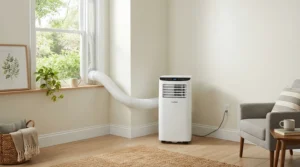
Now that you’ve met the contenders, let’s put the three strategies in the ring. Combined dehumidifier heater units are the tidy answer: one footprint, one plug, a remote. But there’s a catch most listings skate past. These machines are usually portable air conditioners, so the “dehumidifier” function often runs in a separate mode from the heater, and heating mode can warm the room without removing moisture. Check the manual to learn whether your model runs both together or switches between them.
Desiccant units are the specialists. By pulling moisture onto a rotating wheel and heating the air to release it, they stay effective near freezing. The dehumidifier overview on Wikipedia is a handy primer on how both desiccant and refrigeration designs work. Compressor models, meanwhile, are the efficiency champions in warm, wet air but lose their edge as the room cools.
| Strategy | Strength | Weakness | Best For |
|---|---|---|---|
| Combined unit (e.g., Whynter ARC-14SH) | One device, four seasons | Venting, price, mode switching | Finished living spaces |
| Desiccant (e.g., Ivation 19-Pint Desiccant) | Cold-weather drying, warm exhaust | Higher energy per litre | Cold basements and crawlspaces |
| Compressor plus heater (e.g., Frigidaire FFAP5034W1) | Cheapest per litre removed | Needs a second appliance | Large basements above 18°C |
In plain terms, desiccant suits cold rooms, compressor-plus-heater suits big warm-ish ones, and a combined unit is the convenience pick when you’ll use every mode. A Midea DUO 12,000 BTU with Heat offers the most convenience, but the compressor-plus-heater route offers the most drying per dollar. Choose by temperature first, floor area second, and budget third.
How to Choose a Dehumidifying Heater for Humid Basement Spaces
Choosing well comes down to a short, honest checklist. Work through it in order.
- Measure your coldest typical temperature. If the basement sits near or below 15°C for weeks, compressor-only models will struggle, which points you to desiccant or a heat-capable combination.
- Calculate floor area and moisture load. Natural Resources Canada’s sizing chart scales capacity with dampness: a space that merely feels damp needs less than one where walls sweat. Remember that two pints is roughly one litre.
- Decide how you’ll drain it. A built-in pump or continuous drain hose beats emptying buckets, especially for units running unattended for months.
- Check venting if you want heat and cooling. Portable-AC combos need an exhaust path, so measure your basement window or consider a non-window kit.
- Prefer ENERGY STAR and look for the label. According to Natural Resources Canada, certified dehumidifiers use nearly 15% less energy on average than standard models.
- Confirm safety marks and Canadian warranty. Look for CSA or cUL certification and ask whether warranty service covers Canadian purchases.
- Plan for monitoring. A cheap hygrometer tells you whether the machine is working; guessing from smell is a poor strategy.
Follow those seven steps and you’ll rule out roughly two-thirds of what looks tempting online.
Humidity Levels for Basements: The Numbers That Matter
Let’s talk targets. Health Canada recommends keeping indoor relative humidity between 30% and 50%, and that range applies to basements as firmly as bedrooms. Mid-40s is the sweet spot: low enough to discourage mould and dust mites, high enough to protect wood and your sinuses.
Why do humidity levels for basements swing so wildly? Because cold concrete and warm summer air make poor neighbours. When damp air touches a cool wall, it hits its dew point and condenses, even if your hygrometer reads a polite 55%. Meanwhile, the Canada Mortgage and Housing Corporation notes that every home releases roughly 10 to 50 litres of moisture daily from cooking, bathing and breathing, and a damp basement can contribute more moisture than all other sources combined.
Practically, that translates to three thresholds worth remembering:
- Under 50%: you’re in the safe zone.
- 50-60%: a watch zone, especially in summer.
- Above 60%: most mould growth takes off here, and musty smells usually follow.
A word on heat. Warming air lowers its relative humidity without removing a drop of water, so a heater alone makes your hygrometer look better while the moisture load stays put. Pairing heat with real dehumidification is what keeps those readings honest.
Basement Humidity Control Heater: What to Expect in Real-World Performance
A basement humidity control heater sounds almost too good: warmth and dryness in a single appliance. In practice, here’s what each category realistically delivers.
Combined portable ACs with heat offer decent warmth, but typically rated for room sizes between 450 and 550 sq ft, and their heating output is sized for comfort, not for fighting a frozen concrete shell. Expect to warm a finished room, not a bare foundation. Desiccant units, by contrast, raise room temperature a few degrees at best, since their exhaust is only about 8-10°F above ambient. That’s welcome, but it won’t replace baseboards.
Compressor models deliver a gentler version of the same effect. Because the electricity they consume ends up as heat in the room, a 50-pint unit running steadily noticeably takes the chill off a closed basement, which is why RTINGS flags the Frigidaire FFAP5034W1 as emitting quite a bit of heat. Add a small oil-filled radiator and you’ve effectively built your own basement humidity control heater for less than a combined unit costs.
What the spec sheet won’t tell you, but physics does, is that noise, coverage and venting matter as much as heat. A beautifully warm room that’s also 56 dB loud, like the upper end of the Whynter ARC-14SH‘s noise range, may not suit a basement bedroom. Match the unit to the room’s job.
Moisture Reducing Heater: Features That Actually Matter (And Those That Don’t)
Every listing shouts about features. A moisture reducing heater should be judged on a shorter list.
Features that matter:
- Low-temperature operation. Desiccant units like the Ivation 13-Pint Desiccant work from near-freezing; most compressors want 15-18°C or more.
- Continuous drainage. A pump or hose is the difference between a machine you ignore and one you resent.
- Humidistat accuracy. All ENERGY STAR dehumidifiers include a built-in humidistat, per Natural Resources Canada, but check that the unit is easy to set and read.
- Venting design. Dual-hose or hose-in-hose designs reduce infiltration of humid air.
- Warranty length. Compressors fail; a three-year compressor warranty, as on the Whynter, is real insurance.
Features that mostly don’t:
- Fancy light displays or “mood” colours. Pretty, irrelevant.
- Sky-high BTU numbers without SACC context. ASHRAE ratings flatter portable ACs; the stricter SACC figure is closer to reality.
- Extra “air purifier” claims on basic filters. A washable filter protects coils; it won’t turn a basement into a clean room.
If a feature doesn’t change how much water leaves the air, how warm the room gets, or how often you touch the machine, it’s décor. Keep your attention on drain, temperature range and venting, and you’ll avoid most buyer’s remorse.
Mould Prevention: Keeping a Humid Basement Healthy
Mould prevention is the real reason you’re buying any of this. Health Canada says indoor mould growth may pose a health hazard, recommends controlling dampness, and advises cleaning up visible mould whatever type it is. It also notes there’s no health-based exposure limit for indoor mould, so the practical goal is prevention, not measuring.
Here’s a sensible mould prevention routine for a humid basement:
- Hold humidity at 30-50% year-round, using a hygrometer to verify.
- Fix leaks promptly. No dehumidifier outpaces a weeping foundation.
- Improve ventilation at moisture sources, such as dryers and bathroom fans.
- Dry wet materials fast. After flooding or a pipe burst, speed matters more than elegance.
- Raise cold-surface temperatures. Gentle background heat reduces condensation on walls and window wells.
- Keep stored items off the floor and away from exterior walls, with air gaps behind shelving.
A word of caution. If you find extensive mould, don’t treat a dehumidifier as a cure. It stops new growth by removing moisture, but existing colonies need proper cleanup, and larger areas deserve a qualified professional. Sensitive household members, especially people with asthma or allergies, should talk with a healthcare professional about symptoms linked to indoor air.
Setup and First 30 Days: A Practical Usage Guide
Plugging the machine in is the easy 10%. Here’s the schedule that gets you results without drama.
Day 1: Placement and drainage. Put the unit in an open spot, a few inches from walls, and away from dusty sources that clog coils. Route the drain hose to a floor drain or sump, keeping it away from electrical cords and connections as Natural Resources Canada advises. Close basement windows and exterior doors so you’re not drying the outdoors.
Days 2-3: Baseline reading. Place a hygrometer mid-room at about waist height and note the starting number. Set the humidistat to around 45%. If the reading barely moves after 48 hours, you likely have undersized capacity or an unseen moisture source.
Week 1: Tune it. In a cold basement, add a small heater or run a desiccant model so the room holds above 15-18°C. In a warm, wet one, run the compressor model continuously until humidity stabilizes, then let the humidistat cycle it.
Weeks 2-4: Maintain. Wash filters every couple of weeks during heavy use, empty any bucket daily, and check the drain hose for kinks. Watch for ice on coils, a sign the room is too cold for a compressor model.
Common first-month mistakes: leaving a door open to an unconditioned room, setting the target too low (below 35% wastes electricity), and forgetting that a heater alone only changes the reading, not the moisture.
Real-World Scenarios: Three Canadian Basements, Three Different Answers
These profiles are illustrative, not anecdotes. They show how the reasoning plays out.
Scenario 1: The cold laundry basement in Halifax. 400 sq ft, unfinished, around 8-12°C in winter, used daily for laundry. Budget about C$500. The Ivation 19-Pint Desiccant is the logical fit: it works at low temperatures, covers the space, and its warm exhaust helps. A compressor unit would likely ice up for much of the winter.
Scenario 2: The rental basement suite in Toronto. 600 sq ft, finished, lived in year-round, with a small window. Budget around C$900. The Midea DUO 12,000 BTU with Heat offers app control and heating and cooling without ripping out a window frame, though the window or vent route still needs planning. Because tenants vary, confirm the landlord allows window-kit installation.
Scenario 3: The big rec room in Winnipeg. 1,000 sq ft, finished, kept at about 18-20°C by the furnace, with a summer humidity problem. Budget around C$550. Here, the best answer is plain compressor power: a Frigidaire FFAP5034W1 with a pump. Heat isn’t the problem, volume is. If the furnace slacks in January, add a small heater rather than buying a combo.
The lesson: temperature profile first, floor area second, and lifestyle third. Matching those three beats chasing the highest spec.
✨ Don’t Miss These Exclusive Deals!
🔍 Take your basement comfort to the next level with the products above. Click on any highlighted item to check current pricing and availability. A dry, warm basement is closer than you think, and your family will love the fresh, musty-free air!
Damp Basement Solutions: A Problem-and-Solution Guide
Appliances treat symptoms. Damp basement solutions work best when you fix causes first, a point the Canada Mortgage and Housing Corporation’s own guidance on fixing a damp basement is built around: diagnose before you spend. Here’s how common problems map to practical answers.
Problem 1: Walls feel cold and sweat in summer. Solution: This is condensation from warm air meeting cool concrete. Run a compressor model like the Midea MAD50PS1AWT-C and consider insulating or sealing exposed walls over time.
Problem 2: Musty smell in winter, even with no visible water. Solution: Cold air holds less moisture, so winter dampness often comes from poor ventilation and cold surfaces. A desiccant unit such as the Ivation 13-Pint Desiccant suits small spaces; for larger ones, add background heat.
Problem 3: The dehumidifier ices up. Solution: The room is too cold for a compressor. Raise the temperature with a heater or switch to desiccant technology.
Problem 4: Humidity won’t drop below 55%. Solution: Check for leaks, wet downspouts, unvented dryers and an open sump. Capacity helps, but a hidden water source can beat any unit.
Problem 5: Water everywhere after emptying the tank. Solution: Install a pump or continuous drain, as on the Frigidaire FFAP5034W1.
Notice how often the fix is temperature plus drainage rather than “buy more watts.” That’s the theme of the whole guide.
Long-Term Cost and Maintenance
A purchase price is only the opening bid. Running costs depend on wattage, hours and your provincial electricity rate. The Ivation 13-Pint Desiccant draws roughly 470 W on high, so twelve hours a day uses around 5.6 kWh, while ENERGY STAR compressor models are typically more efficient per litre removed in warm rooms. Natural Resources Canada measures efficiency by integrated energy factor in litres per kilowatt-hour, so prefer the highest figure you can find.
Maintenance matters just as much:
- Clean filters regularly, as dirty ones cut efficiency.
- Inspect drain lines for kinks and mineral build-up.
- Wipe coils and grilles before the damp season starts.
- Store properly if you shut the unit down for summer or winter.
| Cost factor | Combined units | Desiccant | Compressor + heater |
|---|---|---|---|
| Upfront price | Highest | Medium | Lowest to medium |
| Running cost in warm rooms | Medium | Highest | Lowest |
| Running cost in cold rooms | Medium | Medium | Medium (heater adds) |
| Typical lifespan concern | Compressor and hoses | Rotor and heater | Compressor and pump |
| Best For | Finished, multi-season rooms | Cold, small spaces | Large, moderately warm basements |
The takeaway: a compressor model plus a CSA-certified heater usually wins on total cost if your basement holds above 15-18°C, while the Ivation 19-Pint Desiccant earns its higher running cost only where cold would otherwise cripple a compressor. The combined units justify themselves through convenience and year-round use rather than lowest cost, so buy a Whynter ARC-14SH or Midea DUO 12,000 BTU with Heat only if you’ll lean on all four modes.
Safety and Canadian Regulations Guide
Moisture and electricity share a room, so a little care goes a long way. Look for CSA or cUL certification on any heater or dehumidifier you plug in; ENERGY STAR indicates efficiency, not electrical safety. Dehumidifiers in Canada are also subject to federal energy efficiency regulations, and many carry an EnerGuide label showing energy consumption compared with similar models.
Practical safety rules for a humid basement:
- Plug directly into a grounded outlet. Avoid extension cords and power bars for heaters.
- Keep drain hoses away from cords and connections.
- Don’t cover or crowd heaters. Leave clearance around any heater and its vents.
- Use ground-fault protection where appropriate. Basements with potential water deserve GFCI-protected outlets; ask a licensed electrician if you’re unsure.
- Check tip-over and overheat protection on any space heater you pair with a dehumidifier.
- Mind your province. Rules and warranty protections vary, and Quebec has specific consumer rules about repairs.
If your basement has flooded or shows significant structural dampness, call a qualified professional before powering anything on. An appliance is never a substitute for fixing a leak.
FAQ
❓ Can a dehumidifier heat a basement on its own?
❓ What size unit do I need for a damp basement of 800 sq ft?
❓ Is it safe to run a space heater and dehumidifier at the same time?
❓ How much electricity does a desiccant dehumidifier use?
❓ Will a portable air conditioner with heat work in an unheated basement?
Conclusion
Here’s the short version. A true all-in-one dehumidifying heater for humid basement use exists, but it’s the expensive, flexible option, and for many Canadian basements a smarter build is a compressor dehumidifier plus a small certified heater. If the room is cold, desiccant models like the Ivation 19-Pint Desiccant keep drying where compressors fail. If you want one box for every season, the Whynter ARC-14SH and Midea DUO 12,000 BTU with Heat are the strongest candidates, with the SereneLife 10,000 BTU AC with Heater as the budget route.
Whichever you pick, anchor the decision in numbers: aim for 30-50% humidity, measure with a hygrometer, fix the water source, and size the unit to the room’s real temperature. Do that and the combined dehumidifier heater units, desiccant models and 50-pint workhorses above can all do their jobs well.
The cheapest dehumidifier is the one that actually keeps mould away, so spend where your basement’s problem really lives. Check current prices, compare warranty terms and read the latest verified feedback before you buy.
✨ Ready to dry out for good?
🏠 Choose the option that matches your basement’s temperature, size and budget, click through to check current pricing and availability, and give your home the dry, healthy lower level it deserves!
Recommended for You
- Crawl Space Heater To Prevent Frozen Pipes: 7 Proven Picks (2026)
- Crawl Space Heater For Cold Climate: 7 Proven Picks 2026
- Basement Heater For Canadian Winter: 7 Best Warm-Up Picks 2026
Disclaimer: This article contains affiliate links. As an Amazon Associate, I earn from qualifying purchases. If you purchase products through these links, we may earn a small commission at no additional cost to you.
✨ Found this helpful? Share it with your friends! 💬🤗
