
In This Article
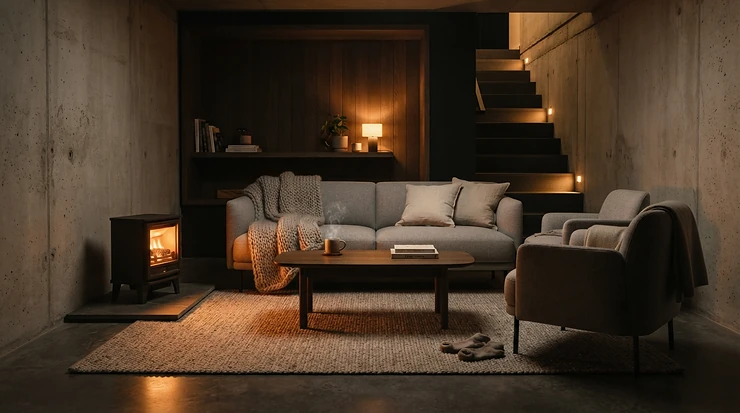
It’s mid-October, the first frost has already visited, and your basement has started giving off that walk-in-fridge energy. Concrete walls, a slab floor and soil on the other side of everything: below-grade rooms hold cold like a grudge. The good news is that basement heaters under $150 CAD can turn that room from “storage unit” to “place a human would voluntarily sit” without a contractor or a renovation permit.
What is a basement heater? A basement heater is a portable or fixed electric space heater sized and placed to warm a below-grade room. According to the general definition of a space heater, it heats one room rather than a whole house. In Canada, plug-in versions typically run on a standard 120 V outlet at up to 1500 W.
Here’s the thing most buyers miss. Shopping for affordable basement heating isn’t really about the heater. It’s about three numbers: how many square feet you need to warm, how many watts your circuit can safely give you, and how many months you’ll use it. Get those right and a C$40 fan heater can outperform a C$150 radiator in the wrong room. Get them wrong and you’ll be resetting a breaker in the dark, in socks, muttering.
This guide covers seven real models I could verify on the Canadian market, honest analysis of each, and the practical material Amazon listings skip: sizing maths, circuit load, running costs and seasonal setup. Specs come from manufacturer and retailer listings; review commentary is clearly aggregated sentiment, not hands-on testing. Prices are ranges only, in Canadian dollars, so check current price before you buy.
Quick Comparison: 7 Budget Basement Heaters at a Glance
| Heater | Type | Output | Price Range (CAD) | Best For |
|---|---|---|---|---|
| De’Longhi Radia S TRRS0715ECA | Oil-filled radiator | 1500 W | C$110-C$150 | De’Longhi Radia S TRRS0715ECA: quiet, steady heat in a finished basement |
| LIVINGbasics Oil Filled Radiator 1500W | Oil-filled radiator | 1500 W | C$70-C$130 | LIVINGbasics Oil Filled Radiator: silent, set-and-forget warmth on a tighter budget |
| Lasko 5919 Pro-Ceramic Utility Heater | Pivoting ceramic fan | 1500 W | C$80-C$120 | Lasko 5919: workshop corners and laundry areas |
| Pelonis 30″ Ceramic Tower | Oscillating tower | 1500 W | C$60-C$110 | Pelonis 30″ Ceramic Tower: rec-room seating areas |
| Outsunny Fan Heater with Tilt | Fan heater | 1500 W | C$50-C$90 | Outsunny Fan Heater: garage-style spot heating |
| Amazon Basics Ceramic 1500W | Compact ceramic | 1500 W | C$40-C$70 | Amazon Basics Ceramic 1500W: desk or workbench heat |
| Tooltech 750-1500W Compact Fan Heater | Fan heater | 750 W / 1500 W | around C$20-C$30 | Tooltech Compact Fan Heater: shared circuits and tiny budgets |
Look at the pattern. The two De’Longhi Radia S TRRS0715ECA and LIVINGbasics radiators trade quick warmth for quiet, lasting warmth. The fan-driven models, led by the Lasko 5919, heat faster but cycle noisily. Meanwhile the Tooltech earns its spot as the only pick with a genuine 750 W step, which matters more than you’d think once we get to circuit loads.
Every model here draws 1500 W at most, so none of them magically heats more space than another. The real differences are noise, speed and how well each one fits your layout. Price ranges are approximate at the time of research and may vary.
💬 Just one click — help others make better buying decisions too!😊
Top 7 Basement Heaters Under $150 CAD: Expert Analysis
1. De’Longhi Radia S TRRS0715ECA — quiet, thermal-mass warmth
Oil-filled radiators work like a hot-water bottle with a thermostat, and the De’Longhi Radia S TRRS0715ECA is the best-known budget example. It carries a 1500 W rating, three heat settings, a digital timer and an ECO mode that cycles power to hold a set temperature.
What does that mean in a basement? The heated oil stores warmth and keeps releasing it after the element cycles off, so the room doesn’t swing between roasting and chilly. That suits a finished space where you’ll sit for hours. Retail listings for the model claim coverage of 100-300 sq ft, but De’Longhi’s own European spec sheet for the sister TRRS0715 says rooms up to 45 m³. At a 2.4 m ceiling, that’s roughly 19 m² (about 200 sq ft). For a cold below-grade room, trust the conservative number.
The Amazon.ca listing showed roughly 4.4 stars across nearly 2,000 ratings at the time of research. Reviewers of this heater family commonly mention quiet operation and effective ECO cycling, while some note cheap-feeling wheels and a faint smell on first warm-up.
Pros:
- ✅ Near-silent operation during long sessions
- ✅ ECO mode and timer cut wasted runtime
- ✅ Wheels make room-to-room moves easy
Cons:
- ❌ Slow to warm a cold room from scratch
- ❌ Heavy (about 10 kg) for stair carrying
Price range: roughly C$110-C$150, which stretches the budget but earns it as the best all-day option.
2. LIVINGbasics Oil Filled Radiator Heater 1500W — the budget radiator alternative
The LIVINGbasics Oil Filled Radiator Heater 1500W follows the same formula as the De’Longhi Radia S TRRS0715ECA, minus the polish. It advertises 1500 W, three heat settings, an adjustable thermostat and overheat protection. Strip away the digital timer and ECO brains and you get the core benefit: silent radiant heat at a lower entry price.
In practice, the analytical question is whether you’ll miss the features. If your basement heater will run on a simple schedule and you’re happy turning a knob, the thermostat does the essential job. If you want automation, the De’Longhi’s timer earns its premium. Because oil-filled heaters have low surface-glow and no exposed element, they also tend to suit households wary of hot grilles.
I couldn’t verify a trustworthy rating or review count for this exact listing, so I’m not attributing sentiment to it. Before buying, read the one- and two-star reviews on Amazon.ca for thermostat accuracy and wheel quality, the usual weak spots for budget radiators.
Pros:
- ✅ Quiet radiant warmth without a fan
- ✅ Adjustable thermostat holds a steady temperature
- ✅ Lower entry price than name-brand radiators
Cons:
- ❌ No built-in timer or ECO logic
- ❌ Slow warm-up, like all oil-filled models
Price range: roughly C$70-C$130, a solid value verdict if you want radiator comfort without the premium.
3. Lasko 5919 Pro-Ceramic Utility Heater — pivoting head for workshop corners
The Lasko 5919 Pro-Ceramic Utility Heater is built like a job-site tool: tubular steel base, carry handle, and a head that pivots so you can aim the heat. Listed specs include 1500 W, 12.5 A, about 5,115 BTU, a 6-foot (1.8 m) cord, 8.5 lb (3.9 kg) weight, ETL listing and a three-year limited warranty.
Those numbers translate neatly. Lasko rates it for about 150 sq ft (roughly 14 m²), which is honest rather than inflated, and it matches what a 1500 W unit can do in a cold basement. The pivot head is the real selling point: aim it at your workbench or laundry sorting table and you stop heating the empty corners.
Durability sentiment is mixed in the data I found. One Rona.ca review reports two units failing within 60 days, but that’s a single anecdote, not a trend. Check the review pool on Amazon.ca before buying and confirm availability, since listings for this model rotate between retailers.
Pros:
- ✅ Pivoting head aims heat where needed
- ✅ Rugged steel base and carry handle
- ✅ Three-year limited warranty
Cons:
- ❌ Fan noise during heating cycles
- ❌ Mixed durability reports on some retail listings
Price range: around C$80-C$120, good value for a utility heater built to be moved around.
4. Pelonis 30″ Ceramic Tower Space Heater — oscillating coverage with a remote
The Pelonis 30″ Ceramic Tower Space Heater brings tower-style convenience to a basement seating area: 1500 W, adjustable thermostat, 75° oscillation, remote control, a 12-hour timer, tip-over switch and overheat protection.
Oscillation is more than a gimmick in a rec room. Swinging the airflow across a sofa and TV area warms the whole group instead of one lucky person, and the remote means you won’t launch yourself off a movie-night couch to nudge the dial. The slim footprint also tucks beside a bookcase without dominating the room.
The trade-off is that tower heaters are fan-forced, so expect some hum, and the thin body offers less thermal mass than a radiator. Once the thermostat satisfies, the heat fades quickly. I couldn’t verify a rating or review count for this exact listing, so check the review pool on Amazon.ca and focus on comments about remote reliability and fan noise.
Pros:
- ✅ Oscillation spreads warmth across seating areas
- ✅ Remote and 12-hour timer add convenience
- ✅ Slim footprint saves floor space
Cons:
- ❌ Fan noise during heating cycles
- ❌ Cools off quickly when the cycle ends
Price range: around C$60-C$110, a strong value for a lounge-focused basement.
5. Outsunny Fan Heater with Tilt — garage-grade spot heat
The Outsunny Fan Heater with Tilt is aimed squarely at garages, workshops and basements. It’s rated at 1500 W with an adjustable thermostat, a fan-only mode, a portable handle and overheat protection, and the tilt function aims warm air downward toward your feet.
That tilt is the practical detail. Cold air pools at floor level in below-grade rooms, so aiming heat low toward a work area or seat beats blasting it at chest height. The fan-only mode also earns it a second life in summer, moving damp air around.
Fan heaters like this one deliver heat quickly but can’t hold it, so you’ll hear them cycle. They’re best for short sessions: a weekend project, a laundry run, a morning workout. Sentiment data wasn’t verifiable for this listing, so check recent Amazon.ca reviews for noise levels and thermostat accuracy before committing.
Pros:
- ✅ Tilt aims heat down toward feet
- ✅ Fan-only mode works year-round
- ✅ Low price for 1500 W of output
Cons:
- ❌ Louder than radiators or tower models
- ❌ No remote or timer features
Price range: around C$50-C$90, a fair value for short-session spot heating.
6. Amazon Basics Ceramic Space Heater 1500W — compact, no-frills ceramic
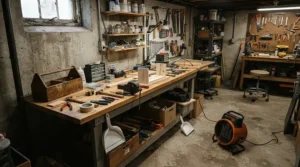
The Amazon Basics Ceramic Space Heater 1500W is the straightforward option: ceramic element, thermostat, tip-over and overheat protection, non-oscillating, and a compact body of roughly 19 cm deep by 16 cm wide by 24 cm tall (7.5 x 6.3 x 9.4 in).
Small size has a catch. A heater this compact warms a person or workbench, not a room, and its 1500 W is the same ceiling every plug-in heater here shares. That makes it a poor choice for open basements and a good choice for a workstation, a laundry corner or a hobby bench where you want a localized heat source you can pack away in spring.
I couldn’t verify a reliable rating for this listing, so I’m not quoting one. A useful check is whether reviewers mention the thermostat dial’s accuracy and whether the plug runs warm, which matters for the circuit-load discussion below.
Pros:
- ✅ Compact, easy to store in off-season
- ✅ Thermostat with tip-over protection
- ✅ Simple controls, no learning curve
Cons:
- ❌ Too small to heat a whole room
- ❌ No oscillation, timer or remote
Price range: around C$40-C$70, solid value as a targeted heater and poor value as a whole-room solution.
7. Tooltech 750-1500W Compact Fan Heater — dual-wattage budget flexibility
The Tooltech 750-1500W Compact Fan Heater is the cheapest ticket on this list and the only one with a genuine low-power step. The Amazon.ca listing showed an adjustable thermostat and 4.0 stars from roughly 350 ratings at the time of research.
The 750 W setting is the reason it’s here. On a shared basement circuit, 750 W is about 6.3 A, leaving room for a dehumidifier, a TV and a lamp without flirting with the breaker. A single-wattage 1500 W heater can’t do that. It won’t heat a large room on low, but it keeps a small space livable and a pipe-adjacent corner above freezing.
Expect build quality to match the price: plastic housing, basic controls and a fan you’ll hear. Treat it as a seasonal backup or a shared-circuit heater, not a ten-year purchase.
Pros:
- ✅ 750 W setting suits shared circuits
- ✅ Very low price for a thermostat model
- ✅ Light and portable
Cons:
- ❌ Basic build quality
- ❌ Noticeable fan noise
Price range: around C$20-C$30, great value for a backup, with realistic expectations about lifespan.
Specs Side by Side
| Heater | Wattage | Heat Method | Thermostat | Review Data Found | Best For |
|---|---|---|---|---|---|
| De’Longhi Radia S TRRS0715ECA | 1500 W | Oil radiant | Yes + ECO | About 4.4 stars, nearly 2,000 ratings | Long evenings |
| LIVINGbasics Oil Filled Radiator | 1500 W | Oil radiant | Yes | Not verified | Budget radiant |
| Lasko 5919 | 1500 W | Ceramic fan | Yes | Mixed; limited data | Workbenches |
| Pelonis 30″ Tower | 1500 W | Ceramic fan | Yes + remote | Not verified | Seating areas |
| Outsunny Fan Heater | 1500 W | Fan | Yes | Not verified | Garage-style heat |
| Amazon Basics Ceramic | 1500 W | Ceramic fan | Yes | Not verified | Small zones |
| Tooltech Compact Fan Heater | 750 / 1500 W | Fan | Yes | 4.0 stars, about 350 ratings | Shared circuits |
Read the table sideways and a simple story emerges: wattage is a tie, so buy on noise, speed and control features. The De’Longhi Radia S TRRS0715ECA is the quality pick, the Tooltech is the flexible pick, and the Lasko 5919 is the tool-minded pick. Where review data is blank, that’s honesty rather than neglect: I’d rather leave a cell empty than invent a rating.
Basement Square Footage Sizing: How Much Heater Do You Really Need?
Basement square footage sizing is where most budget buying goes sideways. The classic rule of thumb is roughly 10 W per square foot of floor space for a standard room. Below-grade rooms with bare concrete and little insulation often need more. Here’s a rough way to run the maths.
Step 1: measure. Length times width gives floor area. A 4 m by 5 m basement is 20 m² (about 215 sq ft).
Step 2: apply a cold-room multiplier. Use 10 W per sq ft for a finished, insulated basement and 12-15 W per sq ft for a raw or poorly insulated one. For 215 sq ft, that’s roughly 2,150-3,200 W.
Step 3: compare with what a plug-in gives you. One 1500 W heater is about 5,100 BTU/h. In a 215 sq ft cold basement, it won’t reach the target temperature on its own, which is why makers like Lasko rate a 1500 W unit for about 150 sq ft.
So what do you do? Heat the zone, not the room. If your basement is a 400 sq ft open expanse, don’t expect two cheap heaters to turn it into a sauna. Instead, warm the 12 m² (about 130 sq ft) where you actually sit, work or exercise, and let the rest stay cooler. Closing a door and heating a smaller room works better than heating a cavern.
Ceiling height matters too. A 2.1 m (7 ft) ceiling holds less air than a 2.7 m (9 ft) one, so it heats faster. Egress windows, uninsulated rim joists and exterior walls pull heat out, which is why a modest weatherstripping job can raise comfort more than a bigger heater.

Electrical Outlet Load: Will Your Basement Circuit Handle a 1500 W Heater?
Electrical outlet load is the secondary keyword that decides whether your cosy plan ends with a breaker flick. A standard 120 V, 15 A branch circuit can deliver 1,800 W at maximum. But the common 80% guideline for continuous loads, discussed under Canadian Electrical Code Rule 8-104, puts the sustainable figure at 12 A or 1,440 W.
A 1500 W heater draws 12.5 A. That’s slightly above the 12 A continuous figure, which means it’s best treated as the only major load on its circuit. Add a dehumidifier, a vacuum or a space-hungry TV setup and you’re asking for trouble. Several buyers of other heaters report blowing breakers by running a heater and a vacuum on the same outlet, which is a pattern worth remembering.
Practical rules:
- Find out what else shares the circuit. Basement outlets often share with lights and rec-room outlets.
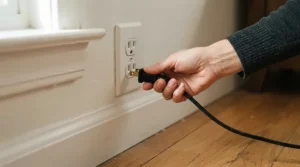
- Plug the heater directly into the wall. Health Canada advises never using an extension cord or power bar with a portable electric heater.
- Prefer the low setting on a shared circuit. The Tooltech 750-1500W Compact Fan Heater offers a true 750 W step.
- Consider an electrician. If you want a permanent basement heater, a dedicated circuit is the proper fix, and a licensed electrician should do that work.
This is general guidance, not electrical advice for your home. Your panel and local code may differ, so check with a licensed electrician when in doubt.
How to Choose Basement Heaters Under $150 CAD
Choosing the right model means working through a short list rather than falling for a feature list. Here are six steps.
- Measure the zone you’ll heat. Use the sizing maths above to decide whether one heater is enough or whether you need a smaller zone.
- Check your circuit. If it’s shared, favour a heater with a low-wattage setting or plan to be the only load on that outlet.
- Pick the heat type. Oil-filled radiators suit long, quiet sessions. Fan and tower heaters suit quick warm-ups.
- Verify the certification. Health Canada says portable electric heaters must meet CSA C22.2 No. 46 or CAN/CSA E60335-2-30 to be sold in Canada. See the Health Canada notice on portable electric heaters for details, and look for a recognized certification mark on the product.
- Insist on safety features. Tip-over shutoff and overheat protection should be non-negotiable, and a thermostat reduces wasted runtime.
- Read the negative reviews. Thermostat accuracy, fan noise and durability are where cheap heaters reveal themselves.
Affordable Basement Heating: What It Really Costs to Run
Affordable basement heating depends on two numbers: the purchase price and the running cost. Natural Resources Canada explains that electric space heaters convert one unit of electricity into one unit of heat, which is effectively 100 percent efficient at the point of use. But that’s not the same as being cheap to run, because a heat pump can deliver roughly three units of heat per unit of electricity.
Here’s an illustrative calculation using a hypothetical rate of 12 cents per kWh. Your provincial rate will differ, so swap in your own.
- Full blast: 1.5 kW x 6 hours x C$0.12 = about C$1.08 per day.
- Thermostat cycling about half the time: roughly C$0.55 per day.
- Over a 30-day month at the cycling rate: roughly C$16.
Notice the key lesson: wattage is wattage, so a C$25 fan heater and a C$150 radiator cost the same per hour at full output. The radiator wins through thermostat cycling, stored heat and ECO modes, not through lower power draw. Over a long season, that difference can pay back part of the premium.
Total cost of ownership also includes lifespan. A cheap fan heater that lasts two winters may cost more per season than a radiator that lasts eight. For the casual user, cheap works. For daily use, spend on a quality radiator.
Budget Basement Heater Options: Fan, Oil-Filled or Ceramic Tower?
Budget basement heater options come in three real families under C$150, and each fits a different job.
Fan and utility heaters (Lasko 5919, Outsunny, Tooltech) heat quickly and aim precisely. They’re loud, cool off fast and best for short sessions.
Ceramic towers (Pelonis 30″ Ceramic Tower) add oscillation, remotes and timers. They’re the comfort pick for seating areas but still rely on a fan.
Oil-filled radiators (De’Longhi Radia S TRRS0715ECA, LIVINGbasics) heat slowly and quietly, then keep warmth going. They’re the best match for long evenings and sleep-adjacent spaces.
How do these compare against the alternatives?
| Option | Upfront Cost | Running Cost | Best For |
|---|---|---|---|
| Portable electric heater (this guide) | Under C$150 | Moderate | Renters, occasional use |
| Electric baseboard | Higher + install | Moderate | Permanent finished rooms |
| Heat pump | High | Lowest | Whole-home, long-term |
The table makes the case for portable heaters clear: they’re the lowest-commitment option, ideal for renters and occasional use. But if you’re in the basement daily for six months a year, a permanent solution will eventually repay its higher upfront cost.
Low Cost Basement Warmth Beyond the Heater
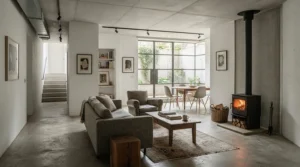
Low cost basement warmth often comes from what surrounds the heater. A C$100 heater in a leaky basement is like a bucket under a waterfall. A few cheap fixes multiply its effect.
- Cover the floor. Concrete is a heat sink. Foam interlocking tiles or a thick area rug break the contact with the cold slab and make the room feel warmer at the same thermostat setting.
- Seal the rim joist area and gaps. Foam gaskets, caulk and weatherstripping on basement windows stop drafts. This is one of the highest-return jobs per dollar.
- Close doors. Heat one room, not the whole level. A closed door can halve the volume you’re heating.
- Use heavy curtains on basement windows to cut radiant heat loss.
- Warm the occupant, not the air. A throw blanket and thick socks cost less than any heater and work instantly.
Combine these with a De’Longhi Radia S TRRS0715ECA or a Pelonis 30″ Ceramic Tower, and you’ve turned a heater into a system. The gains don’t show up on the spec sheet, but they show up in how quickly you stop noticing the cold.
Seasonal Basement Use: Setup, Maintenance and Shoulder-Season Strategy
Seasonal basement use is a rhythm, not a switch. Here’s how to run it well from October to April.
First-use setup:
- Place the heater on a flat, hard surface at least 1 m away from furniture, curtains and boxes. Health Canada gives that exact clearance.
- Plug it directly into a wall outlet. No power bars.
- Run it for a short test period while you’re present, and check that the plug and cord stay cool.
Monthly maintenance:
- Dust the grille and vents with a vacuum brush. Dust burning off is the usual source of “that smell.”
- Check the cord for kinks or discolouration.
- Test the thermostat by watching whether the heater cycles.
Shoulder seasons: In October and April, a heater on low or fan-only may be all you need. Radiators suit the colder mid-winter stretch, while compact fan heaters like the Amazon Basics Ceramic 1500W cover occasional cool mornings.
Spring storage: Wipe it down, coil the cord loosely, and store it upright in a dry spot away from basement moisture. For tips on safe use, Health Canada’s electrical product safety page recommends unplugging portable heaters before you leave home or go to sleep.
Real-World Scenarios: Which Heater for Which Basement?
Three quick profiles show how the pieces fit.
The renter with a laundry-and-gym corner (C$50-C$100 budget, 3-4 hours a week). A Lasko 5919 Pro-Ceramic Utility Heater with its pivoting head aims warmth at the folding table or workout mat. It’s portable, so it moves with the lease.
The family with a finished rec room (C$110-C$150 budget, evenings daily). The De’Longhi Radia S TRRS0715ECA earns its price here. Quiet operation matters during movies, and the thermostat plus ECO mode limits runtime. Pair it with a rug and a closed door.
The hobbyist on a shared circuit (under C$50, weekends). The Tooltech 750-1500W Compact Fan Heater lets you drop to 750 W while a dehumidifier runs on the same circuit, avoiding the breaker dance.
Common Mistakes When Buying a Basement Heater
A few missteps account for most of the regrets.
Buying by wattage alone. Every plug-in is capped near 1500 W, so wattage doesn’t separate good from bad. Noise, thermostat quality and safety features do.
Ignoring the circuit. A heater on a loaded circuit will trip, no matter how good it is.
Heating the whole basement. An open 400 sq ft space defeats any single plug-in. Zone it.
Using an extension cord. Health Canada specifically warns against extension cords and power bars with portable electric heaters.
Skipping certification. Look for a recognized certification mark and the standards referenced in Health Canada’s notice.
Putting it on a damp floor or near laundry. Moisture and electrical heaters don’t mix; keep the unit dry and clear.
Safety, Regulations and Certification in Canada
Safety sets the ceiling on every decision above. Health Canada has stated that portable electric heaters must meet critical safety criteria to be manufactured, imported, advertised or sold in Canada, and that heaters meeting CSA C22.2 No. 46-13 or CAN/CSA E60335-2-30:13 are deemed to meet those criteria. In plain terms, a legitimate heater sold in Canada should carry a recognized certification and the safety features those standards test, such as tip-over and overheat protection.
Practical habits matter as much as certification:
- Keep the heater at least 1 m from anything combustible.
- Never plug it into an extension cord or power bar.
- Unplug it before leaving or sleeping.
- Don’t dry laundry on or near the unit.
- Install working smoke and carbon monoxide alarms in the basement, which matter regardless of heater type.
Provincial rules on electrical work, occupancy and rental units vary, so check your own province’s requirements.
FAQ
❓ Is it safe to leave a basement heater on while I'm at work?
❓ Do oil-filled radiators cost less to run than fan heaters?
❓ Can I put a basement heater on carpet or a rug?
❓ Where should I place a heater for the best warmth?
❓ When should I switch to a heat pump instead of cheap heaters?
Conclusion
Basement heaters under $150 CAD can absolutely make a cold lower level usable, but only if you match the heater to the room, the circuit and the season. For long, quiet evenings, the De’Longhi Radia S TRRS0715ECA is the most polished pick on this list. For budget radiant heat, the LIVINGbasics Oil Filled Radiator is worth a look. For workshop zones, the Lasko 5919 aims warmth where you need it. For seating areas, the Pelonis 30″ Ceramic Tower adds oscillation and a remote. And for shared circuits and tiny budgets, the Tooltech 750-1500W Compact Fan Heater brings the all-important 750 W step, while the Outsunny Fan Heater and Amazon Basics Ceramic 1500W cover quick spot heating.
Remember the three numbers: square footage, circuit load and months of use. Seal drafts, cover the floor, close the door, and your heater will do more with less.
✨ Ready to bring your basement back to life?
🔍 Check current prices and availability on Amazon.ca, pick the heater that fits your space and circuit, and get cosy before the deep cold arrives!
Recommended for You
- Electric Fireplace Insert Vs Freestanding Electric Fireplace 2026
- Mantel Electric Fireplace For Canadian Home: 7 Proven Picks 2026
- Corner Electric Fireplace For Small Space: 7 Best Picks 2026
Disclaimer: This article contains affiliate links. As an Amazon Associate, I earn from qualifying purchases. If you purchase products through these links, we may earn a small commission at no additional cost to you.
✨ Found this helpful? Share it with your friends! 💬🤗
