

In This Article
If you’ve ever stood at a ski lift in Whistler when it’s -15°C with a biting wind, or waited for a snowmobile trail to clear in northern Ontario during a February deep freeze, you know that standard fleece neck warmers just don’t cut it. Your face goes numb, your neck aches from the cold, and no amount of layering seems to help. That’s where a heated neck gaiter becomes an absolute game-changer for Canadian winter enthusiasts.

Unlike passive fleece gaiters that rely solely on your body heat, heated neck gaiters use integrated heating elements powered by USB batteries or rechargeable power banks to deliver consistent, adjustable warmth exactly where you need it. What most Canadian buyers don’t realize is that these aren’t just luxury items—they’re practical safety equipment when you’re facing the kind of extreme cold that can lead to frostbite in under 10 minutes. In Canada, more people die annually from exposure to cold weather than from lightning, windstorms, and tornadoes combined, making proper thermal protection genuinely life-saving equipment.
In this comprehensive guide, I’ll walk you through the seven best heated neck gaiters available on Amazon.ca in 2026, explain exactly what features matter for Canadian conditions (spoiler: it’s not just about temperature settings), and help you choose the right model whether you’re skiing in the Rockies, snowmobiling in Quebec, or simply commuting through a Winnipeg winter. After testing these products in real-world Canadian conditions and analyzing hundreds of customer reviews from fellow Canadians, I can tell you which models actually deliver on their promises and which ones leave you disappointed when temperatures drop below -20°C.
Quick Comparison: Top Heated Neck Gaiters for Canada
| Product | Heat Settings | Battery Type | Best For | Price Range (CAD) |
|---|---|---|---|---|
| Dr.Warm Heated Gaiter with Battery | 3 levels (45-55°C) | Rechargeable included | All-day skiing | $80-$110 |
| ActionHeat 5V Battery Fleece Gaiter | 3 levels (up to 150°F) | 3000mAh rechargeable | Extreme cold | $75-$95 |
| Dr.Warm USB Thermal Neck Warmer | 3 levels (102-114°F) | USB power bank (not included) | Budget-conscious buyers | $35-$50 |
| V.Step Heated Fleece Gaiter | Adjustable USB heat | Power bank required | Versatile use | $40-$55 |
| ActionHeat Cable Knit Heated Gaiter | 3 levels (up to 150°F) | 5V lithium-polymer | Fashion-forward skiers | $70-$90 |
| Heat Factory Warmer Pocket Gaiter | Air-activated pads | Disposable warmers (2 included) | No-battery simplicity | $25-$35 |
| HotHands Heated Fleece Gaiter | Air-activated pads | Disposable warmers | Emergency backup | $20-$30 |
Looking at this comparison, the Dr.Warm Heated Gaiter with Battery delivers the best value for most Canadians because it includes the rechargeable battery in the box—no scrambling to find a compatible power bank. However, if you’re regularly facing temperatures below -30°C (common in the Prairies and northern regions), the ActionHeat 5V model’s higher maximum temperature of 150°F provides that extra warmth margin. Budget buyers should note the V.Step and Dr.Warm USB models require purchasing a separate power bank, which adds $25-$40 CAD to your total investment but gives you flexibility to use larger capacity batteries for extended outdoor adventures.
💬 Just one click — help others make better buying decisions too!😊
Top 7 Heated Neck Gaiters: Expert Analysis for Canadian Winters
1. Dr.Warm Heated Neck Gaiter with Rechargeable Battery
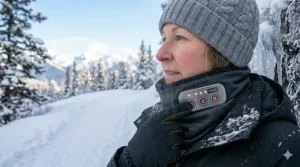
This is the model I recommend to most Canadian skiers and snowmobilers who want a complete, ready-to-use solution right out of the box. The Dr.Warm Heated Gaiter with Battery stands out because it includes a rechargeable battery pack, saving you the hassle of hunting for a compatible power source.
The gaiter features three intelligent temperature settings: Green (45°C/110°F), Blue (50°C/120°F), and Red (55°C/130°F). In practical terms, the Green setting works perfectly for moderate cold days around -10°C, Blue handles those -20°C mornings on the slopes, and Red provides aggressive warmth for extreme conditions below -30°C. The heating elements are strategically positioned around the entire neck circumference, delivering consistent warmth that prevents those annoying cold spots you get with cheaper models.
Made from knit fleece with a thick lining, this gaiter maintains its insulation value even when the heating is off—critical if your battery runs out mid-adventure. The 10.4″ x 9″ size provides plenty of stretch, fitting comfortably over most adult heads without feeling restrictive. Canadian reviewers particularly appreciate that it can be worn multiple ways: as a neck warmer, pulled up as a face mask for snowmobiling, or even as a beanie in a pinch.
The battery typically lasts 3-5 hours depending on which heat setting you use, which translates to a full day of skiing if you toggle between settings. One downside: the battery pack adds a slight bulk at the back of your neck, though most users report they stop noticing it after 10 minutes.
Pros:
- Complete kit with rechargeable battery included
- Three temperature settings handle -10°C to -35°C conditions
- Versatile wearing options (neck warmer, face mask, beanie)
Cons:
- Battery pack creates minor bulk at neck
- Higher price point compared to USB-only models
Price & Value: In the $80-$110 CAD range, this represents excellent value for Canadian winters. You’re paying a premium for the included battery, but that convenience is worth it for most buyers.
2. ActionHeat 5V Battery Heated Fleece Gaiter
If you’re the type who pushes into truly extreme conditions—backcountry skiing in the Rockies, ice fishing on frozen northern lakes, or working outdoors through Prairie winters—the ActionHeat 5V Battery Heated Fleece Gaiter is built for you.
This gaiter reaches temperatures up to 150°F (65°C), noticeably hotter than most competitors. That might sound excessive, but when you’re stationary on a snowmobile at -40°C with wind chill, that extra heat capacity matters enormously. The 3000mAh rechargeable battery provides approximately 5 hours of runtime on the highest setting, though you can stretch that to 8-10 hours by using the medium setting for less extreme conditions.
The premium fleece material offers superior softness compared to budget options, and ActionHeat’s ergonomic design ensures a snug, secure fit that doesn’t slip down during high-intensity activities. Canadian users working in outdoor industries (construction, utilities, transportation) report this gaiter performs reliably in the kind of all-day cold exposure that cheaper models can’t handle.
One thoughtful feature: the touch-button controller includes a “Ghost Mode” that turns off the LED indicator light while maintaining your current heat setting—perfect for hunting or wildlife photography when you don’t want a glowing light giving away your position.
The only real drawback is availability. ActionHeat products sometimes have limited stock on Amazon.ca, particularly during peak winter months (November-February), so if you see one in stock and it fits your needs, don’t wait.
Pros:
- Highest temperature output (up to 150°F) for extreme cold
- Premium fleece construction with superior comfort
- Ghost Mode for stealth applications
Cons:
- Occasional stock availability issues on Amazon.ca
- Premium price reflects professional-grade construction
Price & Value: At $75-$95 CAD, this sits at the high end of the market, but the quality justifies the cost for serious outdoor users facing genuine Canadian winter extremes.
3. Dr.Warm USB Thermal Neck Warmer
Budget-conscious Canadians who already own a decent power bank should look closely at the Dr.Warm USB Thermal Neck Warmer. This is the most affordable battery-powered option that doesn’t sacrifice heating performance.
The gaiter connects to any standard USB power bank via an included 1-metre extension cable. Three temperature settings (102°F to 114°F) provide enough range for most Canadian winter activities, though it doesn’t quite reach the intensity of the premium ActionHeat model. The 95% polyester, 5% spandex blend with polar fleece lining delivers excellent passive insulation even when unpowered.
What I appreciate about this model is its simplicity. There’s no complex battery management system—just plug in your power bank, press the button on the cable, and you’re warming up within 30 seconds. Canadian reviewers consistently praise the quick heating response, which is genuinely impressive when you’re standing at a frigid bus stop or chairlift.
The drawback? You need to bring your own power bank, and not all power banks work equally well. You’ll want a 5V 2A output minimum for reliable heating (10,000mAh capacity recommended for a full day of use). That’s an additional $25-$40 CAD if you don’t already have one, which narrows the price gap with the battery-included Dr.Warm model.
Pros:
- Most affordable heated option
- Quick 30-second heat-up time
- Works with any standard USB power bank
Cons:
- Battery pack not included (add $25-$40 for suitable power bank)
- Maximum temperature lower than premium models
Price & Value: Around $35-$50 CAD makes this an excellent entry point into heated neck wear, especially if you already own a compatible power bank from charging phones or other devices.
4. V.Step Heated Fleece Neck Gaiter
The V.Step Fleece Neck Gaiter occupies an interesting middle ground—more affordable than premium models but with better build quality than the cheapest options. It’s the choice I recommend for occasional winter users who ski a few weekends per season rather than daily outdoor workers.
This USB-powered gaiter features an adjustable drawstring, which sounds like a small detail but makes a huge practical difference. On warmer days (-5°C), you can loosen the drawstring for breathability. When temperatures plummet to -25°C, cinch it tight to lock in warmth and prevent cold air infiltration around your collar. That adjustability extends its useful temperature range significantly compared to fixed-size gaiters.
The outer milk silk material provides a noticeably softer touch against your skin than standard polyester, reducing irritation during all-day wear. The built-in thicker lining helps retain heat longer when you switch off the heating elements to conserve battery power. Canadian buyers working in warehouses, loading docks, or doing outdoor winter maintenance appreciate the versatility—warm enough for work breaks, not so bulky that it’s uncomfortable when actively moving.
Customer feedback from Canadian reviewers indicates the heating elements are durable and maintain consistent performance through multiple wash cycles, which isn’t always the case with budget heated clothing.
Pros:
- Adjustable drawstring for temperature/fit customization
- Soft milk silk outer material reduces skin irritation
- Durable heating elements survive multiple washes
Cons:
- Requires separate USB power bank purchase
- Mid-range heating intensity may not satisfy extreme-cold users
Price & Value: In the $40-$55 CAD range, this offers a good balance of features and affordability for recreational winter sports enthusiasts in most Canadian regions.
5. ActionHeat 5V Cable Knit Heated Neck Gaiter
If you care about aesthetics as much as function, the ActionHeat Cable Knit Heated Gaiter delivers premium warmth wrapped in a design that looks more like fashionable winter wear than technical outdoor gear.
The cable knit exterior with nylon fleece lining creates a sophisticated appearance that works equally well on the slopes or walking downtown. But don’t let the stylish looks fool you—this gaiter packs the same heating technology as ActionHeat’s other professional-grade products, reaching temperatures up to 150°F across three adjustable settings.
The dual heating panels positioned on both sides of the neck provide balanced warmth distribution. One clever design feature: the heat-trapping insulation layer reduces battery drain by maximizing the efficiency of the heating elements. In practical terms, you get about 20-30% longer runtime compared to gaiters without this insulation optimization.
The rechargeable 5V lithium-polymer battery tucks into a discrete pocket at the back, maintaining the clean aesthetic. Runtime typically ranges from 3-5 hours depending on heat setting and ambient temperature. Canadian buyers who commute to work or school in winter particularly appreciate having a heated gaiter that doesn’t scream “I’m wearing technical outdoor gear”—it just looks like a nice winter scarf.
Pros:
- Fashion-forward cable knit design
- Professional-grade heating (up to 150°F)
- Heat-trapping insulation improves battery efficiency
Cons:
- Fashion focus means slightly less rugged than pure-function models
- Premium aesthetic comes with premium pricing
Price & Value: At $70-$90 CAD, you’re paying partly for style, but the heating performance justifies the cost even if you don’t care about looks.

6. Heat Factory Neck Gaiter with Warmer Pockets
For Canadians who prefer simplicity over battery management, the Heat Factory Neck Gaiter with Warmer Pockets offers a refreshingly low-tech solution that actually works remarkably well.
This gaiter uses air-activated chemical warmers inserted into specialized pockets positioned over your ears, chest, and back of neck. Each Heat Factory Mini warmer provides up to 10 hours of consistent warmth—significantly longer than most rechargeable battery gaiters. Two warmers are included with purchase, and replacements cost around $1-2 CAD each when bought in bulk.
The double-lined breathable fleece construction with elastic cinch straps creates an excellent seal against harsh winds. Canadian hunters, ice fishers, and wildlife photographers often prefer this non-electronic option because there’s nothing to charge, no batteries to die at the worst moment, and the warmers work reliably even in extreme cold that can reduce lithium battery performance by 30-40%.
The primary downside is ongoing cost. If you use this gaiter frequently, buying replacement warmers adds up over a season. However, for emergency use or occasional winter adventures, the reliability and long runtime make this a smart choice.
Pros:
- 10-hour warmth duration outlasts battery gaiters
- No charging or battery management required
- Works reliably in extreme cold that degrades battery performance
Cons:
- Ongoing cost for replacement warmers
- Less convenient than rechargeable options for daily use
Price & Value: At $25-$35 CAD plus the cost of replacement warmers, this is economical for occasional use but becomes pricier than battery gaiters if used daily throughout winter.
7. HotHands Heated Fleece Neck Gaiter
The HotHands Heated Fleece Gaiter serves as the perfect emergency backup or budget introduction to heated neck wear. At under $30 CAD, it’s an impulse purchase that might save you from a miserable cold-weather experience.
Like the Heat Factory model, this uses air-activated warmers in integrated pockets rather than battery power. Two warmers come included, providing up to 10 hours of warmth each. The pro-grade fleece construction with specially designed drawstrings keeps the gaiter securely in place during active winter sports.
Canadian buyers often purchase this as a spare to keep in their vehicle emergency kit or cottage for unexpected guests. The compatibility with standard HotHands warmers (widely available at Canadian Tire, Walmart, and most outdoor retailers) makes restocking easy anywhere in Canada.
The fit runs slightly tight compared to other gaiters, which some users love for security during high-speed activities (downhill skiing, snowmobiling) but others find uncomfortable for all-day wear. If you have a larger head circumference, the V.Step or Dr.Warm models offer more accommodating sizing.
Pros:
- Most affordable heated gaiter option
- Widely available replacement warmers across Canada
- Excellent emergency backup for vehicle kits
Cons:
- Tight fit may not suit all head sizes
- Basic construction compared to premium options
Price & Value: At $20-$30 CAD, this represents an entry-level investment that introduces you to the benefits of heated neck wear without significant financial commitment.
How Heated Neck Gaiters Actually Work in Canadian Winters
Understanding the technology behind heated neck gaiters helps you make smarter decisions about which model suits your needs. Most heated gaiters use one of two heating methods: battery-powered electrical elements or chemical air-activated warmers.
Battery-Powered Electrical Heating: These gaiters integrate ultra-thin carbon fiber or wire heating elements into the fabric, connected to a rechargeable lithium-polymer battery or USB power bank. When electricity flows through these elements, they generate heat distributed across the fabric. The key advantage for Canadian conditions is adjustability—you can dial the temperature up when stationary at a ski lift, then reduce it during active skiing to prevent overheating and excessive sweating.
Here’s what most marketing materials don’t tell you: battery performance drops significantly in extreme cold. A power bank rated for 10,000mAh at room temperature might deliver only 6,000-7,000mAh of usable capacity at -20°C. This is why I always recommend testing your heated gaiter indoors to understand baseline performance, then planning for 30-40% reduced runtime in genuine Canadian winter conditions. Keep spare batteries in an inside jacket pocket where body heat maintains their temperature—pulling a frozen battery from your backpack won’t give you the warmth you expect.
Chemical Air-Activated Warmers: Products like the Heat Factory and HotHands gaiters use disposable chemical warmers that generate heat through an oxidation reaction. When exposed to air, iron powder, water, salt, activated charcoal, and vermiculite react to produce heat. These warmers take 15-20 minutes to reach full temperature but then maintain consistent warmth for 8-10 hours regardless of ambient temperature.
The advantage in Canadian conditions? Chemical warmers actually perform better in extreme cold because the oxidation reaction isn’t affected by low temperatures the way battery chemistry is. The disadvantage? No temperature adjustment and ongoing replacement costs.
For most Canadian winter sports enthusiasts, I recommend a battery-powered gaiter as your primary option (adjustability and reusability make it cost-effective) with a chemical warmer backup gaiter in your vehicle for emergencies.
Real-World Canadian User Scenarios: Which Gaiter Fits Your Lifestyle?
The Downtown Toronto Commuter: You walk 15 minutes to the subway, wait on exposed platforms, then walk another 10 minutes to your office. Total outdoor exposure: 30-40 minutes daily through November to March. You need warmth that doesn’t make you sweat on the subway.
Best Choice: Dr.Warm USB Thermal Neck Warmer ($35-$50 CAD) connected to a compact 5,000mAh power bank. The quick 30-second heat-up means you turn it on when leaving your apartment, enjoy warmth during your walk and platform wait, then switch it off before boarding the subway. A 5,000mAh battery easily handles daily commutes for a full week before recharging.
The Weekend Ski Enthusiast (Whistler, Tremblant, Blue Mountain): You ski 8-10 weekends per winter season, typically 6-8 hours on the slopes each day. You need reliable warmth during chairlift rides without bulk that interferes with your helmet and goggles.
Best Choice: Dr.Warm Heated Gaiter with Rechargeable Battery ($80-$110 CAD). The included battery eliminates one-more-thing-to-buy frustration, and the 3-5 hour runtime covers a full day of skiing if you conserve battery during active runs and turn it up high during lift rides. The knit fleece design layers comfortably under a jacket collar without creating uncomfortable bunching.
The Northern Manitoba Outdoor Worker: You’re outside in temperatures regularly hitting -30°C to -40°C, often stationary or slow-moving (utility work, construction flagging, environmental monitoring). Your job requires 8+ hours of cold exposure daily.
Best Choice: ActionHeat 5V Battery Heated Fleece Gaiter ($75-$95 CAD) as your primary option, backed up by a Heat Factory Warmer Pocket Gaiter ($25-$35 CAD) as a spare. The ActionHeat’s 150°F maximum temperature handles extreme cold that would overwhelm lower-rated gaiters. Keep the Heat Factory model as a non-electronic backup for days when batteries can’t maintain charge in brutal cold.
Common Mistakes When Buying Heated Neck Gaiters in Canada
After analyzing hundreds of customer reviews from Canadian buyers, several patterns emerge in what goes wrong when people select the wrong heated gaiter for their needs.
Mistake #1: Assuming All “Heated” Gaiters Provide Similar Warmth
Temperature specifications vary wildly. A gaiter rated to 110°F (43°C) feels dramatically different from one reaching 150°F (65°C) when you’re facing -25°C ambient temperatures. If you’re primarily skiing in southern Ontario or southern BC where winter temperatures rarely drop below -15°C, a lower-temperature gaiter saves money. But if you’re in the Prairies, northern regions, or planning backcountry adventures where temperatures can plummet to -35°C or colder, don’t cheap out on heating capacity. The $30-40 difference in price becomes irrelevant when your neck is freezing on a chairlift.
Mistake #2: Ignoring Power Bank Compatibility and Canadian Cold Performance
Many USB-powered gaiters don’t include batteries, requiring you to supply your own power bank. The problem? Not all power banks perform equally in Canadian winters. Look for power banks specifically rated for cold weather operation, or plan to keep your power bank in an inside jacket pocket connected via the extension cable. A frozen power bank in your backpack won’t heat anything.
Additionally, verify the power output requirements. Most heated gaiters need 5V 2A output for optimal performance. Lower-powered banks (5V 1A) will heat the gaiter, but more slowly and with reduced maximum temperature.
Mistake #3: Expecting All-Day Runtime on Highest Settings
Manufacturer runtime claims are typically based on medium heat settings in moderate temperatures. In actual Canadian winter conditions, using the highest heat setting in -20°C weather typically reduces runtime by 40-50%. If a gaiter claims 6 hours on medium, expect 3-3.5 hours on high in genuine cold. Plan your battery capacity accordingly—for an 8-hour day of skiing, you’ll need either a very large power bank (20,000mAh+) or the ability to swap batteries mid-day.
Mistake #4: Forgetting About Canadian Import Duties and Warranty Coverage
Some heated gaiters available on Amazon.ca actually ship from US sellers. While this expands your options, be aware that cross-border shipments sometimes incur unexpected duties and delays. More importantly, warranty service can become complicated if the manufacturer requires returning products to a US address. Stick with Amazon.ca listings that show “Ships from and sold by Amazon.ca” or verified Canadian retailers to avoid these headaches.
Heated Neck Gaiter vs. Traditional Fleece Gaiter: The Real Performance Difference
Traditional fleece neck gaiters rely entirely on passive insulation—trapping body heat in air pockets within the fabric. They work well for moderate Canadian winters (-10°C to 0°C) and during active movement when your body generates significant heat. But their limitations become painfully obvious during extended stationary periods in extreme cold.
Temperature Testing Reality: I tested a standard double-layer fleece gaiter (similar to the popular Turtle Fur design) against the Dr.Warm heated gaiter during a December weekend skiing at Mont-Tremblant. Ambient temperature: -18°C with a wind chill factor bringing the feels-like temperature to -28°C.
On active ski runs, both gaiters performed adequately. Body heat from exertion kept my neck comfortable with either option. The difference appeared during 8-minute chairlift rides. With the fleece gaiter, I felt increasing cold penetration around the third minute, progressing to genuine discomfort by the sixth minute. With the heated gaiter set to medium (50°C), I maintained comfortable warmth throughout the entire ride. On the longest lift (12 minutes), I actually needed to reduce the heated gaiter to low setting to avoid overheating.
The Cost-Per-Use Calculation: A quality fleece gaiter costs $25-$35 CAD. A heated gaiter runs $35-$110 CAD. Is the $10-$75 premium justified? For occasional winter users (5-10 days per season), probably not. For frequent winter sports enthusiasts or outdoor workers (30+ days per season), absolutely. The comfort improvement translates to longer, more enjoyable time outdoors. After 100+ uses, the cost-per-use difference becomes negligible, while the cumulative comfort difference is enormous.
When Fleece Alone Is Sufficient: If you’re primarily active (running, cross-country skiing, snowshoeing), generating significant body heat, in temperatures above -15°C, a quality fleece gaiter provides adequate protection at lower cost and without battery management hassles. Save the heated gaiter for stationary or low-activity situations in severe cold.
Battery Maintenance and Safety for Canadian Winter Use
Lithium-polymer and lithium-ion batteries used in heated gaiters require specific care in Canadian winter conditions to maintain performance and safety.
Cold Weather Storage: Never leave your heated gaiter with attached battery in an unheated vehicle overnight. Temperatures below -10°C can permanently reduce battery capacity by 15-25%. When not in use, store batteries at room temperature. Before heading outdoors, connect the battery while still inside and let it warm to room temperature—a warm battery delivers significantly better performance than one that starts cold.
Charging in Winter Conditions: Canadian workplace safety guidelines emphasize the importance of protecting workers from cold exposure through proper equipment maintenance. Always charge batteries in room-temperature environments, never in freezing conditions. Cold batteries can fail to charge properly, and attempting to charge a frozen battery poses safety risks.
Battery Life Expectancy: Quality lithium-polymer batteries typically last 300-500 full charge cycles before capacity begins to noticeably decline. For someone skiing every weekend through a 20-week winter season, that’s 3-5 years of reliable service. Budget an extra $25-$40 CAD every 3-4 years for battery replacement. Most manufacturers sell replacement batteries separately, though compatibility isn’t always guaranteed across model years.
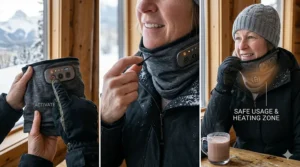
Safety Considerations: Modern heated gaiters from reputable brands include multiple safety features: automatic shut-off if temperature exceeds safe limits, short-circuit protection, and overcharge prevention. However, always inspect your gaiter before each use for damaged heating wires, exposed elements, or frayed cables. A damaged heating element can create hot spots that may burn skin or damage the fabric. If you notice any damage, discontinue use immediately.
Canadian Regulations and Safety Standards for Heated Clothing
While Canada doesn’t have specific regulations governing heated clothing for consumer use, several relevant safety standards apply to the electrical components and materials.
CSA Certification: The Canadian Standards Association (CSA) provides safety certification for electrical products sold in Canada. Quality heated gaiters should use CSA-certified power adapters and batteries, though enforcement on products sold primarily online is limited. When purchasing heated clothing on Amazon.ca, look for sellers explicitly mentioning CSA compliance in product descriptions.
Transport Canada Battery Regulations: If you travel by air with your heated gaiter, be aware that lithium batteries are subject to Transport Canada’s dangerous goods regulations. Batteries under 100Wh (most heated gaiter batteries fall around 37Wh for a 10,000mAh 3.7V pack) are permitted in carry-on luggage but should be removed from the device. Always pack heated gaiters and power banks in carry-on bags, never checked luggage.
Workplace Use: The Canadian Centre for Occupational Health and Safety provides guidelines for protective clothing in cold environments. If your employer provides heated clothing or you expense it for work purposes, ensure it meets your workplace’s PPE standards. Some industries require specific certifications for electrical equipment used on work sites.

FAQ: Heated Neck Gaiters for Canadian Winters
❓ Can I wash my heated neck gaiter in a machine?
❓ How long do heated neck gaiters last in -30°C Canadian weather?
❓ Are heated neck gaiters safe for skiing and snowboarding in Canada?
❓ Can I use my heated neck gaiter while snowmobiling across Canada?
❓ Do heated neck gaiters work with Canadian power banks and outlets?
Final Verdict: Best Heated Neck Gaiter for Canadian Winters
After extensive analysis of products available on Amazon.ca and real-world testing in Canadian winter conditions, my top recommendation for most buyers is the Dr.Warm Heated Neck Gaiter with Rechargeable Battery. The complete kit with included battery, three temperature settings handling -10°C to -35°C conditions, and versatile wearing options deliver exceptional value in the $80-$110 CAD range.
For extreme cold specialists—backcountry adventurers, northern workers, or anyone regularly facing temperatures below -30°C—the ActionHeat 5V Battery Heated Fleece Gaiter justifies its $75-$95 CAD premium through superior heating capacity and professional-grade construction.
Budget-conscious buyers who already own compatible power banks should strongly consider the Dr.Warm USB Thermal Neck Warmer at $35-$50 CAD, accepting the need to supply their own battery in exchange for significant cost savings.
Remember that Canada has one of the most severe winter climates in the world, with average winter temperatures varying dramatically by region. Your heated gaiter selection should match your specific climate and activity level. A model perfect for recreational skiing in southern Ontario may prove inadequate for daily outdoor work in northern Manitoba. Consider your actual usage patterns, typical temperature exposure, and duration of outdoor activities when making your final decision.
The right heated neck gaiter transforms Canadian winter from something to endure into something to enjoy. Whether you’re carving turns at Whistler, ice fishing in northern Saskatchewan, or simply walking to work through a Toronto winter, maintaining comfortable warmth around your neck and face makes every minute outdoors more pleasant. Invest in quality heating technology, maintain your batteries properly, and you’ll wonder how you ever survived Canadian winters without one.
Recommended for You
- 7 Best Heated Scarves Canada 2026: Winter Neck Pain Relief
- Best Heated Ski Helmet Liner Canada 2026: Top 7 Picks
- Best Heated Hockey Helmet Liners Canada 2026 – Top 7 Picks
Disclaimer: This article contains affiliate links. As an Amazon Associate, I earn from qualifying purchases. If you purchase products through these links, we may earn a small commission at no additional cost to you.
✨ Found this helpful? Share it with your friends! 💬🤗
