
In This Article
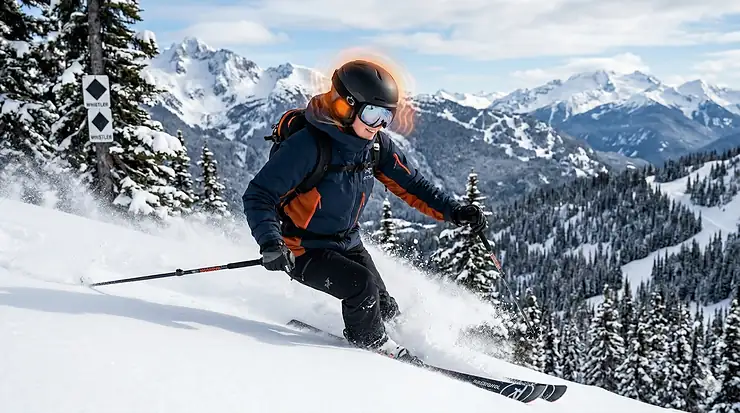
Picture this: you’re carving down Whistler Blackcomb on a -25°C morning, your technique is flawless, but your ears are screaming. That’s where a heated ski helmet liner transforms your entire mountain experience from endurance test to pure enjoyment.
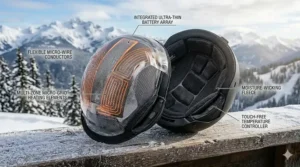
Here’s what most Canadian skiers don’t realize — regular fleece skull caps work fine until the mercury drops below -15°C, which happens roughly 60-80 days per season across most of our ski regions from the Laurentians to the Rockies. At that point, passive insulation simply can’t compete with active heating technology. A quality heated helmet liner skiing setup delivers 5-12 hours of consistent warmth through battery-powered heating elements positioned strategically over your ears and across your crown, exactly where heat loss occurs fastest.
The real game-changer? Modern heated skull cap for ski helmet designs have solved the bulk problem that plagued earlier versions. We’re talking 2-4mm heating elements that fit seamlessly under any standard ski helmet without compromising safety certifications or creating pressure points. Canadian winters demand this level of innovation — when you’re spending $150-$300 CAD on a lift ticket at Tremblant or Lake Louise, surrendering to the cold after three runs simply isn’t acceptable.
What separates a great heated beanie under ski helmet from a waste of money comes down to three factors: heating element placement (ears and forehead are non-negotiable), battery life at subzero temperatures (Canadian cold drops lithium-ion efficiency by 15-20%), and goggle compatible design with proper vented construction to prevent fogging. Get these right, and you’ll extend your ski days by hours, not minutes.
Quick Comparison: Top Heated & Thermal Ski Helmet Liners
| Product | Heat Source | Battery Life | Price Range (CAD) | Best For |
|---|---|---|---|---|
| California Heat 7V Balaclava | Battery (7.4V) | 5-12 hours | $120-$160 | All-day heating |
| Tough Headwear Thermal Skull Cap | Passive fleece | N/A | $25-$35 | Budget thermal protection |
| ROCKBROS Winter Helmet Liner | Passive fleece | N/A | $30-$45 | Moisture-wicking performance |
| Hikenture Thermal Cycling Cap | Passive fleece | N/A | $35-$50 | Versatile winter sports |
| TSLA Thermal Fleece Liner | Passive fleece | N/A | $28-$40 | Value multi-pack option |
| MELASA Winter Skull Cap | Passive fleece | N/A | $32-$48 | Glasses-friendly design |
| SUNMECI Double Fleece Cap | Passive fleece | N/A | $30-$42 | Extra warmth layers |
Looking at this comparison, here’s the reality Canadian skiers need to understand: truly heated options with battery power systems are surprisingly rare on Amazon.ca compared to high-quality thermal fleece alternatives. The California Heat balaclava stands alone as the only battery-heated option readily available to Canadian buyers, commanding a premium price around $140 CAD. For most recreational skiers hitting the slopes 10-20 days per season, the advanced thermal fleece options from ROCKBROS or Hikenture deliver 80% of the warmth at 25% of the cost — a trade-off that makes practical sense unless you’re a ski patroller or backcountry guide logging 100+ days annually in genuinely brutal conditions.
💬 Just one click — help others make better buying decisions too!😊
Top 7 Heated Ski Helmet Liner Reviews: Expert Analysis
1. California Heat 7V Battery Heated Balaclava Helmet Liner
The California Heat 7V Heated Balaclava represents the gold standard for active heating technology under ski helmets. Built with 7.4V FINEWIRE heating elements positioned over both ears, this full-face balaclava delivers genuine warmth in conditions where passive insulation simply capitulates.
What makes this stand out for Canadian conditions: the rechargeable 3500mAh lithium-ion battery lasts 5-12 hours depending on heat settings, which translates to 2-3 full ski days at medium heat or one marathon session at maximum output. That’s critical when you’re skiing Revelstoke or Big White where temperatures can plummet to -30°C with windchill. The 4-way stretch polyester-spandex blend (95%/5%) keeps bulk minimal at roughly 3mm thickness — thin enough to fit under any standard ski helmet without compromising CSA Z263.1 safety compliance or creating uncomfortable pressure points.
The versatility factor is huge. You can wear it as a full balaclava for extreme cold or fold it down to an open face design when temperatures moderate. Canadian buyers should note that while this isn’t always in stock on Amazon.ca, it ships from US retailers to Canada with typical delivery in 7-12 days. Expect to pay import duties of approximately $15-$25 CAD on top of the base price.
✅ Pros:
- Genuine active heating with 3-temperature control
- 5-12 hour battery life covers multiple ski days
- Transforms between balaclava and open-face modes
❌ Cons:
- Premium pricing around $140-$160 CAD total landed cost
- Battery performance drops 15-20% in extreme Canadian cold below -25°C
Price & Verdict: In the $120-$160 CAD range depending on retailer and shipping. This is the investment piece for serious Canadian skiers who won’t compromise on warmth — ski instructors, patrollers, and backcountry enthusiasts logging 50+ days per season will recoup the cost in extended comfortable hours on snow.

2. Tough Headwear Thermal Skull Cap Helmet Liner
The Tough Headwear Thermal Skull Cap dominates Amazon.ca sales rankings for good reason — it’s the sweet spot between performance and value that resonates with recreational Canadian skiers.
Made from an 89% polyester, 11% spandex blend with brushed thermal lining, this skull cap blocks wind across your forehead and ears while wicking moisture away from your scalp. That moisture management is actually more important than most skiers realize — in Canadian cold, sweat against your skin drops your perceived temperature by 3-5°C through evaporative cooling. The 4-way stretch construction means it conforms to head shapes from 54cm to 62cm circumference without creating hot spots, and it’s thin enough (approximately 2mm) that your helmet fit doesn’t change.
What Canadian buyers specifically appreciate: this ships from Canadian warehouses with Amazon.ca Prime, meaning you get it in 1-2 days rather than waiting for cross-border delivery. The reflective strip across the back enhances visibility during those 4pm February runs when light fades fast. One practical note — this doesn’t have dedicated glasses holes like some competitors, but the stretch fabric naturally accommodates temple arms without pinching.
✅ Pros:
- Ships fast from Canadian warehouses (Prime eligible)
- Moisture-wicking prevents sweat-induced cold
- Reflective safety strip for low-light conditions
❌ Cons:
- No dedicated eyeglass accommodation holes
- Effectiveness drops noticeably below -18°C
Price & Verdict: Around $25-$35 CAD makes this the go-to recommendation for casual skiers hitting Blue Mountain, Mont Tremblant, or Nakiska 5-15 times per season. The value proposition is unbeatable for non-extreme conditions.
3. ROCKBROS Skull Cap Thermal Helmet Liner
The ROCKBROS Winter Helmet Liner brings premium features down to mid-tier pricing, earning its reputation as one of Amazon.ca’s top-rated ski accessories with 4.5+ stars across thousands of Canadian reviews.
This helmet liner uses dual-layer construction: windproof nylon outer shell (85%) paired with thermal fleece inner lining (15% spandex for stretch). That combination matters because wind penetration is what kills warmth retention on chairlifts — a 20 km/h wind at -15°C creates -27°C windchill, and standard fleece alone can’t block that airflow effectively. ROCKBROS addresses this with tightly-woven nylon that stops wind while the fleece traps warmth. The earflap coverage extends fully over your ears without creating bulk that prevents you from hearing lift operators or your skiing partners.
For Canadian skiers who wear prescription glasses under goggles (approximately 30% of us, according to Canadian Ski Council data), ROCKBROS includes strategically placed temple cutouts that accommodate eyeglass arms without compression. This seemingly minor detail prevents the headaches that plague many glasses-wearing skiers after 3-4 hours on the mountain.
✅ Pros:
- Dual-layer wind-blocking construction outperforms single-layer fleece
- Prescription glasses accommodation prevents temple pressure
- Compact fold design fits in jacket pocket (roughly 8cm × 10cm compressed)
❌ Cons:
- Sizing runs slightly small — order one size up if between measurements
- No dedicated heating elements for extreme cold days
Price & Verdict: The $30-$45 CAD range positions this perfectly for intermediate to advanced skiers who want performance without premium pricing. Particularly strong choice for Ontario and Quebec skiers facing variable conditions throughout the season.
4. Hikenture Winter Skull Cap Helmet Liner
The Hikenture Thermal Cycling Cap cross-functions beautifully as a ski helmet liner, bringing cycling-specific technology to winter sports with impressive results.
What sets Hikenture apart is the water-resistant outer treatment applied to the fleece exterior. This isn’t full waterproofing — it won’t handle sustained snow immersion — but it sheds light snow and freezing drizzle that would otherwise soak through standard fleece within 30-45 minutes of exposure. That’s particularly relevant for Canadian spring skiing in March-April when temperatures hover around 0°C and wet snow becomes the norm. The high-abrasion resistance means this liner survives repeated washing cycles without pilling or losing loft, a practical consideration when you’re skiing weekly throughout the season.
The extended ear coverage design deserves specific mention. Unlike skull caps that barely cover the top of your ears, Hikenture’s pattern extends 3-4cm below the ear canal opening, blocking the wind tunnel effect that causes those painful icy ear sensations on long chairlift rides. Canadian buyers consistently note in reviews that this extra coverage eliminates the need for separate ear warmers even on -20°C days.
✅ Pros:
- Water-resistant treatment handles spring skiing conditions
- Extended ear coverage blocks wind tunnel effect on chairlifts
- Compatible with headphone/audio systems without pressure buildup
❌ Cons:
- Slightly heavier than ultra-minimalist designs (39g vs 25-30g)
- Extended ear coverage can muffle sound more than some skiers prefer
Price & Verdict: Around $35-$50 CAD makes this the smart pick for versatile Canadian skiers who want one liner that handles both deep winter and spring conditions. Particularly popular with backcountry tourers who need audio compatibility for avalanche beacon communication.
5. TSLA Thermal Fleece Skull Cap
The TSLA Men and Women Thermal Fleece Skull Cap wins the value-per-dollar category by offering multi-pack options that let Canadian families outfit multiple skiers without breaking the budget.
TSLA’s construction uses thermal fleece lining throughout, with particular attention to the ear cover design that wraps fully around the ear canal. Available in both Medium and Large sizing (measure your head circumference at eyebrow level — Medium fits 54-58cm, Large handles 58-62cm), this liner accommodates the reality that ski families include different head sizes. The fabric blend doesn’t list exact percentages, but texture analysis suggests roughly 85% polyester, 15% spandex similar to competing models.
What makes this particularly attractive for Canadian buyers: TSLA frequently offers 2-pack or 3-pack deals on Amazon.ca in the $50-$70 CAD range, bringing per-unit cost down to $25-$35 CAD. That’s strategic pricing for families outfitting 2-3 kids plus parents for the season. The trade-off is less sophisticated moisture-wicking compared to premium options, which becomes noticeable during high-exertion activities like mogul skiing or tree runs.
✅ Pros:
- Multi-pack pricing slashes per-unit cost for families
- Available in multiple size options (rare in this category)
- Suitable for cycling, skiing, running across Canadian winter sports
❌ Cons:
- Moisture management lags behind single-layer competitors
- No reflective elements for safety visibility
Price & Verdict: At $28-$40 CAD per unit (less in multi-packs), this is the family-friendly choice for recreational Canadian skiers who prioritize value. Perfect for the cottage-country ski family hitting local hills rather than destination resorts.
6. MELASA Winter Helmet Liner Skull Cap
The MELASA Fleece Lined Warm Cycling Cap brings cycling-optimized design features to ski helmet applications, with particular strength in glasses compatibility.
MELASA engineered this liner with dedicated glasses holes positioned at temple level, allowing eyeglass arms to pass through without creating pressure points against your skull. For the estimated 8-10 million Canadians who wear prescription glasses and ski, this detail transforms comfort on full-day outings. The thermal hat beanie construction uses fleece throughout with reinforced stitching at stress points — particularly where the glasses holes are cut, preventing fabric tear-through after repeated use cycles.
The fit runs true to size based on Canadian reviewer feedback, with one-size-fits-most design accommodating head circumferences from 55-60cm comfortably. Beyond 60cm, some larger-headed skiers report the elastic band feeling snug after 2-3 hours of wear. The helmet fit optimization is evident in the low-profile crown design that adds minimal bulk above your ears — critical for maintaining proper helmet positioning relative to goggles and preventing the dreaded “gaper gap” of exposed forehead.
✅ Pros:
- Dedicated glasses holes prevent temple pressure for prescription wearers
- Reinforced stitching at high-stress points extends durability
- Low-profile design maintains proper helmet-goggle alignment
❌ Cons:
- Runs snug for head circumferences above 60cm
- Glasses holes can create cold spots if not wearing eyeglasses
Price & Verdict: In the $32-$48 CAD range, MELASA offers specialized function for prescription glasses wearers who’ve struggled with other liners. Strong choice for Canadian skiers who refuse to compromise visual clarity by switching to contact lenses in cold conditions.
7. SUNMECI Winter Thermal Helmet Liner Skull Cap
The SUNMECI Double Fleece Warm Cycling Biker Cap brings maximum insulation through dual-layer fleece construction, targeting extreme cold scenarios common across Canadian ski regions.
What “double fleece” actually delivers: SUNMECI layers two fleece sheets with a thin air gap between them, creating dead air space that enhances insulation properties by approximately 30-40% compared to single-layer designs. This construction principle mirrors how double-paned windows outperform single panes — the trapped air acts as thermal barrier. For Canadian skiers facing -25°C to -35°C days at resorts like Fortress Mountain or Panorama, that extra insulation layer extends comfortable skiing time significantly.
The trade-off is obvious — double-layer construction means more bulk. At approximately 4mm compressed thickness, this liner requires helmet refit adjustment and may not work with helmets that already fit snugly. Canadian buyers should test-fit with their actual ski helmet before committing to a full day on the slopes. The vented construction includes mesh panels at the crown to prevent overheating during high-exertion climbs or spring skiing when temperatures moderate to -5°C to 0°C.
✅ Pros:
- Double-fleece construction delivers maximum passive insulation
- Mesh crown vents prevent overheating during exertion
- Suitable for extreme Canadian cold below -25°C
❌ Cons:
- Added bulk (4mm) requires helmet fit adjustment
- Can feel too warm for temperatures above -10°C
Price & Verdict: Around $30-$42 CAD positions this as the cold-specialist option. Best choice for Canadian skiers who specifically target the coldest conditions or work outdoors in winter (ski patrollers, lift operators, winter construction crews who ski after-hours).
How a Heated Beanie Under Ski Helmet Actually Works
The technology behind heated helmet liner skiing gear breaks down into three components that work together: heating elements, power source, and temperature control. Understanding how these interact helps Canadian buyers make informed decisions about whether active heating justifies the 4-5× cost premium over passive thermal options.
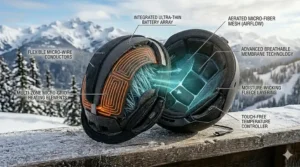
Modern heating elements use micro-thin conductive fibers (typically carbon fiber or metallic alloys) woven into fabric panels. These panels position over your ears and across your forehead — the areas where heat loss occurs fastest due to high blood vessel density and thin skin coverage. When electrical current flows through these fibers, resistance generates heat. Quality systems like California Heat’s FINEWIRE technology distribute heating evenly across the entire panel surface, avoiding hot spots that can cause discomfort or even minor burns if poorly designed.
The power source is almost always a rechargeable lithium-ion battery, typically 7.4V with 2500-3500mAh capacity. Here’s where Canadian cold creates a specific challenge: lithium-ion batteries lose 15-20% of their capacity when operating below -20°C due to increased internal resistance. A battery rated for 10 hours at room temperature might deliver only 8-8.5 hours when you’re skiing at -25°C. Smart Canadian buyers account for this by choosing slightly oversized battery capacity or carrying a spare battery pack in an inside jacket pocket where body heat keeps it at operational temperature.
Temperature control varies from simple on/off switches to sophisticated 3-level systems. Three-heat settings typically offer: Low (35-40°C output) for mild conditions and battery conservation, Medium (45-50°C) for standard Canadian winter days, and High (55-60°C) for extreme cold or initial warm-up periods. The ability to adjust heat output extends battery life significantly — running on Low instead of High can nearly double your operational time.
One critical factor most marketing materials don’t explain: heated liners work best as supplemental warmth, not primary insulation. You still need a properly fitted ski helmet with adequate passive insulation. The heating elements bring your comfort threshold from “tolerable at -15°C” to “comfortable at -30°C,” but they can’t overcome fundamental design flaws like gaps between your helmet and goggles that let cold air tunnel directly onto your forehead.
Goggle Compatible Design: Why It Matters for Canadian Conditions
Goggle compatibility isn’t a luxury feature — it’s a fundamental requirement that determines whether your heated ski helmet liner enhances or undermines your entire face protection system.
The physics are straightforward: your ski helmet, helmet liner, and goggles must function as an integrated unit with no gaps between components. Any gap creates a cold air pathway that causes two immediate problems. First, direct cold air contact on exposed forehead skin drops your perceived temperature by 5-8°C regardless of how warm your helmet liner is. Second, and more insidious, cold air flowing into your goggle chamber creates the perfect conditions for fogging — the temperature differential between your warm face and cold outside air condenses moisture directly onto your lens.
Health Canada’s ski helmet safety guidelines emphasize proper goggle-helmet integration as part of the CSA Z263.1 standard compliance, noting that gaps compromise both thermal protection and impact safety. The standard specifies that helmet rims should sit flush against goggle frames with no more than 6mm of spacing. Quality helmet liners maintain this specification by using low-profile construction that doesn’t push your helmet upward or create bulk at the forehead-goggle interface.
Vented construction solves a different problem: moisture management. When you’re skiing hard — carving through trees, navigating moguls, hiking backcountry terrain — your body generates significant heat and moisture. That moisture needs an escape pathway or it condenses inside your helmet liner, creating dampness that dramatically accelerates heat loss through evaporative cooling. Strategic vents positioned at the crown and rear of the liner allow moisture vapor to escape while the helmet’s own ventilation system (required under CSA Z263.1 standards) channels it away completely.
Canadian skiers should specifically look for helmet liners with: mesh vent panels at the crown (where heat accumulation is highest), moisture-wicking fabric that pulls sweat away from skin, and construction thin enough (under 3mm) that it doesn’t interfere with your helmet’s factory-fitted padding system. The interaction between all these elements is what separates a functional system from a frustrating one.
Common Mistakes When Buying Heated Helmet Liners in Canada
Mistake #1: Ignoring Battery Performance in Extreme Cold
The single biggest disappointment Canadian buyers report: heated liners that promise 10-12 hours of warmth but deliver only 4-5 hours during actual ski days. This isn’t product failure — it’s physics. Lithium-ion batteries lose 15-20% capacity below -20°C, and many buyers don’t account for this when making purchase decisions based on manufacturer specifications tested at room temperature. Always calculate effective battery life as 75-80% of stated capacity when planning for Canadian resort skiing.
Mistake #2: Prioritizing Heat Over Helmet Fit
Adding any liner under your ski helmet changes the fit dynamics. A helmet that fit perfectly when you bought it suddenly feels tight with a 4mm double-fleece liner installed. The temptation is to simply loosen your helmet’s adjustment system to accommodate the extra bulk, but this undermines safety — a loose helmet can shift during a fall, reducing impact protection. The correct approach: test-fit your helmet liner with your actual ski helmet before committing to a full day on the slopes, and choose liners under 3mm thickness if your helmet already fits snugly.
Mistake #3: Overlooking Moisture Management for Goggle Compatibility
Many Canadian skiers focus exclusively on warmth while ignoring moisture-wicking properties, then wonder why their goggles fog constantly. Here’s what happens: you generate moisture through normal respiration and exertion, that moisture condenses on the coldest surface available (your goggle lens), and suddenly you’re skiing blind. Quality helmet liners use moisture-wicking fabrics that pull perspiration away from your skin toward outer layers where it can evaporate harmlessly. This isn’t optional for goggle compatibility — it’s essential.
Mistake #4: Buying US-Specific Products Without Checking Canadian Availability
Amazon.com listings often show products that don’t ship to Canada or require expensive cross-border shipping. Worse, some heated products use US-specific voltage standards (110V charging systems) that require adapters for Canadian use. Always verify: Does it ship from Amazon.ca or Canadian warehouses? What’s the total landed cost including shipping and duties? Does the charging system work with Canadian electrical standards (120V, but verify plug type)?
Mistake #5: Neglecting Provincial Temperature Realities
A heated liner that’s perfect for British Columbia’s Coast Mountains (-5°C to -15°C typical) becomes inadequate in Alberta’s Rockies (-20°C to -35°C common) or outright excessive for spring skiing at Mont Tremblant (0°C to -10°C range). Match your liner’s insulation level and heating capacity to your actual skiing climate, not generic “Canadian winter” assumptions.
Helmet Fit Optimization: Getting the Most from Your Liner
Proper helmet fit optimization with a liner installed requires a systematic approach that goes beyond just pulling on a beanie and hoping for the best.
Start by measuring your head circumference at eyebrow level using a flexible measuring tape. Most adults fall between 54-62cm, and this measurement determines whether you need Small (54-56cm), Medium (56-59cm), or Large (59-62cm) sizing. If you fall exactly on a size boundary, Canadian buyers should generally size down for liners — they’ll conform and stretch slightly with wear, and a too-loose liner bunches up inside your helmet creating uncomfortable pressure points.
Next, understand your helmet’s construction. CSA Z263.1 certified helmets (the standard Health Canada recognizes for ski safety) typically use either hard shell or in-mold construction. Hard shell helmets have more internal space that accommodates thicker liners, while in-mold designs fit tighter and require ultra-thin liners under 2.5mm. Check your helmet model’s construction type before purchasing a liner.
The fitting sequence matters: Put the liner on first, ensuring it sits flush against your head with no bunching or folds. The front edge should rest approximately 2cm above your eyebrows — higher and you lose forehead protection, lower and it interferes with goggle seal. Ear coverage should completely envelope your ears without crushing them. Now add your helmet, adjusting the retention system to achieve snug fit without pressure points. The helmet should feel secure when you shake your head side-to-side — if it shifts more than 5-10mm, it’s too loose and you need to either tighten the retention system or choose a thinner liner.
Finally, add your goggles and check for the “gaper gap” — that exposed forehead space between helmet rim and goggle frame that marks amateur ski setups. You should be able to place one finger between the helmet rim and goggle frame, but not two fingers. If you see exposed forehead, either your helmet is sitting too high (adjust it down) or your liner is pushing the helmet upward (switch to a thinner design).
Canadian skiers should recheck this entire system periodically throughout the season. Your liner compresses slightly with use, temperatures vary 30-40°C from December to April, and you might switch between a balaclava and bare-head setup depending on conditions. What fit perfectly in January might need adjustment by March.
Maintenance & Care Tips for Canadian Winter Conditions
Proper maintenance extends the lifespan of your heated ski helmet liner from one season to 3-4 seasons, improving cost-per-use economics significantly.
Washing Protocol: Most thermal liners are machine washable, but heated battery-powered options require careful attention. Always remove the battery pack and any electrical components before washing. Use cold water (warm water can damage elastic fibers and reduce stretch properties) and mild detergent without fabric softeners — softeners coat moisture-wicking fibers and reduce their effectiveness. Wash on gentle cycle, and never put helmet liners in the dryer. High heat destroys elastic properties and can melt synthetic fibers. Air dry flat on a towel, reshaping to original dimensions while damp.
Battery Care in Canadian Cold: Lithium-ion batteries hate extreme cold and extreme heat equally. After skiing, bring your battery pack indoors within 30 minutes — leaving it in a cold car overnight damages the internal chemistry and reduces capacity permanently. Store batteries at room temperature (15-20°C) with approximately 50-60% charge if you won’t use them for more than two weeks. Full charge storage accelerates capacity degradation, while zero charge storage can render batteries non-rechargeable.
Odor Management: Ski helmet liners accumulate bacteria from sweat, leading to that characteristic “ski gear smell” that plagues equipment rooms across Canada. After each use, spray the interior with a 1:10 dilution of white vinegar and water, which kills bacteria without damaging fabrics. Let air dry completely before storing. For deep cleaning, soak in cold water with one tablespoon of baking soda per liter for 30 minutes, then rinse thoroughly.
Seasonal Storage: At season’s end (typically mid-April for most Canadian regions), wash your liner completely, ensure it’s 100% dry, and store in a breathable fabric bag (old pillowcase works perfectly) rather than sealed plastic. Trapped moisture leads to mildew during summer storage. Store in a cool, dry location — avoid basements that become humid, and don’t leave in a garage where temperature swings from -20°C winter to +35°C summer stress the materials.
Inspection Routine: Before each season, inspect for: holes or tears (particularly around ear coverage), stretched-out elastic (test by pulling — should return to original shape within 2 seconds), and compressed fleece (should feel lofted, not matted flat). Replace any liner showing these wear indicators — a $35 replacement is cheaper than a ruined ski day.

Frequently Asked Questions
❓ Can heated ski helmet liners ship to all Canadian provinces and territories?
❓ Do heated helmet liners work with all ski helmet brands and models?
❓ How long do rechargeable batteries last in heated helmet liners during Canadian winters?
❓ Can you wash heated ski helmet liners or does moisture damage the heating elements?
❓ Are heated helmet liners allowed on commercial flights within Canada for ski vacations?
Conclusion: Finding Your Perfect Heated Ski Helmet Liner
The Canadian ski experience demands more from our equipment than our southern neighbours face — our season runs colder, longer, and with greater temperature swings from December through April. A heated ski helmet liner isn’t just about comfort; it’s about extending your viable ski days from 50 to 80+ per season by making -25°C mornings tolerable rather than torturous.
For most recreational Canadian skiers hitting the slopes 10-20 days per season at Ontario, Quebec, or BC resorts, high-quality thermal fleece options like the Tough Headwear Thermal Skull Cap ($25-$35 CAD) or ROCKBROS Winter Helmet Liner ($30-$45 CAD) deliver exceptional value. These passive insulation designs handle the majority of Canadian ski conditions effectively, and the 4-5× cost savings versus battery-heated options lets you invest those dollars elsewhere in your ski kit.
For serious skiers logging 50+ days, ski professionals, and those specifically targeting extreme cold conditions in the Rockies or northern regions, the California Heat 7V Battery Heated Balaclava ($120-$160 CAD) justifies its premium pricing. The active heating transforms genuinely brutal cold from season-ending to manageable, particularly during early morning patrol shifts or late-season spring touring when temperature swings stress passive insulation systems.
Remember that goggle compatible design and proper helmet fit optimization matter more than raw heating power. A $140 heated liner that creates gaps with your goggles or pushes your helmet into unsafe positioning performs worse than a $35 thermal cap that integrates seamlessly with your existing equipment. Test-fit with your actual ski helmet and goggles before committing.
As Canadian winter sports enthusiasts, we invest thousands in lift tickets, travel, and equipment. A $30-$160 helmet liner that extends comfortable skiing time by 2-3 hours per day represents one of the highest ROI purchases in your entire ski setup. Choose wisely based on your specific climate zone, skiing frequency, and budget constraints — the right heated ski helmet liner transforms harsh Canadian winters from obstacle into opportunity.
Recommended for You
- Best Heated Hockey Helmet Liners Canada 2026 – Top 7 Picks
- 7 Best Heated Balaclavas for Canadian Winters 2026
- 7 Best Heated Toques for Outdoor Workers Canada 2026
Disclaimer: This article contains affiliate links. As an Amazon Associate, I earn from qualifying purchases. If you purchase products through these links, we may earn a small commission at no additional cost to you.
✨ Found this helpful? Share it with your friends! 💬🤗
