
In This Article
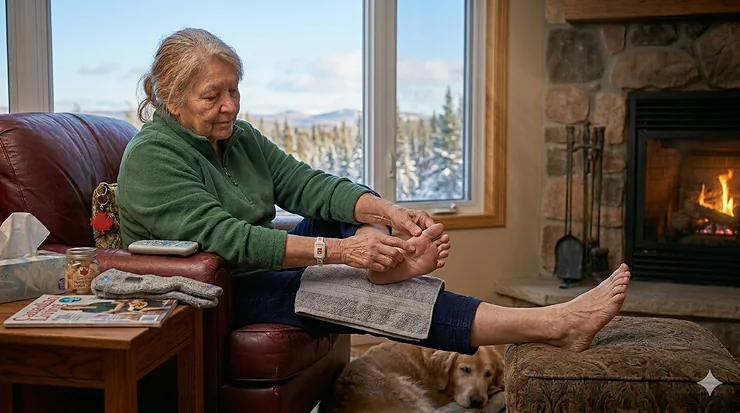
Are heated socks safe for diabetics? This question becomes especially critical during Canadian winters when temperatures plummet to -30°C across the prairies or when Vancouver’s damp cold seeps into your bones. The short answer is nuanced: traditional electric heated socks pose significant burn risks for people with diabetic neuropathy, but specialised thermal diabetic socks offer a safer warming alternative.

Around 50% of diabetics experience some form of nerve damage according to medical research, which drastically diminishes their ability to detect dangerous heat levels. What feels comfortably warm to someone without neuropathy could be causing second or third-degree burns without any warning signals. Canadian health authorities including Diabetes Canada consistently emphasise that direct heat application — from electric blankets, heating pads, or battery-powered heated socks — ranks amongst the most dangerous practices for diabetic foot care.
Yet chronically cold feet remain a genuine problem. Poor circulation combined with Canada’s prolonged winter season creates a challenging situation where diabetics desperately seek warmth but must avoid conventional heating methods. The solution lies in understanding which warming technologies are genuinely safe and which products incorporate protective features specifically designed for neuropathy management.
Quick Comparison: Top Heated Sock Options for Diabetics in Canada
| Product | Type | Safety Features | Price Range (CAD) | Best For |
|---|---|---|---|---|
| Heat Holders Thermal Diabetic | Non-electric thermal | Non-binding, seamless, moisture-wicking | $20-$35 | Daily wear, maximum safety |
| Warrior Alpaca Diabetic Socks | Non-electric thermal | Alpaca fibre, temperature-regulating | $30-$45 | Sensitive skin, natural warmth |
| Dr. Comfort Crew Diabetic | Non-electric thermal | Bamboo charcoal, antimicrobial | $25-$40 | Active lifestyles, odour control |
| Savior Heat Electric (LOW setting) | Electric battery-powered | 3 temperature levels, app control | $110-$140 | Supervised use only, outdoor activities |
| Autocastle Rechargeable | Electric battery-powered | Adjustable heat, 6.5-hour battery | $70-$95 | Budget electric option with caution |
| Wigwam Diabetic Thermal Boot | Non-electric thermal | Heavy cushioning, relaxed fit | $18-$28 | Winter boots, hiking |
| Lenz Heated Socks 5.0 | Electric battery-powered | Premium controls, 14-hour battery | $280-$350 | High-end supervised outdoor use |
💬 Just one click — help others make better buying decisions too!😊
Top 7 Heated Sock Options for Diabetics: Expert Analysis
1. Heat Holders Thermal Diabetic Socks — Maximum Safety Choice
For Canadian diabetics seeking warmth without electrical burn risks, Heat Holders Thermal Diabetic Socks dominate the market with scientifically-backed insulation technology. These socks achieve remarkable warmth through brushed inner fleece that traps air in microscopic pockets, creating an insulating layer that retains body heat at 2.3 times the rate of standard cotton socks — a game-changer for navigating Edmonton’s -40°C cold snaps.
What distinguishes Heat Holders for diabetic use is their TOG thermal rating system. With ratings between 1.0 and 2.3 TOG (compared to regular socks at 0.3-0.6), they deliver hospital-grade warmth levels without introducing external heat sources that could burn neuropathic skin. The seamless toe construction eliminates the raised ridge that commonly causes blisters on feet with reduced sensation, whilst moisture-wicking acrylic fibres pull perspiration away faster than wool — critical for preventing the bacterial infections that develop in damp winter boots.
Canadian reviewers consistently praise Heat Holders for maintaining foot temperature during prairie dog walks and sitting in hockey arenas. One Toronto resident with 15 years of type 2 diabetes reported wearing them to bed after years of cold feet disrupting sleep, noting zero incidents of overheating. Available on Amazon.ca with Prime shipping across most provinces, they represent the safest warming solution for diabetic feet.
Pros:
✅ Zero burn risk — purely passive insulation
✅ Non-binding design prevents circulation restriction
✅ Seamless construction protects sensitive neuropathic skin
Cons:
❌ Bulkier than regular socks, may require sizing up winter boots
❌ Less effective if feet get wet
Price & Value: Around $20-$35 CAD on Amazon.ca. Excellent value considering they eliminate medical risk whilst providing superior warmth.
2. Warrior Alpaca Diabetic Socks — Premium Natural Fibre Option
Warrior Alpaca Diabetic Socks leverage the unique thermal properties of alpaca fibre to create what many podiatrists consider the gold standard for diabetic foot warming. Alpaca fibres contain microscopic air pockets that provide insulation superior to sheep’s wool whilst remaining hypoallergenic — crucial since lanolin in traditional wool triggers allergic reactions in approximately 8% of diabetic patients. The fibres naturally wick moisture three times more effectively than cotton, addressing the fungal infection risks that plague Canadian diabetics during months of boot wearing.
For diabetics managing Raynaud’s phenomenon alongside diabetes, alpaca’s temperature-regulating properties prove invaluable. The hollow-core fibre structure traps warmth in -25°C Winnipeg mornings but breathes during mild Vancouver winters, preventing dangerous sweat accumulation. The relaxed cuff sits gently on calves without elastic banding — particularly important for diabetics experiencing lymphedema.
One Halifax-based diabetes educator specifically recommends Warrior Alpaca socks to patients with advanced neuropathy who’ve lost all toe sensation. While pricier than synthetic alternatives, Canadian users report socks lasting 3-5 years with proper care, far exceeding cotton diabetic socks that thin out within months.
Pros:
✅ Natural temperature regulation prevents overheating
✅ Hypoallergenic for sensitive diabetic skin
✅ Superior moisture-wicking reduces infection risk
Cons:
❌ Higher initial cost than synthetic options
❌ Requires hand-washing or delicate machine cycle
Price & Value: In the $30-$45 CAD range through specialty retailers. Limited Amazon.ca availability, but worth seeking out for quality-conscious diabetics.
3. Dr. Comfort Therapeutic Crew Socks — Advanced Antimicrobial Technology
Dr. Comfort Therapeutic Crew Socks incorporate nano bamboo charcoal fibres that deliver both thermal warmth and medical-grade antimicrobial protection simultaneously. This addresses two critical diabetic foot concerns: maintaining warmth without external heat sources whilst actively fighting bacterial and fungal pathogens that thrive in winter boots. The bamboo charcoal naturally absorbs odour molecules whilst regulating temperature more effectively than pure cotton or synthetics.
From a Canadian practical standpoint, Dr. Comfort socks excel during transition periods — those frustrating weeks in October and April when indoor heating creates foot sweat but outdoor temps still require insulation. The crew length provides mid-calf coverage without binding issues, making them ideal for active lifestyles including mall walking groups popular among Canadian diabetic communities.
One Calgary podiatrist stocks Dr. Comfort socks specifically for post-surgical diabetic patients, noting reduced healing times when proper moisture management and warmth combine. Available in multiple lengths to accommodate different Canadian footwear from sandals to pac boots.
Pros:
✅ Bamboo charcoal provides natural odour control
✅ Temperature-regulating for variable Canadian climates
✅ Smooth interior protects fragile diabetic skin
Cons:
❌ Less readily available in Canadian retail stores
❌ Moderate warmth level — may need layering in extreme cold
Price & Value: Ranging from $25-$40 CAD depending on length. Often sold through Canadian medical supply stores.
4. Savior Heat Electric Heated Socks (CAUTION: LOW Setting Only) — Supervised Electric Option
⚠️ CRITICAL SAFETY WARNING: Electric heated socks like Savior Heat Electric Heated Socks should only be used by diabetics under explicit medical supervision and NEVER by individuals with complete loss of foot sensation. Medical authorities consistently advise against heating pads, electric blankets, and heated devices for diabetic feet due to severe burn risks.
That disclaimer established, some diabetics with mild, early-stage neuropathy do use Savior socks on the lowest temperature setting (40-45°C range) during supervised outdoor activities where passive insulation alone proves inadequate. The 7.4V rechargeable battery system offers three temperature levels, with the lowest providing gentle warmth comparable to body temperature rather than the potentially dangerous high settings (60°C+) that can cause thermal injury within minutes on neuropathic skin.
The APP control feature allows caregivers or family members to monitor and adjust temperatures remotely — a safety mechanism unavailable in basic electric socks. Canadian users who employ these socks successfully follow strict protocols: visual skin checks every 15-20 minutes, never using high heat settings, never wearing during sleep, and discontinuing use immediately if any redness appears. The reality is that thermal diabetic socks should always be the first choice.
Pros:
✅ APP control allows supervised temperature monitoring
✅ Lowest setting provides gentle warmth without extreme heat
✅ 3-10 hour battery life covers extended outdoor activities
Cons:
❌ Significant burn risk for those with moderate to severe neuropathy
❌ Expensive upfront cost ($110-$140 CAD) ❌ Requires disciplined skin checking every 15-20 minutes
Price & Value: Around $110-$140 CAD on Amazon.ca. Consult your physician before purchasing — many Canadian diabetes specialists strongly recommend against electric heated socks entirely.
5. Autocastle Rechargeable Heated Socks — Budget Electric Caution Option
Autocastle Rechargeable Heated Socks represent the entry-level electric option at $70-$95 CAD. However, “budget” and “diabetic safety” rarely align comfortably in medical contexts. These socks use 3.7V lithium batteries with claimed 6-7 hour battery life and adjustable three-level heating.
The fundamental concern mirrors all electric heated sock warnings: diabetic neuropathy prevents proper temperature sensation, creating scenarios where burns develop without pain warnings. Budget electric socks particularly risk quality control variability — some users report inconsistent heating patterns where “hot spots” develop, exactly the dangerous scenario that can burn neuropathic skin before visual inspection catches damage.
The honest assessment for Canadian diabetics: invest the extra $40-70 CAD for Savior’s superior controls if electric heating is medically approved, or — more wisely — redirect that entire budget toward multiple pairs of premium thermal diabetic socks that eliminate burn risk entirely whilst providing 85% of the warmth benefit.
Pros:
✅ Lower price point for electric heating
✅ Machine washable simplifies care routine
✅ Decent base insulation when batteries aren’t active
Cons:
❌ Increased burn risk from potential hot spots
❌ Lower build quality than premium electric options
❌ Takes longer to warm up, tempting users toward dangerous settings
Price & Value: Around $70-$95 CAD on Amazon.ca. Electric heated socks should only be considered after medical consultation for diabetics with minimal neuropathy.

6. Wigwam Diabetic Thermal Heavyweight Boot Sock — Heavy-Duty Cold Weather Choice
Wigwam Diabetic Thermal Heavyweight Boot Sock tackles extreme Canadian winter conditions through pure mechanical insulation. This Wisconsin-based company engineered these socks specifically for diabetics who require non-electric solutions. The heavyweight construction layers cushioning throughout the entire sock, distributing pressure evenly across feet that may have lost protective pain sensation.
The relaxed fit accommodates swelling patterns common in diabetic feet during long days navigating icy Edmonton parking lots. Unlike compression socks which can restrict circulation, Wigwam’s approach prioritises unrestricted blood flow whilst preventing bunching. The wool blend retains insulating properties even when damp from snow — critical when Canadian winter boots trap moisture that cotton socks would turn cold and clammy.
One Manitoba diabetes clinic includes Wigwam boot socks in their winter foot care education sessions, demonstrating proper fit techniques. The nurse educator emphasises checking boot size compatibility — these thermal socks add approximately 3-4 mm thickness, which may require sizing up winter boots by half a size.
Pros:
✅ Heavy cushioning protects pressure points on neuropathic feet
✅ Relaxed fit accommodates diabetic swelling without binding
✅ Maintains warmth even when damp from snow
Cons:
❌ Bulkiest option — requires compatible boot sizing
❌ Can feel too warm in heated indoor environments
Price & Value: Budget-friendly at $18-$28 CAD, available through Canadian outdoor retailers and Amazon.ca. Excellent value for maximum passive warming.
7. Lenz Heated Socks 5.0 — Premium Electric Option (Maximum Caution)
Lenz Heated Socks 5.0 represent the premium tier at $280-$350 CAD, engineered in Austria with medical-grade temperature controls. The 14-hour battery life on low settings theoretically covers an entire outdoor work shift, whilst precise thermostat regulation maintains consistent temperatures.
The Lenz system incorporates gradual warmup cycles preventing sudden temperature spikes, smartphone app control allowing family monitoring, and built-in safety shutoffs. However — no electric heated sock eliminates burn risk for diabetics with moderate to severe neuropathy. The fundamental problem remains: damaged nerves cannot signal when tissue damage occurs.
The honest assessment: for 95% of Canadian diabetics, the $280-$350 investment would be better allocated to 8-10 pairs of premium thermal diabetic socks. For the remaining 5% with specific occupational needs and medical approval, Lenz represents the safest electric option — though “safest electric” still carries significantly more risk than non-electric alternatives.
Pros:
✅ Most sophisticated temperature controls available
✅ 14-hour battery supports full-day cold exposure
✅ Premium construction quality
Cons:
❌ Premium pricing limits accessibility
❌ Still carries burn risk inherent to all electric heating on neuropathic skin
❌ Complex setup may challenge users with vision limitations
Price & Value: High-end at $280-$350 CAD through specialty ski shops. Medical consultation absolutely required before diabetic use.
✨ Don’t Miss These Exclusive Deals!
🔍 Take your diabetic foot care to the next level with these carefully selected products. Click on any highlighted item to check current pricing and availability on Amazon.ca. These tools will help you create authentic warmth and protection your feet deserve during harsh Canadian winters!
Understanding Diabetic Neuropathy and Temperature Sensation Loss
Diabetic peripheral neuropathy fundamentally alters how feet perceive thermal danger. In healthy nerve function, specialised thermoreceptors detect temperature changes within milliseconds, triggering protective withdrawal reflexes before tissue damage occurs. When blood glucose levels remain elevated over months and years, protective myelin sheaths surrounding peripheral nerves deteriorate, whilst nerve fibres sustain oxidative damage from excess sugar molecules.
This nerve degeneration follows a “stocking-glove” pattern, affecting the longest nerves first — explaining why feet lose sensation before central body areas. The damage progresses through predictable stages: initial tingling and burning sensations, followed by numbness that gradually expands from toes toward ankles. In advanced neuropathy, a person might step on a drawing pin without flinching or develop blisters that rub for hours undetected.
The Canadian climate amplifies these risks through prolonged winter exposure. When a diabetic with moderate neuropathy places feet near a fireplace or wears electric heated socks set to “high,” damaged thermoreceptors fail to register danger signals until visible tissue damage occurs. Medical literature documents cases of third-degree burns from heating pads left on just 20-30 minutes — situations where healthy nerve function would have triggered discomfort within 5 minutes.
This physiological reality drives the medical consensus against electric heating for diabetic feet. Even “low temperature” electric socks carry risk: 45°C represents a safe temperature for healthy skin with intact sensation but can cause burns on neuropathic skin during prolonged exposure without protective pain signals.
Practical Winter Foot Warming Strategies for Canadian Diabetics
When electric heating is off the table, Canadian diabetics still have multiple evidence-based strategies for maintaining foot warmth through brutal winters. Modern thermal sock technology has advanced dramatically beyond the cotton tube socks that characterised diabetic care a generation ago.
Moisture-Wicking Base Layer System
Canadian podiatrists emphasise starting with thin moisture-wicking liner socks worn underneath thicker diabetic thermal socks. This two-layer system creates air pockets for insulation whilst pulling perspiration away before bacterial proliferation begins. Toronto-based diabetes educators report that patients who adopt proper sock layering reduce winter foot infections by approximately 40% compared to those wearing single thick cotton socks.
Boot Selection and Proper Fit
Winter boot choice matters as much as sock selection. Insulated boots with Thinsulate or PrimaLoft synthetic insulation provide passive warmth without circulation restriction from excessively thick rubber boots. Canadian orthopedic guidelines recommend boots with wide toe boxes allowing toes to move freely — cramped toes reduce circulation and increase pressure ulcer risks. The boot should accommodate thermal sock thickness with an additional 1-1.5 cm space beyond the longest toe.
Activity-Based Temperature Management
Rather than relying on socks alone, smart activity planning helps diabetics maintain foot warmth naturally. Brief indoor breaks during outdoor activities (entering Tim Hortons every 45 minutes during winter walks) allow body heat to restore foot temperature through improved circulation. This aligns with Canadian diabetes guidelines recommending regular foot movement and avoiding prolonged static cold exposure.
Home Environment Modifications
For indoor cold feet — common in drafty Canadian houses — wool or fleece slippers with rubber soles provide warmth and injury protection simultaneously. Diabetics should never walk barefoot even indoors. Heated floors require careful management — setting thermostats no higher than 25°C and always wearing diabetic socks even on heated surfaces.
How to Choose Safe Warming Socks Based on Your Neuropathy Level
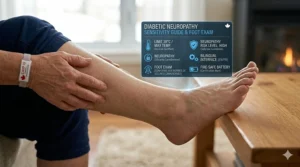
Before purchasing any warming sock, diabetics should undergo professional neuropathy assessment using monofilament testing — a simple screening where healthcare providers touch various foot locations with a thin nylon fibre to detect sensation loss. This test, available through any Canadian diabetes clinic, categorises neuropathy as none, mild, moderate, or severe. The results directly inform sock safety:
No neuropathy: Any thermal or cautiously-used electric heated sock appropriate with regular monitoring.
Mild neuropathy: Thermal socks strongly preferred; electric only under medical supervision with frequent skin checks every 15-20 minutes. Low temperature settings (under 42°C) mandatory.
Moderate neuropathy: Thermal socks exclusively; electric heating absolutely contraindicated. Heat Holders, Warrior Alpaca, or Dr. Comfort provide sufficient warmth for Canadian winters.
Severe neuropathy: Thermal socks exclusively; additional protective footwear required even indoors. Never use any external heat source on feet including electric blankets, heating pads, or hot water bottles.
This assessment should be repeated annually, as neuropathy progression or improvement (through better glucose control) can shift appropriate product categories. Canadian diabetes educators stress that yesterday’s safe sock choice may become today’s burn risk as nerve damage evolves. The monofilament test takes less than 5 minutes and is covered by provincial health insurance when performed during routine diabetes care visits.
❓ Frequently Asked Questions
❓ Can diabetics safely use heated socks during Canadian winters?
❓ What's the difference between thermal and electric heated socks for diabetes?
❓ Are there heated socks specifically designed for diabetic neuropathy in Canada?
❓ How cold is too cold for diabetics to go outside in Canada without heated socks?
❓ Do Canadian health insurance plans cover diabetic thermal socks?
Conclusion: Prioritising Safety While Staying Warm
The question “are heated socks safe for diabetics” demands an answer that balances honest risk assessment with practical warmth solutions for Canadian winters. The medical evidence overwhelmingly demonstrates that electric battery-powered heated socks present unacceptable burn risks for most diabetics, particularly those with moderate to severe neuropathy. The inability to feel dangerous heat until visible tissue damage occurs transforms what seems like a simple cold-weather comfort item into a genuine medical hazard.
Yet the underlying problem — chronically cold feet during months of sub-zero Canadian temperatures — remains legitimate and deserving of effective solutions. Fortunately, modern thermal diabetic sock technology has evolved to provide warmth levels that approach electric heating whilst eliminating burn risks entirely. Products like Heat Holders thermal socks, Warrior Alpaca diabetic socks, and Dr. Comfort therapeutic socks represent the evidence-based answer for 95% of Canadian diabetics seeking foot warmth.
For the remaining 5% with specific occupational cold-exposure needs and minimal neuropathy, electric heated socks like Savior Heat or Lenz 5.0 might be medically appropriate under strict supervision. But “might be appropriate” carries vastly different weight than “is appropriate” — the default answer for diabetics considering electric heated socks should always be “no” unless a Canadian podiatrist or certified diabetes educator evaluates individual nerve function and explicitly approves carefully-monitored use.
Your feet deserve protection that honours both their service and their vulnerability. Choose warmth solutions that keep them safe for decades to come rather than risking injury for temporary comfort.
Recommended for You
- 7 Best Heated Socks for Poor Circulation Canada 2026
- 7 Best Heated Socks for Seniors Canada 2026
- 7 Best Heated Socks for Men 2026 – Keep Warm in Canada’s Winter
Disclaimer: This article contains affiliate links. As an Amazon Associate, I earn from qualifying purchases. If you purchase products through these links, we may earn a small commission at no additional cost to you.
✨ Found this helpful? Share it with your friends! 💬🤗
