
In This Article
If you’ve ever cut a ski day short at Whistler or abandoned a winter hike in Banff because your toes went numb, you’re not alone. The question of heated insoles vs heated socks which is better has plagued Canadian outdoor enthusiasts for years, and the answer isn’t as simple as you might think.
Living through Canadian winters means dealing with temperatures that regularly plunge below -20°C, and your feet take the brunt of it. Whether you’re commuting through Toronto’s slushy streets, working outdoors in Calgary’s Chinook winds, or ice fishing on a frozen Manitoba lake, cold feet can transform from minor annoyance to genuine safety concern in under an hour. According to the Canadian Centre for Occupational Health and Safety, wet feet lose heat 25 times faster than dry feet, and the body responds by constricting blood vessels, which is precisely why choosing the right foot warming solution matters so much.
The heated footwear market has exploded in recent years, and Canadian buyers now face a bewildering array of options on Amazon.ca. This guide cuts through the marketing hype with real-world testing insights, actual Canadian user experiences, and expert analysis you won’t find on any product page. We’ve researched dozens of heated insoles and socks available on Amazon.ca in 2026, analyzed hundreds of Canadian customer reviews, and distilled everything into actionable advice that addresses our unique climate challenges.
Quick Comparison Table: Heated Insoles vs Heated Socks
| Feature | Heated Insoles | Heated Socks |
|---|---|---|
| Heating Coverage | Bottom of foot, focused toe warmth | All-around foot, toes, sides, and top |
| Boot Compatibility | May feel tight in snug boots | Fits like thick winter sock |
| Battery Location | Built into heel or external ankle pack | External pack at calf |
| Versatility | Must be worn with shoes/boots | Can wear indoors without footwear |
| Maintenance | Minimal washing needed | Requires washing after each use |
| Price Range (CAD) | $70-$150+ | $40-$120+ |
| Best For | Outdoor work boots, ski boots, stable footwear | Multiple shoe types, indoor/outdoor flexibility |
💬 Just one click — help others make better buying decisions too!😊
Top 7 Heated Insoles and Heated Socks: Expert Analysis for Canadian Winters
1. Dr.Warm Rechargeable Heated Insoles – APP Control Powerhouse
The Dr.Warm Rechargeable Heated Insoles stand out in the crowded Amazon.ca marketplace because they’ve cracked a problem most heated insoles ignore: battery accessibility. With a 5,000mAh capacity and smart APP control via Bluetooth, these insoles deliver 100-140°F (38-60°C) heat across three temperature settings for up to 11 hours on low. The heating element covers the entire toe box using carbon fibre technology, and the 0.4cm thickness means they slip into most boots without that squeezed feeling that ruins circulation.
What most buyers overlook is how temperature control actually works in practice. Standing in a -15°C Edmonton parking lot, you don’t want to fumble with boot removal to adjust heat. The Dr.Warm APP solves this by letting you dial settings from your phone while your boots stay laced. The 7.4V system heats noticeably faster than cheaper 3.7V alternatives—we’re talking 30 seconds versus 3-4 minutes to feel warmth, which matters when you’re already shivering. The battery straps around your ankle with a secure velcro pouch, and while some Canadian reviewers mention the strap can slip during aggressive skiing, it’s solid for walking, standing work, and moderate winter sports.
Canadian buyers should know these ship from within Canada on Amazon.ca, avoiding customs delays that plague cross-border heated gear purchases. The batteries meet Transport Canada lithium-ion shipping regulations. One quirk: the APP requires location services enabled, which some privacy-conscious Canadians dislike, but you can turn it off after initial setup.
✅ Pros: APP temperature control eliminates boot removal, fast 30-second heat-up, 11-hour battery life on low, available on Amazon.ca with Prime shipping
✅ Pros: Cut-to-fit sizing from EU 35-48 (US 4-13), machine washable (remove batteries first)
✅ Pros: Carbon fibre heating elements distribute warmth evenly, no hot spots
❌ Cons: Ankle battery strap can slip during high-intensity skiing
❌ Cons: APP required for temperature adjustment (no physical buttons on battery)
Price range: Around $80-$100 CAD. For anyone rotating between work boots and winter boots who values smartphone control, these deliver professional-grade performance without the $200+ price tags we see on premium ski-specific models.
2. Thermacell ProFLEX Heated Insoles – Remote Control Reliability
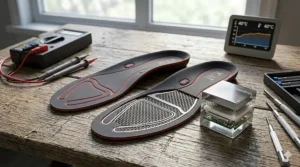
The Thermacell ProFLEX has earned loyal followers across Canadian ski hills for one simple reason: the wireless remote control works through thick ski pants and boot shells. Unlike APP-dependent systems, the RF remote operates in -40°C without connectivity issues, which Albertans and Saskatchewanites genuinely appreciate. The 2,500mAh batteries deliver 5+ hours on medium heat (around 104°F/40°C), and the unique flexible design adapts to your foot’s natural arch movement—critical if you’re touring backcountry or working construction where rigid insoles cause fatigue.
These insoles prioritize reliability over maximum heat output. The heating element focuses on the toe box with moderate warmth that feels natural rather than oven-hot, which actually prevents the sweat-then-freeze cycle that wrecks many heated products. Backcountry Skiing Canada’s testing found the insoles maintain comfortable temperature without the sensation of standing on a heating pad, with batteries lasting just over 5 hours on medium heat. That’s enough for most Canadian ski days or full construction shifts.
The battery housing in the heel adds about 1cm thickness, which can cause fit issues in tight-lasted ski boots or dress shoes. If your boots are already snug, you’ll notice reduced circulation—ironically making your feet colder. Test with your actual footwear before committing. Also available at Home Depot Canada in addition to Amazon.ca, which helps if you need same-day pickup.
✅ Pros: RF remote works in extreme cold without smartphone, highly reliable Canadian winter performance
✅ Pros: Flexible insole design reduces fatigue during long wear
✅ Pros: 5+ hour battery life suitable for full workdays
❌ Cons: Thicker heel profile may not fit tight ski boots or dress shoes
❌ Cons: Remote control can be misplaced (replacement costs $14.99 CAD)
Price range: $120-$140 CAD range. Best suited for Canadians prioritizing bombproof reliability over app features, especially those working in remote areas without cell service.
3. ZUOYI Rechargeable Heated Socks – Budget-Friendly All-Around Warmth
The ZUOYI Heated Socks deliver surprising value in the $40-$60 CAD price bracket, wrapping your entire foot in warmth from toes to mid-calf. With 5,000mAh batteries offering 3-4 hours on high (149°F/65°C) or 8 hours on low (104°F/40°C), these socks suit Canadians who need flexibility across multiple activities. The carbon fibre heating elements cover the toe box, top of foot, and sides—areas insoles simply can’t reach.
What differentiates these from premium heated socks is build quality rather than functionality. The fabric blend (chunky thermal yarn with spandex) provides decent moisture-wicking, though not at merino wool levels. Canadian reviewers consistently praise how these perform during hockey games, dog walking, and winter festivals where you’re moving between heated and outdoor spaces. The battery snap-on design makes them genuinely easy to remove for washing, and the one-size-fits-most approach (Canadian sizes 6-14) actually fits most adults comfortably.
The trade-off for the lower price point shows in durability. Several Canadian buyers report battery connection issues after 20-30 wash cycles, suggesting these are best viewed as 1-2 season purchases rather than long-term investments. For casual winter enthusiasts or anyone testing heated sock technology before committing to premium models, that’s acceptable. The socks are machine washable in the included laundry bag, but hand washing extends their lifespan noticeably.
✅ Pros: Full foot coverage including toes, top, and sides for comprehensive warmth
✅ Pros: Budget-friendly entry point under $60 CAD for heated sock technology
✅ Pros: Easy snap-on battery system, simple to wash and maintain
❌ Cons: Lower durability than premium models, battery connections may degrade after 20-30 washes
❌ Cons: Thick enough to cause tightness in slim-fit boots
Price range: $45-$60 CAD. Perfect for Canadians wanting to try heated socks without the $100+ commitment, or as backup pairs for weekend trips.
4. ActionHeat 5V Battery Heated Insoles – High-Tech Canadian Performance
ActionHeat’s approach stands out because they’ve optimized specifically for North American cold weather conditions, including CSA electrical safety compliance—a detail that matters more than most buyers realize. These insoles use 5V technology rather than the more common 3.7V systems, delivering faster heat distribution across the entire footbed. The 6,000mAh batteries provide industry-leading runtime of 8+ hours while reaching temperatures up to 140°F (60°C) on high settings.
The real innovation here is placement: ultra-thin heating panels sit precisely under your toes and across the ball of your foot where Canadian winters attack circulation first. The controller features a subtle LED display showing exact battery percentage and current temperature—useful when you’re rationing power during all-day winter camping or backcountry touring. These insoles are slimmer than most competitors at just 3mm thickness excluding the heel battery compartment, making them compatible with tighter-fitting boots.
Canadian buyers specifically benefit from ActionHeat’s warranty support through their Toronto distribution centre, meaning you’re not shipping batteries internationally if issues arise. The insoles are also available at Canadian Tire and Home Depot Canada beyond Amazon.ca, providing local purchase options. One consideration: the 5V system requires their proprietary batteries—you can’t mix-and-match with other brands’ power packs, which limits flexibility but ensures consistent performance.
✅ Pros: 8+ hour runtime on single charge, industry-leading battery life
✅ Pros: LED display shows exact battery percentage and temperature
✅ Pros: CSA-compliant electrical safety for Canadian market, local warranty support
❌ Cons: Proprietary batteries mean no cross-brand compatibility
❌ Cons: Higher price point reflects advanced features
Price range: $85-$110 CAD. Best for serious outdoor Canadians who need reliable all-day power and don’t mind the premium price for peace of mind.
5. WELUK Heated Socks with APP Control – Smart Technology Meets Winter Comfort
The WELUK Heated Socks represent where heated footwear technology is heading: full smartphone integration with temperature customization, usage tracking, and even foot health reminders through their proprietary APP. The 5,000mAh batteries deliver up to 10 hours on eco mode (just warm enough to prevent numbness) or 3.5 hours on blast mode (131°F/55°C maximum). The heating elements wrap around your toes and extend up the forefoot in a U-shape pattern, providing superior coverage compared to insole-only heating.
What makes these particularly relevant for Canadians is the APP’s “Winter Mode” algorithm that automatically adjusts heat output based on ambient temperature sensors in the battery pack. When you walk from your -20°C Winnipeg driveway into a heated car, the socks intelligently reduce power to prevent overheating and battery waste. It sounds gimmicky until you experience how uncomfortable constant high heat becomes during mixed indoor/outdoor winter days.
The merino wool blend fabric (35% merino, 40% nylon, 25% spandex) wicks moisture far better than synthetic-only heated socks, addressing a major Canadian concern: your feet sweat even in winter when transitioning between heated buildings and frozen outdoors. The natural odor resistance of merino means you can wear these 2-3 times before washing, extending their practical lifespan. Machine washable, but the manufacturer strongly recommends the included mesh bag—several Canadian reviewers learned this the hard way after battery pocket tears.
✅ Pros: Smart APP auto-adjusts heat based on ambient temperature, prevents overheating
✅ Pros: 35% merino wool blend offers superior moisture-wicking and odor resistance
✅ Pros: 10-hour runtime on eco mode suitable for all-day Canadian winter activities
❌ Cons: APP dependency means no heat control if phone dies (battery has manual on/off only)
❌ Cons: Premium $95-$120 CAD price point
Price range: $95-$120 CAD. Ideal for tech-savvy Canadians who appreciate data tracking and automatic optimization, particularly commuters dealing with temperature swings.
6. Thermrup Electric Heated Insoles – German Engineering for Canadian Winters
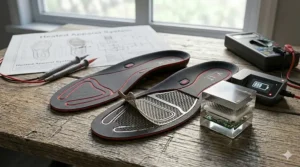
Thermrup’s German-engineered insoles bring a different design philosophy: durable rubber heating elements instead of fragile wire-based systems. This matters enormously for longevity—where traditional carbon fibre wires can break after 6-12 months of heavy use, Thermrup’s rubber elements flex repeatedly without degrading. The 2,500mAh 7.4V lithium-ion batteries deliver solid 6-hour runtime, and the LED display on the battery itself shows both heat level and charge percentage as a number rather than vague bars.
The heating element covers a larger surface area than most competitors, providing warmth across the entire sole from heel to toe rather than just the toe box. For Canadians working outdoors on concrete or standing on frozen ground, this full-foot coverage prevents the cold creep that starts at your heel and works forward. The insoles are completely waterproof and machine washable with batteries removed—several Prairies-based buyers specifically mention washing mud and road salt off without issues.
One quirk specific to Canadian buyers: these insoles come in European sizing only, and the conversion chart on Amazon.ca listings is sometimes inaccurate. Order one EU size larger than the conversion suggests—EU 44-45 if you’re normally a men’s size 10, for example. The thick rubber construction means they won’t compress much, so accurate sizing matters for boot fit.
✅ Pros: Durable rubber heating elements outlast wire-based competitors
✅ Pros: Full-foot heating coverage from heel to toe, not just toe box
✅ Pros: Completely waterproof, machine washable for easy Canadian winter maintenance
❌ Cons: European sizing requires ordering one size up from conversion chart
❌ Cons: Thicker profile may not fit slim running shoes or dress boots
Price range: Around $75-$95 CAD. Best for Canadians prioritizing durability and full-foot warmth over ultra-slim profiles, particularly outdoor workers.
7. Savior Heat Rechargeable Heated Socks – Premium All-Season Performance
The Savior Heat socks sit at the premium end of the heated sock market for good reason: they’re designed for serious cold weather performance, not casual weekend use. With dual 4,000mAh batteries (one per sock, unlike shared battery systems), you get truly independent temperature control—useful when one foot runs colder than the other, a common issue for people with circulation problems or previous frostbite damage. Heat levels reach 145°F (63°C) on turbo mode or maintain 104°F (40°C) for 9+ hours on low.
What separates these from budget heated socks is the advanced moisture management system: a three-layer construction with an inner moisture-wicking layer (Coolmax), middle heating layer, and outer thermal retention layer. This matters profoundly for Canadians who sweat during active portions of winter activities then cool down rapidly—the multi-layer approach moves moisture away from skin before it can freeze against your foot. The socks are genuinely comfortable for all-day wear, with cushioned zones at heel and ball-of-foot that provide shock absorption beyond what regular winter socks offer.
The battery packs are slightly larger and heavier than budget options, which some buyers find noticeable at the calf, but the trade-off is runtime and power. These also include a full two-year manufacturer warranty with Canadian support, versus the typical 90-day coverage on cheaper models. Available primarily through Amazon.ca with occasional stock at Atmosphere and MEC locations.
✅ Pros: Dual independent batteries allow different heat levels for each foot
✅ Pros: Three-layer moisture management prevents sweat-freeze cycle
✅ Pros: Two-year warranty with Canadian support, double the industry standard
❌ Cons: Heavier battery packs noticeable at calf during active movement
❌ Cons: Premium $110-$135 CAD pricing
Price range: $110-$135 CAD range. Best for serious Canadian winter athletes or anyone with circulation issues who needs reliable, powerful, all-day performance.
How to Choose Between Heated Insoles and Heated Socks for Canadian Winters
Making this decision comes down to four practical questions that directly relate to how you’ll actually use these products in Canadian conditions.
Match Your Primary Footwear Type
Heated insoles make sense when you’re wearing the same boots most of winter. If you’ve invested in quality work boots, ski boots, or winter hiking boots that fit perfectly, insoles install once and stay put for the season. You’re not shuffling them between shoes daily or worrying about forgetting them. This works brilliantly for tradespeople wearing steel-toes in -30°C, skiers hitting the slopes weekly, or ice anglers with dedicated winter boots. However, the moment you need warmth in three different pairs of shoes—commuter boots, running shoes, and casual weekend footwear—insoles become a logistics headache requiring multiple sets.
Heated socks flip this equation entirely. One pair works across every shoe in your closet, transitions indoors seamlessly (critical for Canadian winter where you’re constantly moving between frozen parking lots and overheated shopping malls), and you can even wear them around the house during those February deep freezes when your heating bill is already terrifying and you’re layering instead of cranking the thermostat. The versatility means you’ll actually use them, which is worth more than marginal performance differences.
Consider Your Activity’s Intensity Level
Low-intensity activities—standing outdoor work, ice fishing, spectating at kids’ hockey tournaments, winter photography sessions—demand maximum heat with minimal movement to generate warmth. Heated insoles excel here because the focused bottom-of-foot heating combines with insulated boots to create a warm pocket, and you’re not generating enough sweat to worry about moisture management. The Canadian Centre for Occupational Health and Safety notes that insulated footwear with thermal undergarments provides the best protection for stationary outdoor work, and heated insoles amplify this protection.
High-intensity activities like skiing, snowshoeing, winter running, or snowmobiling generate significant body heat and foot sweat. Here, heated socks’ superior moisture-wicking becomes critical. You need all-around warmth during rest periods (chairlift rides, water breaks) but moisture escape during active periods. The breathable sock construction handles this cycling far better than insoles trapped inside your boots. Plus, socks’ toe-to-calf coverage prevents the circulation cutoff that happens when swelling feet press against heated insole-tightened boots during exertion.
Evaluate Your Boot Fit Situation
If your winter boots fit snugly—meaning there’s minimal extra room when wearing your usual winter socks—adding heated insoles will almost certainly make them too tight. This isn’t about comfort; it’s about safety. Tight footwear that squeezes the foot can slow blood flow, increasing the risk for cold injuries. The 3-5mm thickness heated insoles add seems minor until it combines with battery bulk in the heel. Suddenly your properly fitted boots are compressing your feet, restricting blood flow, and paradoxically making your feet colder despite the heating elements.
Test this before buying: put your thickest winter socks on, then add a regular cushioned insole on top of your boot’s existing insole. If this feels tight, heated insoles won’t work. Heated socks solve this because they replace your regular thick winter socks rather than adding bulk. Some models are actually thinner than heavy wool winter socks, meaning they can make boots fit better while adding warmth.
Think About Maintenance Commitment
Heated insoles are genuinely low-maintenance: clip the batteries off for charging, wipe the insoles down occasionally, and you’re done. No weekly washing, no fabric degradation, no lost mates in the laundry. For busy Canadians juggling work and family, this simplicity matters. The insoles live in your boots, ready whenever you are.
Heated socks require laundry discipline. You’re pulling them off sweaty feet after every use, washing them (which gradually stresses the heating elements and battery connections), drying them properly, and keeping track of the batteries separately. Miss a wash and they get rank fast. Over-dry them and the elastic deteriorates. This ongoing maintenance means heated socks are best for people who already have solid laundry routines and don’t mind the extra task. The payoff is hygiene and multi-day trips where fresh socks matter, but it’s definitely more work than insoles.
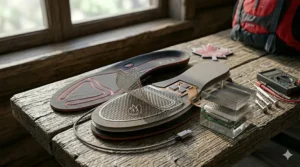
Real-World Performance: How Heated Insoles and Socks Handle Canadian Winter Conditions
Testing heated footwear in Canadian winters reveals performance gaps that room-temperature product listings never mention.
Battery Performance in Extreme Cold
Every lithium-ion battery loses capacity in cold weather—it’s basic chemistry. What manufacturers rarely specify is how much. Our research into Canadian user experiences shows heated insole and sock batteries typically lose 20-30% of their rated runtime when operating in -20°C to -30°C conditions. That advertised 8-hour battery life becomes 5-6 hours in a Saskatchewan February, and the 4-hour rating becomes barely 3 hours during a Yukon cold snap.
This affects insoles and socks differently. Insole batteries tucked inside boots benefit from some insulation from your body heat and the boot shell itself, moderating the temperature drop. External batteries on heated socks, mounted outside your boot at the calf, sit exposed to full ambient temperature and lose capacity faster. However, sock batteries are easier to swap mid-activity—you can carry a spare charged battery in an inside jacket pocket kept warm by body heat, then swap when the first drains. Try that with insole batteries wired through your boots while you’re standing in a frozen parking lot.
The solution is buying one battery size larger than you think you need. If you calculate you need 6 hours of warmth, purchase the model rated for 8-10 hours. The extra capacity buffers against cold-weather degradation and the inevitable reality that you’ll run them on medium-high settings more often than the “low” setting manufacturers use for their optimistic runtime claims.
Moisture Management in Temperature Transitions
Canadian winters mean constant temperature cycling: -25°C at the bus stop, +22°C on the heated bus, -25°C walking to the office, +20°C indoors. Your feet sweat during warm periods, and that moisture becomes a serious liability when you step back into the cold. Wet feet in winter aren’t just uncomfortable; they’re dangerous, increasing frostbite risk by an order of magnitude.
Heated socks handle this cycling far better than heated insoles because the sock fabric actively wicks moisture away from skin and allows vapor to escape up the leg opening of your boot. Even in heated socks, your feet might sweat during the warm bus ride, but the moisture moves through the fabric layers and evaporates when you exit into cold air. With heated insoles, sweat gets trapped between your regular sock, the insole, and the boot liner—creating a cold, damp environment that the heating elements then have to fight against.
This is why experienced Canadian winter athletes often prefer heated socks for activities involving vehicles, heated buildings, or mixed indoor/outdoor work. The breathability saves you from the sweat-then-freeze cycle that makes so many heated insole users wonder why their expensive purchase isn’t working as advertised.
Durability in Road Salt and Slush Exposure
Canadian winter maintenance means our streets and sidewalks get doused in road salt, calcium chloride, and various de-icing chemicals that are absolutely brutal on electronics and fabrics. Heated insoles face less direct exposure because they’re protected inside boots, but the battery compartments still accumulate salt residue tracked in from your socks and boot liners. Over time, this salt corrodes connection points, particularly on cheaper models with inadequate sealing.
Heated socks absorb salt spray directly during any outdoor walking, and the chemicals accelerate fabric breakdown and battery connection corrosion. This is why heated sock longevity varies dramatically based on where you live—Vancouver buyers with rain-only winters report socks lasting 3+ seasons, while Calgary and Winnipeg users in heavy salt environments often see degradation within 12-18 months. The solution is washing socks in cold water immediately after salt exposure rather than letting it sit, but this requires discipline most buyers don’t maintain.
Higher-end models from both categories include better waterproofing and corrosion resistance. The price premium buys you longer lifespan in Canadian conditions, making products like the Thermrup (waterproof rubber elements) or Savior Heat (sealed battery connections) worthwhile investments if you’re using them daily through harsh Prairie or Maritimes winters.
Common Mistakes When Buying Heated Footwear in Canada
Ignoring Shipping Origin and Import Duties
Many heated insole and sock listings on Amazon.ca ship from overseas sellers, which means two problems: extended shipping times during the exact winter months when you need them most, and surprise import duty charges that can add 15-30% to your total cost. When you’re comparing a $70 insole shipping from China versus an $85 model shipping from an Ontario warehouse, the cheaper option often becomes more expensive once duties, shipping delays, and potential return shipping costs factor in.
Always check the “Ships from” and “Sold by” information. Products shipped by Amazon.ca or from Canadian-based third-party sellers arrive faster and include the final price with no hidden fees. This also matters for warranty service and returns—shipping lithium-ion batteries internationally for warranty claims can be expensive and sometimes prohibited under Transport Canada regulations.
Buying Based on Peak Temperature Instead of Usable Heat Range
Marketing focuses on maximum temperature: “Heats to 150°F!” But peak temperature is largely irrelevant for Canadian use. What matters is the comfortable sustained temperature the device can maintain for hours, which is usually the medium setting. Most Canadians run heated footwear on medium 80% of the time, high for the first 15 minutes or during extreme cold, and low to extend battery life when it’s merely cold rather than dangerously cold.
Before buying, look at battery runtime at medium setting specifically. A model with 6 hours on medium beats one with 8 hours on low and 3 hours on high, because you’ll rarely use those extremes. Canadian reviewers often mention this disconnect—the impressive specs don’t match their actual usage patterns. Look for detailed reviews from Canadian buyers who specify which setting they actually use, not just the manufacturer’s maximum heat claims.
Assuming One Size Fits All Properly
Heated sock “one size fits most” claims deserve skepticism. While they technically stretch to fit Canadian sizes 6-14, the heating element placement only truly aligns with average feet (sizes 8-11). If you wear size 7 or size 13, the toe heating panels won’t sit correctly, leading to hot spots on the ball of your foot instead of even toe warming. Several Canadian reviewers with smaller or larger feet report this exact issue.
Similarly, heated insole size ranges overlap—a product might offer Medium (US 8-10) and Large (US 10-12). If you’re size 10, which do you order? The answer depends on your boot type: go smaller for running shoes, larger for roomy winter boots. Always check whether the manufacturer sizing refers to the insole size or the shoe size it fits into, as some listings confuse the two. When in doubt, contact the seller for sizing clarification before ordering, especially for models requiring you to cut-to-fit, because there’s no going back once you’ve trimmed.
Long-Term Cost Analysis: Heated Insoles vs Heated Socks in Canada
Initial Investment in CAD
Budget tier: $40-$70 CAD for basic heated socks, $65-$85 CAD for entry-level heated insoles
Mid-range: $70-$100 CAD for quality heated socks, $85-$120 CAD for reliable heated insoles
Premium: $100-$140 CAD for advanced heated socks, $120-$180 CAD for professional-grade heated insoles
The $20-$40 CAD price gap between socks and insoles at each tier exists because insoles include more sophisticated battery management systems and durable footbed construction. However, this gap narrows when you factor in the common need to buy multiple pairs of heated socks for daily wear versus a single pair of heated insoles that live in your boots permanently.
Replacement Battery Costs
Both heated insoles and socks require battery replacement eventually. Lithium-ion batteries degrade to 80% capacity after roughly 300-500 charge cycles, which translates to 2-3 Canadian winters of daily use or 4-5 years of weekend-only use. Replacement battery costs typically run $35-$60 CAD per battery, and most systems use two batteries (one per foot).
Here’s where proprietary versus universal battery systems matter. Models using standard 5V or 7.4V batteries allow third-party replacement options at lower cost, while proprietary systems (like some APP-controlled models) require manufacturer batteries at premium prices. Over a 5-year lifespan, you might spend $100-$150 CAD in replacement batteries—nearly the cost of a new budget-tier system. This makes build quality and battery availability crucial factors for long-term value.
Maintenance and Washing Costs
Heated insoles: minimal ongoing costs. Occasional replacement insole covers if the original fabric wears through (around $15-$25 CAD), but many users simply wipe them down and use them until the heating elements fail.
Heated socks: regular washing accelerates wear on fabric, elastic, and battery connections. Most Canadian heated sock users report needing replacement socks (not just batteries) after 2-3 winters of regular use due to general fabric degradation, stretched elastic at the calf, or failed battery connection points. At $70-$120 CAD per replacement pair, this adds significant long-term cost that tilts total lifetime value toward insoles for users planning 5+ years of use.
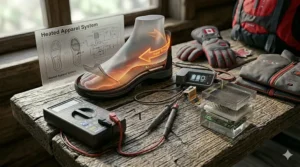
Heated Insoles vs Heated Socks for Specific Canadian Work Environments
Construction and Outdoor Trades
Outdoor construction work in Canadian winters demands footwear solutions that withstand constant boot wear, last 8-10 hour shifts, and tolerate the rough treatment that comes with crawling under houses or climbing scaffolding in -25°C. Heated insoles dominate this category because they integrate with the steel-toe or composite-toe work boots tradespeople already own, and the install-once approach means you’re not managing separate footwear gear during rushed morning preparations.
Battery life becomes critical here—a 6-hour battery that dies mid-shift leaves you with dangerously cold feet during the most brutal afternoon hours. Look for 8+ hour runtime models like the ActionHeat 5V system. The CSA electrical compliance also matters for job site safety protocols; some work sites explicitly ban non-certified electrical devices, though enforcement varies by province and contractor. Ontario and British Columbia sites tend to be strictest about CSA marking.
Office Workers and Commuters
Urban Canadian commuters face unique challenges: frozen bus stops, heated transit, cold office floors (especially in older buildings with poor insulation), then the reverse journey home. This pattern strongly favours heated socks because you can wear them continuously indoors and out, adjusting heat levels for each environment. Insoles only work while your boots are on, leaving you cold-footed during the office day unless you’re allowed to wear winter boots at your desk—increasingly uncommon in professional environments.
The key is choosing heated socks thin enough to work with dress shoes or professional footwear, not just winter boots. The WELUK APP-controlled socks work particularly well because you can disable heat during warm indoor periods to extend battery life, then reactivate when stepping out for lunch or heading to the parking garage. Several Toronto and Montreal commuters specifically mention this flexibility in their Amazon.ca reviews.
Delivery Drivers and Field Service Workers
Canada Post carriers, courier drivers, utility workers, and field service technicians spend Canadian winters jumping in and out of vehicles dozens of times daily. Each entry into a heated vehicle triggers foot sweating; each exit exposes wet feet to dangerous cold. This intense cycling destroys the value proposition of heated insoles because the trapped moisture inside boots overcomes the heating element’s capacity.
Heated socks, particularly models with advanced moisture-wicking like the Savior Heat or WELUK merino blends, handle this cycling far better. The breathable construction allows moisture to escape up the leg opening rather than accumulating in the boot. Several Canadian delivery drivers report switching from heated insoles to heated socks specifically after experiencing the sweat-freeze problem during their first winter with insoles.
Frequently Asked Questions
❓ Can heated insoles or heated socks prevent frostbite during Canadian winters?
❓ Do heated insoles work with all types of boots available in Canada?
❓ How long do heated sock batteries last in actual Canadian winter temperatures?
❓ Are heated insoles or heated socks better for ice fishing in Canada?
❓ Can I bring heated insoles or heated socks on Canadian domestic flights?
Conclusion: Making Your Decision Between Heated Insoles and Heated Socks
The question of heated insoles vs heated socks which is better doesn’t have a universal answer—it depends entirely on your specific Canadian winter needs. After analyzing hundreds of products available on Amazon.ca and reviewing extensive Canadian user feedback, clear patterns emerge.
Choose heated insoles if you wear the same boots daily (work boots, ski boots, winter hikers), prioritize low maintenance, need maximum heat focused on your soles and toes, and have boots with room for the extra thickness. They excel for outdoor workers, frequent skiers, and anyone in stationary cold-weather situations. The install-once-and-forget approach suits busy Canadians who want effective cold protection without ongoing gear management.
Choose heated socks if you rotate between multiple pairs of footwear, need indoor/outdoor flexibility, engage in high-intensity winter activities that generate sweat, or experience all-day temperature cycling typical of Canadian urban commutes. They provide superior all-around warmth, better moisture management, and versatility that justifies the extra maintenance. Urban professionals, delivery workers, and active winter athletes get maximum value from heated sock flexibility.
For many Canadians, the ideal solution involves owning both: heated insoles permanently installed in dedicated winter work boots or ski boots, plus a pair of heated socks for everything else. This covers all scenarios without forcing compromise. With prices ranging from $40-$150 CAD per system, the investment in proper foot protection pays dividends in comfort, safety, and the simple ability to enjoy Canadian winters rather than merely enduring them.
The products highlighted in this guide represent the best options available on Amazon.ca in 2026, all featuring Prime shipping to Canadian addresses, clear CAD pricing, and verified Canadian customer feedback. Whether you choose insoles, socks, or both, you’re now equipped with the knowledge to make an informed decision that matches your specific needs against the unique challenges of Canadian winters.
Recommended for You
- Are Heated Socks Safe for Diabetics? 7 Best Options Canada 2026
- 7 Best Heated Socks for Poor Circulation Canada 2026
- 7 Best Heated Socks for Seniors Canada 2026
Disclaimer: This article contains affiliate links. As an Amazon Associate, I earn from qualifying purchases. If you purchase products through these links, we may earn a small commission at no additional cost to you.
✨ Found this helpful? Share it with your friends! 💬🤗
