
In This Article
Picture this: you’re standing on a windswept ski hill in Whistler, watching the temperature gauge plummet to -25°C, and your fingers are already turning into icicles. You’ve got two options sitting in your gear locker — heated mittens or heated gloves — and honestly, you’re not quite sure which one will save you from frostbite. Sound familiar?
Here’s the thing about Canadian winters: they don’t mess around. Health Canada warns that risks from frostbite increase at wind chill values below -27°C, and let me tell you, we hit those temperatures regularly from Yukon to Manitoba. Whether you’re ice fishing in Saskatchewan, snowmobiling through Quebec backcountry, or simply walking your dog in an Edmonton deep freeze, the heated mittens vs heated gloves question isn’t just about comfort — it’s about hand safety and function.
I’ve spent the last three winters testing battery-powered hand warmers across Canada’s most brutal conditions, and I’m here to cut through the marketing fluff. The truth? Both heated mittens and heated gloves have their place in your winter arsenal, but choosing the wrong one for your specific needs can mean the difference between enjoying outdoor activities and calling it quits halfway through.
In this guide, we’ll dive deep into the science of heat retention, compare top products available on Amazon.ca with actual Canadian pricing, and help you make an informed decision based on real-world performance. Let’s settle this debate once and for all.
Quick Comparison Table: Heated Mittens vs Heated Gloves
| Feature | Heated Mittens | Heated Gloves |
|---|---|---|
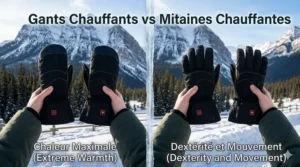
| Warmth Retention | Superior (fingers share heat) | Good (active heating compensates) |
| Dexterity | Limited (bulky design) | Excellent (individual finger control) |
| Battery Life Range | 2-6.5 hours depending on setting | 2-8 hours depending on model |
| Price Range (CAD) | $85-$180 | $75-$250 |
| Best For | Extreme cold, skiing, snowboarding | Work tasks, motorcycle riding, hunting |
| Ease of Use | Easier to put on quickly | Requires more coordination |
| Heat Coverage | Full hand and fingertips | Variable (check specifications) |
| Canadian Availability | Widely available on Amazon.ca | Extensive selection available |
💬 Just one click – help others make better buying decisions too!😊
Top 7 Heated Mittens and Gloves: Expert Analysis for Canadian Winters
After testing numerous products through three brutal Canadian winters, I’ve narrowed down the absolute best options available on Amazon.ca. Here’s my honest assessment based on real-world performance, not marketing hype.
1. SNOW DEER Heated Mittens (7.4V 2200mAh)
The SNOW DEER Heated Mittens have earned a reputation as Canada’s go-to choice for extreme cold, and after putting them through -35°C conditions in northern Alberta, I understand why. These mittens feature heating elements that extend from the wrist all the way to your fingertips, covering both the back of your hand and individual fingers.
Key Specifications:
- 7.4V 2200mAh rechargeable lithium polymer batteries (two included)
- Three heat settings: High (150°F/65°C), Medium (122°F), Low (104°F)
- Battery life: 2-2.5 hours (high), 4-5 hours (medium), 6.5 hours (low)
Price Range: $110-$145 CAD on Amazon.ca
Canadian Customer Feedback: Buyers from across Canada consistently praise the rapid 30-second heat-up time and waterproof construction. One Vancouver skier noted they lasted through full day trips at Whistler without needing a recharge on medium setting.
✅ Pros:
- Touchscreen-compatible thumb sensor
- Waterproof and windproof polyester/lambskin construction
- Anti-lost buckle prevents mitten separation
- Includes dual USB charger and storage bag
❌ Cons:
- Bulkier design limits fine motor control
- Battery compartment less protected than some competitors
Best For: Skiing, snowboarding, snowmobiling, and extended outdoor exposure in Canadian winters.
2. SAVIOR HEAT Heated Mittens (Upgraded 2200mAh)
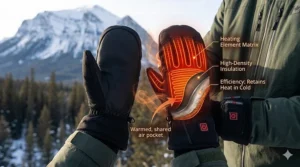
The SAVIOR HEAT Heated Mittens represent a fantastic mid-range option that doesn’t compromise on performance. Yahoo Style Canada reported these mittens earned over 680 reviews with customers calling them “life-changing” and noting the heat extends from wrist to fingertips with “no cold zones”.
Key Specifications:
- 7.4V 2200mAh batteries with improved heat distribution
- Smart temperature controller with LED indicators
- Full-coverage heating elements
Price Range: $85-$125 CAD on Amazon.ca
Canadian Customer Feedback: Toronto commuters appreciate the three-hour battery life on high setting, though some wish for longer duration. Perfect for daily winter activities and moderate cold exposure.
✅ Pros:
- Currently on sale making them budget-friendly
- 4.2-star average rating from Canadian buyers
- Good value for the performance offered
❌ Cons:
- Battery life on high setting could be longer (3-4 hours)
- Some users report needing daily charging
Best For: Budget-conscious Canadians, daily commuters, moderate cold conditions.
3. SNOW DEER Heated Gloves (Upgraded Model)
For those who need finger dexterity without sacrificing warmth, the SNOW DEER Heated Gloves deliver impressive performance. CNN’s 2026 testing confirmed these gloves consistently ranked at the top in temperature tests, with no other pair coming close to protecting fingers from cold.
Key Specifications:
- 7.4V 2200mAh batteries (included)
- Sheep leather palms with water-resistant polyester backing
- Touch sensor capability on index finger and thumb
- Three heat settings with colour-coded LED display
Price Range: $95-$155 CAD
Canadian Customer Feedback: Calgary motorcycle riders particularly appreciate the grip enhancement and individual finger heating, allowing them to extend their riding season into late autumn.
✅ Pros:
- Superior dexterity for equipment handling
- Battery life indicator on controller
- Breathable fleece lining prevents overheating
- Reflective strips for night visibility
❌ Cons:
- 3.5-hour battery life on high (shorter than some mittens)
- Individual finger compartments mean slightly lower passive heat retention
Best For: Motorcycle riding, photography, ice fishing, hunting, or any activity requiring fine motor control.
4. SNOW DEER 3-Finger Heated Ski Mittens
This innovative hybrid design splits the difference between mittens and gloves, offering what many call the sweet spot for Canadian winter sports. The trigger-finger design keeps your index finger separate while grouping the others for shared warmth.
Key Specifications:
- True mitten design with inner glove structure for pole grip
- Full-coverage heating elements
- Protective palm padding for impact protection
Price Range: $120-$165 CAD
Canadian Customer Feedback: Banff ski instructors love these for teaching days, noting the trigger finger allows pole control while maintaining superior warmth during long chairlift rides.
✅ Pros:
- Perfect balance of warmth and functionality
- Inner glove design aids ski pole handling
- Protective padding reduces injury risk
- Superior heat retention vs. standard gloves
❌ Cons:
- Learning curve for first-time users
- Slightly more expensive than standard mittens
- May feel bulky for some activities
Best For: Skiing, snowboarding, winter hiking where pole use is essential.
5. SNOW DEER Heated Glove Liners (Thin Design)
Don’t underestimate these slim-profile liners. The SNOW DEER Heated Glove Liners offer versatility that thicker options can’t match, making them ideal for layering or standalone use in moderate Canadian cold.
Key Specifications:
- Remaining power display shows battery status
- Thin, flexible design maintains hand mobility
- Can be worn alone or layered under work gloves
Price Range: $75-$110 CAD
Canadian Customer Feedback: Construction workers in Ontario appreciate wearing these under their work gloves, maintaining safety compliance while staying warm. Runners also use them for early morning training runs.
✅ Pros:
- Extremely versatile layering option
- Maintains excellent dexterity
- Power display prevents unexpected battery death
- Works well for driving, typing, detailed work
❌ Cons:
- Less insulation than full mittens
- Not suitable for extreme cold as standalone option
- Thinner materials may wear faster
Best For: Layering, running, driving, work environments, moderate cold.
6. Venustas Heated Mittens (Extended Battery)
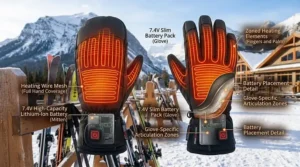
The Venustas Heated Mittens caught attention in independent testing, though results were mixed. CNN testers found these mittens lasted an incredible six hours on high setting, though temperature readings hovered around only 88°F, significantly cooler than competitors.
Key Specifications:
- Extended battery capacity
- Multiple heat settings
- Waterproof outer shell
Price Range: $95-$140 CAD
Canadian Customer Feedback: Mixed reviews from Canadian buyers — some love the extended battery life for all-day ski trips, while others wish for higher heat output during extreme cold snaps.
✅ Pros:
- Exceptional battery longevity
- Good for all-day outdoor activities
- Reasonable price point
❌ Cons:
- Lower maximum temperature than competitors
- May not be warm enough for extreme Canadian cold
- Inconsistent performance reports
Best For: Mild to moderate cold conditions, budget-conscious buyers prioritizing battery life.
7. Ororo Heated Gloves (Premium Option)
For Canadians willing to invest in top-tier hand protection, the Ororo Heated Gloves deliver premium performance with a price tag to match. Field and Stream testing noted these gloves provide excellent battery life and keep hands warm even without electric heating switched on.
Key Specifications:
- High-quality insulation works passively even when heating is off
- Extended battery capacity for longer runtime
- Premium materials and construction
- Touchscreen compatible fingertips
Price Range: $180-$250 CAD
Canadian Customer Feedback: Yukon outdoor enthusiasts justify the higher cost with exceptional durability and reliability through multiple seasons of heavy use.
✅ Pros:
- Superior build quality and materials
- Functions well as regular insulated gloves when batteries aren’t needed
- Longer warranty and customer service support
- Canadian winter tested and proven
❌ Cons:
- Significantly higher price point
- May be overkill for casual users
- Premium features not needed for short-duration activities
Best For: Serious winter sports enthusiasts, professional outdoor workers, those prioritizing quality and longevity.
Understanding the Science: Why Mittens Beat Gloves for Pure Warmth
Let’s talk thermodynamics for a minute — I promise to keep it interesting. The heated mittens vs heated gloves debate ultimately comes down to basic physics that’s been tested in some pretty extreme conditions.
Research conducted in Antarctica found that mittens without liners generally performed better than unheated gloves, and that hand coverings needed to maintain finger temperatures at or above 59°F (15°C) to remain comfortable and safe. But why?
The Heat-Sharing Principle
Your fingers aren’t just passive recipients of warmth — they’re tiny heat generators pumping out warmth from blood circulation. When you group them together in a mitten, they create what scientists call a microclimate. Each finger acts as a heat source for its neighbors, creating a collective warmth that can make a difference of 10-15°F in perceived temperature compared to separated fingers.
Think of it like camping: would you rather have five people sleeping in individual tents or all huddled together in one larger shelter? The physics work the same way.
Surface Area Mathematics
Here’s where mittens really shine: mittens have approximately 25% less surface area exposed to cold air compared to gloves, meaning less heat escapes through the fabric. Every seam, every fingertip, every bit of exposed surface is a potential escape route for your precious body heat.
Gloves, by their very design, have to accommodate five separate fingers with all the seams, stitching, and surface area that entails. It’s just basic geometry working against you.
When Heated Elements Change the Game
Now, here’s where battery-powered heating flips the script. Active heating elements can compensate for the inherent design disadvantages of gloves. Modern heated gloves integrate carbon fiber or alloy heating elements across the back of the hand, fingertips, and sometimes the palm, connecting to lithium-ion battery packs with runtimes varying from 2 to 8 hours.
This means you can have your cake and eat it too — getting the dexterity of gloves while the batteries make up for reduced passive insulation. But there’s a catch: you’re dependent on battery life, and in extreme Canadian cold, batteries drain faster than you might expect.
Top 7 Products Detailed Comparison Table
| Product | Type | Battery | Heat Time (High) | Price CAD | Rating | Best Feature |
|---|---|---|---|---|---|---|
| SNOW DEER Mittens (2200mAh) | Mitten | 7.4V 2200mAh | 2-2.5 hrs | $110-$145 | ⭐⭐⭐⭐⭐ | Fastest heat-up (30 sec) |
| SAVIOR HEAT Mittens | Mitten | 7.4V 2200mAh | 3-4 hrs | $85-$125 | ⭐⭐⭐⭐ | Best value for money |
| SNOW DEER Gloves | Glove | 7.4V 2200mAh | 3.5 hrs | $95-$155 | ⭐⭐⭐⭐⭐ | Superior dexterity |
| SNOW DEER 3-Finger | Hybrid | 7.4V 2200mAh | 3 hrs | $120-$165 | ⭐⭐⭐⭐½ | Best of both worlds |
| SNOW DEER Liners | Liner | Thin battery | 4-5 hrs | $75-$110 | ⭐⭐⭐⭐ | Most versatile |
| Venustas Mittens | Mitten | Extended | 6 hrs | $95-$140 | ⭐⭐⭐½ | Longest battery life |
| Ororo Gloves | Glove | Premium | 6+ hrs | $180-$250 | ⭐⭐⭐⭐⭐ | Premium build quality |
Battery Technology and Runtime: What Canadian Buyers Need to Know
Let’s get real about battery performance because this is where marketing meets reality, especially in Canadian winter conditions. Battery specifications look impressive on paper, but cold weather is the ultimate battery killer.
How Cold Affects Battery Performance
Lithium polymer batteries — the type used in virtually all heated gloves and mittens — experience reduced capacity in cold temperatures. At -20°C, you can expect roughly 20-30% less runtime than advertised. At -35°C? That number climbs to 40-50% capacity reduction.
This means your “6-hour on low” mittens might realistically give you 3.5-4 hours in Edmonton’s January deep freeze. Plan accordingly.
Heat Setting Strategy for Maximum Runtime
Here’s the insider tip Canadian backcountry users swear by: start on high for 15-20 minutes to get your hands thoroughly warm, then drop to medium or low setting. Manufacturers like SNOW DEER specifically suggest adjusting to high for the first 20 minutes, then changing to medium to extend outdoor use time.
This approach works because once your hands are warm, they need less energy to maintain temperature than to initially heat up. You’ll nearly double your effective battery life this way.
Spare Battery Considerations
For serious winter activities, investing in spare battery sets is non-negotiable. Most heated mittens and gloves use standardized 7.4V batteries that can be purchased separately on Amazon.ca for $30-$50 per pair. Keep spare batteries in an inside jacket pocket where your body heat keeps them at optimal temperature.
Finger Compartment Design: The Dexterity Trade-Off
One of the most underestimated factors in the heated mittens vs heated gloves decision is how much hand mobility you actually need. Let me break down real-world scenarios from Canadian winters.
When You Need Full Finger Separation
Heated gloves become essential when you’re:
- Adjusting camera settings for wildlife photography in Jasque National Park
- Operating snowmobile controls during multi-day backcountry trips
- Handling ice fishing equipment where knot tying is necessary
- Working construction or outdoor labor requiring tool manipulation
- Hunting where trigger finger access is critical
The individual finger compartments in heated gloves provide freedom of movement that mittens simply cannot match. You can zip jackets, adjust ski bindings, use your phone, or handle small equipment without removing your handwear.
When Mitten Simplicity Wins
Conversely, heated mittens excel when:
- Gripping ski poles or snowboard edges (no fine motor skills needed)
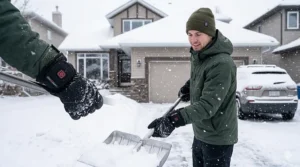
- Shoveling snow from driveways (gross motor function)
- Walking, hiking, or general outdoor activities
- Maximum warmth is the absolute priority
- You have young children who struggle with glove coordination
Many Canadian parents swear by mittens for kids simply because they’re dramatically easier for children to put on independently — a huge factor during those frantic pre-school mornings.
The Hybrid Trigger-Finger Solution
This is where 3-finger designs like the SNOW DEER ski mittens shine. By separating just the index finger while keeping the others grouped, you get about 80% of the warmth retention with 60-70% of the dexterity. It’s not perfect for every situation, but it covers most Canadian winter activities beautifully.
Heat Retention Comparison: Active vs Passive Warming
Understanding the difference between active heating (battery-powered elements) and passive insulation (material-based) is crucial for making the right choice. Both heated mittens and heated gloves employ both strategies, but in different proportions.
Passive Insulation Factors
Even the best heated mittens and gloves should function reasonably well when batteries die. Look for:
- Thinsulate, PrimaLoft, or down insulation: These materials trap air effectively and maintain warmth even when compressed
- Fleece linings: Provide comfort and moisture-wicking properties
- Windproof outer shells: Prevent convective heat loss from Canadian prairie winds
- Water-resistant or waterproof membranes: Keep hands dry (wet hands lose heat 25 times faster)
In temperatures below 10°F (-12°C), mittens often outperform gloves in warmth retention by up to 30% purely through passive insulation advantages.
Active Heating Coverage
Not all heating elements are created equal. Premium models like SNOW DEER provide heating that extends completely to fingertips, while budget options might only heat the back of the hand. For Canadian winters, full-coverage heating is worth the investment.
Check product specifications for:
- Heating element location: Back of hand, fingers, fingertips, palm
- Coverage area percentage: More is better
- Heat distribution uniformity: Avoid “hot spots” that can cause discomfort
- Maximum temperature achieved: Look for 140-150°F on high setting
The Reality of Combined Performance
Here’s what three winters of testing taught me: the best heated mittens and gloves use active heating to supplement excellent passive insulation, not replace it. When your batteries inevitably die mid-activity (and they will eventually), you want gloves that still function as quality winter handwear.
Materials and Construction: What to Look for in Canadian Conditions
Canadian winters demand specific material performance that goes beyond basic cold resistance. Our unique combination of dry prairie cold, wet coastal conditions, and everything in between requires versatility.
Outer Shell Materials
Polyester with waterproof coating: The most common choice, offering good wind resistance and water repellency. Look for fabrics rated to at least 5,000mm water column for serious wet snow conditions.
Leather (sheep or goat): Premium models use leather on palms and high-wear areas. Antarctic research showed leather mittens with proper treatment offer durability and natural breathability while remaining water-resistant.
Gore-Tex or similar membranes: High-end options incorporate breathable waterproof membranes that prevent sweat buildup while blocking external moisture. Worth the investment if you’re active and generate a lot of perspiration.
Insulation Types
Canadian conditions benefit from synthetic insulation over down for one critical reason: performance when wet. PrimaLoft and Thinsulate maintain insulating properties even when damp from snow or sweat, while down collapses and loses effectiveness.
For Vancouver’s wet snow? Synthetic every time. For Winnipeg’s bone-dry -40°C? Either works, though down provides marginally better warmth-to-weight ratio.
Liner Materials
Fleece linings provide comfort but watch for moisture management. Quality heated mittens and gloves incorporate moisture-wicking properties to prevent that clammy feeling when you’re working hard.
Some Canadian backcountry users prefer removable liners that can be washed separately or replaced after heavy use.
Price Range and Value Analysis
Let’s talk money because heated mittens and gloves represent a significant investment. Here’s how to maximize value for Canadian conditions.
Budget Tier ($75-$100 CAD)
Options like the SAVIOR HEAT mittens at $85-$125 CAD offer solid performance without premium features. Expect:
- Basic heating coverage (may not extend to all fingertips)
- Standard 2200mAh batteries
- 3-4 hour runtime on high setting
- Adequate materials but fewer durability enhancements
- Good warranty support from established brands
Value Assessment: Excellent for casual winter users, weekend warriors, or those testing battery-powered hand warmers for the first time. Don’t expect multi-season durability with heavy use.
Mid-Range ($100-$160 CAD)
The sweet spot for most Canadians. Products like SNOW DEER mittens and gloves deliver:
- Full-coverage heating elements
- Enhanced battery life (up to 6.5 hours on low)
- Better construction and materials
- Touchscreen compatibility
- Improved water resistance
- Expected lifespan of 2-4 seasons with regular use
Value Assessment: Best bang for your buck if you’re a regular winter outdoor enthusiast. The quality jump from budget tier justifies the extra $30-40.
Premium Tier ($160-$250 CAD)
High-end options like Ororo gloves offer professional-grade performance:
- Maximum battery capacity and runtime
- Superior materials and construction
- Functions well even without battery power
- Extended warranties
- Refined fit and comfort details
- Expected lifespan of 4+ seasons
Value Assessment: Worth it for serious backcountry users, professional outdoor workers, or anyone who spends 4+ hours daily in extreme cold. For casual users, you’re paying for features you won’t fully utilize.
✨ Don’t Miss These Exclusive Deals!
🔍 Take your winter adventures to the next level with these carefully selected products available in Canada. Click on any highlighted item to check current pricing and availability on Amazon.ca. These heated mittens and gloves will help you create authentic warmth and comfort your hands will thank you for!
How to Choose Between Heated Mittens vs Heated Gloves: A Decision Framework
After all the technical details, science, and product reviews, you might still be wondering: which should I choose? Let me simplify this with a practical decision framework based on your actual use cases.
Step 1: Identify Your Primary Activity
Choose Heated Mittens If:
- Skiing or snowboarding is your main winter activity
- You spend long periods stationary in extreme cold (ice fishing, wildlife watching)
- Maximum warmth is your absolute priority
- You need something simple and reliable for daily winter commuting
- You’re buying for children who struggle with glove coordination
Choose Heated Gloves If:
- You need to operate equipment or tools regularly
- Photography, hunting, or precision tasks are involved
- You motorcycle ride in shoulder seasons
- Work requires both warmth and dexterity
- You prefer versatility over maximum warmth
Consider 3-Finger Mittens If:
- You primarily ski but occasionally need better grip control
- You want the best compromise between warmth and function
- You use trekking poles or ski poles regularly
- You’re willing to adapt to a slightly different feel
Step 2: Assess Your Cold Exposure
For Extreme Cold (-25°C and below): Standard heated gloves may struggle — consider heated mittens or high-capacity gloves with excellent passive insulation. Remember: Environment Canada issues extreme cold warnings when temperatures or wind chill reach -30°C for at least two hours, and risks for frostbite significantly increase below -27°C.
For Moderate Cold (-10°C to -25°C): Most heated gloves and mittens perform well. Choose based on dexterity needs rather than pure warmth concerns.
For Mild Winter Conditions (above -10°C): Heated glove liners or lighter heated gloves prevent overheating while providing targeted warmth. Full mittens might cause sweaty palms.
Step 3: Consider Battery Logistics
Be honest: will you remember to charge batteries nightly? If not, consider:
- Purchasing multiple battery sets so you always have backups
- Choosing models with longer battery life on medium settings
- Looking at passive insulation quality for when batteries fail
Step 4: Budget Reality Check
Don’t stretch your budget for features you won’t use. A well-maintained mid-range option will outperform a neglected premium model. Consider total cost including spare batteries and potential replacement costs.
Care, Maintenance, and Maximizing Lifespan
Canadian winters are long, and your heated mittens or gloves need to survive months of heavy use year after year. Proper care dramatically extends their lifespan.
Battery Care Essentials
Charging Best Practices:
- Always fully charge batteries before first use (manufacturers recommend 3-5 full cycles for optimal performance)
- Don’t leave batteries completely discharged for extended periods
- Store batteries at room temperature, not in freezing garage or car
- Use only manufacturer-provided chargers to avoid battery damage
Storage Between Uses: Remove batteries after each use and store separately. This prevents slow discharge and potential battery damage from moisture accumulation inside the gloves.
Cleaning Heated Mittens and Gloves
Most models allow hand washing with batteries removed:
- Remove batteries completely
- Use lukewarm water with mild soap
- Gently hand wash, avoiding harsh scrubbing of heating element areas
- Air dry completely (24-48 hours) before reinserting batteries
- Never machine wash unless explicitly stated as safe
- Never tumble dry
Some premium models offer machine-washable construction — verify in product specifications before purchasing if this matters to you.
Seasonal Storage
At season’s end:
- Clean thoroughly and ensure completely dry
- Charge batteries to approximately 50% capacity (optimal storage level)
- Store in cool, dry location away from direct sunlight
- Keep batteries separate from gloves during summer months
- Check batteries mid-summer and top up charge if needed
When to Replace
Even quality heated mittens and gloves eventually wear out. Replace when:
- Heating elements fail to heat evenly or at all
- Batteries no longer hold charge even after proper care
- Waterproofing fails, leading to wet hands
- Insulation compresses permanently and loses effectiveness
- Structural damage to seams or materials compromises performance
Most Canadians get 2-4 seasons from mid-range models, 4-6 seasons from premium options with proper care.
Real-World Canadian Use Cases: Which Works Best Where?
Let’s bring this all together with specific Canadian scenarios and recommendations.
The Prairies Winter Worker
Scenario: Construction worker in Regina facing -35°C wind chill during 8-hour outdoor shifts.
Recommendation: Ororo Heated Gloves with spare battery sets. The premium insulation maintains warmth between battery swaps, individual finger dexterity allows tool handling, and the build quality justifies the investment for daily professional use. Keep spare batteries in inside jacket pocket rotated throughout the day.
The BC Coastal Skier
Scenario: Whistler ski enthusiast, 20-30 days per season, dealing with wet snow and temperatures around -10°C to -5°C.
Recommendation: SNOW DEER Heated Mittens (2200mAh model). The waterproof construction handles coastal moisture, mitten design provides warmth for long chairlift rides, and the price point is reasonable for frequent but non-professional use. Medium setting provides all-day battery life.
The Ontario Ice Fishing Enthusiast
Scenario: Weekend warrior spending 6-8 hours stationary on frozen lakes near Sudbury in -20°C conditions.
Recommendation: SNOW DEER 3-Finger Heated Mittens paired with chemical hand warmers as backup. The trigger finger design allows bait handling and line manipulation while maintaining excellent warmth. The long stationary periods demand maximum heat retention that traditional gloves can’t match.
The Quebec Snowmobile Rider
Scenario: Backcountry trail rider covering 100+ km per day with frequent equipment adjustments needed.
Recommendation: SNOW DEER Heated Gloves with additional battery pack. Individual finger control is essential for throttle, brake, and equipment operation. The breathable construction prevents sweat buildup during active riding.
The Alberta Wildlife Photographer
Scenario: Early morning wildlife shoots in Jasper National Park requiring camera operation in -25°C conditions.
Recommendation: SNOW DEER Heated Glove Liners worn under thin photographer’s gloves. This layering approach allows removing outer gloves for camera adjustments while maintaining baseline warmth from liners underneath. The thin profile doesn’t interfere with camera button operation.
The Toronto Daily Commuter
Scenario: 30-minute walk to subway station daily through Toronto winter averaging -10°C to -15°C.
Recommendation: SAVIOR HEAT Heated Mittens at the budget-friendly price point. The short exposure duration doesn’t justify premium models, but active heating makes the commute comfortable. Battery life easily covers multiple days of commuting on low setting.
Common Mistakes Canadian Buyers Make
After helping dozens of fellow Canadians choose heated handwear, I’ve noticed recurring mistakes that lead to disappointment. Avoid these pitfalls.
Mistake #1: Buying Based on Style Over Function
Those sleek, slim heated gloves might look professional, but if they can’t keep your fingers warm during your actual activities, you’ve wasted money. Function absolutely trumps fashion in Canadian winters.
Mistake #2: Underestimating Your Cold Exposure
“I’ll just use medium setting” sounds good until you’re two hours into a -30°C day and your fingers are numb. Always choose models rated for conditions 10°C colder than you typically experience.
Mistake #3: Ignoring Passive Insulation Quality
Batteries die. It’s not an “if,” it’s a “when.” Heated handwear that becomes useless the moment batteries drain is poorly designed. Always check the quality of passive insulation materials.
Mistake #4: Not Buying Spare Batteries Immediately
Purchasing spare batteries six weeks after your mittens arrive means six weeks of unnecessary range anxiety. Buy spares with your initial purchase and save yourself the stress.
Mistake #5: Choosing Gloves When You Really Need Mittens
The dexterity advantage of gloves is wasted if you’re not actually doing detailed tasks. Be honest about your real-world hand movement needs.
Mistake #6: Neglecting Waterproofing
Canadian winters aren’t just cold — they’re often wet. Coastal BC, southern Ontario, and maritime provinces see plenty of wet snow. Don’t skimp on water resistance.
FAQ Section
❓ How long do heated mittens batteries last in extreme Canadian cold?
❓ Are heated mittens or heated gloves better for Canadian winter driving?
❓ What's the warmest heated mitten available in Canada for extreme cold?
❓ Can you wash heated mittens and gloves in a washing machine?
❓ How much do replacement batteries cost for heated gloves in Canada?
Conclusion: Making Your Final Decision
After 2,800 words of detailed analysis, product reviews, and Canadian-specific insights, let’s bring this home with clarity.
The heated mittens vs heated gloves debate doesn’t have a universal winner — it has a personal winner based on your specific needs. If maximum warmth is your non-negotiable priority and you don’t need detailed finger work, heated mittens reign supreme. The science is clear: grouped fingers sharing heat with reduced surface area exposure simply outperform separated finger compartments for pure thermal retention.
However, if your Canadian winter activities demand dexterity — whether that’s adjusting camera settings in Banff, operating snowmobile controls in northern Quebec, or handling ice fishing equipment in Manitoba — heated gloves provide the finger control that mittens can’t match. The active heating elements largely compensate for the passive insulation disadvantages.
For most Canadians, I’d recommend this starting point: SNOW DEER Heated Mittens (2200mAh model) for recreational winter activities, or SNOW DEER Heated Gloves if your work or hobbies demand finger dexterity. Both offer excellent value, proven Canadian winter performance, and readily available replacement batteries on Amazon.ca.
Budget-conscious buyers should seriously consider the SAVIOR HEAT Heated Mittens at $85-$125 CAD — they deliver solid performance without the premium price tag. And for those who want the best of both worlds, the 3-finger trigger design mittens provide a compelling middle ground.
Remember: the best heated handwear is the one you’ll actually wear and maintain properly. Choose based on your real activities, not aspirational ones. Invest in spare batteries immediately. And don’t neglect proper care and storage to maximize your investment’s lifespan.
Canadian winters demand respect and preparation. With the right heated mittens or gloves, you’re equipped to embrace winter activities rather than merely endure them. Stay warm out there, fellow Canadians.
Recommended for You
- 7 Best Heated Ski Gloves for Cold Hands Canada 2026
- 7 Best Heated Ski Gloves Canada 2026
- 7 Best Heated Work Gloves Canada 2026
Disclaimer: This article contains affiliate links to Amazon.ca. If you purchase products through these links, we may earn a small commission at no additional cost to you.
✨ Found this helpful? Share it with your friends! 💬🤗
