

In This Article
If you’ve ever watched a Canadian winter storm roll in from your kitchen window while mentally calculating how long you can keep the thermostat at 20°C before going broke, you already understand why so many Canadians are searching for a ventless propane heater indoor approved for residential use. A power outage. A poorly insulated basement. A garage workshop that your central heating simply refuses to reach. A remote cabin in northern Ontario where running a duct line isn’t even on the table. Whatever your situation, the appeal is real — and in 2026, the technology is genuinely good.
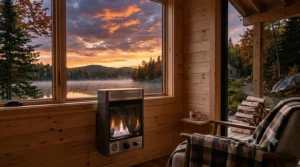
But here’s the thing: not all propane heaters belong indoors. The difference between a ventless propane heater indoor approved for Canadian use and an outdoor-only unit isn’t just a sticker on the box — it’s the difference between a warm family room and a carbon monoxide emergency. In Canada, Health Canada explicitly advises that combustion appliances must be properly selected and maintained to avoid dangerous CO buildup indoors (Canada.ca, Health Canada indoor air quality guidance). The right heater, used correctly, with a working CO detector on every floor, is a genuinely safe and efficient supplemental heat source.
This guide covers exactly what you need to know: seven real products available on Amazon.ca, Canadian regulations you need to understand before you plug anything in, and practical advice tailored to our uniquely demanding climate. Whether you’re a first-time buyer in suburban Calgary, an ice fishing enthusiast in Manitoba, or a family in rural New Brunswick looking to cut your heating bill in half, there’s an option on this list for you. All prices are in CAD (Canadian dollars) — because what you pay on Amazon.ca is rarely the same as what you see on a US review site.
Let’s get warm.
Quick Comparison Table: Top Ventless Propane Heaters for Canada (2026)
| Product | BTU Range | Coverage Area | Type | CSA/Safety Cert | Best For | Amazon.ca Available? |
|---|---|---|---|---|---|---|
| Mr. Heater MH9BX Portable Buddy | 4,000–9,000 | Up to ~21 m² (225 sq ft) | Radiant | CSA, ODS | Portability, camping, ice fishing | ✅ Yes |
| Mr. Heater MH18B Big Buddy | Up to 18,000 | Up to ~42 m² (450 sq ft) | Radiant + Conv. | ODS, tip-over | Larger enclosed spaces | ✅ Yes |
| Dyna-Glo BFSS30LPT-2P | Up to 30,000 | Up to ~93 m² (1,000 sq ft) | Blue Flame | ODS, thermostatic | Permanent wall install | ✅ Yes |
| Dyna-Glo BF30PMDG | Up to 30,000 | Up to ~93 m² (1,000 sq ft) | Blue Flame | ODS | Wall-mounted budget option | ✅ Yes |
| Rinnai FC824P | Up to 22,000 | Up to ~93 m² (1,000 sq ft) | Fan Convector | CSA, ODS, multi-safety | Premium homes, long-term use | ✅ Yes |
| ProCom ML100TPA-B | Up to 10,000 | Up to ~14 m² (150 sq ft) | Infrared Plaque | ODS, CSA | Small rooms, tight budgets | ✅ Yes |
| Mr. Heater F299830 Vent-Free 30K | Up to 30,000 | Up to ~70 m² (750 sq ft) | Radiant | Dual ODS, tip-over | Garages, workshops, cabins | ✅ Yes |
The table above tells a clear story: your choice hinges on coverage area and installation style. Portable Buddy models under $250 CAD are the go-to for flexibility and occasional use, while wall-mounted units in the $300–$800+ CAD range make more sense for permanent supplemental heating. The Rinnai FC824P stands alone as a premium investment — higher upfront cost, but dramatically better for long-term daily use. Canadian buyers should note that Prime membership unlocks free shipping on most of these models, whereas non-Prime orders may need to hit the $35 CAD threshold.
💬 Just one click — help others make better buying decisions too! 😊
✨ Don’t Miss These Exclusive Deals!
🔍 Take your home heating to the next level with these carefully selected products. Click on any highlighted item to check current pricing and availability on Amazon.ca. These heaters will help you create a warm, safe, and energy-smart environment your whole family will appreciate this winter!
Top 7 Ventless Propane Heater Indoor Approved: Expert Analysis
1. Mr. Heater MH9BX Portable Buddy — Canada/Massachusetts Approved
The MH9BX is arguably the most purpose-built ventless propane heater indoor approved for Canadian use on the entire market — it literally says “Canada approved” in the product name. That matters more than most buyers realize. This model ships with a modified regulator specifically calibrated to meet both Canadian Standards Association (CSA) requirements and Massachusetts state regulations (one of the strictest jurisdictions in North America), which is a strong signal of build quality right out of the gate.
The MH9BX delivers 4,000 to 9,000 BTU of radiant heat and covers spaces up to approximately 21 square metres (225 sq ft) for up to 5.4 hours on a single 1 lb propane cylinder. A swivel regulator lets you connect to a larger 20 lb tank with an optional hose and filter — a smart move for a weekend at the ice hut when you’d rather not be swapping cylinders every few hours in −25°C weather. The Oxygen Depletion Sensor (ODS) and automatic tip-over shutoff are non-negotiable safety features for any indoor-approved radiant heater; both are present here and work reliably according to thousands of reviews, including many from Canadian buyers who use it in ice fishing shelters across Saskatchewan and Quebec.
In my view, this is the strongest pick for any Canadian who needs portable supplemental heat — not a permanent wall heater, but a unit you can toss in the truck and deploy wherever you need it. The $150–$230 CAD price range makes it accessible, and the name recognition means replacement parts and service support are easier to find across Canada than with lesser-known brands. Just be aware: at 9,000 BTU, it’s not going to heat a garage. It will, however, keep a single room or enclosed space genuinely comfortable through a prairie winter.
Pros:
✅ Explicitly Canada-approved |
✅ Highly portable with fold-down handle |
✅ ODS + tip-over protection
Cons:
❌ Not suitable for large spaces |
❌ Short run time on 1 lb cylinder at high setting
Value verdict: Around $150–$230 CAD — excellent entry-level value for portable indoor-safe propane heat.
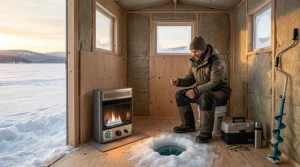
2. Mr. Heater MH18B Big Buddy — 18,000 BTU for Larger Spaces
Think of the Big Buddy as the Portable Buddy’s older, more capable sibling — same trusted platform, three times the heating power. At up to 18,000 BTU, this unit covers spaces up to approximately 42 square metres (450 sq ft), which takes it from “warming the ice shanty” territory firmly into “actually heating the workshop or chalet” category. The combination of infrared radiant and convection heating means you feel warmth quickly rather than waiting for the whole room’s air to circulate — a key advantage when you’ve just walked in from a Manitoba February.
The MH18B runs off two 1 lb propane cylinders simultaneously (a clever parallel design), or connects to a 20 lb tank with an optional hose. At the low setting, you’ll get up to 11 hours of runtime — enough for an entire overnight stay in a remote cabin without refuelling. The ODS and tip-over safety shutoff carry over from the Portable Buddy, and the optional fan kit (sold separately) helps distribute heat more evenly in larger, open-concept spaces. Canadian reviewers frequently mention this as their go-to for ice fishing, hunting camps, and seasonal cottages across northern Ontario and B.C.
What most buyers overlook about the Big Buddy is that it genuinely bridges the gap between “camping heater” and “serious supplemental heater.” For a family renting a ski chalet in Mont-Tremblant or a fishing party up near Flin Flon, this is the unit that does the job without requiring a propane line installation. The $230–$350 CAD range puts it squarely in the mid-tier — not cheap, but honest value for what you get.
Pros:
✅ 18,000 BTU handles real-world Canadian spaces |
✅ Dual-cylinder design for extended runtime |
✅ Fan-compatible for even heat distribution
Cons:
❌ Larger and heavier than the standard Buddy |
❌ Fan sold separately
Value verdict: Around $230–$350 CAD — strong mid-range option for semi-permanent or portable supplemental heating.
3. Dyna-Glo BFSS30LPT-2P Blue Flame Thermostatic Vent-Free Wall Heater
If you’re ready to commit to a wall-mounted ventless propane heater indoor approved for permanent supplemental heating, the Dyna-Glo BFSS30LPT-2P is the product that most experienced Canadian buyers end up recommending to each other in forums and community Facebook groups — and for good reason. The blue flame technology works by heating the surrounding air first (convection-style), rather than radiating heat directly at nearby objects. It’s a crucial distinction: blue flame heaters feel more like central heating, providing even, ambient warmth throughout the room rather than a focused hot zone.
At 30,000 BTU and coverage up to approximately 93 square metres (1,000 sq ft), this heater is a legitimate supplemental heat source for main-floor living areas, large workshops, or open-plan cabins. The built-in thermostatic control knob — five settings — lets it cycle on and off automatically to maintain your desired temperature, which is far more convenient (and fuel-efficient) than manually adjusting a unit every hour. The ODS is standard; no electricity is required for operation, which makes this an excellent choice during the Canadian power outages that tend to hit when temperatures are already brutal.
The wall-mount installation is straightforward, but do read the instructions carefully. Optional floor legs are sold separately, making this a floor-standing unit if you rent and can’t put holes in the walls. Canadian buyers in attached garages or heated detached workshops particularly love this model for its set-and-forget simplicity. Note that ventless wall heaters of this type are regulated under the National Building Code of Canada and may have provincial restrictions — always verify with your local municipality before installation (more on this in the regulations section below).
Pros:
✅ 30,000 BTU covers serious Canadian spaces |
✅ Thermostatic control for automatic cycling |
✅ No electricity required
Cons:
❌ Requires wall installation or separate leg purchase |
❌ Blue flame requires insulated space for best efficiency
Value verdict: Around $280–$400 CAD — excellent ROI for permanent supplemental heating, pays for itself in reduced electricity use within one season.
4. Dyna-Glo BF30PMDG Blue Flame Vent-Free Wall Heater
The Dyna-Glo BF30PMDG is the more straightforward sibling to the BFSS30LPT-2P — same 30,000 BTU blue flame output, wall-mount design and ODS safety system, but without the thermostatic auto-cycling feature. Instead, you get a simple manual knob control. That sounds like a downgrade, but for many Canadian users — particularly those using the heater only during specific hours (say, morning and evening in a seasonal workshop) — the simplified design actually means fewer components to maintain and potentially longer service life.
What I appreciate about this model for the Canadian context is its no-frills durability. Blue flame heaters in sheds and garages take a beating — cold starts, sawdust-heavy environments, inconsistent use across seasons. The BF30PMDG’s straightforward mechanics mean less to go wrong over a decade of seasonal use. Canadian user reviews frequently mention reliability through multiple harsh winters, which carries more weight than any spec sheet. Like the BFSS30LPT-2P, this model is available on Amazon.ca and ships to most Canadian provinces.
If your primary heating need is a workshop or a secondary space where you’ll manually manage the temperature yourself, the BF30PMDG can save you $50–$100 CAD versus the thermostatic model. That’s a propane tank’s worth of fuel right there. If you want set-and-forget convenience, step up to the BFSS30LPT-2P.
Pros:
✅ Same powerful 30,000 BTU output |
✅ Simpler mechanics = higher durability |
✅ Budget-friendly alternative to thermostatic model
Cons:
❌ No auto thermostatic cycling |
❌ Less energy-efficient without automatic shutoff
Value verdict: Around $230–$330 CAD — the no-nonsense choice for manual-control users.
5. Rinnai FC824P Vent-Free Fan Convector — Premium Pick
The Rinnai FC824P is in a different class entirely. Rinnai is the Japanese manufacturer that essentially defined modern tankless water heater technology, and they’ve brought the same engineering rigour to this 22,000 BTU vent-free fan convector. The 99.9% AFUE (Annual Fuel Utilization Efficiency) rating means nearly every joule of propane combustion becomes usable heat — the spec sheet here is not marketing exaggeration. For Canadian homeowners looking to run a ventless propane heater as a genuine daily-use supplemental heat source (not just an emergency backup), this efficiency rating translates to meaningful fuel savings over a season.
The digital adaptive thermostat is the real star of this product. You set a temperature; the FC824P maintains it. A quiet variable-speed fan (30–44 dB — quieter than most refrigerators) distributes heat evenly across spaces up to about 93 square metres (1,000 sq ft). The cool-to-touch cabinet with a child-safety lock is not window dressing — it’s a genuine feature for families with curious toddlers. Multiple layered safety systems cover power failures, ODS shutoff, overheating protection, and tilt detection. This is the heater you buy when you want to stop thinking about your heater.
The sticker shock is real — expect to pay in the $700–$1,000+ CAD range — but the math works out over time. If you’re supplementing your home’s forced-air heating in a 90 m² (968 sq ft) open-concept main floor through a six-month Canadian winter, the FC824P’s efficiency advantage over a mid-range competitor can recover its price premium within two or three heating seasons. Think of it as an appliance, not a gadget. It’s available on Amazon.ca, though shipping may take slightly longer to remote areas.
Pros:
✅ 99.9% AFUE — industry-leading efficiency |
✅ Digital thermostat with child-safety lock |
✅ Whisper-quiet operation — ideal for living spaces
Cons:
❌ High upfront cost in CAD |
❌ Requires professional installation for warranty compliance
Value verdict: $700–$1,000+ CAD — premium investment with the lowest long-term operating cost on this list.
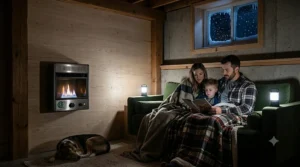
6. ProCom ML100TPA-B Ventless Infrared Plaque Heater — Compact & Affordable
Not everyone needs 30,000 BTU. Sometimes you just need to take the chill off a 14 square metre (150 sq ft) home office, a small apartment bedroom, or a bunkhouse at the family camp. The ProCom ML100TPA-B fills that role — 10,000 BTU of infrared plaque heat, wall-mountable, no electricity required, CSA-certified ODS safety system, and a push-button piezo ignition. At under $150–$200 CAD on Amazon.ca, it’s the most affordable ventless propane heater indoor approved on this list that still ticks every safety box.
The infrared plaque technology works like sunshine: it warms people and objects in the room directly rather than heating the air. In a well-insulated small room, this is extremely efficient — you feel warm within minutes even if the ambient air temperature is still rising. The wall mount bracket is included, and the slim profile (roughly 48 cm × 36 cm / 19″ × 14″) means it doesn’t dominate a small space. Reviewers from across Atlantic Canada particularly appreciate this model for seasonal camps and older homes with inadequate central heating reach in back rooms.
The trade-off for the affordable price is limited coverage. Push this heater into a space larger than about 14–18 square metres (150–200 sq ft) and you’ll notice it struggling — especially in a poorly insulated older Canadian home during a cold snap. Match it to the right space and it punches well above its price tag.
Pros:
✅ Most affordable CSA-certified option on this list |
✅ Infrared heat warms immediately — no waiting |
✅ Compact and wall-mountable
Cons:
❌ Limited to small spaces |
❌ No thermostatic auto-cycling at this price point
Value verdict: Around $150–$200 CAD — the smart pick for small spaces on a budget.
7. Mr. Heater F299830 Vent-Free 30,000 BTU Radiant Heater
The Mr. Heater F299830 rounds out this list as the heavy-duty radiant option for Canadian garages, workshops, and large cabins. At 30,000 BTU, it covers up to approximately 70 square metres (750 sq ft) per Mr. Heater’s conservative spec — in practice, in a moderately insulated garage with standard ceilings, Canadian users report effective heating well beyond that in milder conditions. The dual ODS system is a standout: two independent oxygen sensors provide a redundant safety layer that single-ODS competitors cannot match, which matters a great deal in an enclosed garage where a running engine or power tool could be impacting air quality simultaneously.
The F299830 can be wall-mounted or set on a stand (both included), which gives it genuine flexibility. Radiant heat warms objects and people directly — unlike blue flame convection units, you feel the heat immediately even in a large, draughty space. That’s why ice fishing guides and construction site managers across northern Canada tend to favour radiant heaters for semi-open or poorly insulated environments: the heat reaches you before the whole space is warmed up. Available on Amazon.ca, with Prime delivery available to most major Canadian cities.
What I’d caution on this model: at 30,000 BTU, you’ll burn through propane faster than on smaller units. If you’re running it from a 1 lb cylinder, runtime is very short — this heater is designed for connection to a 20 lb or larger tank. Factor that into your operating cost calculation.
Pros:
✅ Dual ODS for redundant safety |
✅ Wall or floor installation flexibility |
✅ Immediate radiant warmth even in large spaces
Cons:
❌ Requires large tank for practical use |
❌ Radiant heat less effective in poorly insulated spaces compared to blue flame
Value verdict: Around $280–$420 CAD — the workhorse pick for garages and workshops.
Canadian Buyer Profiles: Finding Your Best Match
Let’s translate all of the above into real decisions for real Canadians. In my experience, most buyers fall into one of three profiles — and matching your situation to the right product upfront saves both money and frustration.
Profile 1 — The Urban Renter in a Toronto or Vancouver Condo You have a drafty second bedroom or a home office that your building’s radiators simply refuse to heat adequately. You probably can’t mount anything permanently. You want something safe, compact, and landlord-friendly. The ProCom ML100TPA-B at under $200 CAD is your answer — it heats a small room efficiently, wall-mounts with minimal impact, and the infrared technology means you’re warm within minutes of arriving home. Just ensure your condo building permits propane appliances; check with building management before purchasing.
Profile 2 — The Rural Ontario Homeowner With a Workshop You have a detached garage or workshop that your home’s heat doesn’t reach, you spend several hours a week out there between October and April, and you want reliable, low-maintenance heat. The Dyna-Glo BFSS30LPT-2P is your ideal match. The 30,000 BTU thermostatic system will maintain your preferred temperature automatically, and the blue flame convection suits an insulated garage perfectly. Budget around $280–$400 CAD for the unit, plus a 20 lb propane tank and regulator hose.
Profile 3 — The Northern Camping Enthusiast You ice fish, hunt, or spend weekends at a remote cabin in northern Quebec or Manitoba. You need something portable, reliable at low temperatures, and genuinely safe for enclosed shelters. The Mr. Heater MH9BX for smaller shelters or the MH18B Big Buddy for larger groups is the clear choice — both are explicitly designed for this use case, and the Portable Buddy’s Canadian-specific approval version removes any ambiguity about indoor safety certification.
Canadian Regulations & Safety Standards You Must Know in 2026
This is the section most review sites skip, and skipping it can get you into genuine trouble — or worse, genuine danger. Here’s what every Canadian buyer of a ventless propane heater indoor approved for residential use needs to understand in 2026.
The National Building Code Distinction The National Building Code of Canada (Section 9.36.3.10) prohibits ventless gas fireplaces in most jurisdictions — but this applies to decorative fireplace units, not to portable propane radiant or convection space heaters designed as supplemental heating appliances. The distinction matters. A Mr. Heater Buddy or a Dyna-Glo Blue Flame wall heater is a heating appliance, governed by different code provisions than a ventless gas fireplace insert. That said, provincial adoption of national codes varies, and some municipalities have their own overlay regulations. Always verify with your local building department before permanently installing any gas appliance.
New CO Alarm Requirements Effective January 2026 This is urgent and current. As of January 1, 2026, Ontario’s updated Fire Code now requires a working carbon monoxide alarm on every storey of any home with a fuel-burning appliance — including propane heaters. This is a significant upgrade from the previous requirement (CO detector only near sleeping areas), and it’s aligned with the 2020 National Fire Code of Canada. If you’re in Ontario and using any propane appliance, you are now legally required to have CO alarms on every floor. Other provinces are implementing similar standards. The CBC reported extensively on these new requirements as they took effect (CBC News, December 2025).
CSA Certification — What It Actually Means A CSA (Canadian Standards Association) mark on a propane heater is not optional for indoor use — it’s the baseline requirement for any safety-verified appliance sold in Canada. CSA certification means the product has been independently tested against Canadian standards for gas-fired appliances, including ODS performance, combustion quality, and structural integrity under stress conditions. When shopping on Amazon.ca, prioritize products with explicit CSA certification listed in the product description. If a listing mentions only UL (Underwriters Laboratories, a US standard) without CSA, treat that as a caution flag and verify with the manufacturer before purchasing.
Propane and Indoor Air Quality — Health Canada’s Position Health Canada acknowledges that properly maintained, CSA-certified propane appliances with functioning ODS systems can be used safely as supplemental heating, provided adequate fresh air exchange is maintained. However, the department’s 2025 guidance for indoor air quality professionals is unambiguous: propane combustion releases CO, nitrogen dioxide, and water vapour as by-products, and without proper ventilation these can accumulate to harmful levels. The practical implication? Even with a certified heater and a functioning CO detector, crack a window slightly when running a propane heater in a tightly sealed modern home. Modern Canadian homes built after 2000 are often so well air-sealed that supplemental ventilation is genuinely necessary.
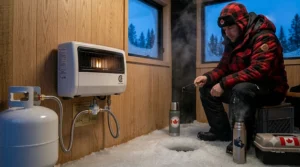
How to Choose a Ventless Propane Heater Indoor Approved in Canada: 6-Step Framework
- Calculate your BTU requirement first. A rough rule is 30–40 BTU per square metre for a well-insulated Canadian space; add 20–30% for older construction or below-grade rooms. Don’t overshoot — oversized heaters cycle inefficiently and burn more propane than necessary.
- Verify CSA certification explicitly. Look for the CSA mark in the product listing and confirm with the manufacturer’s spec sheet. In Canada, this is non-negotiable for indoor propane appliances.
- Match heater type to space insulation. Blue flame (convection) heaters like the Dyna-Glo BFSS30LPT-2P work best in well-insulated, enclosed spaces — they heat air first. Radiant heaters (Mr. Heater Buddy series) work better in draughty or poorly insulated spaces — they warm people and objects directly.
- Plan your propane supply. Small 1 lb cylinders are convenient but expensive per BTU. If you’re running a 18,000 BTU+ heater regularly, connect to a 20 lb or larger tank with a regulator hose. At Canadian propane prices, the cost difference per hour of heat is significant over a season.
- Install CO detectors before first use. Ontario now requires them on every floor; even if your province doesn’t yet mandate it, treat it as mandatory regardless. A combination CO/smoke detector from Amazon.ca in the $50–$80 CAD range is the most important safety investment you’ll make alongside any propane heater.
- Check local municipality regulations. Portable heaters are typically unregulated; wall-mounted ventless gas appliances may require a permit or licensed gas fitter installation in your province. A quick call to your local building department takes ten minutes and can save you a significant headache.
Ventless vs. Direct Vent vs. Electric: The Real-World Canadian Comparison
| Factor | Ventless Propane | Direct Vent Propane | Electric Space Heater |
|---|---|---|---|
| Installation | Minimal (portable) or simple wall mount | Requires exterior venting | Plug and play |
| Operates during power outage | ✅ Yes | ✅ Yes | ❌ No |
| Indoor air quality impact | Moderate (CO, moisture, NOₓ) | None (vented outside) | None |
| Fuel cost (CAD, per winter) | Moderate–low | Moderate–low | High (electricity) |
| CSA certification available | ✅ Yes | ✅ Yes | ✅ Yes |
| Suitable for northern Canada winters | ✅ Yes | ✅ Yes | ❌ (suffers in extreme cold) |
| Best For | Backup heat, portability, no-electricity situations | Permanent primary supplemental heat | Urban apartments, low-use scenarios |
The table reveals a clear truth: ventless propane heaters earn their place in the Canadian market primarily through two advantages — they function during power outages (critical in rural Canada), and they require no permanent venting infrastructure. A direct vent propane heater is objectively safer from an indoor air quality standpoint, but the installation complexity and cost are substantially higher. Electric space heaters are perfectly safe and require zero ongoing maintenance, but they fail precisely when Canadians need heat most: during grid outages in severe winter storms. At Ontario and B.C. hydro rates in 2026, they’re also increasingly expensive to run for extended supplemental heating.
The ventless propane option lands in the middle: more complex than an electric heater, simpler than a direct vent unit, and uniquely valuable as emergency backup heat that functions independently of the grid.
Common Mistakes Canadian Buyers Make (And How to Avoid Them)
Buying an outdoor-only unit and assuming it’s safe indoors. This is the most dangerous mistake on the list. Outdoor propane heaters are engineered for open, well-ventilated spaces — they produce far higher CO output per hour than indoor-approved units and lack ODS systems. The word “indoor approved” or “indoor safe” in the product name or description is not marketing language; it’s a genuine engineering distinction. If you’re unsure, look for explicit CSA certification and ODS confirmation in the product specs.
Ignoring altitude restrictions. Several models — including the Mr. Heater Buddy series — note that ODS systems may trigger spurious shutoffs above 2,134 metres (7,000 ft) above sea level. For most Canadian buyers this is irrelevant, but if you’re heading to a ski chalet in the B.C. Interior near Revelstoke or Whistler, check the altitude spec in your product’s manual before assuming it’ll behave normally.
Skipping the CO detector because “the heater has an ODS.” The ODS shuts off the heater when oxygen levels fall below approximately 18% — but it does not detect CO at lower, chronic exposure levels. You can be exposed to CO concentrations that cause long-term neurological damage without ever triggering an ODS shutoff. The CO detector and the ODS serve completely different safety functions. Both are required.
Underestimating propane consumption. A 30,000 BTU heater running on high consumes approximately 0.9–1.1 litres (0.24–0.28 gallons US) of propane per hour. A standard 20 lb Canadian propane tank holds about 9 litres of propane. That’s approximately 9–10 hours of runtime at full power. Plan your propane supply accordingly before a long weekend cabin trip in January.
Ignoring provincial regulations. Alberta, Ontario, and B.C. have different gas appliance codes and inspection requirements for permanently installed units. What’s a permit-free installation in one province may require a licensed gas fitter certification in another. When in doubt, call your local authority having jurisdiction (AHJ) before drilling anything into a wall.
Long-Term Cost & Maintenance in Canada: What the Spec Sheet Won’t Tell You
The purchase price of a ventless propane heater indoor approved for Canadian conditions is only the first number you need to care about. Here’s what the full cost picture actually looks like over a five-year ownership horizon:
Propane cost. In most Canadian provinces, propane refill prices in 2025–2026 run approximately $0.90–$1.40 CAD per litre at cylinder exchange or bulk delivery. A mid-range heater running at 15,000 BTU for four hours per day over a 150-day Canadian heating season burns roughly 810 litres of propane — call it $700–$1,100 CAD in fuel per year. This is substantially lower than electric resistance heating in Ontario or B.C. at current hydro rates, and comparable to natural gas forced air heating in most provinces.
Maintenance. Ventless propane heaters have fewer moving parts than forced-air systems and require modest annual maintenance: a burner cleaning with compressed air before the season, an ODS sensor inspection (the sensor can accumulate dust and fail to trigger correctly), and a regulator check for cracks or wear. The Mr. Heater Buddy line has an excellent aftermarket parts ecosystem available on Amazon.ca; wall-mounted Dyna-Glo and ProCom units are similarly well-supported. Rinnai FC824P service, by contrast, should be handled by a certified Rinnai technician — budget $100–$200 CAD for an annual service call if you’re running it as a primary supplemental heat source.
Longevity. Well-maintained blue flame wall heaters regularly last 15–20 years in Canadian conditions. Portable radiant units like the Buddy series typically see 8–12 years of reliable service with seasonal maintenance. The Rinnai FC824P, per owner reports, frequently exceeds 15 years. Divide purchase price by expected service years and the math strongly favours quality investments like the Dyna-Glo thermostatic models or the Rinnai over budget alternatives with shorter lifespans.
FAQ: Ventless Propane Heaters in Canada
❓ Are ventless propane heaters legal in Canada for indoor use?
❓ Do I need a carbon monoxide detector with a ventless propane heater indoors?
❓ Can I use a ventless propane heater indoor approved during a Canadian power outage?
❓ Which ventless propane heater is best for ice fishing in Canada?
❓ Does Amazon.ca ship ventless propane heaters to northern or remote Canadian communities?
Conclusion: Stay Warm, Stay Safe, Stay Canadian
The ventless propane heater indoor approved category has matured significantly in 2026. You’re no longer choosing between “safe but weak” and “powerful but sketchy.” The products on this list — from the accessible Mr. Heater MH9BX at the entry level to the supremely engineered Rinnai FC824P at the premium tier — represent genuinely safe, CSA-certified supplemental heating that can make a real difference in your Canadian winter comfort without putting your family at risk.
The key takeaways: verify CSA certification before you buy, install a CO detector on every floor before you run anything, understand your province’s regulations for permanent installations, and match your heater’s BTU output to your actual space size. Get those fundamentals right, and a ventless propane heater is one of the most practical, grid-independent, cost-effective heating tools available to Canadian homeowners in 2026.
Whether you’re in a Kelowna townhouse, a Moncton bungalow, a Sudbury workshop, or a remote Saskatchewan hunting camp, there’s a right option on Amazon.ca for your budget, your space, and your safety expectations.
✨ Don’t Miss These Exclusive Deals!
🔍 Click on any of the highlighted products above to check current pricing and availability on Amazon.ca. Prices change regularly — check today to lock in the best value for your heating season!
Recommended for You
- 7 Best Convection Heaters in Canada 2026: Warm Smarter, Not Pricier
- 7 Best Desk Heaters Under $100 CAD in Canada (2026)
- 7 Best Propane Heaters for a Remote Cottage in Canada (2026)
Disclaimer: This article contains affiliate links. As an Amazon Associate, I earn from qualifying purchases. If you purchase products through these links, we may earn a small commission at no additional cost to you.
✨ Found this helpful? Share it with your friends! 💬🤗
