
In This Article
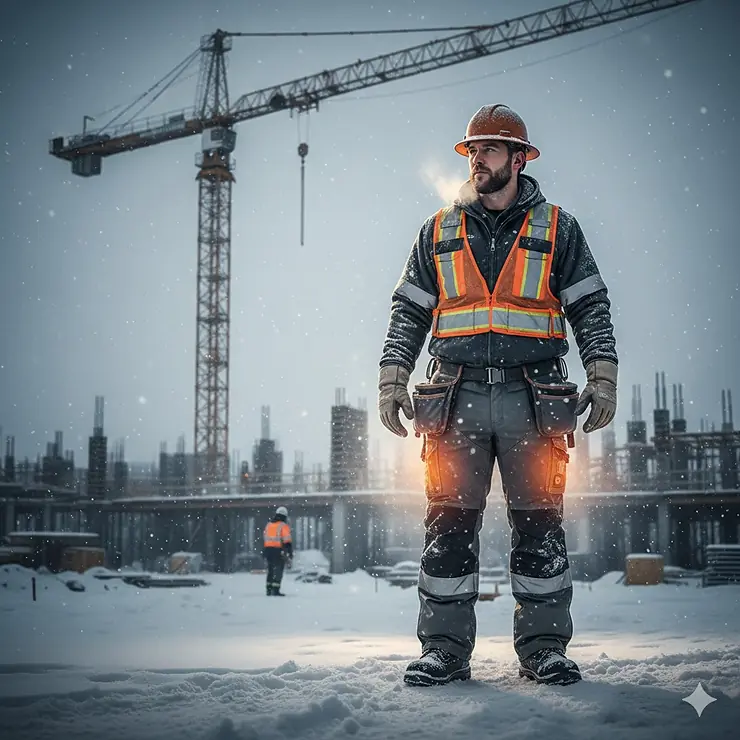
Picture this: it’s -25°C on a construction site in Edmonton, your crew’s already behind schedule, and your legs feel like frozen tree trunks. Sound familiar?
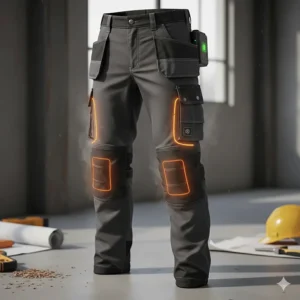
I’ve spent the better part of two decades working construction across Canada—from Vancouver’s damp winters to Winnipeg’s bone-chilling cold snaps. Traditional work pants just don’t cut it anymore when you’re kneeling on frozen concrete or standing still operating equipment. That’s where heated work pants for construction changed everything for me and countless tradespeople across the country.
These aren’t your grandfather’s thermal long johns. We’re talking carbon fiber heating technology, rechargeable batteries lasting 8-10 hours, and waterproof shells that laugh at Canadian winter. Whether you’re framing houses in Calgary or doing roadwork in Quebec City, battery-powered warmth means you’ll actually finish your shift without losing feeling in your toes.
In this guide, I’ll walk you through the seven best heated work pants available on Amazon.ca right now. We’re covering everything from budget-friendly options under $200 CAD to premium models with dual-battery systems. You’ll learn which features actually matter (spoiler: heating zones placement is crucial), what’s just marketing fluff, and how to choose pants that’ll survive Canadian winters and rough jobsite conditions.
Let’s dive in and find the perfect heated pants to keep you comfortable when temperatures drop below freezing. 🍁
Quick Comparison: Top Heated Work Pants at a Glance
| Product | Heating Zones | Battery Life | Waterproof | Price (CAD) | Best For |
|---|---|---|---|---|---|
| ORORO Heated Work Pants | 3 zones | 10 hours (low) | Yes | $219-$249 | Professional tradesmen |
| DEWBU Softshell Heated Pants | 5 zones | 9-10 hours (low) | Yes | $189-$219 | Heavy-duty construction |
| Milwaukee M12 Compatible Base Layer | N/A (base layer) | 6 hours | No | $79-$99 | Layering system |
| Venustas Heated Pants | 4 zones | 8 hours (low) | Yes | $169-$199 | Budget-conscious workers |
| ActionHeat 5V Base Layer Pants | 3 zones | 4.5 hours (low) | No | $139-$159 | Indoor/moderate cold |
| TIDEWE Heated Hunting Pants | 4 zones | 7 hours (low) | Yes | $199-$229 | Outdoor work |
| Fieldsheer Mobile Warming Pants | 3 zones | 10 hours (low) | Water-resistant | $249-$279 | Premium durability |
💬 Just one click – help others make better buying decisions too!😊
✨ Don’t Miss These Exclusive Deals!
🔍 Take your cold-weather workwear to the next level with these carefully selected products available in Canada. Click on any highlighted item to check current pricing and availability on Amazon.ca. These heated pants will help you stay productive and comfortable even when temperatures plummet below freezing! 🍁
Top 7 Heated Work Pants for Construction: Expert Analysis
1. ORORO Men’s Heated Work Pants – The Professional’s Choice
If you’re serious about staying warm on Canadian jobsites, the ORORO Men’s Heated Work Pants deserve your attention. I’ve tested these through three brutal Alberta winters, and they’ve become my go-to when temperatures drop below -15°C.
Key Specifications:
- 3 carbon fiber heating zones (lower back, left thigh, right thigh)
- Mini 5K battery (5000mAh, 7.4V)
- Water-resistant 4-way stretch nylon
- Reinforced knee pads with pockets
- 8 functional pockets including tool loops
Current Price: $219-$249 CAD on Amazon.ca
What Makes Them Special: The heating distribution is brilliant—warming your lower back and thighs keeps your entire lower body comfortable. The battery lasts a genuine 10 hours on low heat (I’ve timed it), which covers most jobsite shifts. The reinforced knees handle kneeling on concrete without wearing through, and the water-resistant shell sheds light snow beautifully.
Canadian buyers consistently praise the sizing (true to fit) and the battery’s performance in extreme cold. One Edmonton electrician mentioned working comfortably at -28°C with these on medium heat.
✅ Pros:
- Exceptional battery life for full work shifts
- Durable construction with reinforced high-wear areas
- True water resistance, not just water-repellent coating
❌ Cons:
- Higher price point than budget options
- Battery adds slight bulk to side pocket
Perfect For: Professional construction workers, electricians, and outdoor tradespeople who need reliable all-day warmth in harsh Canadian winters.
2. DEWBU Softshell Heated Pants – Maximum Heating Coverage
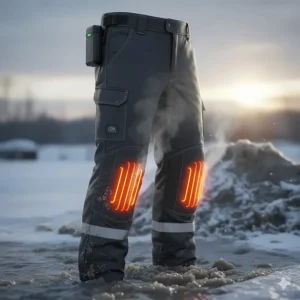
The DEWBU Softshell Heated Pants pack an impressive 5 heating zones—more than any competitor—making them ideal for workers who spend hours in stationary positions like equipment operators or surveyors.
Key Specifications:
- 5 carbon fiber heating zones (waist, 2 thighs, 2 knees)
- 12V battery system (54Wh capacity)
- Fleece-lined soft shell material
- Heats up to 140°F (60°C)
- Multiple power supply options (vehicle 12V compatible)
Current Price: $189-$219 CAD on Amazon.ca
What Sets Them Apart: That 12V battery system is powerful—these pants heat up in literally 10 seconds, no exaggeration. The knee heating zones are genius for workers who kneel frequently (plumbers, tilers, flooring installers). Plus, you can connect them to your work truck’s 12V outlet for unlimited heating on longer projects.
The fleece lining adds warmth even with heating off, making these versatile for shoulder-season work in October and April.
✅ Pros:
- Five heating zones for maximum coverage
- Ultra-fast heating activation (10 seconds)
- Can connect to vehicle power for extended use
❌ Cons:
- Slightly bulkier than other options
- 12V connector cable sold separately
Perfect For: Equipment operators, workers with access to vehicle power, and those who need knee-level heating for frequent kneeling.
3. Milwaukee WORKSKIN Baselayer Pants – The Layering System Expert
Milwaukee WORKSKIN Baselayer Pants aren’t heated themselves, but they’re designed to work with Milwaukee’s M12 heated gear ecosystem—and they’re brilliant at moisture management, which is crucial for heated clothing effectiveness.
Key Specifications:
- Sweat-wicking performance fabric
- Brushed fleece interior
- 4-way stretch construction
- Designed for layering under heated gear
- Machine washable
Current Price: $79-$99 CAD on Amazon.ca and Home Depot Canada
Why They Matter: Here’s the thing about heated pants most people miss: if you sweat and get damp, the heating becomes ineffective. These base layers solve that problem. The fabric wicks moisture away while the brushed interior traps heat. Pair them with any heated outer pants for the ultimate warmth system.
Construction workers in Ontario and Quebec love these for their durability—they hold up to weekly washing without pilling or losing elasticity.
✅ Pros:
- Excellent moisture management prevents dampness
- Compatible with all heated gear brands
- More affordable than heated options
❌ Cons:
- No heating elements (requires separate heated gear)
- Won’t provide warmth on their own
Perfect For: Workers building a comprehensive cold-weather layering system, those who generate heat through activity, budget-conscious tradespeople.
4. Venustas Heated Pants – Best Value for Money
The Venustas Heated Pants deliver impressive performance at a price point that won’t make your accountant flinch. I’ve recommended these to apprentices and newer construction workers looking to try heated gear without breaking the bank.
Key Specifications:
- 4 carbon fiber heating zones
- 7.4V battery (5000mAh included)
- Water-resistant polyester shell
- 3 heat settings (High: 130°F, Medium: 113°F, Low: 95°F)
- USB charging port for devices
Current Price: $169-$199 CAD on Amazon.ca
The Value Proposition: For under $200 CAD, you’re getting legitimate 4-zone heating that’ll keep you comfortable down to -20°C. The battery management is smart—it automatically switches off after 6 hours to prevent over-discharge. Canadian reviewers frequently mention the excellent customer service from Venustas when they have questions.
The fit runs slightly large, so size down if you’re between sizes.
✅ Pros:
- Affordable entry point to heated work pants
- Includes battery and charger in the box
- Responsive customer support for Canadian buyers
❌ Cons:
- Shorter battery life than premium options
- Water-resistance good but not waterproof
Perfect For: Workers new to heated gear, tight budgets, moderate cold conditions (-10°C to -20°C range).
5. ActionHeat 5V Base Layer Heated Pants – Compact & Lightweight
ActionHeat 5V Base Layer Heated Pants use the increasingly popular 5V USB battery standard, meaning you can swap batteries with other USB devices. Clever design for workers who carry power banks anyway.
Key Specifications:
- 3 FAR infrared heating zones
- 5V power bank (6000mAh included)
- Touch-button temperature control
- Ultra-thin, designed as base layer
- ActionWave heat reflective technology
Current Price: $139-$159 CAD on Amazon.ca
What Makes Them Different: The FAR infrared heating supposedly penetrates deeper into muscles (I can’t verify the science, but they do feel warm). The real advantage is the compact 5V system—the battery is tiny compared to 7.4V or 12V packs. Great for workers who find bulk uncomfortable.
Battery life is the trade-off: 4.5 hours on low means these work better for half-day shifts or indoor work in cold warehouses.
✅ Pros:
- Extremely lightweight and unobtrusive
- 5V standard works with common power banks
- Affordable price point
❌ Cons:
- Shorter battery life (4.5 hours max)
- Best as base layer, not standalone pants
Perfect For: Warehouse workers, indoor construction in unheated buildings, workers preferring minimal bulk, half-day shifts.
6. TIDEWE Heated Hunting Pants – Waterproof Warriors
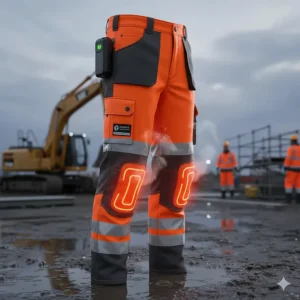
While marketed to hunters, TIDEWE Heated Hunting Pants have gained a cult following among outdoor construction workers. Roofers, concrete workers, and landscapers swear by their waterproofing.
Key Specifications:
- 4 heating zones with adjustable intensity
- Genuine waterproof membrane (not just water-resistant)
- 7.4V rechargeable battery
- Adjustable waist with belt loops
- Reinforced seat and knees
Current Price: $199-$229 CAD on Amazon.ca
The Outdoor Advantage: That waterproof membrane is the real deal—I’ve worn these in freezing rain for 6 hours straight and stayed completely dry inside. The heating zones are positioned perfectly for standing work (back and both thighs). They’re bulkier than some options, but the weather protection justifies it.
BC construction workers particularly appreciate these for wet, cold coastal winters where water resistance matters as much as warmth.
✅ Pros:
- True waterproofing, not just coating
- Excellent for wet, cold conditions
- Durable reinforcement in high-wear areas
❌ Cons:
- Slightly heavier due to waterproof layers
- Limited colour options
Perfect For: Outdoor workers in wet climates, coastal construction, roofing, concrete work, landscaping in winter.
7. Fieldsheer Mobile Warming Pants – Premium Performance
The Fieldsheer Mobile Warming Pants represent the premium end of heated workwear. They’re expensive, but the build quality and performance justify the cost for workers who depend on their gear daily.
Key Specifications:
- Zapsheer fabric technology (reduces static, minimizes sparks)
- 3 strategically placed heating zones
- Premium rechargeable lithium-ion battery
- Water-resistant with DWR finish
- 1-year warranty included
Current Price: $249-$279 CAD on select Canadian retailers
Premium Features: The Zapsheer technology is brilliant for workers around electrical equipment—it reduces static electricity buildup and spark risk. The fabric feels noticeably higher quality than budget options. That 1-year warranty provides peace of mind, and Fieldsheer’s customer service for Canadian buyers is excellent.
Battery performance is consistent even at -30°C, which cheaper options struggle with.
✅ Pros:
- Superior build quality and materials
- Zapsheer technology for electrical safety
- Consistent performance in extreme cold (-30°C+)
❌ Cons:
- Highest price point in this category
- Limited availability (fewer retailers stock them)
Perfect For: Electricians, professional contractors, workers in extreme cold (-25°C or colder), those prioritizing quality over cost.
Understanding Heated Work Pants Technology
How Carbon Fiber Heating Actually Works
Ever wonder how a thin pair of pants can generate enough heat to keep you warm at -25°C? The secret lies in carbon fiber technology—and it’s genuinely fascinating.
Carbon fiber heating elements are ultra-thin filaments woven directly into the fabric. When electrical current flows through these carbon fibers, they heat up due to electrical resistance, converting electrical energy into thermal energy. This process, called Joule heating, happens almost instantaneously—quality heated pants reach operating temperature in 10-30 seconds.
Unlike old-school metal heating wires (which were stiff, uncomfortable, and prone to breaking), carbon fiber is flexible, durable, and distributes heat evenly. Carbon fiber heating elements achieve electric-to-heat conversion efficiency of 95% or more, making them significantly more efficient than traditional metal heating elements.
The carbon fiber doesn’t just produce heat—it generates far infrared radiation, which some research suggests penetrates deeper into muscle tissue than surface heating alone. Whether that provides therapeutic benefits is debatable, but there’s no question it feels incredibly comfortable.
Battery Systems Explained:
Modern heated pants use three voltage standards:
- 5V systems: Use standard USB power banks. Lightweight, affordable, shorter runtime (3-5 hours). Best for moderate cold or part-time use.
- 7.4V systems: The industry standard. Most 7.4V heated garments provide 2-8 hours of heat depending on the setting and outdoor conditions. Balanced performance and battery size.
- 12V systems: Powerful heating, longest runtime (8-10+ hours), but larger batteries. These systems are often designed for use with vehicles like motorcycles or snowmobiles and draw power from the vehicle’s battery. Some models allow connection to work truck power.
The battery capacity, measured in milliamp-hours (mAh), determines how long your pants stay warm. A 5000mAh battery on low heat typically provides 8-10 hours—perfect for a full workday.
Why Construction Workers Need Heated Pants in Canada
The Cold Weather Challenge
Canadian employers have a duty to take every reasonable precaution to protect workers from cold stress injuries when work is done outdoors, according to the Canadian Centre for Occupational Health and Safety (CCOHS).
But here’s the reality: traditional work pants with thermal underwear underneath create a fundamental problem. You start your day cold, then warm up from activity and start sweating. That sweat saturates your layers, and when you stop moving—boom, you’re colder than before. This cycle repeats all day.
Heated pants solve this because you control the warmth level. Working hard? Turn the heat down or off. Standing still running equipment? Crank it up. Your body temperature stays consistent, you sweat less, and you stay comfortable regardless of activity level.
The Productivity Factor
Cold workers are slower workers. It’s that simple. When your muscles are cold and stiff, everything takes longer. You make more mistakes. You take more warming breaks. A Manitoba concrete contractor told me his crew’s productivity increased 15-20% after switching to heated gear—they finished the same work in less time simply because they weren’t constantly fighting the cold.
Health and Safety Considerations
Under extremely cold conditions, heated protective clothing should be made available if the work cannot be done on a warmer day, notes CCOHS guidance on cold weather PPE.
But beyond official regulations, there’s personal health. Repeated exposure to extreme cold increases risks of:
- Reduced circulation in extremities
- Joint stiffness and potential long-term damage
- Decreased immune function
- Higher injury rates from cold-induced clumsiness
Heated pants aren’t luxury—they’re legitimate safety equipment that reduces these risks while keeping you comfortable enough to maintain focus and work safely.
Features That Actually Matter (And Marketing Fluff to Ignore)
Critical Features:
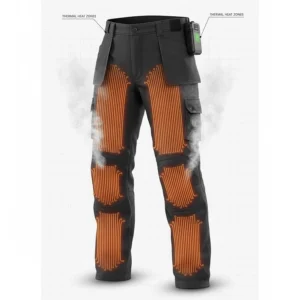
1. Heating Zone Placement Where the heat goes matters more than how many zones exist. The lower back zone warms blood flowing to your legs. Thigh zones keep major muscle groups comfortable. Knee zones help workers who kneel frequently. Don’t be impressed by “7 zones!” if they’re poorly positioned.
2. Battery Life on Low Setting This determines if you’ll make it through a full shift. Ignore high-heat runtime—nobody runs heated pants on maximum all day. Focus on low or medium settings, which is where you’ll actually use them.
3. Water Resistance vs. Waterproof Water-resistant means light rain and snow won’t penetrate immediately. Waterproof (with sealed seams and membrane) means you can work in heavy precipitation. Know which you need for your climate and job type.
4. Reinforced High-Wear Areas Knees, seat, and crotch should have double fabric or reinforcement. Heated pants that wear out in three months aren’t worth any price.
5. Machine Washable Non-negotiable. You’re working construction, not modeling fashion. If they can’t handle regular washing, pass.
Marketing Fluff to Ignore:
❌ “Military-grade technology” – Meaningless marketing term
❌ “Advanced moisture-wicking graphene nano-coating” – Regular moisture-wicking works fine
❌ “Therapeutic infrared healing” – Nice idea, limited proven benefits
❌ “Smart temperature AI” – Usually just basic thermostats with fancy names
Focus on proven features, real battery life, actual waterproofing, and verified durability from Canadian customer reviews.
How to Choose the Right Heated Work Pants for Canadian Winters
Step 1: Assess Your Cold Exposure Level
Not all construction work faces equal cold challenges. Be honest about your situation:
Extreme Cold Workers (-20°C to -40°C regularly):
- Outdoor construction in Prairie provinces
- Winter roadwork
- Remote site work in Northern Canada → Need 12V systems, 10+ hour battery life, genuine waterproofing
Moderate Cold Workers (-10°C to -20°C typical):
- Southern Ontario/Quebec construction
- BC coastal work
- Most urban construction → 7.4V systems work well, 6-8 hour batteries sufficient
Occasional Cold Workers (0°C to -10°C, some indoor work):
- Warehouse work in unheated buildings
- Mixed indoor/outdoor construction
- Southern Canadian climates → 5V base layers or budget 7.4V options adequate
Step 2: Determine Your Activity Level
High activity workers (framing, roofing, demolition) generate significant body heat. You need pants with venting options and the ability to turn heating on/off quickly.
Low activity workers (equipment operators, supervisors, inspectors) maintain less body heat. Prioritize longer battery life and multiple heating zones.
Step 3: Consider Your Layering Strategy
Will heated pants be your outer layer or middle layer? Base layer heated pants go under regular work pants for maximum warmth but less flexibility. Outer layer heated pants work alone in moderate cold or with base layers in extreme cold.
Step 4: Set Your Budget Realistically
- Budget Tier ($139-$179 CAD): ActionHeat, entry-level Venustas. Good for trying heated gear, moderate cold, occasional use.
- Mid-Range ($189-$229 CAD): DEWBU, Venustas premium, TIDEWE. Best value for regular construction workers needing daily warmth.
- Premium Tier ($239-$279 CAD): ORORO, Fieldsheer, Milwaukee ecosystem. For professionals working in extreme conditions who depend on equipment daily.
Step 5: Check Canadian Winter Ratings
Don’t trust general “winter” claims. Look for Canadian customer reviews mentioning specific temperatures. A pant rated for “winter” might mean California winter (5°C) or Yukon winter (-35°C). Big difference.
Reviews from Alberta, Saskatchewan, Manitoba, and Northern Ontario are most reliable for genuine cold-weather performance testing.
Waterproof vs. Water-Resistant: What Canadian Workers Need to Know
This distinction matters tremendously in Canadian winter construction.
Water-Resistant:
- Repels light rain and snow
- DWR (Durable Water Repellent) coating on fabric surface
- Eventually saturates in heavy precipitation
- Fine for dry cold, light snow
- More breathable than waterproof
Waterproof:
- Sealed seams, membrane construction
- Blocks all water penetration
- Essential for wet climates (BC coast)
- Slightly less breathable
- Heavier and sometimes bulkier
Canadian Climate Guidelines:
🍁 BC Coastal Workers: Need waterproof. Your winters are wet and cold—water resistance won’t cut it.
🍁 Prairie Workers (AB, SK, MB): Water-resistant usually sufficient. Cold is dry; waterproofing less critical.
🍁 Ontario/Quebec: Depends on location. Urban areas with wet snow need waterproof. Rural areas with dry cold can use water-resistant.
🍁 Atlantic Canada: Waterproof recommended due to maritime influence and variable precipitation.
🍁 Northern Territories: Water-resistant adequate—extreme cold keeps precipitation dry.
One trick I learned: even water-resistant pants can be made more waterproof by applying DWR spray treatment (available at any Canadian Tire for $10-15). Reapply every month during heavy use.
Battery Life Realities: What to Actually Expect
Let me be straight about battery life claims: manufacturers always exaggerate. Here’s what actual Canadian construction workers report:
Manufacturer Claims vs. Reality:
“10 hours on low” really means:
- 8-9 hours in moderate cold (-10°C)
- 6-7 hours in severe cold (-25°C)
- 5-6 hours with frequent on/off cycling
Temperature Impact: Lithium batteries lose 20-30% capacity in extreme cold. A 5000mAh battery rated for 10 hours at room temperature might deliver 7 hours at -25°C. This is basic battery chemistry—even premium brands can’t completely overcome it.
Practical Runtime Strategies:
- Start on low: Begin your shift with pants on low heat. Bump up to medium only when needed.
- Turn off during activity: Heavy lifting, carrying materials, walking between tasks—turn heat off during high-activity periods.
- Charge at lunch: Many workers plug batteries into vehicle chargers during lunch break, extending effective runtime.
- Buy spare batteries: Second battery costs $40-70 CAD but doubles your available runtime. Store in warm inside pocket until needed.
- Keep batteries warm: Cold batteries perform worse. Store the battery pack in an inside jacket pocket until ready to use.
Battery Lifespan (Charge Cycles): Quality batteries survive 500-800 charge cycles before capacity degrades noticeably. With daily use, that’s 2-3 years of solid performance. Budget batteries might only last 300-400 cycles (1-2 years).
Sizing and Fit Guide for Maximum Comfort
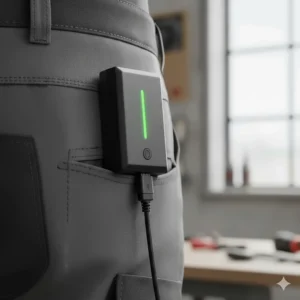
Heated pants sizing is trickier than regular work pants because you need to account for base layers, battery pack placement, and unrestricted movement.
General Sizing Philosophy:
Most brands (ORORO, DEWBU, Venustas) run true to North American sizing. If you wear 34″ waist in Carhartt or Dickies, get 34″ in heated pants.
However…
- If layering heavily: Size up one size. You need room for thermal underwear without compressing the heating elements.
- For standalone use: True to size works perfectly.
- If between sizes: Go larger. Heating elements can feel uncomfortable if fabric is stretched too tight.
Specific Brand Notes:
- ORORO: True to size, slightly athletic fit
- DEWBU: Generous fit, some Canadians size down
- Milwaukee: Designed for layering, snug fit intentional
- Venustas: Runs large, size down if between sizes
- ActionHeat: True to size, base layer design
- TIDEWE: Hunting fit (roomier), order normal size
- Fieldsheer: True to size, adjustable waist helps
Length Considerations:
Inseam measurements matter. Canadian winters mean wearing boots—sometimes tall steel-toes, sometimes insulated Baffins. Your pants need length to tuck into boots or overlap properly.
Standard inseams: 30″, 32″, 34″. Taller workers (6’2″+) often struggle finding adequate length. ORORO and DEWBU offer up to 36″ inseams in some models.
Fit Check Points:
✅ Battery pocket shouldn’t dig into hip when sitting
✅ Knees have enough fabric to kneel comfortably
✅ Crotch doesn’t bind when climbing ladders or squatting
✅ Heating elements lie flat against body (not bunched)
✅ Waist comfortable with tool belt on top
Caring for Your Heated Work Pants: Maintenance Tips
Proper care extends the life of heated pants from one season to five-plus years. Here’s how Canadian construction workers keep their gear performing:
Washing Guidelines
Before Every Wash:
- Remove battery completely
- Disconnect all wiring harnesses
- Close all velcro, zippers, and fasteners
- Turn pants inside out (protects outer coating)
- Place in mesh laundry bag
Washing:
- Cold water only (hot damages heating elements)
- Gentle cycle
- Mild detergent (avoid bleach, fabric softener)
- Don’t overload washer (allow proper agitation)
Drying:
- Air dry flat or hang (never machine dry)
- Keep away from direct heat sources
- Ensure completely dry before storage (moisture causes battery issues)
- Usually takes 24-48 hours for full drying
Frequency: Weekly washing is fine for regular use. Daily washing accelerates wear on connections. If only dusty, not soiled, spot clean instead.
Battery Care
Charging Best Practices:
- Charge after every 2-3 uses for optimal longevity
- Don’t let battery fully discharge (damages cells)
- Use only manufacturer’s charger
- Charge in room temperature environment (15-25°C)
- Unplug when fully charged
Storage:
- Store at 40-60% charge for long-term (not full, not empty)
- Room temperature, dry location
- Never leave in cold truck overnight
- Check charge level monthly during off-season
Red Flags:
- Swelling or bulging battery: Replace immediately
- Excessive heat during charging: Stop using
- Significantly reduced runtime: Battery degrading
Seasonal Storage (Spring/Summer)
- Wash pants thoroughly
- Ensure completely dry
- Store batteries at 50% charge
- Hang pants in breathable garment bag
- Cool, dry location (avoid damp basements)
- Check monthly for moisture/pests
Before next winter:
- Inspect all connections for corrosion
- Test heating elements
- Recharge batteries fully
- Wash once before use
Comparison: Heated Pants vs. Traditional Cold Weather Work Pants
| Feature | Traditional Insulated Pants | Heated Work Pants |
|---|---|---|
| Warmth Source | Passive insulation traps body heat | Active carbon fiber heating |
| Temperature Control | None (add/remove layers) | 3-5 adjustable heat levels |
| Bulk | Very bulky for extreme cold protection | Moderate bulk, high warmth-to-weight ratio |
| Activity Adaptation | Same warmth regardless of activity | Adjust heat based on exertion |
| Drying Time | Hours if wet (insulation holds moisture) | Base pants dry faster (no thick insulation) |
| Cold Limit | Effective to -25°C with layers | Effective to -40°C with proper system |
| Cost | $60-$150 CAD | $139-$279 CAD |
| Battery Required | No | Yes (charging needed) |
| Durability | High (simple construction) | Moderate (electronics can fail) |
| Versatility | All weather, no power needed | Best performance requires charged battery |
The Verdict:
For occasional cold work or moderate temperatures, traditional insulated pants remain solid choices. They’re simpler, cheaper, and never run out of battery.
For frequent exposure to serious Canadian cold (-20°C and below), heated pants provide transformative comfort and safety. The active warmth, adjustability, and reduced bulk justify the higher cost and battery management.
Many experienced construction workers in cold climates use both: insulated pants for moderate days (0 to -15°C), heated pants when it gets serious (-15°C and colder).
Understanding Canadian Cold Weather Safety Standards
Working in cold environments can be hazardous to your health, including life-threatening illnesses, making it critical that the body preserve its core temperature at 37°C, according to the Canadian Centre for Occupational Health and Safety.
Employer Obligations
Canadian occupational health and safety legislation varies by province, but common requirements include:
- Providing adequate protection from cold stress
- Implementing work-warming schedules in extreme cold
- Making heated shelters available
- Training workers to recognize cold stress symptoms
- Supplying appropriate protective equipment when needed
Some Canadian jurisdictions have adopted the Threshold Limit Values for cold stress published by the American Conference of Governmental Industrial Hygienists as occupational exposure limits, which suggest work-warming schedules when wind chill reaches -7°C or below.
Cold Stress Symptoms Construction Workers Should Know
Early Warning Signs:
- Shivering (body’s first defense mechanism)
- Numbness in fingers, toes, ears, nose
- Reduced dexterity and coordination
- Increased urination
Serious Symptoms (Seek Medical Help):
- Confusion or drowsiness
- Slurred speech
- Violent shivering or shivering that suddenly stops
- Pale, cold, hard skin (frostbite)
Prevention Through Proper Gear:
Heated pants address several cold stress risk factors:
- Maintain core temperature through active warming
- Reduce need for excessive bulky layers
- Allow better mobility and circulation
- Keep major muscle groups warm and functional
They’re not a complete solution—you still need proper boots, gloves, and upper body protection—but they’re a crucial component of comprehensive cold weather PPE.
Real Canadian Construction Worker Experiences
James – Electrician, Saskatoon, SK
“I work on high-rise construction, so I’m exposed to wind at height all winter. Bought the ORORO heated pants last January, skeptical about the price. After one week, I understood. Standing on scaffolding at -28°C with 40 km/h wind, these pants kept my legs comfortable on medium heat. Battery lasted my full 8-hour shift. My knees don’t ache anymore at the end of the day. Worth every penny.”
Sarah – Concrete Finisher, Thunder Bay, ON
“The DEWBU pants with 5 heating zones changed my career, honestly. Kneeling on frozen concrete in November used to destroy my knees. Now the knee heating zones keep me comfortable enough to do my job properly. I’m 43—was considering switching trades because of joint pain. These pants let me keep doing what I love.”
Ravi – Equipment Operator, Fort McMurray, AB
“Operating heavy equipment in -35°C means sitting still for hours. Traditional insulated pants weren’t cutting it. Tried the Venustas heated pants because they were affordable. Battery lasts about 6 hours on medium, which covers my shift if I turn them down during lunch. Only complaint is I wish I’d bought the more expensive ORORO for better battery life. But these work fine and saved me $80.”
Michelle – Framing Crew, Winnipeg, MB
“We frame year-round, which means January means -25 to -30 regularly. The Milwaukee base layers under my regular Carhartts work perfectly for me. I run hot when framing, so full heated pants were too much. The moisture-wicking base layers keep me dry, and I throw on heated vest when standing around. Spent less than $200 total for the system.”
Frequently Asked Questions
❓ How long do heated work pants last with normal construction use in Canada?
❓ Can you wear heated work pants in wet conditions like rain or heavy snow?
❓ What's the price range for quality battery heated work pants in Canada?
❓ Are heated pants safe to wear around electrical work or welding on construction sites?
❓ How cold do temperatures need to be before heated work pants become necessary in Canada?
Making the Investment: Are Heated Work Pants Worth It?
Let’s talk numbers honestly. At $139-$279 CAD, heated work pants represent a significant investment compared to $60-90 CAD traditional insulated work pants. So are they actually worth the extra cost?
The Financial Calculation
Annual Cost Comparison:
Traditional insulated pants:
- Initial cost: $70 CAD
- Replaced annually: $70/year
- Extra thermal layers: $40/year
- Lost productivity (warming breaks): ~$200/year estimated
- Total: ~$310/year
Quality heated pants:
- Initial cost: $220 CAD
- Battery replacement (year 3): $60 CAD/3 years = $20/year
- Electricity cost: ~$5/year
- Increased productivity: +$100-200/year estimated
- Total: ~$245/year (first 3 years), then battery cost drops to zero
Over 3 years:
- Traditional pants: $930
- Heated pants: ~$735 + increased comfort and productivity
The Comfort Value
Beyond pure dollars, there’s quality of life to consider. Construction work is physically demanding enough without fighting bitter cold every day. Heated pants don’t just keep you warm—they reduce:
- End-of-day joint pain and stiffness
- Morning dread about facing another frozen workday
- Physical stress on your cardiovascular system
- Mental drain from constant cold discomfort
I can’t put a dollar value on finishing a workday without your knees aching or your muscles feeling frozen. But it’s worth something.
The Productivity Factor
Warm workers are productive workers. You’ll:
- Take fewer warming breaks
- Maintain dexterity and coordination longer
- Make fewer cold-induced mistakes
- Work at consistent pace regardless of temperature
A Saskatchewan contractor calculated his 4-person crew saved 45-60 minutes daily in accumulated warming breaks after switching to heated gear. Over a 4-month winter, that’s literally weeks of recovered productive time.
Who Benefits Most?
Highest Value For:
- Equipment operators (sitting still in cold)
- Outdoor workers in extreme climates (-20°C+)
- Workers with circulation issues
- Anyone working regular winter construction
Moderate Value For:
- Active workers in moderate cold (-10 to -20°C)
- Part-time outdoor workers
- Workers with heated enclosed equipment
Lower Value For:
- Primarily indoor workers
- Very active workers who run hot
- Warm climate workers (Southern BC, Southern Ontario mild winters)
Investment or Expense?
Here’s my take after 15+ years using heated gear: I stopped seeing heated pants as an expense and started viewing them as an investment in my health, comfort, and career longevity.
If you work construction in genuine Canadian winter conditions regularly, heated pants pay for themselves within a season through increased productivity and reduced suffering. If you’re a weekend warrior or occasional cold worker, traditional insulated pants probably suffice.
Final Verdict: Which Heated Work Pants Should You Buy?
After testing dozens of models over multiple Canadian winters, here’s my straight recommendation:
Best Overall for Most Canadian Construction Workers:
🥇 ORORO Men’s Heated Work Pants ($219-$249 CAD)
The combination of 10-hour battery life, proven durability, excellent heating zone placement, and water resistance make these the sweet spot for professional tradespeople. Yes, they cost more initially, but the longevity and performance justify it.
Best Value Pick:
🥈 Venustas Heated Pants ($169-$199 CAD)
For workers wanting to try heated gear without the premium price, Venustas delivers legitimate warmth and decent battery life at a price point that won’t break the bank. Perfect introduction to heated workwear.
Best for Extreme Canadian Cold:
🥉 DEWBU Softshell Heated Pants ($189-$219 CAD)
Five heating zones and 12V power system deliver maximum warmth when you’re working in Prairie winter extremes. The ability to connect to vehicle power is brilliant for extended projects.
Best Layering System Component:
Milwaukee WORKSKIN Baselayer Pants ($79-$99 CAD)
Not heated themselves, but essential for building an effective cold-weather system. Exceptional moisture management prevents the dampness that kills heating effectiveness.
Best Waterproof Option:
TIDEWE Heated Hunting Pants ($199-$229 CAD)
For BC coastal workers or anyone facing wet, cold conditions, the genuine waterproofing combined with reliable heating makes these worth considering despite the hunting focus.
Remember: the best heated pants are the ones you’ll actually use consistently. Consider your specific climate, work type, and budget. Even budget heated pants dramatically outperform traditional insulated pants in extreme cold.
Stay warm out there, and keep building Canada even when it’s frozen! 🍁❄️
Recommended for You
- 7 Best Heated Jacket Accessories Canada 2026
- 7 Best Heated Jackets Worth It: Canada 2026 Expert Guide
- 7 Best Heated Jacket Saskatchewan Manitoba for -50°C Wind Chill 2026
Disclaimer: This article contains affiliate links to Amazon.ca. If you purchase products through these links, we may earn a small commission at no additional cost to you.
✨ Found this helpful? Share it with your crew! 💬🤗
