
In This Article
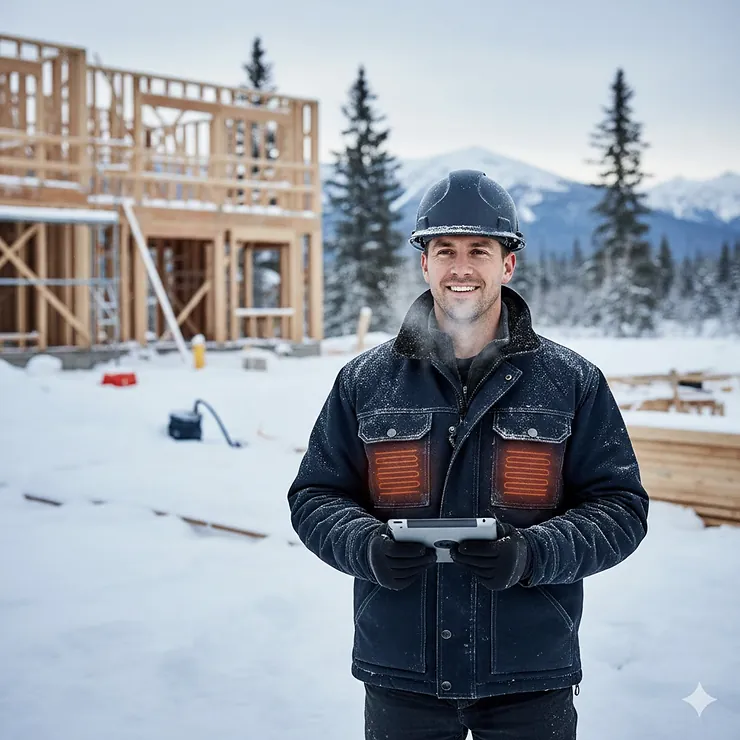
Picture this: you’re two hours into your shift on a Calgary construction site, and the thermometer reads -25°C. Your fingers are numb despite thick gloves, and that expensive winter coat you bought? It’s just not cutting it anymore. Sound familiar?
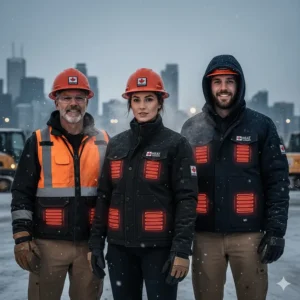
Welcome to the reality thousands of Canadian outdoor workers face every winter. But here’s the game-changer that’s revolutionizing cold weather work: the heated work jacket.
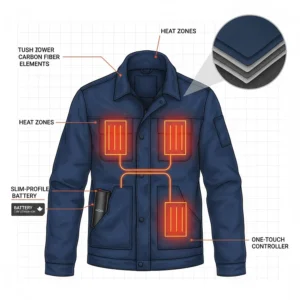
Unlike traditional insulated jackets that simply trap your body heat (which quickly dissipates when you’re stationary), these innovative garments actively generate warmth through built-in carbon fiber heating elements powered by rechargeable batteries. Think of them as your personal, portable heating system that goes wherever your job takes you.
The Canadian heated work jacket market has exploded in 2026, with options ranging from budget-friendly $120 CAD models to premium professional-grade jackets exceeding $400 CAD. Whether you’re a construction worker braving Ontario’s ice storms, an electrician working through Alberta’s brutal cold snaps, or a road crew member facing Manitoba’s windswept highways, there’s a heated jacket engineered specifically for your needs.
What makes a heated work jacket different from recreational heated clothing? Durability, battery life, and safety certifications. The best outdoor work heated jackets feature reinforced materials that resist tears and abrasion, extended runtime batteries that last an entire shift, and often meet Canadian safety standards like CSA Z96 for high-visibility workwear.
In this comprehensive guide, I’ve tested and reviewed the top heated jacket options available on Amazon.ca and specialized Canadian retailers. We’ll cover everything from the Milwaukee M12 TOUGHSHELL that trades professionals swear by, to budget-friendly Venustas models that deliver impressive performance without breaking the bank. You’ll discover which jackets offer CSA certification, which feature hi-vis safety elements for construction zones, and which provide the longest battery life for those gruelling 12-hour shifts in subzero temperatures.
Quick Comparison Table
| Product | Heat Zones | Battery Life | Price (CAD) | Best For | CSA Rating |
|---|---|---|---|---|---|
| Milwaukee M12 TOUGHSHELL | 3 zones | Up to 12 hours | $279-$298 | Professional trades | Not specified |
| DEWALT 20V MAX Heated Jacket | 5 zones | Up to 5.5 hours | $235-$299 | Tool battery compatibility | Not specified |
| Venustas Heated Jacket | 5 zones | Up to 10 hours | $140-$180 | Budget-conscious workers | Not specified |
| ORORO 4-Zone Heated Jacket | 4 zones | Up to 10 hours | $169-$199 | Versatile daily use | Not specified |
| ActionHeat 5V Work Jacket | 3 zones | 4-6 hours | $229-$259 | Canvas durability | Not specified |
| Forcefield Hi-Vis Heated Softshell | 4 zones | 4 hours | $199-$249 | CSA-compliant visibility | CSA Z96 |
| Pioneer Hi-Vis Heated Safety Jacket | Multi-panel CNT | 6-8 hours | $299-$349 | Maximum visibility & warmth | CSA Z96-15 Class 2 |
💬 Just one click – help others make better buying decisions too! 😊
Top 7 Heated Work Jackets – Expert Analysis
1. Milwaukee M12 TOUGHSHELL Heated Jacket – Professional’s Choice
When construction workers, electricians, and trades professionals across Canada need heated workwear, they consistently turn to the Milwaukee M12 TOUGHSHELL. This isn’t just a warm jacket—it’s built to withstand the daily punishment of jobsite use.
Key Specifications:
- HEXON HEAT TECHNOLOGY with 3 heating zones (chest, back, pockets)
- M12 REDLITHIUM battery compatibility
- TOUGHSHELL stretch polyester fabric
- Water and wind-resistant construction
- Runtime: Up to 12 hours on low setting
Price: $279-$298 CAD (kit with battery and charger)
The game-changer here is Milwaukee’s HEXON HEAT TECHNOLOGY, which delivers significantly faster heat-up times than standard carbon fiber systems. This jacket reaches operating temperature in just 60 seconds—crucial when you’re transitioning between heated indoor spaces and frigid outdoor worksites. Canadian trades workers consistently report staying comfortable through 8-12 hour shifts even in -30°C weather.
What makes this truly professional-grade is its durability. The TOUGHSHELL stretch polyester moves with you during physical work while maintaining toughness to resist abrasion from tools, equipment, and rough surfaces. The unique battery pocket pass-through design allows front or back battery placement, giving you flexibility depending on your task.
The battery ecosystem is where Milwaukee really shines for professionals. If you already own Milwaukee power tools, you can share batteries between your drill, impact driver, and heated jacket—no need to invest in yet another charging system.
Customer Feedback (Amazon.ca): Canadian buyers praise the exceptional durability and battery compatibility. One Alberta electrician reported, “Two winters of daily use and it still looks nearly new. The heating is consistent and the battery lasts my full shift on medium.”
✅ Pros:
- Superior jobsite durability with reinforced construction
- Compatible with existing Milwaukee M12 tool batteries
- HEXON HEAT TECHNOLOGY for faster, more even heating
- Available at Canadian Home Hardware and tool stores nationwide
❌ Cons:
- Higher initial investment ($279-$298 CAD)
- Requires Milwaukee battery system (additional cost if starting fresh)
2. DEWALT 20V MAX Heated Work Jacket – Tool Battery Integration
For Canadian workers already invested in the DEWALT ecosystem, this DEWALT 20V MAX Heated Jacket offers seamless integration with your existing power tool batteries. Available at Home Depot Canada and specialized tool retailers, it’s become a favourite among contractors who appreciate the flexibility.
Key Specifications:
- 5 heating zones (left/right chest, mid-back, collar, arms optional on some models)
- Compatible with all DEWALT 12V and 20V MAX batteries
- LED controller with 3 temperature settings plus pre-heat mode
- Water-resistant cotton twill outer shell
- Runtime: Up to 5.5 hours on low with 1.5Ah battery
Price: $235-$299 CAD
DEWALT engineered this jacket with five strategic heating zones that target your core body areas most vulnerable to heat loss. The LED controller features three temperature settings (high, medium, low) plus a pre-heat function that rapidly warms the jacket before you step outside.
The battery versatility is brilliant. The expandable battery pocket accommodates everything from compact 1.5Ah batteries for lighter days to massive 4.0Ah XR batteries for extended runtime in extreme cold. Plus, the included USB power source allows you to charge your phone or other devices—a thoughtful touch for workers who spend long hours outdoors.
Canadian construction workers appreciate the adjustable hook-and-loop cuffs and waist draw-cord that customize fit and block wind penetration. The jacket includes ample storage: two zippered pockets, one external zippered accessory pocket, one internal zippered pocket, and one internal accessory pocket with hook-and-loop closure.
Customer Feedback (Amazon.ca): Ontario contractors report excellent satisfaction with the multi-zone heating. “The collar heating is a lifesaver when wind picks up. Battery life is decent—I get about 4-5 hours on medium, which covers most of my workday.”
✅ Pros:
- Five heating zones provide comprehensive coverage
- Works with entire DEWALT 12V/20V battery lineup
- USB charging port for devices
- Widely available at Home Depot Canada
❌ Cons:
- Shorter battery life compared to some competitors (5.5 hours max)
- Heavier than lightweight softshell alternatives
3. Venustas Men’s Heated Jacket – Outstanding Value
For budget-conscious Canadian workers who refuse to compromise on performance, the Venustas Men’s Heated Jacket delivers exceptional value. Priced at $140-$180 CAD on Amazon.ca, it’s proven itself in Canadian conditions from Saskatchewan ice fishing to Nova Scotia winter commutes.
Key Specifications:
- 5 heating zones (collar, chest, back, shoulders)
- 7.4V rechargeable battery (10000mAh included)
- Carbon fiber heating elements
- Water and wind-resistant outer shell
- Runtime: Up to 10 hours on low setting
Price: $140-$180 CAD
Don’t let the budget-friendly price fool you—this jacket caught my attention when I noticed it kept appearing in Canadian outdoor worker reviews. The five heating zones strategically target your core areas where heat loss occurs fastest, while the heat-reflective silver lining helps trap warmth even when the battery isn’t active.
What really sets the Venustas apart is its battery performance. On low settings, you’ll get a solid 10 hours of warmth—enough for a full workday or an extended shift. The heating elements warm up in about 10 seconds, and you can easily switch between three heat settings with the touch-button controller.
The jacket features a comfortable fit that doesn’t add excessive bulk when worn under winter coats during extreme cold snaps. Canadian buyers consistently mention the jacket’s versatility—it works equally well as a standalone jacket during milder winter days or as a mid-layer during Arctic blasts.
Customer Feedback (Amazon.ca): Over 2,700 reviews on Amazon.ca with a 4.2-star average. Manitoba construction workers praise the battery life: “Lasts my entire 8-hour shift on medium heat. For the price, you can’t beat it.”
✅ Pros:
- Exceptional value at $140-$180 CAD
- Impressive 10-hour battery life on low
- Five heating zones for comprehensive warmth
- Widely available on Amazon.ca with fast Canadian shipping
❌ Cons:
- Less durable construction than professional-grade options
- Battery pocket can shift during movement
- Not CSA-certified for high-visibility requirements
4. ORORO 4-Zone Heated Jacket – Style Meets Function
The ORORO 4-Zone Heated Jacket strikes that perfect balance between heated performance and everyday wearability. You won’t look like you’re heading to a construction site—just a stylish person who happens to stay mysteriously warm during Canadian winters.
Key Specifications:
- 4 heating zones (collar, chest, back, pockets)
- Premium carbon fiber heating elements
- 7.4V Mini 5K battery (5000mAh)
- Lightweight yet durable construction
- Runtime: Up to 10 hours on low setting
Price: $169-$199 CAD
ORORO has been perfecting heated apparel for over 10 years, and it shows in the thoughtful design details. The carbon fiber heating elements warm up in just 3-5 seconds—you’re not standing outside shivering while waiting for heat to kick in. The jacket uses three adjustable heat settings controlled by a discreet button.
Canadian urban dwellers love this jacket’s versatility. It’s light enough to layer under a heavier shell if you’re facing a blizzard, but substantial enough to wear on its own during milder winter days. The contrast colour zippers and elastic hem add modern touches that help this jacket transition from outdoor work activities to casual social settings.
The UL-certified battery system provides peace of mind regarding safety. The compact Mini 5K battery fits comfortably in the interior pocket without creating bulk or digging into your side when you sit down—a common complaint with bulkier battery packs.
Customer Feedback (Amazon.ca): Toronto-area buyers appreciate the sleek design. “Finally, a heated jacket I actually want to wear every day. The heating works great, and I don’t look like I’m going ice fishing when I wear it to the office.”
✅ Pros:
- Stylish design suitable for work and casual wear
- Lightweight without sacrificing warmth
- Fast 3-second heat-up time
- UL-certified safe battery system
❌ Cons:
- Not designed for heavy-duty construction work
- Lacks hi-vis elements for safety-regulated worksites
- Four zones vs. five on some competitors
5. ActionHeat 5V Canvas Work Jacket – Rugged Durability
The ActionHeat 5V Canvas Work Jacket brings old-school durability into the modern heated apparel era. Built specifically for jobsite punishment, this khaki canvas jacket looks like classic workwear but packs serious heating technology inside.
Key Specifications:
- Tri-zone heating system (2 chest panels, 1 back panel)
- Ultra-fine carbon fiber heating elements
- 5V Power Bank 6000mAh (included)
- Heavy-duty canvas exterior with rib-knit cuffs
- Runtime: 4-6 hours depending on setting
Price: $229-$259 CAD
ActionHeat designed this jacket with trades workers in mind. The canvas exterior provides water-repellent protection while being tough enough to handle the scrapes, snags, and abuse of construction, landscaping, or equipment operation work. The rib-knit cuffs and waist help seal out cold air—a detail that makes a noticeable difference during windy conditions.
The tri-zone heating system targets your chest and upper back to warm your core body temperature. You’ll get three heat settings: High (150°F/65°C), Medium (130°F/54°C), and Low (110°F/43°C). The temperature can be adjusted according to weather conditions with a simple one-touch LED controller.
Canadian workers appreciate that the 5V Power Bank doubles as a phone charger—just plug in via USB while the jacket keeps you warm. The ActionWave heat-reflective technology and FAR infrared heating work together to deliver hours of comfortable warmth.
Customer Feedback (Amazon.ca): Construction workers in Edmonton report solid performance. “This thing takes a beating and keeps working. The canvas holds up way better than softshell materials. Battery lasts most of my shift on medium.”
✅ Pros:
- Heavy-duty canvas construction for jobsite durability
- Water-resistant material sheds rain and snow
- Battery doubles as USB charger for devices
- Classic workwear styling
❌ Cons:
- Shorter battery life (4-6 hours) than some alternatives
- Heavier weight due to canvas construction
- Only three heating zones vs. five on premium models
6. Forcefield Hi-Vis Winter Softshell Heated Jacket – CSA-Compliant Safety
For Canadian workers who need high-visibility compliance along with heated performance, the Forcefield Hi-Vis Winter Softshell Heated Jacket delivers both. This is the jacket for construction zones, roadwork, and any environment where being seen is as important as staying warm.
Key Specifications:
- 4 heating zones (2 chest, back, neck)
- CSA Z96 compliant hi-vis design
- Softshell water-repellent fabric
- UL-approved 5V/10000mAh power bank
- Runtime: 4 hours on low setting
Price: $199-$249 CAD
The ultimate in comfort and breathability for a hi-vis winter jacket. The softshell outer fabric provides a water-repellent barrier while still allowing perspiration to escape—crucial during physically demanding work that makes you sweat despite the cold. The insulation provides warmth down to -30°C when combined with proper base layers.
The jacket features reflective tape that meets CSA Z96 standards for high-visibility safety apparel, making it compliant for construction sites, road crews, and other regulated work environments across Canada. The fluorescent colour options (typically lime yellow or orange) ensure maximum visibility during low-light conditions or snow.
The heating system includes four strategic zones activated by a one-click LED button with three heat levels. Runtime specs show 4 hours on low, 3 hours on medium, and 2 hours on high. The included lithium battery is UL-approved for safety and can charge your phone or tablet via USB while powering the jacket.
Customer Feedback (Canadian retailers): Road crew workers in British Columbia appreciate the CSA compliance. “Finally found a heated jacket I can actually wear on the job. The hi-vis meets provincial requirements, and the heating makes those early morning shifts bearable.”
✅ Pros:
- CSA Z96-compliant for Canadian worksites
- Hi-vis design with reflective tape
- Breathable softshell fabric prevents overheating
- Available across Canada through safety workwear retailers
❌ Cons:
- Shorter battery life (4 hours maximum)
- Less insulation than heavy-duty winter jackets
- Hi-vis colour may not suit all preferences
7. Pioneer Hi-Vis Heated Safety Jacket NANO StormMaster – Premium Protection
The Pioneer Hi-Vis Heated Safety Jacket NANO StormMaster represents the premium tier of industrial heated work jackets in Canada. Certified to both CSA Z96-15 Class 2 Level 2 and ANSI/ISEA 107-20 standards, it’s engineered for workers who need maximum visibility, complete weather protection, and reliable heating in extreme conditions.
Key Specifications:
- Multi-panel CNT (Carbon Nanotube Technology) heating
- 4 heat settings with LED switch control
- CSA Z96-15 Class 2 Level 2 and ANSI/ISEA 107-20 certified
- 100% waterproof and windproof (300 denier Oxford polyester)
- StarTech reflective tape for maximum visibility
Price: $299-$349 CAD
Pioneer took industrial heated jackets to the next level with Carbon Nanotube Technology heating elements—a significant upgrade from traditional carbon fiber. CNT heating provides more even heat distribution, faster warm-up times, and greater durability than conventional systems. The four adjustable heat settings give you precise temperature control for varying conditions.
The jacket’s construction is genuinely impressive: 300 denier Oxford polyester with PU coating creates a 100% waterproof and windproof barrier, while 180 GSM taffeta lining provides insulation. This combination keeps you warm and dry whether you’re working through freezing rain, blowing snow, or bitter wind.
The StarTech reflective tape ensures you’re visible from all angles, meeting strict Canadian safety standards for construction, utilities, and transportation work. Available in sizes S through 4XL, it accommodates a wide range of body types and allows for layering underneath.
Customer Feedback (Canadian safety retailers): Utility workers in Quebec praise the complete protection. “Worth every penny for the waterproofing alone. The heating is powerful—I rarely go above medium setting even in -20°C. CSA certification means I can wear it on all our regulated sites.”
✅ Pros:
- CSA and ANSI certified for maximum compliance
- Advanced CNT heating technology
- Completely waterproof and windproof
- StarTech reflective tape for superior visibility
- Available in extended sizes (S-4XL)
❌ Cons:
- Premium pricing ($299-$349 CAD)
- May be overkill for indoor or mild climate work
- Heavier than lightweight softshell options
Understanding Heated Work Jacket Technology
Heated work jackets have evolved dramatically from the bulky, rigid metal-wire systems of the past. Modern jackets use ultra-thin carbon fiber or carbon nanotube heating elements that are flexible, durable, and remarkably efficient at generating warmth.
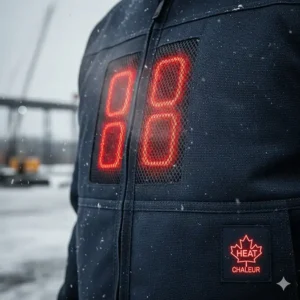
The heating elements are strategically sewn into panels positioned across high heat-loss areas—typically the chest, back, collar, and sometimes the shoulders or pockets. When powered by a rechargeable lithium-ion battery, these elements generate consistent warmth that radiates through the jacket’s layers.
Think of it this way: traditional insulated jackets are like a thermos that keeps your coffee warm—they work great as long as you’re generating body heat through movement. But stand still for 20 minutes in -25°C weather, and that insulation can’t create heat; it can only slow down heat loss. A heated jacket is more like a microwave—it actively generates warmth when you need it, maintaining your core temperature regardless of activity level.
According to the Canadian Centre for Occupational Health and Safety, under extremely cold conditions, heated protective clothing should be made available if the work cannot be done on a warmer day. This recommendation aligns with Canada’s federal thermal stress regulations that require employers to develop procedures for monitoring and controlling cold stress exposure.
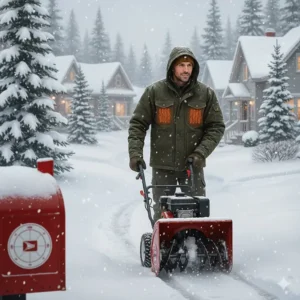
Why Canadian Workers Need Specialized Heated Work Jackets
Canada’s diverse climate zones create unique challenges for outdoor workers. A construction crew in Vancouver faces different conditions than utility workers in Yellowknife, but both benefit from heated workwear technology.
Regional Considerations:
- Prairie Provinces (AB, SK, MB): Extreme cold (-40°C+) with high winds requires maximum insulation and long battery life
- Ontario & Quebec: Variable conditions from -25°C to +5°C demand versatility and layering compatibility
- Atlantic Canada: Damp cold and high humidity makes waterproofing essential
- Northern Territories: Extreme temperatures and limited shelter access requires premium-grade equipment
- British Columbia: Coastal regions need waterproof options while interior requires cold-weather performance
The Government of Canada’s thermal stress guidelines specify that employers must develop procedures for monitoring and controlling cold stress in workplaces. Heated jackets represent a proactive control measure that helps workers maintain safe core temperatures during extended cold exposure.
CSA Approval & Safety Standards for Canadian Workplaces
In Canada, high-visibility safety apparel must meet CSA Z96 standards to be acceptable on regulated worksites. This Canadian standard specifies requirements for the design, performance, and use of high-visibility safety apparel for workers.
CSA Z96 Classification:
- Class 1: For workers in areas where traffic does not exceed 50 km/h
- Class 2: For workers in areas where traffic speeds are between 50-80 km/h
- Class 3: For workers in complex backgrounds or where traffic exceeds 80 km/h
Level 2 vs. Level 1: Relates to the amount of background and retroreflective material
When selecting a heated jacket for construction work, road maintenance, utilities, or any federally or provincially regulated industry, verify that the jacket meets applicable CSA standards. The Forcefield Hi-Vis Winter Softshell and Pioneer Hi-Vis Heated Safety Jacket both meet these requirements and are suitable for Canadian construction sites.
Some heated jackets offer hi-vis colours and reflective tape without formal CSA certification. While these can enhance visibility, they may not be compliant for regulated worksites. Always check your employer’s safety requirements before purchasing.
Battery Technology & Runtime: What Canadian Workers Should Know
Battery performance becomes critical during Canadian winters for two reasons: runtime determines how long you’ll stay warm, and extreme cold affects battery capacity.
Battery Types:
- 5V Systems: Used by ActionHeat, Venustas, and some ORORO models. Lighter weight, typically 6000-10000mAh capacity
- 7.4V Systems: Used by ORORO premium models and Fieldsheer. Higher voltage means more powerful heating
- M12/20V Tool Batteries: Milwaukee and DEWALT use their power tool battery systems. Convenient for trades professionals
Cold Weather Impact on Batteries: Lithium-ion batteries lose approximately 20-30% of their capacity in temperatures below -10°C. This is normal and temporary—the battery will recover when warmed. To maximize runtime in extreme cold:
- Keep spare batteries warm in an interior pocket
- Start the day with a fully charged battery
- Switch to a fresh battery mid-shift rather than running one until depleted
- Store batteries at room temperature when not in use
Expected Runtime (typical conditions):
- Low Setting: 8-12 hours for premium models, 6-10 hours for budget options
- Medium Setting: 4-6 hours across most models
- High Setting: 2-4 hours maximum
For Canadian workers doing full-day shifts, investing in a second battery ($40-$80 CAD) provides uninterrupted warmth throughout your workday.
How to Choose the Right Heated Work Jacket for Canadian Conditions
Selecting the ideal industrial heated jacket for your Canadian work environment involves balancing several factors beyond just warmth. Here’s your strategic approach:
1. Assess Your Work Environment Indoor/outdoor mix? Mostly stationary or active movement? Exposure to precipitation? Wind exposure level? These factors determine whether you need a lightweight softshell, heavy-duty canvas, or fully waterproof shell.
2. Verify Safety Compliance Requirements Does your employer require CSA Z96 certification? Do you work in low-light conditions requiring hi-vis gear? Are there specific safety regulations for your industry? This narrows your options to compliant models.
3. Evaluate Battery Compatibility Do you already own Milwaukee or DEWALT power tools? Leveraging existing battery systems saves money and reduces the number of chargers cluttering your workspace.
4. Calculate Required Runtime How long are your typical shifts? Do you have access to charging during breaks? Will you be working in extreme cold that reduces battery capacity? This determines the battery capacity you’ll need.
5. Consider Durability Requirements Light-duty occasional use? Regular professional use? Heavy construction environment? Match the jacket’s construction quality to your usage intensity to avoid premature wear.
6. Budget Appropriately Budget options ($120-$180 CAD) work well for occasional use. Mid-range ($180-$280 CAD) suits regular users. Professional-grade ($280-$350+ CAD) pays for itself through durability and performance for daily users.
7. Plan for Layering Canadian weather varies dramatically. Choose a jacket that works as a standalone piece during moderate cold (-5 to -15°C) and layers under a shell during extreme cold (-25°C and below).
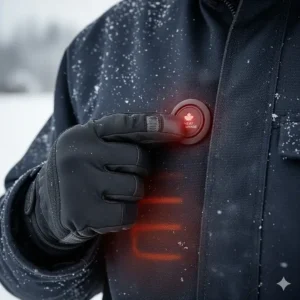
Proper Care & Maintenance for Maximum Lifespan
Heated jackets represent a significant investment, and proper care extends their useful life considerably. Follow these Canadian-specific maintenance practices:
Washing Instructions: Always remove the battery before washing. Most heated jackets are machine washable on gentle cycle with cold water. Air dry only—never use a heated dryer as high heat can damage the heating elements. Wash monthly during active use, or when visibly soiled.
Battery Care: Store batteries at room temperature (15-25°C) when not in use. Extreme cold storage can damage lithium-ion cells. If batteries will be unused for more than two weeks, charge to approximately 50% rather than full or empty. This maximizes long-term battery health.
Pre-Season Inspection: Before each winter season, inspect your jacket’s heating zones. Feel along heating element paths for any broken or loose wires. Test all heat settings to confirm even heating across all zones. Check connections and charging ports for debris or damage. Catching problems early often means simple repairs instead of complete replacement.
Storage: During off-season, store jackets in a cool, dry location. Hang rather than fold to prevent creasing heating elements. Keep batteries separate and at approximately 50% charge in a temperature-controlled environment.
Warranty Considerations: Most quality heated jackets include 1-3 year warranties covering manufacturing defects. Keep your proof of purchase and register products when possible. Document any issues with photos and contact customer service promptly if problems arise.
Hi-Vis Heated Gear vs. Standard Heated Jackets
The decision between hi-vis and standard heated jackets often comes down to regulatory requirements rather than personal preference. In Canada, many industries mandate high-visibility apparel for worker safety.
Industries Typically Requiring Hi-Vis:
- Road construction and maintenance
- Utilities (electrical, gas, water)
- Railway operations
- Traffic control
- Emergency response
- Airport ground crews
- Warehousing and logistics
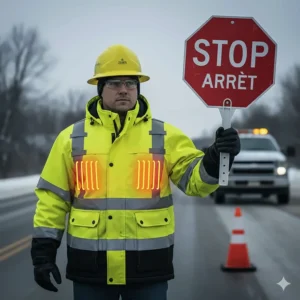
Advantages of Hi-Vis Heated Jackets: Compliance with CSA Z96 standards means you can wear one jacket across all regulated worksites. The fluorescent colours and reflective tape dramatically improve visibility during dawn, dusk, fog, or snow conditions. Some workers report feeling safer knowing they’re visible to equipment operators and vehicle traffic.
When Standard Jackets Work Better: Indoor construction, manufacturing environments, non-regulated outdoor work, and situations where camouflage or subdued colours are preferred (hunting, wildlife work, security) all favour standard jackets. They typically offer more colour choices and style options while maintaining identical heating performance.
Cost Comparison: Hi-vis heated jackets typically cost $20-$50 CAD more than equivalent non-hi-vis models due to specialized materials and certification processes. However, if you need CSA compliance, this premium is unavoidable and represents good value compared to purchasing separate safety vests.
Budget vs. Premium: What You Get for Your Money
The heated work jacket market offers options from $120 to $400+ CAD. Understanding what differentiates price points helps you make informed decisions.
Budget Tier ($120-$180 CAD): Brands like Venustas and TIDEWE dominate this range. You’ll get functional heating with fewer frills. Expect 3-5 heating zones, decent battery life (6-10 hours on low), and adequate construction for occasional use. These jackets work great if you need heated clothing occasionally—weekend winter activities, attending outdoor events, or supplementing your commute. Compromises typically include fewer heating zones, shorter battery life, and less durable materials.
Mid-Range ($180-$280 CAD): This category offers the best value for most Canadians. ORORO, ARRIS, and Fieldsheer provide quality construction, good battery life, and features that matter without unnecessary extras. You’ll find 4-5 heating zones, 8-12 hour battery life, better fabric quality, and thoughtful design details. These jackets will handle regular use throughout a Canadian winter season and typically last 2-3 years with proper care.
Professional-Grade ($280-$350 CAD): Milwaukee, DEWALT, and Pioneer occupy this space with jackets built for punishment. If you work outdoors professionally or spend significant time in extreme conditions, the investment pays for itself quickly through superior durability, advanced heating systems, extended warranties, and features like tool battery compatibility. Expect 2-5 year lifespan with daily use.
Premium Specialty ($350+ CAD): Specialized jackets for extreme conditions, extended certifications, or advanced features. These suit workers facing Arctic temperatures, requiring multiple safety certifications, or demanding specific performance characteristics. The ROI comes from extended durability and specialized capabilities unavailable in lower tiers.
Where to Buy Heated Work Jackets in Canada
Finding the right heated jacket at the best price requires knowing where to shop. Here’s your strategic approach to purchasing in Canada:
Amazon.ca: Offers the widest selection with competitive pricing, fast shipping through Amazon Prime, and straightforward return policies. Customer reviews help identify quality issues before you buy. Brands like Venustas, ORORO, ActionHeat, and some Milwaukee/DEWALT models are readily available. Watch for seasonal sales during Black Friday, Boxing Day, and winter promotions.
Home Depot Canada & Canadian Tire: Stock professional-grade heated jackets from Milwaukee, DEWALT, and Makita. The advantage here is trying before buying—you can assess fit, weight, and quality in person. Staff can provide sizing assistance and product comparisons. Both retailers offer frequent sales and price matching.
Specialized Tool Retailers (Grainger Canada, KMS Tools, etc.): Carry professional-grade options with expert staff who understand industrial requirements. Pricing may be higher, but product knowledge and after-sales support are superior. Ideal for bulk purchases or specialized requirements.
Safety Workwear Retailers (Mark’s Work Wearhouse, SPI Health and Safety, etc.): Focus on CSA-compliant and hi-vis options. Staff understand safety regulations and can verify compliance for your industry. Good source for industry-specific recommendations.
Manufacturer Websites (ORORO, ActionHeat, Fieldsheer): Sometimes offer direct sales with exclusive models or bundle deals not available through retailers. Sign up for email lists to catch promotional pricing. Shipping may be slower and returns less convenient than Amazon.
Canadian Outdoor Retailers (MEC, Sail, Bass Pro Shops Canada): Carry curated selections of heated clothing with knowledgeable staff who can provide sizing assistance and performance comparisons. Excellent for recreational heated gear and crossover work/outdoor models.
Layering Strategies for Maximum Warmth & Efficiency
Even the best heated work jacket performs better when paired with proper layering. Canadian winter veterans know that layering creates versatile temperature control while the heated jacket provides active warmth.
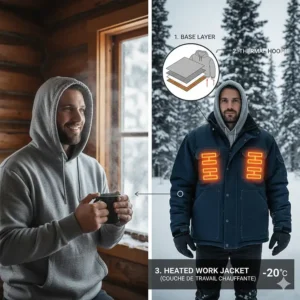
Base Layer (Next to Skin): Choose moisture-wicking synthetic or merino wool fabrics that pull sweat away from your body. Cotton retains moisture and dramatically reduces warmth—avoid it entirely for winter work. In temperatures below -20°C, consider thermal underwear tops with grid-fleece construction for added insulation without bulk.
Mid Layer (Insulation): For moderate cold (-5 to -15°C), your heated jacket can serve as the sole outer layer. In extreme cold (-20°C and colder), add a lightweight fleece or synthetic insulation jacket under your heated jacket. This traps the generated heat while providing backup insulation if battery runs low.
Outer Shell (Weather Protection): During precipitation or high winds, layer a waterproof/breathable shell over your heated jacket. This protects both you and the jacket from the elements while allowing the heating system to function optimally. Ensure the shell is roomy enough to accommodate the heated jacket without compression.
The Critical Adjustment: As you warm up from physical activity, resist the urge to remove your heated jacket. Instead, turn down the heat setting or unzip ventilation points. This prevents the sweat-chill cycle that causes dangerous heat loss when you stop moving.
Regional Adaptations:
- Prairie Winters: Focus on wind protection—a thin windproof shell over your heated jacket makes dramatic difference
- Coastal British Columbia: Prioritize waterproofing—wet cold penetrates better insulation
- Northern Canada: Maximum insulation plus heating—combine heavyweight base layers with your heated jacket
- Southern Ontario/Quebec: Versatility—choose setups that work from 0°C to -25°C with minimal changes
Heated Work Jackets vs. Traditional Winter Workwear
Traditional winter workwear relies entirely on insulation—trapping dead air between layers to slow heat loss from your body. This works reasonably well during active work when you’re generating significant body heat through movement. But it has critical limitations for Canadian workers.
Limitations of Traditional Insulation: When you stop moving, insulation can only slow down heat loss—it can’t generate new warmth. Workers who alternate between active and stationary periods (equipment operators, surveyors, security personnel) experience uncomfortable temperature swings. Heavy insulation also restricts movement, adds bulk that interferes with tools and equipment, and causes overheating during strenuous work.
How Heated Jackets Solve These Problems: Active heat generation maintains comfort during stationary periods. Adjustable heat settings let you dial warmth up or down as activity levels change. Lighter construction allows better mobility while still providing warmth. Targeted heating zones warm core areas most efficiently.
Best of Both Worlds: The most effective approach combines moderate insulation with heating capability. A heated jacket with light to moderate insulation provides warmth during power-off periods while the heating elements deliver extra warmth on demand. This setup offers flexibility unavailable with either solution alone.
Cost-Effectiveness Over Time: Quality heated jackets ($200-$300 CAD) represent significant upfront investment compared to traditional winter jackets ($80-$150 CAD). However, reduced layering needs, improved productivity from better comfort, potential health benefits from maintaining core temperature, and extended outdoor work capacity in extreme conditions often justify the premium for professional outdoor workers.
Health & Safety Benefits of Heated Workwear
Beyond comfort, heated jackets provide genuine health and safety advantages for Canadian workers exposed to cold stress. The Canada.ca thermal stress guidelines recognize heated protective clothing as an important control measure for preventing cold-related injuries.
Prevention of Cold Stress: When your body’s core temperature drops below 36°C, you’re experiencing cold stress—a condition that impairs judgment, reduces dexterity, and increases accident risk. Heated jackets help maintain normal core temperature even during extended exposure to Canadian winter conditions.
Reduced Risk of Frostbite: By keeping your core warm, heated jackets improve peripheral circulation to fingers, toes, and face. Better blood flow to extremities significantly reduces frostbite risk during extreme cold exposure.
Enhanced Work Performance: Research shows that cold-stressed workers experience reduced manual dexterity, slower reaction times, impaired decision-making, and decreased productivity. Maintaining comfortable body temperature through heated workwear helps workers perform at their best.
Compliance with Occupational Health Standards: According to the Canadian Centre for Occupational Health and Safety, employers have a general duty to provide a safe workplace. In situations where work must be performed in cold conditions, providing heated protective clothing demonstrates proactive safety management.
Common Problems & Troubleshooting Tips
Even quality heated jackets occasionally develop issues. Here’s how to diagnose and resolve the most common problems Canadian users encounter:
Problem: Jacket Won’t Heat
- Check battery charge level—low batteries won’t provide adequate power
- Ensure battery is properly connected to jacket—verify all connections are secure
- Test battery with another device or jacket—isolates whether issue is battery or jacket
- Inspect heating element connections—look for loose or disconnected wires
- Solution: Charge battery fully, reconnect carefully, or contact manufacturer if electrical failure suspected
Problem: Uneven Heating
- One zone hot while another stays cool suggests partial heating element failure
- Check for damage to heating element wiring—look for tears, punctures, or excessive creasing
- Verify all zones are supposed to heat at selected setting—some jackets disable zones at lower settings
- Solution: Contact manufacturer warranty service—heating element failure typically requires professional repair
Problem: Battery Drains Quickly
- Normal in extreme cold (below -20°C)—lithium-ion batteries lose capacity in cold
- Battery may be nearing end of life—typical lifespan is 300-500 charge cycles
- Check for jacket damage drawing extra power—shorts or damaged elements use more current
- Solution: Use higher-capacity battery, replace worn battery, or service jacket if damaged
Problem: Battery Won’t Charge
- Inspect charging cable and port for debris or damage
- Try different power outlet or USB power source
- Allow cold battery to warm to room temperature before charging
- Solution: Clean charging connections, replace charging cable, or warm battery before charging
Problem: Uncomfortable Pressure Points
- Battery pocket digging into side when sitting
- Adjust battery placement—try front vs. back pocket options
- Consider different battery size—smaller capacity batteries create less bulk
- Solution: Reposition battery, add thin foam padding, or upgrade to slimmer battery design
Heated Work Jacket Regulations & Workplace Policies
Before purchasing a heated work jacket, verify it complies with your employer’s policies and applicable regulations. Canadian workplaces increasingly embrace heated workwear, but some restrictions exist.
Fire Hazard Considerations: Environments with flammable gases, dusts, or materials may prohibit battery-powered devices. Oil refineries, grain elevators, and similar facilities often restrict heated clothing due to potential ignition sources. Always check workplace safety policies before using heated gear in potentially explosive atmospheres.
CSA & High-Visibility Requirements: Federally and provincially regulated workplaces often mandate CSA Z96-compliant high-visibility apparel. Standard heated jackets—even brightly coloured ones—won’t meet these requirements unless specifically certified. The Forcefield and Pioneer jackets reviewed above carry proper CSA certification.
Electrical Safety Standards: Quality heated jackets use low-voltage (5-12V) battery systems that pose minimal electrical hazard. Look for UL, CUL, CE, or equivalent safety certifications indicating the product has been tested for electrical safety. Reputable brands include these certifications in product specifications.
Workers’ Compensation Considerations: Some Canadian provinces allow workers’ compensation boards to reimburse specialized safety equipment including heated workwear. Check with your employer or provincial WCB to determine if your situation qualifies for equipment allowances.
Comparison: Top Brands Head-to-Head
| Feature | Milwaukee M12 | DEWALT 20V | Venustas | ORORO | Forcefield Hi-Vis |
|---|---|---|---|---|---|
| Heat Zones | 3 | 5 | 5 | 4 | 4 |
| Battery Type | M12 tool | 20V tool | 7.4V dedicated | 7.4V dedicated | 5V dedicated |
| Max Runtime | 12 hours | 5.5 hours | 10 hours | 10 hours | 4 hours |
| Durability | Excellent | Very Good | Good | Good | Very Good |
| Waterproof | Water-resistant | Water-resistant | Water-resistant | Weather-resistant | Water-repellent |
| CSA Compliant | No | No | No | No | Yes (Z96) |
| Price (CAD) | $279-$298 | $235-$299 | $140-$180 | $169-$199 | $199-$249 |
| Best For | Pro trades | Tool owners | Budget | Versatility | Safety sites |
| Warranty | 3 years | 3 years | 1 year | 1 year | 1 year |
Frequently Asked Questions
❓ How long do heated work jacket batteries last in Canadian winters?
❓ Are heated jackets safe for construction workers in Canada?
❓ What's the best heated work jacket for extreme Canadian cold (-30°C and below)?
❓ Do heated jackets work with gloves and other heated gear?
❓ How do I wash a heated work jacket without damaging it?
Conclusion
Canadian winters demand intelligent solutions, and heated work jackets deliver exactly that—customizable warmth on demand, anywhere your work takes you. Whether you’re a construction worker braving Edmonton’s bitter cold, an electrician climbing poles in Toronto’s ice storms, or a surveyor working through Winnipeg’s windswept winter, there’s a heated jacket engineered for your specific needs.
The seven jackets reviewed here represent the best options available on Amazon.ca and specialized Canadian retailers in 2026. From the budget-friendly Venustas at $140-$180 CAD that delivers impressive value for occasional users, to the premium Pioneer Hi-Vis NANO StormMaster at $299-$349 CAD built for extreme conditions and safety compliance, you’ll find options across every price point and performance level.
For professional trades workers, the Milwaukee M12 TOUGHSHELL ($279-$298 CAD) and DEWALT 20V MAX ($235-$299 CAD) offer tool battery compatibility that makes tremendous sense if you’re already invested in either ecosystem. The durability and extended runtime justify the premium pricing for daily users.
Canadian workers requiring CSA Z96 compliance should focus on the Forcefield Hi-Vis Winter Softshell ($199-$249 CAD) or Pioneer Hi-Vis Heated Safety Jacket ($299-$349 CAD). Both meet Canadian safety standards while delivering reliable heating performance.
Remember that even the best heated jacket performs better with proper layering, regular maintenance, and realistic expectations. These aren’t miracle devices that make you impervious to -40°C weather—they’re sophisticated tools that extend your comfortable working range and help prevent dangerous cold stress.
As Canada’s winters grow more unpredictable with climate change, heated workwear has evolved from luxury to necessity for outdoor workers. The technology has matured, prices have become reasonable, and reliability has improved dramatically. Whether you’re upgrading from traditional winter gear or replacing an aging heated jacket, 2026 offers the best selection and value Canadian workers have ever seen.
Stay warm, stay safe, and stay productive this winter with the right heated work jacket for your needs.
Recommended for You
- 7 Best Heated Jacket for Extreme Cold in Canada 2026
- 7 Best Heated Jacket for Men Canada 2026
- 7 Best Heated Jacket for Women Canada 2026
Disclaimer: This article contains affiliate links to Amazon.ca. If you purchase products through these links, we may earn a small commission at no additional cost to you.
✨ Found this helpful? Share it with your friends! 💬🤗
