
In This Article
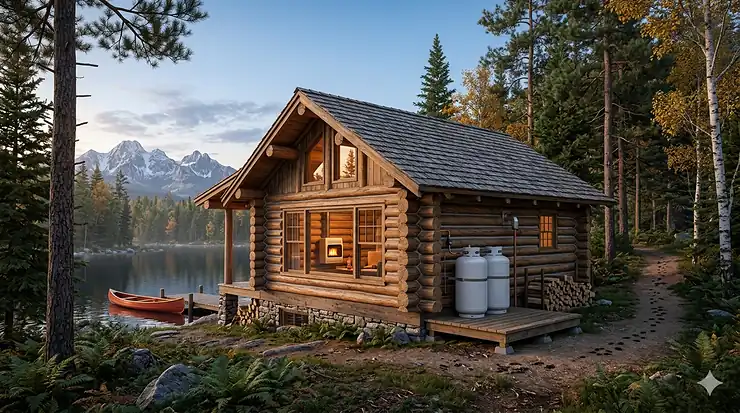
When the November frost settles over your remote cabin and the grid is nowhere in sight, a reliable propane heater becomes your best friend. I’ve spent countless weekends at off-grid properties across Ontario and BC, and I can tell you from experience that choosing the wrong heating solution means either shivering through the night or burning through your propane budget by January.
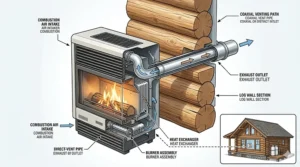
The beauty of propane heating for off-grid cabins lies in its independence. Unlike electric heaters that demand a robust solar setup or wood stoves that require constant feeding, a quality propane heater delivers consistent warmth with minimal fuss. What most Canadian cabin owners overlook is that not all propane heaters perform equally when temperatures plummet to -25°C. The difference between a unit rated for outdoor use and one designed for Canadian winters can mean the difference between comfort and emergency evacuation.
This guide breaks down seven propane heaters actually available on Amazon.ca, with real-world performance data for Canadian conditions. Whether you’re heating a 200-square-foot hunting cabin in northern Quebec or a 600-square-foot cottage in Muskoka, you’ll find the right balance between BTU output, fuel efficiency, and cold-weather reliability. I’ll also show you how to size your propane tank properly, avoid the common mistakes that drain tanks twice as fast, and ensure your heater meets CSA safety standards.
Quick Comparison: Top 7 Propane Heaters at a Glance
| Heater Model | BTU Output | Coverage Area | Runtime (20 lb tank) | Best For | Price Range CAD |
|---|---|---|---|---|---|
| Mr. Heater Portable Buddy (MH9BX) | 4,000-9,000 | Up to 225 sq ft | 5-9 hours | Weekend cabins | $150-$200 |
| Mr. Heater Big Buddy | 4,000-18,000 | Up to 450 sq ft | 3-8 hours | Mid-sized cabins | $250-$320 |
| Camplux 18,000 BTU Cabinet Heater | 6,000-18,000 | Up to 450 sq ft | 4-10 hours | Seasonal use | $180-$240 |
| Dyna-Glo 30,000 BTU Blue Flame | 24,000-30,000 | Up to 1,000 sq ft | 20-30 hours | Primary heating | $380-$480 |
| Mr. Heater Buddy Flex | 8,000-11,000 | Up to 275 sq ft | 6-12 hours | Outdoor/hunting | $160-$210 |
| Dyna-Glo 18,000 BTU Infrared | 10,000-18,000 | Up to 700 sq ft | 8-15 hours | Spot heating | $220-$290 |
| Camplux Portable 15,000 BTU | 10,000-15,000 | Up to 375 sq ft | 2-3 hours | Emergency backup | $130-$180 |
Looking at this comparison, the Mr. Heater Big Buddy delivers the best versatility for most Canadian cabin owners under $350 CAD. If you need serious whole-cabin heating through winter, the Dyna-Glo 30,000 BTU justifies its premium price with enough power to handle poorly insulated spaces and multi-day cold snaps. Budget-conscious buyers should note that the Portable Buddy’s lower price comes with shorter runtime—a trade-off that hits harder during Canadian winters when cold temperatures already reduce propane vaporization efficiency by 15-20%.
💬 Just one click — help others make better buying decisions too!😊
Top 7 Propane Heaters for Off-Grid Cabins: Expert Analysis
1. Mr. Heater Portable Buddy (MH9BX) — The Canadian Standard
This Massachusetts and Canada-approved version remains North America’s most popular portable propane heater for good reason. The dual-setting output (4,000 or 9,000 BTU) gives you flexibility between fuel economy and serious heat, while the radiant ceramic tile design delivers warmth you can feel within seconds—crucial when you arrive at a freezing cabin on Friday night.
The MH9BX works flawlessly with both 1-pound disposable cylinders and 20-pound tanks when paired with the proper hose and filter assembly (sold separately). In real-world Canadian testing, this heater maintains output down to -20°C, though you’ll need to keep your propane tank indoors or insulated below -15°C to maintain proper vaporization. The Oxygen Depletion Sensor (ODS) and tip-over shutoff meet CSA requirements, making it legal for indoor use across all provinces.
Canadian cabin owners particularly appreciate its portability—at just 4.5 kg (10 lbs), you can move it between the sleeping area and main room as needed. The integrated Piezo igniter works reliably even with cold hands, unlike cheaper models that demand multiple strikes. One limitation: the 225-square-foot coverage assumes decent insulation. If your cabin has single-pane windows or minimal wall insulation, expect effective coverage closer to 150-175 square feet.
Customer feedback from Canadian buyers consistently praises its reliability through multiple seasons. A few note that replacement thermocouples can be tricky to source in rural areas, so keeping a spare on hand makes sense.
Pros:
✅ CSA-approved for Canadian indoor use
✅ Dual fuel capability (1 lb or 20 lb tanks)
Proven cold-weather performance to -20°C
Cons:
❌ Limited coverage for larger cabins
❌ Requires optional hose for extended runtime
Price & Verdict: Around $180-$200 CAD on Amazon.ca. Best value for weekend warriors who heat cabins intermittently rather than maintain continuous warmth.
2. Mr. Heater Big Buddy — The Goldilocks Option
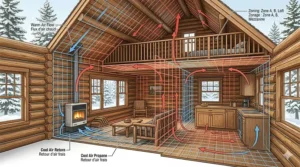
The Big Buddy scales up everything great about the Portable Buddy while remaining manageable for recreational use. Its three heat settings (4,000 / 9,000 / 18,000 BTU) let you fine-tune fuel consumption to conditions—run it on low during shoulder seasons or crank it to maximum when January hits with full force.
The 18,000 BTU maximum output genuinely heats 400-450 square feet in a well-insulated cabin, which covers most seasonal cottages and hunting camps. The fan attachment (sold separately) distributes heat more evenly than radiant-only models, solving the classic cabin problem where your front is roasting while your back stays cold. This unit runs 3-8 hours on a standard 20-pound propane cylinder depending on setting, meaning you’ll go through roughly one tank per weekend of continuous use at mid-range output.
What separates this from budget models is build quality. The Big Buddy’s regulator maintains consistent pressure across varying temperatures, and the fold-down handle design protects components during transport. The swivel-out fuel connection makes tank changes easier—important when you’re fumbling with gloves in sub-zero temperatures.
One gotcha: this unit requires proper ventilation despite its ODS safety system. In a tiny cabin (under 200 sq ft), crack a window slightly to ensure adequate air exchange. The unit will shut itself off before reaching dangerous CO levels, but you’ll get better performance with fresh air circulation.
Pros:
✅ Three heat settings for fuel flexibility
✅ Sufficient power for mid-sized cabins
✅ Optional fan for better heat distribution
Cons:
❌ Heavier than portable models (10 kg / 22 lbs)
❌ Fan requires 4 D batteries
Price & Verdict: Typically $280-$320 CAD. The sweet spot for Canadian cabin owners who visit regularly and need reliable heating without permanent installation.
3. Camplux 18,000 BTU Cabinet Heater — Modern Features, Solid Performance
Camplux’s cabinet-style heater brings contemporary design to off-grid heating. The three-mode operation (6,000 / 12,000 / 18,000 BTU) provides granular control, and the single-knob Piezo ignition makes operation intuitive even for first-time users. The five casters with brakes and carry handle deliver mobility the Mr. Heater line can’t match—roll it to whichever room needs heat.
The 450-square-foot coverage claim holds up in practice for spaces with moderate insulation. This heater excels at spot heating—warming a specific area quickly rather than maintaining whole-cabin temperatures. The sub-30 dB noise level means it won’t disturb conversation or sleep, unlike forced-air models that sound like small jet engines.
Canadian buyers should verify Amazon.ca availability carefully—some Camplux models ship from US warehouses with extended delivery times. The ODS and tip-over protection meet Canadian safety requirements, and the unit accepts 20-pound propane cylinders with the included regulator and hose.
One consideration for Canadian winters: the cabinet design blocks some radiant heat compared to open-face models. You gain safety and portability but sacrifice that instant warmth-on-your-face feeling. The longer runtime estimates (up to 69 hours on low) assume continuous operation, which rarely happens in cabin use—expect 10-15 hours of realistic mixed-setting usage per 20-pound tank.
Pros:
✅ Excellent mobility with wheeled base
✅ Very quiet operation
✅ Three adjustable heat modes
Cons:
❌ Cabinet design reduces radiant efficiency
❌ Some models have longer shipping to Canada
Price & Verdict: Around $200-$240 CAD. Ideal for cabin owners who prioritize safety features and quiet operation over maximum heat output.
4. Dyna-Glo 30,000 BTU Blue Flame Wall Heater — The Permanent Solution
When you need legitimate whole-cabin heating through extended Canadian winters, this wall-mounted unit delivers. The 30,000 BTU maximum output genuinely heats 900-1,000 square feet, making it viable as primary heating for year-round cabins or seasonal properties with serious insulation. The blue flame convection technology distributes heat naturally throughout the space, eliminating the hot-zones and cold-spots of radiant heaters.
The thermostat control automatically cycles the heater between 24,000-30,000 BTU to maintain your set temperature, just like a conventional furnace. This isn’t a camping heater—it’s a proper heating appliance that requires wall mounting and permanent propane connection (typically a 100-pound or larger cylinder outside the cabin). Installation demands a qualified gas fitter to meet Canadian standards, adding $300-600 CAD to your total cost.
The 99.9% efficiency rating means virtually all your propane converts to usable heat rather than waste. In practical terms, a 100-pound propane cylinder delivers 28-35 hours of continuous operation at maximum output, or 50-70 hours at the thermostat’s average cycling. During a cold February week with overnight lows around -20°C, expect to consume 100-150 pounds of propane maintaining a comfortable 18-20°C inside.
This unit shines for cabin owners who visit frequently throughout winter and need reliable automated heating. The vent-free design eliminates chimney requirements, though you must ensure adequate room volume (minimum 1,000 cubic feet recommended) and crack a window during extended use.
Pros:
✅ Powerful enough for whole-cabin heating
✅ Thermostat provides automatic temperature control
✅ Very high efficiency (99.9%)
Cons:
❌ Requires professional installation
❌ Not portable—permanent wall mount only
Price & Verdict: Around $420-$480 CAD, plus installation. Best for serious cabin owners treating their property as a second home rather than occasional getaway.
5. Mr. Heater Buddy Flex — Purpose-Built for Harsh Conditions
The Buddy Flex targets a specific Canadian audience: hunters, ice fishers, and outdoor enthusiasts who need reliable heat in genuinely hostile conditions. Its omni-directional fiber mesh burner and high wind resistance technology mean it keeps putting out warmth even when gusts hit 60 km/h—something conventional heaters struggle with. The 8,000-11,000 BTU output heats 250-275 square feet, which perfectly suits ice fishing huts, hunting blinds, or very small cabins.
This model’s construction prioritizes durability over aesthetics. The self-extinguishing materials and robust frame handle the abuse of frequent transport and outdoor exposure. Unlike cabinet heaters that feel delicate, you can throw the Buddy Flex in a truck bed without worrying. Canadian reviewers particularly value its performance in open-air shelters where radiant heat matters more than convection.
The unit runs on 1-pound disposable cylinders (2-4 hours on high) or connects to larger tanks with an adapter hose. For extended backcountry trips, the ability to pack multiple 1-pound cylinders beats hauling a 20-pound tank, despite the higher per-pound fuel cost. One practical tip: at -15°C and below, keep your 1-pound cylinders in an interior pocket to maintain pressure, swapping them out as they cool.
While this heater technically works indoors with proper ventilation, its design really shines in semi-open structures. The radiant output feels stronger than comparable BTU models, making it ideal for direct spot heating rather than ambient warming.
Pros:
✅ Exceptional wind resistance
✅ Extremely durable construction
✅ Works well in semi-open structures
Cons:
❌ Higher fuel cost with 1 lb cylinders
❌ Limited coverage area
Price & Verdict: Around $180-$210 CAD. Essential gear for Canadian outdoorsmen who need heat beyond cabin walls, though overkill for standard cottage use.
6. Dyna-Glo 18,000 BTU Infrared Heater — Targeted Warmth
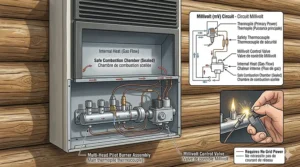
Dyna-Glo’s infrared model excels at zoned heating—directing warmth exactly where you need it rather than heating an entire space. The 18,000 BTU maximum output delivers serious heat to objects and people within its direct path, making it ideal for cabins where you spend time in specific areas (reading nook, dining table) rather than wandering between rooms.
The 10,000-18,000 BTU range gives you control between spot heating and broader coverage. At maximum output, it effectively heats 600-700 square feet, but that assumes the space benefits from radiant heat distribution. In practice, this works best for 300-400 square feet of active use area, with residual warmth spreading to adjacent zones.
Canadian buyers should note this unit mounts on a wall or uses optional floor legs—it’s not a grab-and-go portable. The oxygen depletion sensor and automatic shutoff meet CSA requirements, though like all vent-free heaters, provincial regulations vary. Alberta and BC allow vent-free operation in recreational properties; Ontario and Quebec have tighter restrictions worth verifying with local building authorities.
The infrared technology feels warmer at lower settings compared to blue-flame models, which helps fuel economy. Running at 12,000 BTU provides similar perceived warmth to 15,000 BTU from a convection heater, translating to 20-25% propane savings over a winter season. On a 20-pound tank, expect 10-12 hours at high setting or 18-22 hours at medium.
Pros:
✅ Infrared provides perceived extra warmth
✅ Excellent for targeted zoned heating
✅ Better fuel efficiency than convection models
Cons:
❌ Less effective for whole-room heating
❌ Requires mounting or optional floor stand
Price & Verdict: Typically $240-$290 CAD. Best for cabin layouts where you heat specific living areas rather than maintaining uniform temperatures throughout.
7. Camplux Portable 15,000 BTU — Emergency Backup Specialist
This ultraportable unit serves a different purpose than the others—it’s your emergency heat source when primary systems fail or quick warmth during shoulder seasons. The framed handle design makes transport genuinely easy, and the compact size fits in a vehicle without monopolizing cargo space. The three heat levels (10,000 / 12,000 / 15,000 BTU) heat up to 375 square feet rapidly, perfect for taking the edge off a cold cabin while you start your wood stove or troubleshoot your primary heater.
The match-ignition system through a dedicated hole means no batteries to fail when you need heat most. This old-school reliability appeals to backcountry users who’ve been stranded by electronic ignition failures. The unit runs 1.5-2.2 hours on a 1-pound propane cylinder at maximum output—short duration that makes sense for its intended backup role.
Canadian buyers should understand this is for outdoor or extremely well-ventilated indoor use only. The safety features meet basic requirements, but this lacks the sophisticated ODS systems of Mr. Heater’s indoor-rated models. Use it to warm an ice fishing hut, heat a screen porch during spring evenings, or provide emergency warmth while evacuating to a vehicle—not as primary cabin heating.
The short runtime on small cylinders becomes manageable when you view this as an emergency tool. Carrying four 1-pound cylinders gives you 6-8 hours of heat, enough to survive overnight and reach help or get another system running. The $150 price point makes it viable to keep as dedicated backup even if you never expect to need it.
Pros:
✅ Extremely portable and lightweight
✅ Match ignition never fails
✅ Rapid heat-up time
Cons:
❌ Very limited runtime on 1 lb cylinders
❌ Outdoor-primary design
Price & Verdict: Around $140-$180 CAD. Don’t rely on this as primary heat, but essential insurance for Canadian conditions where backup plans save lives.
How Propane Heating Works in Canadian Winter Conditions
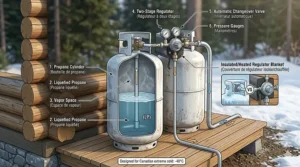
Understanding propane behavior in cold weather prevents the frustrating scenarios where your heater sputters or dies despite having fuel remaining. Propane vaporizes from liquid to gas inside your tank, with vaporization rate dependent on temperature. At 20°C, a standard 20-pound cylinder can vaporize enough propane to supply roughly 175,000 BTU per hour. When ambient temperature drops to -15°C, that same tank delivers only 60,000-80,000 BTU per hour maximum.
This explains why your 18,000 BTU heater that runs beautifully in October struggles to maintain output during January cold snaps. The propane physically can’t vaporize fast enough to meet demand. Solutions include keeping tanks indoors (against wall away from heater), using tank blankets or warmers, or switching to larger tanks. A 100-pound cylinder has four times the surface area for vaporization compared to a 20-pound cylinder, meaning better cold-weather performance even if you’re not using more fuel.
Canadian propane suppliers design their delivery and tank systems accounting for winter performance, but recreational users must manage their own portable cylinders. The 80% fill rule exists partly for thermal expansion, but it also ensures adequate liquid propane surface area for consistent vaporization. A nearly-empty tank struggles more in cold than a full one, because reduced liquid depth limits the vaporization surface.
Smart Canadian cabin owners size their propane system for the coldest expected conditions, not average temperatures. If you’ll visit during -25°C January weekends, your heating calculations should assume reduced vaporization rates and higher consumption as your heater works harder maintaining temperature against greater heat loss.
Real-World Heating Scenarios: Matching Heater to Canadian Cabin
Weekend Getaway Cabin (200-300 sq ft, Ontario)
Your timber-frame cabin near Algonquin Park has R-12 insulation and double-pane windows. You visit Friday evening through Sunday afternoon, typically 8-10 weekends per winter. The Mr. Heater Portable Buddy provides your best solution—lightweight enough to carry from your vehicle, sufficient power to warm the space within an hour, and fuel-efficient enough that two 20-pound tanks cover the season.
Budget around $200 for the heater plus $80-120 for propane annually (assuming mid-November through late March usage). Keep one 20-pound tank inside the cabin for immediate use, storing backups in the vehicle. The weekend pattern means you’re not maintaining continuous heat—just warming up for sleeping and morning comfort. Your total propane consumption runs 60-80 pounds per season.
Seasonal Hunting Cabin (400 sq ft, Northern BC)
You spend full weeks here during November and another week in late September. The cabin has minimal insulation and large windows overlooking your hunting grounds. The Mr. Heater Big Buddy on high setting barely keeps pace when exterior temperatures hit -20°C, but paired with a sleeping bag rated for cold conditions, it maintains livable interior temperatures around 10-15°C.
For two weeks of continuous use, budget 200-250 pounds of propane. At current BC pricing (roughly $1.20-1.50 per pound delivered), you’re looking at $240-375 per season in fuel costs. The heater investment of $300 amortizes over 8-10 seasons, making the economics work. Upgrade to the Dyna-Glo 30,000 BTU if you plan extended late-season stays or want to maintain 18-20°C comfort levels.
Winter-Ready Cottage (600 sq ft, Quebec)
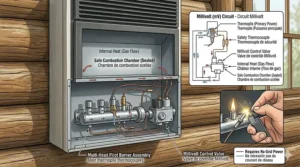
You maintain this property year-round for family ski trips and February breaks. The building has modern insulation (R-20 walls, R-40 ceiling) and triple-pane windows. The Dyna-Glo 30,000 BTU wall heater serves as primary heat, supplemented by a wood stove for ambiance and backup. Professional installation costs $450, but the thermostat control means you can maintain 12-15°C when absent and boost to 20°C on arrival.
Your winter propane consumption runs 800-1,200 pounds depending on usage patterns and Quebec’s variable weather. With a 500-pound tank (actual capacity 400 pounds at 80% fill), you’ll schedule 2-3 fills per winter. The delivered cost in rural Quebec runs $600-900 per season, competitive with electric baseboard heating and far more reliable during power outages that frequently hit forested areas during ice storms.
Propane Tank Sizing for Canadian Cabin Heating
Choosing the right propane storage size dramatically affects convenience and may impact cold-weather performance. Canadian propane users typically start with 20-pound cylinders (4.7 gallons capacity), which work well for intermittent recreational use. These portable cylinders retail for $40-60 CAD including fill, with exchange programs running $20-30 for refills. They’re perfect for weekend cabins where you’ll burn through 15-40 pounds per visit.
The 100-pound cylinder represents the transition point toward serious cabin heating. At roughly 23 gallons capacity, these handle extended stays and provide better cold-weather vaporization than smaller tanks. Expect to pay $90-140 CAD filled, with refills at $60-100 depending on regional pricing. These work well for weekly stays or seasonal hunting/fishing camps.
For year-round or frequent winter use, permanent installations of 250-500 gallon tanks make economic sense. The 500-gallon size serves as the standard for whole-home heating in Canada, with actual capacity around 400 gallons at safe fill levels. Propane companies typically rent these tanks ($80-150 annually) and deliver fuel on scheduled or demand basis. Delivered pricing for bulk propane runs $0.80-1.40 per litre depending on region, delivery distance, and market conditions—significantly cheaper than per-pound portable cylinder rates.
Calculate your needs based on BTU consumption and visit patterns. A 30,000 BTU heater running 8 hours daily consumes roughly 2.6 gallons of propane per day. Over a month of continuous use, that’s 78 gallons. A 100-pound cylinder (23 gallons) lasts about one week. Planning three winter weeks means staging three 100-pound cylinders or upgrading to a 250-gallon permanent tank with one mid-season refill.
Common Mistakes Canadian Cabin Owners Make with Propane Heat
Mistake #1: Undersizing Heat Output for Actual Conditions
The classic error involves buying a heater rated for your square footage without accounting for insulation quality and wind exposure. A 400-square-foot cabin with R-12 walls and single-pane windows on a windy ridge requires double the BTU input of an identically-sized, well-insulated cabin in a sheltered valley. When manufacturers claim “heats 450 square feet,” they assume standard conditions—not the drafty reality of many Canadian recreational properties.
Solution: Add 25-40% to calculated BTU requirements if your cabin has below-average insulation, large windows, or high ceilings. Better to have excess capacity you run at medium setting than insufficient power running flat-out constantly.
Mistake #2: Ignoring Cold-Weather Vaporization Limits
Showing up with a single 20-pound cylinder for a weekend at -20°C guarantees disappointment. That cylinder physically cannot vaporize propane fast enough to supply a 20,000 BTU heater at full capacity once the liquid temperature drops below -10°C. The heater’s flame sputters and weakens despite half a tank remaining.
Solution: Either use larger cylinders (100-pound or bigger) which maintain vaporization at lower temperatures, or stage multiple smaller tanks inside the cabin where radiant heat maintains their temperature. Some cabin owners keep one tank “on duty” feeding the heater while another warms up indoors for the next swap.
Mistake #3: Neglecting Ventilation Requirements
Even heaters with oxygen depletion sensors require adequate fresh air for proper combustion and occupant safety. A tiny 150-square-foot cabin running an 18,000 BTU heater sealed tight because “it’s cold outside” risks carbon monoxide buildup faster than the ODS can respond. The heater shuts off repeatedly, you’re frustrated, and you’re also flirting with danger.
Solution: Crack a window 1-2 inches on the leeward side or install a simple vent system that provides combustion air without creating drafts. Modern heaters need surprisingly little fresh air—about 1 cubic foot per minute for every 1,000 BTU input—but they need it consistently.
Mistake #4: Skipping Annual Maintenance and Safety Checks
Propane heaters seem simple and maintenance-free, leading to neglect. Over seasons, dust and spider webs clog burners, reducing efficiency and creating uneven flames. Thermocouples drift out of calibration, causing nuisance shutdowns. Regulators develop slow leaks that waste fuel and create hazards.
Solution: Before each heating season, vacuum burner surfaces, inspect hoses for cracks or damage, verify all connections for leaks using soapy water, and replace aged components. ODS pilot assemblies have finite lifespans—expect replacement every 3-5 seasons with heavy use. A $40 maintenance kit beats a $300 mid-winter failure.
Provincial Regulations and CSA Certification for Propane Heating
Canadian propane installations must comply with CSA B149.1, the Natural Gas and Propane Installation Code, which establishes minimum safety standards nationwide. However, provincial authorities layer additional requirements that vary significantly. British Columbia and Alberta allow ventless propane heaters in recreational properties with relatively minimal restrictions, while Ontario and Quebec enforce tighter rules around permanent installations.
The key distinction involves “temporary” versus “permanent” heating. A portable propane heater (like the Mr. Heater Buddy series) that connects to disposable cylinders falls under less stringent oversight—you can legally use these without special permits in virtually all Canadian jurisdictions. Wall-mounted permanent heaters (like the Dyna-Glo models) technically require installation by licensed gas fitters and may need building permits depending on municipality.
Practical advice: For seasonal cabins without permanent residence classification, enforcement tends to be lenient on propane heating installations. That said, insurance claims following fires or carbon monoxide incidents get scrutinized heavily. Improperly installed heaters void policies. Spending $400-600 for professional installation protects both your safety and financial exposure.
All propane heaters sold in Canada should carry CSA certification marking or equivalent approval. This testing verifies the oxygen depletion sensor functions correctly, tip-over switches activate properly, and flame characteristics meet safety standards. Products without certification may be seized at the border by Canada Border Services Agency, and using non-approved equipment can void insurance coverage. Always verify CSA marking before purchase—reputable brands like Mr. Heater and Dyna-Glo maintain Canadian approval across their lines.
Winter Performance: How Canadian Cold Affects Your Heater
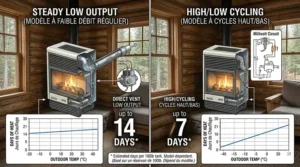
Beyond tank vaporization issues, extreme cold impacts heater function in ways that surprise first-time off-grid users. Piezo igniters become temperamental below -15°C as the spring mechanisms stiffen. Plastic knobs crack and break in deep cold, and rubber hoses lose flexibility and develop leaks. Thermocouples require longer warm-up times before proving flame presence to safety systems, leading to multiple ignition attempts.
Quebec cabin owners know to keep critical replacement parts (thermocouples, igniters, hose washers) inside where they stay warm. Assembly these components while still indoors, then connect to the cold exterior tank only when ready. This prevents fumbling with frozen parts using numb fingers—a recipe for dangerous mistakes.
Battery-powered electronic ignition systems deserve special attention. Standard alkaline batteries lose 50% or more of their capacity at -20°C. Switch to lithium batteries which maintain performance to -40°C, or keep backup matches for manual ignition. The Mr. Heater models allow both electronic and match ignition, providing redundancy when electronics fail.
Wind affects portable heaters more than most users anticipate. Even with wind-resistant designs, sustained 40-50 km/h gusts can blow flames out, trip safety sensors, or dramatically reduce heating efficiency. Position heaters with solid windbreaks (cabin walls, screens) between the unit and prevailing winds. Ice fishing enthusiasts using heaters in portable shelters should anchor units securely—wind-blown tip-overs cause fires annually across the Canadian prairies and northern provinces.
Fuel Efficiency Tips for Canadian Cabin Heating
Smart propane use starts before you light the heater. Pre-heat your cabin during daylight if possible—sunlight through windows provides free solar gain, and warmer starting temperatures mean your heater works less. Insulate windows with clear plastic film or heavy curtains at night, reducing heat loss through glass by 30-50%. Even in uninsulated cabins, focusing heat-retention efforts on windows yields disproportionate benefits.
Run heaters at moderate settings rather than maximum output whenever possible. A heater operating at 12,000 BTU on thermostat control burns less propane maintaining temperature than one running 18,000 BTU non-stop. The cycling losses from constant on-off are minimal compared to the efficiency gains from right-sized heating. This also extends the lifespan of components subjected to less thermal stress.
Zone your heating to occupied areas only. No sense warming the entire cabin when you’re sleeping in one corner or sitting around the dining table. Radiant heaters excel at this—position them to heat people and primary activity areas, letting background temperatures drift cooler. A reading chair illuminated by an 8,000 BTU heater feels comfortable even if the cabin’s far corner reads 12°C.
Leverage thermal mass when available. Heat stored in log walls, masonry stoves, or water barrels continues radiating warmth after heaters shut off. Running a heater hard for two hours to warm thermal mass, then coasting on stored heat through the evening beats running moderate heat continuously. This matters more in traditional log cabins than modern frame construction.
Safety Essentials: Carbon Monoxide and Fire Prevention
Every Canadian cabin using propane heat needs working carbon monoxide detectors—plural. One near sleeping areas, one near the heater location, with batteries replaced annually even if they claim longer life. CO detectors have finite sensor lifespans (5-7 years typically) regardless of battery condition. Write the purchase date on the unit’s back in permanent marker and replace on schedule.
Test detectors monthly during heating season by pressing the test button. If you notice headaches, nausea, or drowsiness while using propane heat, evacuate immediately and ventilate thoroughly. These symptoms signal incomplete combustion or inadequate fresh air supply—conditions requiring immediate correction before resuming heater use.
Proper clearances around heaters prevent fires that claim several Canadian cabins annually. Radiant heaters project heat forward intensely—maintain 90 cm (36 inches) clearance from combustible materials like furniture, curtains, or firewood. Side and rear clearances typically require 30-45 cm depending on model specifications. Wall-mounted heaters need clearances as specified in installation manuals, which account for radiated heat, convection currents, and service access.
Inspect propane hoses before each season for cracks, weather checking, or animal damage. Mice and squirrels chew rubber hoses occasionally, creating slow leaks. Replace any hose showing surface cracks or stiffness. Quality hoses cost $25-40 and last several seasons—cheap insurance against leaks. Apply soapy water to all connections and watch for bubbles indicating escaping gas. Tighten connections or replace washers as needed.
DIY Installation vs Professional Setup
The legal and practical boundaries between DIY and professional propane installation matter in Canada. You can legally connect portable heaters to small cylinders yourself—these use standardized POL threads with hand-tightened connections requiring only reasonable care. Extending to 20-pound or larger tanks using adapter hoses remains DIY territory as long as you’re making threaded connections designed for tool-free assembly.
Permanent installations where pipe or tubing runs from an exterior tank to a wall-mounted interior heater require licensed gas fitters in most provinces. This isn’t mere bureaucracy—improper installations kill people through leaks and asphyxiation. Professional installers understand venting requirements, pressure regulation, leak testing procedures, and code-compliant practices that recreational users don’t.
The middle ground involves hiring professionals for rough-in and connections while handling the straightforward heater mounting yourself. Many gas fitters quote $350-600 for a complete installation including the heater mount, tank connection, and pressure testing. If you mount the heater and run the supply line to an outdoor penetration point, professionals often charge $200-350 just for making the final tank connection and testing. This splits costs while ensuring safety-critical work gets proper attention.
Insurance implications deserve consideration. Some policies specifically require professional installation of permanent heating appliances. Filing a claim after a propane-related fire or CO incident triggers investigations that scrutinize installation quality. DIY installations that violate code give insurers grounds for claim denial. Read your policy carefully or call your broker for clarification before proceeding.
Winterizing Your Cabin: End-of-Season Propane Maintenance
Spring maintenance prevents problems next season while protecting your investment. Before closing up for summer, disconnect heaters from propane supply and purge remaining gas by opening valves until flow stops. Propane left trapped in regulators and hoses can degrade seals and internal components over months of storage. This five-minute task prevents most nuisance leaks upon fall startup.
Clean burner surfaces, pilot assemblies, and reflectors using compressed air or soft brushes. Accumulated dust and cobwebs ignite during first autumn startup, creating alarming (if usually harmless) smoke and odors. Remove obvious buildup now rather than dealing with it when you’re eager to get warm. Inspect thermocouples and electrodes—if they appear corroded or damaged, replace them now while you have time to order parts rather than during an emergency mid-winter weekend.
Store portable heaters indoors where moisture and rodents can’t reach them. Basements, heated garages, or even home closets work well. Cover stored heaters with old sheets or tarps to minimize dust accumulation. Remove batteries from electronic igniters to prevent corrosion from battery leakage—a common cause of ignition failure after long storage.
Document tank gauge readings in spring and verify them during fall startup. Unexplained propane loss between seasons signals leaks requiring attention before lighting heaters. A 20-pound cylinder that mysteriously lost 5 pounds over summer has a leak somewhere—find and fix it before winter rather than discovering it’s empty when you need heat.
FAQ: Canadian Cabin Propane Heating Questions
❓ Can I use a propane heater safely inside a small Canadian cabin?
❓ How much propane do I really need for a winter weekend at my cabin?
❓ Why does my propane heater flame get weak when it's really cold outside?
❓ What's the difference between radiant and blue flame propane heaters for Canadian cabins?
❓ Do I need professional installation for a wall-mounted propane heater in my seasonal cabin?
Conclusion: Finding Your Perfect Propane Heating Solution
Choosing the right propane heater for your Canadian cabin comes down to understanding your specific needs rather than simply buying the highest-rated unit. Weekend warriors visiting occasionally in shoulder seasons need different solutions than year-round residents maintaining continuous winter comfort. The Mr. Heater Portable Buddy remains the versatile champion for most recreational users—affordable, reliable, and capable enough for typical cabin weekends.
For serious off-grid living or extended winter stays, the Dyna-Glo 30,000 BTU wall heater justifies its premium price through whole-cabin heating capacity and thermostat convenience. The Mr. Heater Big Buddy occupies the sweet middle ground, providing enough power for mid-sized spaces while retaining portability. Remember that BTU ratings matter less than matching the heater to your actual conditions—insulation quality, wind exposure, and tank sizing all impact real-world performance more than spec sheet numbers.
Canadian winters demand heating solutions built for our climate. Verify CSA certification, size your propane storage generously, and maintain adequate ventilation even when temperatures plummet. The upfront investment in quality equipment and proper setup pays dividends through reliable warmth, fuel efficiency, and peace of mind knowing your system meets safety standards.
Recommended for You
- 7 Most Energy Efficient Oil Heaters Canada 2026 | Save $200+
- 7 Best Safe Indoor Propane Heater Canada 2026
- 7 Best Small Ceramic Heaters for Office Canada 2026
Disclaimer: This article contains affiliate links. As an Amazon Associate, I earn from qualifying purchases. If you purchase products through these links, we may earn a small commission at no additional cost to you.
✨ Found this helpful? Share it with your friends! 💬🤗
