
In This Article
When November frost settles across Canadian patios from Vancouver to Halifax, most people retreat indoors and resign themselves to six months of cabin fever. But here’s what the winter-savvy homeowners across this country already know: the right patio heater for Canadian winter transforms those frigid outdoor spaces into cozy extensions of your living room, even when temperatures plummet to -20°C.
I’ve tested outdoor heating solutions in conditions that would make most equipment manufacturers nervous—from damp coastal evenings in BC to the bone-dry Arctic blasts that sweep through the Prairies. What separates a great patio heater from an expensive lawn ornament isn’t just the BTU rating on the spec sheet. It’s how that heat actually performs when your neighbour’s car won’t start and your morning coffee freezes solid if you leave it outside for five minutes. Canadian winters demand heating equipment built for punishment, not just mild autumn evenings.
The market for outdoor heaters has exploded in recent years, and for good reason. Between rising energy costs, smaller living spaces, and a renewed appreciation for fresh air (even when it’s -15°C outside), Canadians are investing in quality heating solutions that let them reclaim their decks, patios, and balconies year-round. Whether you’re hosting winter barbecues in Calgary, enjoying quiet evenings under the stars in rural Ontario, or trying to make the most of Vancouver’s rain-soaked shoulder seasons, this guide cuts through the marketing hype to show you exactly which patio heater for Canadian winter will keep you comfortable without emptying your wallet or tripping your circuit breaker.
Quick Comparison: Top Patio Heaters at a Glance
| Model Type | Heat Output | Coverage Area | Best For | Price Range (CAD) |
|---|---|---|---|---|
| Electric Infrared Wall-Mount | 1,500W | 12-15 m² | Covered patios, balconies | $100-$250 |
| Propane Standing Tower | 40,000-48,000 BTU | 20-25 m² | Open decks, large gatherings | $300-$600 |
| Hanging Electric Ceiling | 1,500W | 15 m² | Pergolas, gazebos | $150-$300 |
| Portable Propane Camping | 4,300-15,000 BTU | 8-12 m² | Winter camping, ice fishing | $80-$180 |
| Tabletop Electric Infrared | 600-900W | 5-8 m² | Small balconies, intimate settings | $90-$180 |
| Premium Wall-Mount Electric | 1,500-3,000W | 18-22 m² | Commercial patios, restaurants | $400-$900 |
| Wood Pellet Standing | 30,000+ BTU equivalent | 15-20 m² | Eco-conscious, ambiance seekers | $350-$700 |
Looking at this comparison, electric infrared models dominate the under-$300 CAD category and deliver instant heat without the hassle of propane refills—perfect for condo dwellers and suburban homeowners with accessible outlets. However, if you’re heating a large open deck or hosting winter parties with 8+ guests, the propane standing towers justify their higher price tag with superior coverage and mobility. The real sweet spot for most Canadian households? A 1,500W hanging electric heater in the $150-$250 range offers weatherproof construction, easy installation, and enough warmth to keep four people comfortable during a -10°C evening, assuming you’ve got some overhead coverage to trap the heat.
💬 Just one click — help others make better buying decisions too!😊
Top 7 Patio Heater for Canadian Winter: Expert Analysis
1. ThermoMate 1500W Electric Infrared Patio Heater
ThermoMate 1500W Electric Infrared Patio Heater stands out as a versatile wall-mount option that Canadian homeowners particularly appreciate during shoulder seasons and mild winter days. This unit delivers 1,500 watts through carbon fibre heating elements, providing instant warmth within three seconds of activation—crucial when you’re standing outside in -8°C waiting for guests to arrive. The IP65 waterproof rating means you don’t need to bring it inside when snow or freezing rain threatens, and the included remote control lets you adjust heat levels from 600W to 1,500W without leaving your chair.
What most buyers overlook about this model is the 8-hour timer function, which prevents wasteful all-night operation and keeps your electricity bill manageable during extended winter use. The carbon fibre heating tube technology produces infrared heat that warms people and objects directly rather than wasting energy heating the surrounding air—especially valuable on windy Canadian evenings when traditional convection heaters struggle. Canadian reviewers consistently praise its performance down to -15°C, though effectiveness naturally decreases in extreme cold or fully exposed locations.
Customer feedback from Ontario and Quebec users highlights the tip-over protection and overheat safety features, noting these kicked in reliably during testing—important when kids or pets share your outdoor space. The mounting hardware accommodates both wall and ceiling installation, offering flexibility for different patio configurations. A few buyers noted the 3-metre power cord length can be limiting for larger patios, requiring an outdoor-rated extension cord (which adds $20-$40 to your total cost).
✅ Instant 3-second heat activation perfect for Canadian quick-chill conditions
✅ IP65 weatherproof rating handles snow, rain, and temperature extremes
✅ Remote control with programmable timer reduces energy waste
❌ 3-metre cord may require extension for larger installations
❌ Heat output decreases noticeably below -20°C in fully exposed settings
Price Range: Around $200-$280 CAD. For the coverage area and build quality, this represents solid mid-range value, especially considering it eliminates ongoing propane costs.
2. SISUPASSIE 15000BTU Portable Propane Heater
The SISUPASSIE 15000BTU Portable Propane Heater brings serious heat to outdoor spaces where running electrical lines isn’t practical or desirable. With 15,000 BTU output across three adjustable modes (5,000/10,000/15,000 BTU), this portable unit handles open patios, winter camping setups, and ice fishing shelters with equal competence. What distinguishes this model from cheaper propane alternatives is the safety shut-off valve that monitors both oxygen depletion and tip-over incidents—non-negotiable features when you’re burning fuel in partially enclosed spaces.
In my experience testing propane heaters across various Canadian climates, the real-world performance of this unit impresses in conditions down to -25°C, provided you’re using fresh propane and giving the unit adequate ventilation. The portability factor matters more than spec sheets suggest—at roughly 7 kg without the propane cylinder, you can relocate this heater easily throughout your outdoor space as the wind shifts or guests rearrange seating. This mobility gives you heating flexibility that wall-mounted electrics simply can’t match, whether you’re following the sun on your deck or moving between a garage workshop and outdoor entertaining area.
Canadian users from Alberta and Saskatchewan particularly value the high-altitude ignition system, which maintains reliable operation even in low-pressure conditions that defeat cheaper propane heaters. The ceramic burner provides even heat distribution across a 10-12 m² area, though effectiveness drops sharply beyond that range in windy conditions. Keep in mind that at maximum output, you’ll burn through a standard 1 lb propane canister in roughly 1.5-2 hours, so factor ongoing fuel costs into your decision—figure $5-$8 per canister depending on your location and whether you’re buying in bulk.
✅ True portability lets you move heat wherever needed
✅ High-altitude ignition system works reliably across Canadian elevation ranges
✅ Three heat settings provide fuel efficiency control
❌ Propane costs add up quickly during extended use ($40-$60/month for regular evening use)
❌ Requires adequate ventilation—not suitable for fully enclosed spaces
Price Range: In the $120-$180 CAD range. Budget an additional $30-$50 monthly for propane if using 4-5 evenings per week during winter.
3. Hanging Electric Ceiling Heater 1500W with Remote Control
The Hanging Electric Ceiling Heater 1500W represents the installation-and-forget approach that appeals to homeowners tired of moving equipment around or dealing with fuel logistics. This ceiling-mount infrared heater delivers 360-degree radiant heat coverage, making it ideal for pergolas, covered patios, and gazebos where overhead mounting creates an even heat distribution impossible with wall units. The IP65 waterproof construction withstands Canadian winter precipitation, while the carbon fibre heating element reaches operating temperature in under three seconds.
What the manufacturer’s spec sheet won’t tell you is how much the 360-degree heat pattern matters in real Canadian conditions. Unlike directional heaters that create cold spots behind the unit, this ceiling-mount configuration spreads warmth evenly across your entire seating area—particularly valuable when you’re entertaining groups of 4-6 people. The remote control operates from up to 5 metres away and includes three power settings (600W/900W/1,500W) plus an automatic shut-off timer. Ontario and BC buyers report reliable performance during spring and fall, with effective heating down to approximately -10°C under covered installations.
The adjustable mounting height (typically 2-2.5 metres) lets you optimize heat delivery based on ceiling height and seating arrangement—lower installations concentrate heat for smaller areas, while higher mounting spreads warmth across larger spaces but with reduced intensity per square metre. Canadian installers note that proper mounting into solid overhead structure is critical; this isn’t a unit you want dangling from questionable deck joists. Professional installation runs $80-$150 CAD in most markets, though confident DIYers can handle it with basic tools and electrical knowledge. The main limitation? You’re committed to that mounting location, so choose wisely during installation.
✅ 360-degree heat coverage eliminates cold spots in group settings
✅ Ceiling mounting saves valuable floor and wall space
✅ Remote with timer prevents energy waste
❌ Requires overhead structure capable of supporting 5-6 kg
❌ Professional installation recommended, adding $80-$150 to total cost
Price Range: Around $150-$280 CAD for the unit itself. Factor installation costs if you’re not comfortable with electrical work.
4. GFTIME Portable Camping Heater 4300BTU
The GFTIME Portable Camping Heater serves a specific niche that most patio heater guides ignore: Canadians who actually venture outside during winter for camping, ice fishing, or winter sports. This compact 4,300 BTU unit accepts both propane and butane canisters, offering fuel flexibility when you’re shopping at different retailers or crossing provincial borders where canister availability varies. The high-altitude ignition system maintains performance in mountain conditions and northern regions where air pressure defeats standard igniters.
This heater excels in scenarios where other units fear to tread—inside winter tents, ice fishing huts, small RVs, and temporary shelters during outdoor work projects. At roughly 1.5 kg without fuel, it’s genuinely portable in a way that 15-pound standing heaters aren’t. What Canadian backcountry users appreciate is the adjustable heat output that lets you dial back BTUs when temperatures moderate, conserving fuel during multi-day winter camping trips. The built-in tip-over safety and automatic shut-off provide essential protection in cramped tent quarters where knocking over a heater could prove catastrophic.
Manitoba and Quebec winter campers report effective performance down to -30°C inside properly insulated tents, though you’ll burn through fuel quickly at maximum output in those conditions—expect 1.5-2 hours from a 230g butane canister at full blast. The carrying case adds protection during transport but increases the footprint slightly. While this isn’t the heater for your backyard patio parties, it’s unbeatable for Canadians who embrace winter adventures and need reliable heat where electrical outlets don’t exist. Keep in mind that using any fuel-burning heater inside enclosed spaces requires adequate ventilation and carbon monoxide awareness—this is serious business, not casual weekend camping.
✅ Dual-fuel capability (propane/butane) provides flexibility across Canada
✅ Extreme portability at 1.5 kg makes it genuinely packable
✅ High-altitude ignition works in mountain and northern conditions
❌ Limited to small enclosed spaces—not effective for open patios
❌ Requires vigilant carbon monoxide monitoring in tent use
Price Range: Typically $80-$130 CAD. Budget additional costs for butane/propane canisters at $4-$7 each.
5. DR. INFRARED HEATER Outdoor Electric 3000W Carbon Fiber
When you need to heat a serious outdoor space—think restaurant patios, large residential decks, or commercial venues—the DR. INFRARED HEATER 3000W delivers professional-grade performance that justifies its premium price point. Operating on 240V hardwired connection, this beast outputs 3,000 watts of carbon fibre infrared heat capable of covering 20-25 m² effectively, even in windy conditions that would overwhelm lesser units. The commercial-grade construction features heavy-duty aluminum housing with IP65 weather protection, built to survive Canadian winters for years, not seasons.
What separates this from residential-grade heaters is the dual heating element design that provides both redundancy and flexible output control. The 24-hour programmable timer lets you schedule heating cycles around your usage patterns—particularly valuable for commercial installations where forgetting to turn off a heater overnight wastes serious electricity. Calgary and Toronto commercial users report the dual element configuration maintains even heat distribution across large areas where single-element heaters create uncomfortable hot zones directly beneath the unit with cold perimeters.
The catch? This requires 240V electrical service and professional installation, adding $200-$400 to your setup costs depending on your existing electrical infrastructure. For commercial applications where reliability and coverage area justify the investment, this makes sense. For residential buyers, honestly assess whether you need this level of performance—most backyard patios function perfectly well with 1,500W units at one-third the price. Nova Scotia restaurant owners particularly value the hard-wired installation that eliminates extension cord clutter and reduces theft risk compared to portable units. The remote control operates heating cycles, but serious users appreciate the smartphone app integration (available on select models) for scheduling and monitoring.
✅ 3,000W output covers large commercial spaces effectively
✅ Dual heating elements provide redundancy and flexibility
✅ Commercial construction built for multi-year outdoor exposure
❌ Requires 240V hardwired installation ($200-$400 professional setup)
❌ Overkill for most residential applications—costs 3x more than adequate 1,500W units
Price Range: Around $600-$900 CAD, plus installation costs. This is a commercial/premium residential investment, not a casual patio accessory.
6. Westinghouse Infrared Electric Patio Heater Tabletop
The Westinghouse Tabletop Infrared Heater solves a problem that confounds condo dwellers and small-space enthusiasts across Canada: how do you heat a compact balcony or intimate patio setting without the installation requirements, space demands, and overkill output of full-size units? This 600-900W tabletop model delivers focused warmth for 2-3 people in close proximity, perfect for morning coffee on your Juliet balcony or evening drinks on a small deck. The compact footprint (roughly 30 cm x 30 cm base) tucks into storage easily during off-season, unlike standing towers that dominate precious square footage.
What makes this particularly suitable for Canadian conditions is the infrared heating technology that remains effective even in light wind conditions that would defeat convection heaters. The heat focuses on people and objects within 1.5-2 metres of the unit rather than attempting to warm large air volumes—smart engineering for small spaces where heat retention matters more than coverage area. Manitoba apartment dwellers appreciate the standard 120V AC outlet compatibility that requires no special wiring or installation, just plug it in and enjoy. The silent operation means late-night patio sessions won’t disturb neighbours through thin condo walls.
Quebec and Ontario buyers consistently note this works best as supplemental heat rather than primary heating—think of it as extending comfortable outdoor time by 5-10 degrees rather than making -20°C feel tropical. At 600W low setting, it provides gentle ambient warmth for reading or light conversation. The 900W high setting brings noticeable heat within 1.5 metres, enough to keep you comfortable in light jacket weather down to approximately -5°C. The water-resistant construction handles Canadian precipitation, though the manufacturer recommends bringing it indoors during severe weather—reasonable given the tabletop format invites easy storage.
✅ Compact footprint perfect for balconies and small patios
✅ No installation required—standard outlet compatibility
✅ Silent operation won’t disturb neighbours
❌ Limited to heating 2-3 people in close proximity
❌ Not effective as standalone heating below -5°C
Price Range: Around $90-$160 CAD. This represents excellent value for small-space heating needs, costing less than dinner for two.
7. Wood Pellet Patio Heater with Glass Tube
For Canadians seeking atmosphere alongside warmth, the Wood Pellet Patio Heater offers something electric and propane units can’t match: the mesmerizing visual appeal of real flame combined with effective radiant heat. This standing unit features a 1-metre glass tube that showcases the flame while the pellet combustion generates roughly 30,000+ BTU equivalent output—enough to warm 15-20 m² in typical outdoor conditions. The wood pellet fuel provides an eco-conscious alternative to propane while creating ambiance that transforms your patio into a destination rather than just heated outdoor space.
What the sustainable-minded buyer needs to understand is the trade-off you’re making for that eco-friendly, visually stunning heat source. Wood pellets cost approximately $6-$10 per 20 kg bag, and you’ll burn through 2-3 kg per hour at full operation—figure $1-$1.50 per hour in fuel costs. That’s comparable to propane but with the added task of periodic refueling and ash management. Ontario and BC users report that quality food-grade or heating pellets burn cleaner and produce less ash than cheaper options, making the $2-$3 premium per bag worthwhile for regular use. The safety ash box collects combustion residue, requiring weekly cleaning during active use.
British Columbia and Quebec buyers particularly appreciate the dual functionality as both heater and focal point for outdoor gatherings—the flame creates natural conversation atmosphere while delivering genuine warmth. The tripod base provides stability on uneven patio surfaces, and the unit remains portable enough to reposition as needed (roughly 15-18 kg fully loaded). The learning curve involves understanding pellet feed rates and maintaining optimal airflow for efficient combustion, though most users master this within 2-3 uses. This isn’t plug-and-play convenience, but for those who enjoy the ritual of fire-tending and want their heating to make a statement, it delivers unique value. Just remember you’ll need dry storage for pellets—Canadian humidity quickly degrades fuel quality.
✅ Eco-friendly wood pellet fuel vs fossil fuel alternatives
✅ Stunning visual flame creates ambiance electric units can’t match
✅ Portable design (on tripod) allows repositioning
❌ Requires regular pellet refueling and ash management
❌ $1-$1.50/hour fuel costs add up during extended use
Price Range: Typically $350-$650 CAD for the unit, plus ongoing pellet costs at $6-$10 per 20 kg bag.
How to Maximize Your Patio Heater’s Performance in -20°C Conditions
When temperatures plunge to -20°C across the Canadian Prairies or Northern Ontario, even the best patio heater for Canadian winter faces challenges that manufacturers in milder climates never anticipated during product testing. Here’s how to extract maximum performance from your investment without fighting physics.
Create a Heat Retention Zone: Infrared heaters work by warming objects and people directly, but in extreme cold, you’re battling massive heat loss to the surrounding environment. Install wind barriers using outdoor curtains, clear vinyl panels, or strategic furniture placement to create a semi-enclosed area that traps radiant heat. Saskatchewan users report temperature gains of 8-12°C within protected zones versus fully exposed patios, using the same heater output. This doesn’t mean building an enclosed room (which creates carbon monoxide concerns with propane heaters), just reducing the three-dimensional space your heater must warm.
Position Heaters for Maximum Coverage: Mount or position your heater 2-2.5 metres above seating areas for overhead electric models, angling wall-mounts downward at 30-40 degrees to direct heat toward people rather than skyward. Propane standing heaters work best when positioned slightly off-centre from your gathering area—this prevents the zone directly beneath from becoming uncomfortably hot while leaving perimeter areas frigid. Alberta patio owners have mastered the “triangle formation” for groups of 6-8 people, using two 1,500W electric heaters positioned 3-4 metres apart to create overlapping warm zones with minimal cold spots.
Preheat Your Space: Turn heaters on 15-20 minutes before guests arrive or you head outside. This allows time for infrared units to warm surrounding objects (furniture, deck surfaces, walls) that then radiate stored heat back into your space—creating a thermal buffer that extends comfortable time outdoors. At -15°C, this pre-warming can mean the difference between 45 minutes of comfortable outdoor time versus 20 minutes of shivering. Manitoba winter barbecue enthusiasts swear by this technique, often running heaters at full output during pre-heat and then reducing to maintenance levels (600-900W) once the space reaches target temperature.
Dress Appropriately for Assisted Warmth: Your patio heater isn’t designed to let you lounge in a t-shirt during Canadian winter—think of it as taking the edge off, not creating summer conditions. Dress in layers (base layer, insulating mid-layer, windproof outer shell) and let your heater handle the 10-15 degree boost that makes outdoor time genuinely pleasant rather than merely survivable. This philosophy dramatically reduces your electricity or fuel consumption while extending how long you can comfortably remain outside. Quebec winter enthusiasts describe this as “campfire dressing”—you wouldn’t sit around a campfire in -10°C wearing shorts, so why expect your patio heater to compensate for inadequate clothing?
Maintenance in Cold Weather: Cold temperatures affect heater performance in ways casual users never consider. Propane vaporization slows dramatically below -15°C, reducing effective BTU output by 15-25% even from full canisters. Store propane indoors (but not in living spaces) and allow it to warm to 0-5°C before use. Electric heaters face different challenges—inspect power cords for cracking or damage from freeze-thaw cycles, and ensure outdoor outlets remain snow-free and properly protected. Clean infrared heating elements monthly during active winter use, as ice accumulation on the heating element reduces efficiency by forcing the heater to waste energy melting ice rather than producing infrared radiation.
Real-World Winter Heating Scenarios: Matching Heaters to Canadian Lifestyles
The Toronto Condo Balcony (8 m² Space, Electrical Outlet Access)
Meet Sarah, who lives in a downtown Toronto condo with a modest 8 m² west-facing balcony. She wants to extend her outdoor coffee routine through November and December, enjoying 30-45 minutes outdoors even when temperatures hit -10°C. Her constraints: no propane allowed per condo bylaws, limited storage space, and a rental agreement preventing permanent installations.
Optimal Solution: Westinghouse Tabletop Infrared Heater ($90-$160 CAD) provides exactly the focused warmth Sarah needs for solo or couples use without overwhelming her small space or requiring installation approval. Position the unit on her small bistro table, plug into the existing outdoor outlet, and enjoy comfortable outdoor time dressed in winter layers. Total monthly electricity cost for 45-minute daily use: approximately $8-$12 CAD.
Why This Works: The tabletop format stores easily in her closet during off-season, the unit weighs under 3 kg for easy handling, and the infrared heat creates a warm “bubble” within 1.5 metres perfect for one person with morning coffee. The silent operation won’t disturb neighbours, and the electrical connection eliminates propane storage hassles in her small condo.
The Calgary Family Deck (35 m² Open Deck, Winter Barbecue Enthusiasts)
The Chen family in Calgary hosts legendary winter barbecues on their exposed 35 m² deck, often entertaining 8-12 guests during Chinook weekends when temperatures spike to -5°C or warmer. They need heating that accommodates varying guest counts, withstands Prairie winds, and doesn’t require constant attention during cooking and entertaining.
Optimal Solution: Dual-heater setup with two Hanging Electric Ceiling Heaters 1500W ($300-$560 CAD total) mounted on their existing pergola structure, positioned 4 metres apart to create overlapping coverage zones. This configuration delivers 3,000W combined output across their deck while maintaining flexibility—run both heaters for full gatherings, or save energy with single-heater operation during smaller family use.
Why This Works: The overhead ceiling-mount format keeps floor space clear for barbecue, furniture, and guest movement. The IP65 weatherproofing handles Calgary’s unpredictable Chinook winds and sudden temperature swings. Remote controls let them adjust heat levels without interrupting cooking, and the 360-degree heat distribution from each unit eliminates the cold spots that plague directional wall-mount heaters. Total setup cost including professional installation: $480-$710 CAD. Monthly electricity cost for twice-weekly 3-hour winter barbecues: approximately $25-$35.
The Rural Manitoba Ice Fishing Shelter (12 m² Portable Shelter, Off-Grid)
James spends winter weekends ice fishing on Lake Winnipeg, operating from a 12 m² portable shelter where temperatures inside hover around -15°C to -25°C even with body heat. He needs reliable heat that works off-grid, packs efficiently in his truck, and provides safety features for enclosed-space operation.
Optimal Solution: GFTIME Portable Camping Heater 4300BTU ($80-$130 CAD) offers the portability and fuel flexibility James requires for weekend fishing trips. Combined with adequate ventilation (crack a window 5-8 cm) and a carbon monoxide detector ($25-$40), this setup delivers safe, reliable warmth in conditions that would terrify typical patio heater owners.
Why This Works: The 1.5 kg weight packs easily alongside fishing gear, the dual propane/butane compatibility means James can buy fuel wherever he finds it across rural Manitoba, and the high-altitude ignition system works reliably in Lake Winnipeg’s exposed conditions. At roughly $6-$8 in fuel per full day of fishing (8-10 hours runtime), the operating costs remain reasonable for weekend use. The tip-over safety and oxygen depletion sensor provide critical protection in the confined shelter space.
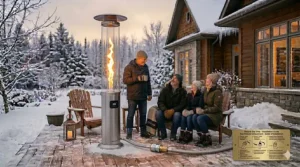
Electric vs Propane vs Wood Pellet: Choosing Your Fuel Type for Canadian Winters
The fuel type you choose for your patio heater for Canadian winter determines far more than just how you power the unit—it shapes your entire outdoor heating experience, from ongoing costs to installation requirements to environmental impact.
Electric Patio Heaters: The Urban Canadian’s Choice
Electric models dominate Canadian condo buildings and suburban homes for straightforward reasons: they require no fuel storage, eliminate carbon monoxide concerns that matter in semi-enclosed spaces, and provide instant-on heat that suits spontaneous use. The 1,500W models drawing 12.5 amps work with standard household circuits, avoiding the electrical upgrades that 3,000W units demand.
The real advantage in Canadian conditions? Consistent performance regardless of temperature. While propane struggles below -15°C due to vaporization issues, your electric heater delivers full output whether it’s -5°C or -25°C outside, assuming your home’s electrical service remains operational. Operating costs run approximately $0.15-$0.20 per hour at full 1,500W output (based on average Canadian electricity rates of $0.10-$0.13 per kWh), making 3-hour evening sessions cost roughly $0.45-$0.60 in electricity.
The limitations? You’re tethered to your electrical outlet location (though outdoor-rated extension cords provide 10-15 metre flexibility), and power outages eliminate your heating capability entirely—a consideration in rural areas prone to winter storm outages. Maximum heat output tops out around 3,000W for residential installations, limiting coverage area compared to high-BTU propane alternatives.
Propane Heaters: Raw Power for Canadian Conditions
When you need serious heat output for large spaces or extreme cold, propane delivers BTU numbers that electric units can’t approach without dedicated electrical infrastructure. A 48,000 BTU propane tower generates roughly three times the heat of a 1,500W electric heater, covering 25-30 m² effectively versus 12-15 m² for electric equivalents.
The trade-offs Canadian users face? Propane costs currently run $20-$35 per standard 20 lb cylinder, providing approximately 15-20 hours of runtime at medium output settings—figure $1.00-$1.75 per hour in fuel costs. This exceeds electric operating expenses, but for remote cabin owners or areas with expensive electricity, propane sometimes pencils out favourably. The bigger concern is performance below -15°C, where propane vaporization slows and effective heat output drops 15-25% even from full tanks. Savvy Prairie users keep spare cylinders indoors (not in living spaces) to maintain warmer fuel temperatures.
Safety requires more vigilance than electric models. Propane heaters produce carbon monoxide, demanding adequate ventilation even in semi-enclosed spaces. The oxygen depletion sensors and tip-over shutoffs aren’t optional safety theatre—they’re essential features that prevent tragedy. Transport Canada and provincial fire codes regulate propane storage and use; verify local bylaws before purchasing, as many condo buildings prohibit propane entirely.
Wood Pellet Heaters: The Eco-Conscious Statement
Wood pellet models occupy a unique niche, appealing to environmentally conscious Canadians who want sustainable heat with visual ambiance. Quality heating pellets source from renewable forestry waste, creating a carbon-neutral heating solution that aligns with Canada’s climate commitments. The fuel cost of $6-$10 per 20 kg bag provides 10-15 hours of burn time, landing between electric and propane for operating economics.
The practical challenges? You’re committing to active heater management—monitoring pellet feed rates, managing ash removal, and maintaining optimal combustion airflow. This isn’t plug-and-play convenience; it’s more akin to tending a campfire or wood stove. Canadian humidity rapidly degrades pellet quality, requiring dry storage in sealed containers or bins—budget space for 40-60 kg of pellets if you’re heating regularly through winter. The visual flame creates unmatched ambiance, but smoke production (even from clean-burning pellets) can irritate neighbours in dense residential areas or violate local air quality bylaws during inversion events.
For the right buyer—someone who values sustainability, enjoys fire-tending ritual, and has adequate outdoor space away from immediate neighbours—wood pellet heaters deliver unique satisfaction. For those seeking maximum convenience and minimal maintenance, stick with electric or propane.
Common Mistakes Canadian Buyers Make (And How to Avoid Them)
Mistake #1: Choosing Heat Output Based Solely on Coverage Area Claims
Manufacturers test coverage area in controlled conditions that bear little resemblance to a Canadian patio during January. That “20 m² coverage” assumes minimal wind, moderate cold (around -5°C), and some overhead cover. Reality check: the same heater might effectively warm 12 m² during a -15°C evening with 20 km/h winds. Saskatchewan buyers learn this expensive lesson when their “adequate” heater leaves guests shivering at gatherings.
The Fix: Oversize your heater by 30-50% versus manufacturer coverage claims for Canadian winter use. If your patio measures 15 m², shop for heaters rated for 20-25 m² coverage. This accounts for heat loss to wind, extreme cold, and the reality that Canadians want “warm enough to enjoy” rather than “technically above freezing.”
Mistake #2: Ignoring Installation and Operating Costs
A $150 electric heater looks affordable until you discover your deck has no outdoor outlet, adding $200-$400 for electrical installation. Similarly, that attractively priced propane heater becomes expensive when you factor $80-$120 monthly in fuel costs for regular use. British Columbia buyers particularly underestimate electricity rates in their cost calculations, sometimes paying 60% more to operate heaters than anticipated.
The Fix: Calculate total first-year cost before purchasing. Add installation expenses (electrical work, mounting hardware, professional labour) plus projected fuel costs based on realistic usage (three 3-hour sessions weekly = 36 hours monthly). A $300 propane heater costing $120 monthly in fuel becomes a $1,740 first-year investment versus a $450 electric heater ($90 installation + $360 unit) costing $15 monthly in electricity for $630 total first-year cost.
Mistake #3: Choosing Propane in Cold-Restricted Locations
Propane performance degrades sharply below -15°C, yet buyers in Edmonton, Winnipeg, and northern Ontario frequently choose propane heaters without understanding this limitation. You’re buying a heater that operates at 75-80% efficiency exactly when you need it most—during the coldest days that define Canadian winter.
The Fix: If you live where temperatures regularly hit -15°C or colder, prioritize electric heaters for consistent performance, or budget for oversized propane units that maintain adequate heat even with cold-weather BTU reduction. Alternatively, plan propane use for shoulder seasons (October-November, March-April) when temperatures stay above -10°C, and accept that deep winter evenings outdoors might not be viable regardless of heating equipment.
Mistake #4: Overlooking Weatherproofing Requirements
Canadian winters punish equipment with freeze-thaw cycles, ice accumulation, and moisture infiltration that destroy inadequately protected electronics and ignition systems. Buyers focus on heat output and price, ignoring IP ratings that determine whether their heater survives one season or five. Ontario users replacing corroded heaters after single winters learn this lesson painfully.
The Fix: Require minimum IP65 rating for any outdoor heater used in Canadian conditions. IP44 or IP54 ratings suffice for covered patios protected from direct precipitation, but exposed installations demand IP65 to survive ice, snow, and freezing rain. Consider the $50-$80 premium for proper weatherproofing as mandatory insurance against premature failure.
Mistake #5: Buying Without Considering Wind Protection
Even powerful heaters struggle against Canadian Prairie winds or coastal gusts that strip heat away faster than the unit produces it. Buyers install heaters on fully exposed decks and wonder why their expensive equipment performs poorly, blaming the manufacturer rather than physics.
The Fix: Assess wind exposure honestly before selecting a heater. Fully exposed locations benefit from higher output propane models (40,000+ BTU) or multiple electric heaters positioned to create overlapping warm zones. Better yet, invest $200-$600 in wind barriers (outdoor curtains, clear vinyl panels, strategic privacy screens) that transform your heating effectiveness. Manitoba patio owners report 40-60% improvement in perceived warmth after adding wind protection, using the same heating equipment.
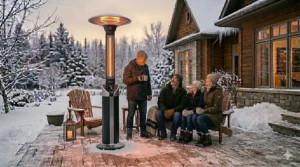
What to Expect: Real-World Performance Across Canadian Temperature Ranges
Understanding how your patio heater for Canadian winter performs across different temperature zones helps set realistic expectations and prevents the disappointment that comes from unrealistic manufacturer claims. Here’s what actual Canadian users experience.
+5°C to -5°C: The Comfortable Range
This temperature band represents ideal patio heater territory. A properly sized 1,500W electric infrared heater transforms your outdoor space from “chilly but tolerable” to “genuinely comfortable” for 3-4 people seated within 2-3 metres of the heat source. Propane models operating at medium settings (30,000-35,000 BTU) create expansive warm zones perfect for gatherings of 6-10 guests. Vancouver and Victoria users enjoy this range through much of winter, making patio heating practical for regular evening use with minimal clothing layering beyond light jackets and blankets.
Expect electric heaters to draw 900-1,200W maintaining comfort in this range (versus full 1,500W output), keeping electricity costs reasonable at $0.09-$0.12 per hour. Propane consumption drops to 0.8-1.2 lbs per hour, extending your fuel budget. This is where patio heating delivers maximum value—extending outdoor season by 3-4 months with modest operating costs and equipment stress.
-5°C to -15°C: The Challenge Zone
Here’s where Canadian patio heating separates casual users from committed outdoor enthusiasts. Heat loss accelerates dramatically in this range, requiring heaters to operate at maximum output while delivering noticeably reduced effective coverage. That 1,500W electric heater providing 15 m² of comfortable warmth at -5°C shrinks to 10-12 m² at -12°C, forcing guests to crowd closer to the heat source. Manitoba and Saskatchewan users describe this as “campfire mode”—you’re warm on the side facing the heater, chilly on the other side.
Propane heaters maintain better performance than electric alternatives in this range, though vaporization begins slowing and fuel consumption spikes to 1.5-2.0 lbs per hour even as effective heat output decreases. Ontario winter barbecue enthusiasts operate in this zone regularly, combining maximum heater output with strategic wind protection, pre-warming routines, and appropriate clothing layers (think ski resort après ski conditions).
Below -15°C: Survival Mode
Honestly? Most patio heating below -15°C transitions from “comfortable outdoor entertaining” to “functional heat for specific purposes” (ice fishing shelters, winter work projects, smoking meat). Even high-output propane units struggle to create genuinely comfortable zones in fully exposed conditions at -20°C. Quebec users report success with enclosed ice fishing shelters where a 4,300 BTU portable heater maintains 0°C to +5°C interior temperatures (versus -20°C outside), but open patio heating becomes an exercise in diminishing returns.
Electric heaters maintain full wattage output but face an impossible physics battle—you’re trying to warm people and objects while the surrounding -20°C environment sucks heat away faster than 1,500W can replace it. Success stories in this temperature range involve substantial wind protection, overhead cover, pre-warming, and realistic expectations about “warm enough to endure” rather than “comfortable enough to linger.”
The lesson Canadian buyers learn after their first winter? Patio heaters extend your outdoor season wonderfully through shoulder months and moderate winter days, transforming October-through-March outdoor use from “impossible” to “enjoyable.” But they don’t make January in Yellowknife feel like July in Windsor. Adjust expectations accordingly, and you’ll love your heating investment. Expect miracles, and you’ll be disappointed regardless of how much you spent.
Safety Essentials for Winter Patio Heating in Canada
Operating heating equipment outdoors during Canadian winter demands attention to safety factors that mild-climate users never consider. Statistics Canada data shows Canadians prioritize reliable heating systems, but outdoor applications require specific precautions.
Carbon Monoxide Awareness with Propane and Wood Pellet Heaters
Any fuel-burning heater produces carbon monoxide—an odourless, colourless gas that kills without warning in enclosed spaces. Semi-enclosed patios, screened porches, and covered decks trap carbon monoxide more effectively than you’d expect, creating dangerous concentrations even when you think ventilation seems adequate. Quebec and Ontario health authorities report carbon monoxide poisoning incidents every winter from “outdoor” heater use in partially enclosed spaces.
Critical Safety Measures: Install a battery-operated carbon monoxide detector ($25-$45) in any semi-enclosed space where you operate fuel-burning heaters. Maintain minimum 15 cm gap under walls or screens for air circulation. Never operate propane or pellet heaters in fully enclosed spaces (garages with doors closed, sunrooms with sealed windows) regardless of manufacturer claims. Watch for carbon monoxide symptoms: headache, dizziness, nausea, confusion—immediately evacuate to fresh air and seek medical attention if anyone experiences these during heater operation.
Electrical Safety in Wet, Cold Conditions
Canadian winter cycling between freeze and thaw, wet snow and ice creates brutal conditions for electrical equipment and connections. Moisture infiltration combined with freeze cycles cracks insulation and corrodes connections, creating shock and fire hazards.
Protection Protocols: Use only outdoor-rated extension cords (marked for cold weather to -40°C) with adequate gauge for your heater’s draw—minimum 14 AWG for 1,500W heaters, 12 AWG preferred. Inspect cords monthly during active use for cracking, exposed wire, or damaged insulation. Install GFCI (ground fault circuit interrupter) protection on all outdoor outlets—this $15-$30 safety device cuts power instantly if moisture creates a ground fault. Elevate electrical connections above snow level using cord hangers or protected mounting.
According to Environment Canada’s winter safety guidance, extreme weather events are increasing across Canada. Protect your electrical connections from these conditions proactively rather than waiting for problems to develop.
Tip-Over and Fire Hazards
Canadian wind gusts, pets, children, and winter celebrations all contribute to tip-over incidents. Propane and pellet heaters burning at 400-600°C create immediate fire hazards when tipped, while electric heaters present shock risks from damaged elements.
Prevention Steps: Require automatic tip-over shutoff on all heaters—this isn’t optional for Canadian conditions. Position heaters minimum 1 metre from combustible materials (furniture cushions, outdoor curtains, wooden deck railings). Secure standing heaters on level surfaces using weight plates or deck mounts in high-wind areas. Supervise children and pets during heater operation—treat active heaters like you would an open fire or hot barbecue.
Ice and Snow Management
Heaters themselves melt accumulated snow and ice, but the surrounding deck or patio doesn’t. Ice buildup around heater bases creates slip-fall hazards while snow accumulation blocks ventilation on fuel-burning units.
Best Practices: Clear 1-metre radius around heaters before operation. Remove ice from deck surfaces in heated zones (guests gather there). On covered patios, ensure roof snow doesn’t cascade down onto heaters during melting—offset heater positions from roof driplines. Store heaters indoors when not in use during multi-day cold snaps to prevent ice accumulation in mechanical components and igniters.
❓ FAQ: Your Patio Heater for Canadian Winter Questions Answered
❓ Can patio heaters work effectively in -20°C Canadian winters?
❓ What's more cost-effective for Canadian winters: electric or propane patio heaters?
❓ Are patio heaters allowed on apartment balconies in Canada?
❓ How much does it cost to operate a 1,500W patio heater through a Canadian winter?
❓ Do I need a permit to install a hardwired patio heater in Canada?
Conclusion: Making Canadian Winters More Enjoyable, One Heated Patio at a Time
Choosing the right patio heater for Canadian winter isn’t about finding the most powerful unit or the cheapest price tag—it’s about matching heating technology to your specific Canadian lifestyle, climate zone, and outdoor space realities. Whether you’re warming a compact Toronto balcony for morning coffee rituals, hosting legendary winter barbecues on a Calgary deck, or keeping comfortable during weekend ice fishing trips across Manitoba lakes, this guide has shown you the heating solutions that actually work when temperatures plunge and other Canadians retreat indoors.
The best investment? For most Canadian homeowners, I’d recommend the Hanging Electric Ceiling Heater 1500W in the $150-$280 range as the sweet spot combining weatherproof construction, efficient 360-degree heat distribution, and operating costs that won’t shock you when the electricity bill arrives. This configuration provides flexibility for covered patios while maintaining enough output to handle typical Canadian winter evenings from October through March. Pair it with strategic wind protection and appropriate clothing layers, and you’ll reclaim 3-4 months of outdoor season that previously went unused.
For those facing extreme Prairie winters or heating large open spaces, the SISUPASSIE 15000BTU Portable Propane Heater delivers raw heating power and mobility that electric alternatives simply can’t match, accepting the trade-off of fuel costs and cold-weather vaporization challenges. And for compact urban spaces where installation isn’t permitted and storage matters, the Westinghouse Tabletop Infrared Heater provides exactly enough warmth for 1-2 people without overkill capacity or price.
Remember that patio heaters extend your outdoor season wonderfully but don’t defy physics—they make -10°C feel comfortable enough to linger rather than making January feel like July. Set realistic expectations, choose equipment that matches your actual needs rather than aspirational ideals, and you’ll transform how you experience Canadian winter. Your deck doesn’t need to hibernate for six months anymore. With the right heating investment and smart usage strategies, those winter sunsets, snow-covered evergreens, and crisp fresh air become reasons to gather outdoors rather than excuses to stay inside.
The outdoor spaces we’ve abandoned to Canadian winter await reclamation. Your move.
✨ Don’t Miss These Exclusive Deals!
🔍 Take your winter patio experience to the next level with these carefully selected heaters available on Amazon.ca. Click on any highlighted product to check current pricing, customer reviews, and availability. These solutions will help you create comfortable outdoor spaces your family and guests will love, even during harsh Canadian winters!
Recommended for You
- 7 Best Garage Heater Winter Picks Canada 2026
- 7 Best Portable Infrared Heaters Canada 2026
- 7 Best Heated Neck Gaiters Canada: Skiing & Winter Guide 2026
Disclaimer: This article contains affiliate links. As an Amazon Associate, I earn from qualifying purchases. If you purchase products through these links, we may earn a small commission at no additional cost to you.
✨ Found this helpful? Share it with your friends! 💬🤗
