
In This Article
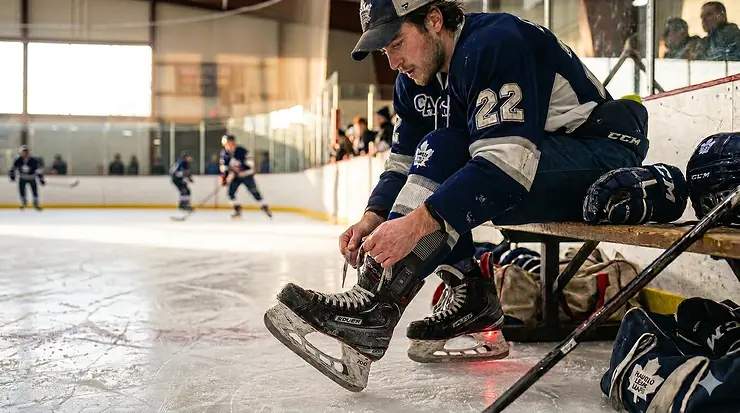
If you’ve ever stepped off the ice after a game with numb toes, you know the feeling. That pins-and-needles sensation that makes you question whether frostbite is setting in, even though you’re just playing recreational hockey at your local arena. Canadian winters are brutal enough without dealing with frozen feet during every practice and game, and for players who skate outdoors on frozen ponds or participate in early-morning ice times when arenas drop temperatures to preserve ice quality, cold feet can cut a session short before you’ve even warmed up your stride.

Heated insoles for hockey skates represent an intriguing solution to this age-old problem, but here’s what most buyers don’t realize: hockey skates present unique challenges that standard heated insoles weren’t designed to handle. The ultra-tight fit of skate boots, the need for low-profile design to maintain proper energy transfer, and the rigid structure required for edge control all complicate the equation. What works brilliantly in a ski boot or winter work boot might transform your perfectly-fitted skates into uncomfortable torture devices.
This guide cuts through the marketing hype to deliver honest, practical advice for Canadian hockey players considering heated insoles. You’ll discover which products offer the best chance of success, what compromises you’ll need to make, and whether heated technology is even the right solution for your specific cold-feet problem. We’ve researched products available on Amazon.ca, analyzed customer feedback from Canadian buyers, and consulted Hockey Canada safety standards to bring you information you can trust.
Quick Comparison: Top Heated Insole Options for Hockey Players
| Product | Heat Duration | Profile Thickness | Best For | Price Range (CAD) | Amazon.ca |
|---|---|---|---|---|---|
| Dr. Warm Rechargeable | 6-8 hours | Medium (may be tight) | Outdoor rinks, loose skates | $120-$160 | Available |
| ActionHeat Rechargeable | 8+ hours | Medium-thin | Wider skate boots | $130-$170 | Available |
| HotToes Remote Control | 4-6 hours | Thin heating pads | Custom retrofit projects | $70-$100 | Available |
| Therm-ic Disposable | 8 hours | Ultra-thin (air-activated) | Game-day warmth, tight fits | $25-$35 (5-pack) | Limited stock |
| Thermacell ProFLEX | 6.5 hours | Medium | Recreational skates | $180-$230 | Check availability |
| SNOW DEER Heated | 5-7 hours | Medium | Goalie skates (roomier) | $100-$140 | Available |
| Superfeet Hockey Performance | N/A (insulation only) | Ultra-thin | Performance + cold resistance | $60-$80 | Available |
💬 Just one click — help others make better buying decisions too! 😊
Top 7 Heated Insoles for Hockey Skates: Expert Analysis
1. Dr. Warm Rechargeable Heated Insoles with APP Control
The Dr. Warm Rechargeable Heated Insoles feature smartphone app control and 7.4-volt lithium batteries that deliver three adjustable heat settings from 38°C to 60°C (100-140°F). The heating element concentrates under the toes—precisely where hockey players need it most—and the 2200mAh batteries tuck into ankle straps that can be positioned outside your skate if internal placement creates pressure points.
Here’s the reality Canadian buyers need to understand: these insoles work exceptionally well in winter boots and even goalie skates, but fitting them into player skates requires careful consideration. The insole thickness measures approximately 3-4mm, which sounds minimal until you remember that hockey skates are engineered for millimetre-perfect fit. If your current skates have any extra volume, or if you typically wear thin socks and have room to spare, the Dr. Warm insoles might work. For skates that already fit snugly, you’re likely to experience pressure points, reduced circulation, and the opposite of your intended warmth outcome.
Canadian reviewers specifically mention using these for outdoor pond hockey in -20°C temperatures with good results, though most successful users report going up half a skate size or using them in recreational skates with more forgiving fits. The app control is genuinely useful—you can adjust temperature between periods without removing your skates—and the battery life holds up reasonably well in Canadian cold, though expect closer to 6 hours on high heat rather than the advertised 8+ hours when ambient temperatures drop below -15°C.
Pros:
✅ Smartphone app control for easy temperature adjustment
✅ Heating element positioned directly under toes
✅ External battery placement option reduces in-skate bulk
Cons:
❌ 3-4mm thickness may compromise fit in performance skates
❌ Battery life decreases 20-30% in extreme Canadian cold
Price range: Around $140-$160 CAD. Best value for outdoor rink players with slightly roomier skates or those willing to size up their boots.
2. ActionHeat Rechargeable Battery Heated Insoles
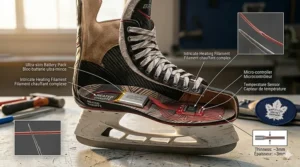
The ActionHeat Rechargeable Heated Insoles deliver up to 8+ hours of heat reaching 54°C (130°F) through ultra-fine heating panels built directly into the insole structure. Unlike external heating pads, ActionHeat integrates the 3.7V battery into the insole itself, creating a streamlined profile that improves your chances of maintaining proper skate fit.
What makes ActionHeat particularly interesting for hockey players is the cut-to-fit design with clear sizing guidelines. You can trim these insoles to match your skate’s existing footbed, which gives you more control over the final fit than pre-sized alternatives. The deodorized material addresses one of hockey’s least glamorous realities—equipment that smells like a locker room crime scene—and Canadian buyers report the odour control actually works through multiple uses.
The challenge remains the same: even ActionHeat’s “thin and lightweight design” adds 2-3mm of height compared to the foam footbeds that come stock in most hockey skates. For players with medium to high-volume feet, this extra thickness can create uncomfortable pressure against the skate’s upper boot structure. The wireless remote control operates through thick hockey socks and equipment, which is more practical than you might expect when you’re layered up at an outdoor rink in Swift Current or Yellowknife.
Canadian shipping is reliable (ships from Ohio with standard delivery to most provinces within 5-7 business days), and the company backs the product with responsive customer service. Several reviewers from Alberta and Manitoba specifically mention using these for
outdoor shinny hockey with positive results, though again, success correlates strongly with having skates that don’t fit like a second skin.
Pros:
✅ Cut-to-fit customization improves skate compatibility
✅ Built-in battery design reduces external bulk
✅ Wireless remote works through hockey equipment
Cons:
❌ 2-3mm added thickness still challenges tight skate fits
❌ Battery integrated into insole makes replacement impossible
Price range: In the $150-$170 CAD range. Solid mid-tier option for players prioritizing customizable fit.
3. HotToes Remote Control Foot Warmers (Battery Pack Separate)
The HotToes Remote Control Foot Warmers take a different approach: ultra-thin heating pads with 64cm cables that connect to external battery packs you wear elsewhere on your body. This modular system offers the thinnest in-skate profile of any battery-powered option reviewed here—the heating pads themselves measure just 1-2mm thick.
This is where things get creative for DIY-minded hockey players. Because the heating element is so thin, you can install it on top of your existing Superfeet or CURREX hockey insole, underneath a thin insole cover, or even adhered to the bottom of your skate’s removable footbed. The long cables allow you to position the battery pack in a coat pocket, strapped to your shin pad, or tucked into your hockey pants, keeping all the bulk away from your skate’s internal space.
The trade-off is convenience and heat distribution. The HotToes pads only cover the toe box area, leaving your midfoot and heel reliant on passive insulation. The external battery setup requires more fiddling to get dressed—you’re running cables up the inside of your skate boot and managing connections—and you’ll need to purchase the battery pack separately (adds another $40-$60 CAD to your total cost). Canadian users report the system works brilliantly for outdoor hockey when set up properly, but it’s definitely not a plug-and-play solution.
What most buyers overlook is that HotToes originally designed these for hunting and ice fishing, activities where you remain relatively stationary. The cables can shift during explosive skating movements, and a few reviewers mention experiencing disconnections during particularly intense games. That said, for the dedicated outdoor player who frequently skates on frozen lakes and ponds across Ontario or Manitoba, the minimal in-skate bulk makes this worth considering.
Pros:
✅ Ultra-thin 1-2mm heating pads preserve skate fit
✅ External battery eliminates in-skate power source bulk
✅ Long cables allow creative positioning options
Cons:
❌ Battery pack sold separately (additional cost)
❌ Cable management complicates getting dressed
❌ Heating limited to toe area only
Price range: $70-$100 CAD for the heating pads (battery pack not included). Best for DIY enthusiasts and outdoor rink regulars willing to invest setup time.
4. Therm-ic Disposable Foot Warmers (Air-Activated)
Here’s an option that completely sidesteps the battery and thickness problems: Therm-ic Disposable Foot Warmers are air-activated chemical heat pads that measure under 1mm thick when activated. You open the package, expose them to air, and they generate 8 hours of gentle warmth through an oxidation reaction—no batteries, no charging, no bulk.
These represent the most skate-friendly option in this entire guide because they add virtually no thickness to your boot’s interior. Place them on top of your existing hockey insole, slide your foot in, and the chemical reaction begins generating heat within 15-20 minutes. The warmth output isn’t adjustable and tops out around 40°C (104°F), which is cooler than battery-powered alternatives, but for many Canadian players dealing with moderately cold arenas or outdoor rinks in -5°C to -15°C conditions, this passive warmth proves entirely sufficient.
The obvious limitation is single-use functionality. Each pair works for one session, making these more expensive per-use than rechargeable options over a full season. A 5-pack runs $25-$35 CAD on Amazon.ca (when in stock), which breaks down to $5-$7 per game or practice. For a player hitting the ice twice weekly through a 20-week season, you’re looking at $200-$280 annually versus a one-time $150-$170 investment in rechargeable insoles.
However, Therm-ic disposables shine in specific situations: important games where you can’t risk battery failure, outdoor tournaments, or for players who only occasionally deal with cold-feet issues. Several Canadian figure skaters and hockey parents mention keeping a pack in their equipment bag for emergency use. The ultra-thin profile means they work even in performance skates fitted by professional skate shops, and availability on Amazon.ca with Prime shipping makes last-minute purchases feasible.
Pros:
✅ Ultra-thin <1mm profile works in any skate
✅ No batteries or charging required
✅ Generates heat within 15-20 minutes of air exposure
Cons:
❌ Single-use design becomes expensive over full season
❌ Heat output not adjustable (fixed ~40°C)
❌ Availability on Amazon.ca varies (check stock)
Price range: $25-$35 CAD for 5-pair pack. Ideal for occasional use, tournaments, or players in moderately cold conditions.
5. Thermacell ProFLEX Heated Insoles
The Thermacell ProFLEX Heated Insoles feature Bluetooth connectivity and deliver 6.5 hours of runtime with heating zones covering the entire foot from heel to toe. The wireless temperature control operates through a smartphone app or handheld remote, and the insoles are designed with moisture-wicking material that addresses the sweat-and-freeze cycle that plagues hockey players during long outdoor sessions.
Canadian availability of Thermacell products has historically been spotty on Amazon.ca, with stock levels fluctuating and some models showing extended shipping times or limited provincial delivery. When available, these insoles typically command a premium price point in the $180-$230 CAD range, reflecting their advanced Bluetooth technology and comprehensive heating coverage.
The profile thickness sits in the medium range at approximately 4-5mm, which places them firmly in the “recreational skate compatible” category but makes them challenging for performance skates. Where Thermacell earns its consideration is heat distribution quality—the full-foot coverage prevents the “warm toes, frozen heel” problem that toe-only heating solutions create. For players with circulation issues or those who genuinely need warmth throughout the entire foot, this comprehensive approach justifies the thickness trade-off.
What Canadian buyers should know: Thermacell’s customer service operates from the United States, and warranty support can involve cross-border shipping if problems arise. Several reviewers mention the battery performance degrades noticeably after 12-18 months of regular use, which at this price point feels disappointing. The Bluetooth connectivity, while convenient, adds another layer of potential technical failure—dead phone battery, app glitches, Bluetooth pairing issues—that low-tech alternatives avoid entirely.
Pros:
✅ Full-foot heating coverage (heel to toe)
✅ Bluetooth app control plus handheld remote
✅ Moisture-wicking material reduces sweat-freeze cycle
Cons:
❌ 4-5mm thickness incompatible with tight-fitting skates
❌ Premium pricing with uncertain Canadian availability
❌ Battery longevity issues reported after 12-18 months
Price range: $180-$230 CAD when available. Best for players prioritizing full-foot warmth over performance fit.
6. SNOW DEER Heated Insoles with Remote Control
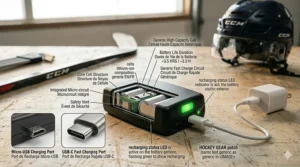
The SNOW DEER Heated Insoles deliver 5-7 hours of heat through 2600mAh batteries with three temperature settings controlled by wireless remote. Designed primarily for winter work boots and ski boots, these insoles feature cut-to-fit sizing and heating elements positioned under the toes and across the ball of the foot.
For hockey players, SNOW DEER insoles work best in goalie skates, which typically offer more internal volume than player skates. The 3-4mm thickness creates less of a fit problem in goalie equipment, and goalies who spend extended periods standing relatively still benefit more from supplemental heat than forwards and defensemen generating body heat through constant movement. Several Canadian goalie parents mention using these for minor hockey players who play outdoors or in poorly heated arenas.
The quality control on SNOW DEER products receives mixed reviews on Amazon.ca, with some buyers reporting excellent performance while others describe battery failures within the first few months. The mid-range pricing around $100-$140 CAD reflects this inconsistency—you’re not paying Thermacell premium prices, but you’re also not getting Thermacell reliability guarantees. The wireless remote operates at a range of about 8-10 metres, which works fine for controlling your insoles from the bench but can be frustrating if you need to adjust temperature while actively playing.
What makes SNOW DEER worth mentioning is Canadian shipping reliability. The company maintains good stock levels on Amazon.ca with consistent Prime delivery across most provinces. For buyers in remote areas—Northern Ontario, rural Manitoba, smaller centres across the Prairies—this shipping reliability matters more than marginal performance differences between brands.
Pros:
✅ Good fit compatibility with goalie skates
✅ Reliable Canadian shipping and Amazon.ca availability
✅ Mid-range pricing balances cost and features
Cons:
❌ Quality control inconsistency reported by buyers
❌ 3-4mm thickness challenging for player skates
❌ Remote range limitations during active play
Price range: $100-$140 CAD. Best suited for goalies or players with roomier recreational skates.
7. Superfeet Hockey Performance Insoles (Insulation-Enhanced Alternative)
Let’s address the elephant on the ice: the Superfeet Hockey Performance Insoles aren’t heated insoles—they’re high-performance hockey insoles with superior thermal insulation properties. Including them in this list might seem like cheating, but here’s why it matters: for many Canadian hockey players, the root cause of cold feet isn’t actually cold—it’s poor circulation caused by improper skate fit, lack of arch support, or pressure points that restrict blood flow.
Superfeet’s carbon fiber construction and proprietary EVOLyte stabilizer cap deliver the rigid support hockey skates demand while maintaining an ultra-thin 2mm profile. The key thermal feature is the venting system that aligns with most hockey skates’ perforation patterns, allowing moisture to escape rather than pool and freeze against your skin. The biomechanical support positions your foot optimally within the skate boot, reducing pressure points that strangle circulation and cause that numb-toe sensation players mistake for cold sensitivity.
What Canadian buyers consistently report: after switching to Superfeet (or similar performance insoles like CURREX HockeyPro), their perceived cold-feet problem diminished or disappeared entirely, not because the insoles provided active heating, but because improved support restored proper circulation. This is especially relevant for players with flat feet or high arches who never addressed the underlying fit issues their factory foam insoles were masking.
The Superfeet approach costs $60-$80 CAD on Amazon.ca—less than most heated insoles—and solves the problem through biomechanics rather than battery technology. You avoid all the complications of charging, thickness, battery failure, and fit compromise. The trade-off is obvious: if you’re legitimately dealing with extreme cold (outdoor rinks in -25°C windchill, early-morning ice times in unheated arenas), passive insulation won’t match active heating. But for the substantial subset of players whose “cold feet” stems from circulation problems rather than environmental cold, Superfeet represents the smarter solution.
Pros:
✅ Ultra-thin 2mm profile maintains skate performance
✅ Biomechanical support improves circulation
✅ No batteries, no charging, no technical failures
Cons:
❌ No active heating for extreme cold conditions
❌ Requires proper diagnosis of cold-feet root cause
❌ Higher initial cost than some heated options
Price range: $60-$80 CAD. Best for players whose cold feet actually stem from circulation/fit issues rather than genuine environmental cold.
Why Hockey Skates Make Heated Insoles So Challenging
Before you add any heated insole to your Amazon.ca cart, you need to understand the fundamental conflict between heated insole design and hockey skate engineering. This isn’t just about thickness—though that’s part of it—it’s about how skates transfer energy, maintain edge control, and protect your feet during explosive movements.
Hockey skates are designed with minimal internal volume. Where ski boots, winter work boots, and hiking boots accommodate thick insoles, multiple sock layers, and internal bulk, hockey skates achieve performance through precision fit. The entire boot structure wraps your foot in a semi-rigid shell that translates every muscle contraction directly into blade contact with the ice. When you add even 2-3mm of extra thickness from a heated insole, you’re fundamentally altering the skate’s geometry.
Here’s what happens in practice: that additional thickness raises your foot inside the boot, changing pressure distribution against the eyelets and creating new contact points along your ankle bones and the top of your foot. Your heel might start lifting during stride pushoffs—what hockey players call “heel slip”—because the relationship between your heel cup and the skate’s heel pocket has shifted by millimetres. Edge control suffers because your center of gravity relative to the blade’s contact point has moved upward by the exact thickness of the insole.
For Canadian players baking their skates at pro shops or using heat-molding technology at home, adding heated insoles after the fact creates additional complications. Most modern skates are heat-molded to your specific foot shape with your intended insole already installed. If you heat-mold your skates with factory insoles, then later swap to thicker heated insoles, the boot interior no longer matches the foot-plus-insole combination it was shaped around. The only way to address this properly is to install your heated insoles BEFORE heat-molding—but this commits you to always using those specific insoles, turning your $150-$170 heated insole purchase into permanent equipment rather than an optional cold-weather add-on.
Temperature extremes add another dimension to this challenge. Hockey Canada safety standards require CSA-certified equipment, but heated insoles fall outside current certification protocols because they’re aftermarket accessories rather than primary protective equipment. While this doesn’t make them illegal or dangerous, it does mean you’re accepting personal responsibility for any fit complications or equipment interactions. In extreme Canadian cold (outdoor rinks in -30°C windchill), battery-powered heated insoles can experience reduced runtime and performance degradation that manufacturers don’t account for in their testing, which typically uses moderate temperature conditions.
Real-World Application Guide: Making Heated Insoles Work in Hockey Skates
For players determined to use heated insoles in hockey skates despite the challenges, here’s a practical framework for maximizing success while minimizing fit disasters.
Step 1: Honest Fit Assessment
Before purchasing anything, evaluate your current skate fit objectively. Put on your skates with your current insoles and normal hockey socks. Can you pinch any excess material on your skate’s upper? Does your heel lift even slightly during stride simulation? Is there noticeable space when you press down on the toe box?
If you answered “no” to all three questions, your skates fit precisely as designed, and adding heated insoles will create problems. Your options are: (1) size up to new skates specifically to accommodate heated insoles, or (2) accept that heated insoles won’t work with your current setup.
If you answered “yes” to any question, you have existing volume to work with. Measure the space carefully. A skate shop can help assess whether you have 2mm, 3mm, or 4mm of excess volume. This measurement determines which heated insole products might work for you.
Step 2: Test With Disposables First
Before investing $150+ CAD in rechargeable heated insoles, spend $6-$7 on a single-use pair of Therm-ic disposables. Install them in your skates and actually skate—don’t just walk around your house. Push hard on crossovers, practice edge work, and simulate game-intensity movements. If the 1mm thickness creates pressure points or fit problems, thicker battery-powered insoles will only magnify these issues.
The disposable test also reveals whether you genuinely need active heating or whether your cold-feet problem stems from other causes (circulation, sock thickness, boot ventilation). If passive 40°C warmth from disposables solves your problem, you might not need expensive battery technology.
Step 3: External Battery Configuration
For buyers purchasing HotToes or similar modular systems, spend time planning your battery pack placement before your first use. Run the cables inside your hockey pants or up through your shin guards to keep them secure during play. Practice your full equipment routine—skates, shin pads, pants, jersey—to ensure the cable routing works with your specific gear configuration.
Canadian players using external batteries outdoors should keep the battery pack insulated against your body (inside a coat pocket against your chest) rather than exposed to -20°C ambient temperatures. Cold batteries deliver reduced performance, cutting your 6-hour rating down to 4 hours in extreme conditions.
Step 4: Gradual Adaptation Period
Don’t install heated insoles for the first time right before an important game. Use them during practice sessions first, allowing 3-5 sessions for your feet to adapt to the changed fit dynamics. Pay attention to any new pressure points, hot spots, or areas of discomfort that didn’t exist with your factory insoles.
If problems emerge, address them immediately through lacing adjustments, sock thickness changes, or insole positioning tweaks. Continuing to play through pain creates lasting damage to your feet and reinforces poor movement patterns that affect your skating mechanics.
Common Mistakes When Choosing Heated Insoles for Hockey Skates
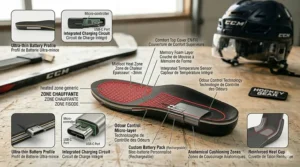
The single biggest mistake Canadian hockey players make is choosing heated insoles based on skiing or winter boot performance without understanding that hockey skates operate under completely different fit constraints. A product with five-star reviews from skiers and snowboarders might earn one star from hockey players because the use cases aren’t comparable.
Another critical error: assuming “rechargeable” automatically means “better value.” For players who only occasionally face extreme cold—maybe 10-15 sessions per season—disposable air-activated warmers deliver better economics. At $6 per use for 15 sessions, you spend $90 annually versus $150 upfront for rechargeable insoles that might not fit properly and could experience battery degradation within 18 months. The disposables also work in any skate without fit compromises, making them the more versatile solution for players who switch between different skate models or sizes.
Players also underestimate the importance of sock selection when using heated insoles. Thick hockey socks insulate your foot from the heating element, requiring you to run higher temperatures to feel the same warmth—which drains batteries faster and increases pressure against your skate’s upper boot. Thin technical socks designed for ski touring or cycling transfer heat more efficiently and reduce overall bulk inside the skate. Canadian brands like Icebreaker and Smartwool make excellent thin merino wool socks that manage moisture while allowing heat transfer.
Finally, many buyers ignore battery maintenance requirements for rechargeable insoles. Lithium-ion batteries degrade when stored at full charge or when allowed to fully discharge repeatedly. For maximum longevity, store your heated insoles at 40-60% charge during off-season periods, and avoid draining them completely during use. This basic maintenance extends battery life from 12-18 months to 24-36 months, dramatically improving the cost-per-use economics.
Heated Insoles vs Traditional Cold-Weather Solutions
| Solution | Effectiveness | Fit Impact | Cost (CAD) | Best Use Case |
|---|---|---|---|---|
| Heated insoles (battery) | High (active warming) | Moderate-High (thickness issues) | $100-$230 | Outdoor rinks, extreme cold |
| Heated insoles (disposable) | Moderate (passive warming) | Minimal (1mm profile) | $25-$35/5-pack | Occasional cold, tight skates |
| Performance insoles | Moderate (circulation improvement) | Minimal (designed for skates) | $60-$80 | Circulation-related cold feet |
| Thicker hockey socks | Low-Moderate | Low (designed for skates) | $15-$30 | Moderate cold, budget option |
| Neoprene skate covers | Low (protects from wind) | None (external) | $25-$45 | Outdoor warmup periods |
| Wool sock liners | Moderate (insulation + moisture) | Low | $20-$35 | Multi-day tournaments, travel |
This comparison reveals that heated insoles occupy a specific niche: players facing genuinely extreme cold who can accommodate the fit compromises. For the majority of Canadian recreational hockey players dealing with moderately cold arenas (0°C to -10°C) or indoor rinks with aggressive ice-making protocols, simpler solutions like performance insoles or moisture-wicking sock systems deliver better results without fit complications.
Canadian Climate Considerations for Heated Insole Performance
Battery chemistry behaves differently in Canadian winter conditions than in the controlled environments where manufacturers conduct testing. Lithium-ion batteries—used in all rechargeable heated insoles—experience reduced capacity at sub-zero temperatures. The chemical reactions that generate electricity slow down when cold, cutting your advertised 8-hour runtime down to 5-6 hours in -20°C conditions and even less in -30°C windchill.
For outdoor rink players across the Prairies, Northern Ontario, or rural Quebec, this means planning your heating strategy around actual environmental performance rather than package claims. If you’re heading to a pond hockey tournament in Gimli, Manitoba, during February, assume your heated insoles will deliver 60-70% of their rated runtime. Bring backup disposable warmers for championship games or extended outdoor sessions.
Provincial climate variations matter too. A hockey player in coastal British Columbia dealing with damp, near-freezing conditions faces different challenges than someone skating in dry, -25°C Alberta cold. Moisture management becomes crucial in BC’s wet cold—heated insoles that don’t include vapour barriers can actually make your feet colder by trapping sweat that subsequently freezes. The SNOW DEER and ActionHeat models incorporate moisture-wicking materials that address this problem better than budget alternatives.
Canadian regulations around lithium battery transport also affect product availability and shipping. Some heated insole brands available on Amazon.com don’t ship to Canada or arrive with significant delays due to battery transport restrictions. Always verify Amazon.ca availability and shipping timelines specific to your province—a product showing “in stock” might still face 2-3 week delivery to Nunavut or Northwest Territories.
Price Analysis and Long-Term Value in Canadian Dollars
At first glance, $150-$170 CAD for rechargeable heated insoles seems expensive compared to $60-$80 for performance insoles or $6-$7 per session for disposables. But Canadian buyers need to evaluate total cost of ownership across a realistic usage timeline.
A recreational player skating twice weekly for 20 weeks annually who chooses disposables spends $240-$280 per season. Over three years, that’s $720-$840 CAD. Rechargeable insoles costing $150-$170 upfront deliver three seasons of use before battery degradation requires replacement, assuming proper maintenance. The break-even point arrives around 20-25 uses, after which rechargeable options save money.
However, this calculation assumes the rechargeable insoles actually fit your skates properly and deliver the performance you expect. If you purchase $170 heated insoles that create pressure points forcing you to stop using them after 10 sessions, your cost-per-use jumps to $17—more expensive than disposables and with nothing to show for it.
Canadian buyers should also factor in warranty coverage and return policies. Amazon.ca’s standard 30-day return window gives you approximately 12-15 skating sessions to evaluate whether heated insoles work with your specific skates. Use this window aggressively—test the insoles in practice, in games, during warm-up periods, and in actual cold conditions. If problems emerge, return the product and try a different solution rather than accepting a poor fit.
Provincial sales taxes add 5-15% to your final cost depending on location (13% HST in Ontario, 15% in Nova Scotia, 5% GST in Alberta), so budget accordingly. A $150 product becomes $169.50 in Ontario or $172.50 in Nova Scotia. This tax variance can shift the value proposition between products—sometimes a higher-priced option with better features proves more economical than a cheaper alternative when provincial taxes are factored in.
How to Choose Heated Insoles for Hockey Skates: A Canadian Decision Framework
Start with the root cause diagnosis: why are your feet cold? Genuinely cold environments (outdoor rinks, poorly heated arenas) require different solutions than circulation problems, moisture issues, or improper sock selection. If you’re only cold during the first 10 minutes of skating before your body generates heat, you don’t need heated insoles—you need better warm-up protocols.
Measure your available skate volume honestly. If your skates fit precisely with zero extra space, heated insoles won’t work without creating problems that outweigh their benefits. Accept this reality rather than forcing a solution that damages your skating performance.
Consider your usage pattern realistically. How many sessions per year do you genuinely face cold feet problems? If it’s fewer than 15-20 sessions, disposable air-activated warmers deliver better economics and avoid fit compromises. If you’re skating outdoors 3-4 times weekly through Canadian winter, rechargeable battery insoles justify their upfront cost and complexity.
Evaluate your technical comfort level. Modular systems like HotToes with external batteries offer the thinnest in-skate profile but require DIY installation and cable management. If you’re uncomfortable with semi-permanent equipment modifications or troubleshooting connectivity issues, choose integrated all-in-one products even if they’re slightly thicker.
Factor in your skate type and position. Goalies with roomier skate boots can accommodate thicker heated insoles without the fit compromises that plague forwards and defensemen. Recreational skate models often include more internal volume than performance skates, making them more compatible with heated insole technology.
Finally, consider the simplicity factor. The most effective solution is the one you’ll actually use consistently. Heated insoles requiring 2-hour charge cycles, app downloads, and Bluetooth pairing create friction that discourages regular use. Sometimes a less technologically sophisticated option that you use every time beats a high-tech solution that stays in your equipment bag because it’s too complicated to bother with.
❓ Frequently Asked Questions
❓ Can heated insoles damage hockey skates or void warranties?
❓ Do heated insoles work in outdoor hockey conditions below -20°C in Canada?
❓ Are air-activated disposable warmers allowed in organized Hockey Canada games?
❓ How do I prevent my feet from sweating too much with heated insoles in skates?
❓ Can I use the same heated insoles in both my hockey skates and winter boots?
Final Verdict: Are Heated Insoles Worth It for Hockey Skates?
After analyzing product specifications, reviewing Canadian customer feedback, and evaluating real-world performance in hockey-specific applications, the honest answer is: it depends entirely on your specific situation, and for most players, probably not.
Heated insoles solve one very specific problem—environmental cold during extended skating sessions—but create multiple new problems related to skate fit, performance compromise, and cost-benefit ratios. For the recreational player skating once or twice weekly in moderately cold arenas or outdoor rinks, passive solutions like performance insoles (Superfeet, CURREX) or disposable air-activated warmers deliver better overall results without the fit complications.
However, three player profiles genuinely benefit from heated insole technology:
1. Outdoor rink enthusiasts: If you’re skating 3+ times weekly on frozen lakes, outdoor rinks, or participating in pond hockey tournaments across the Canadian Prairies, rechargeable heated insoles justify their cost and complexity. The Dr. Warm or ActionHeat models provide legitimate warmth that extends your playing time in -20°C conditions.
2. Circulation-impaired players: Athletes with documented circulation issues (Raynaud’s phenomenon, peripheral neuropathy, or other medical conditions) experience genuine medical benefits from supplemental foot warming. For these players, heated insoles are therapeutic equipment rather than comfort accessories.
3. Goalies with roomier skates: Goaltenders’ skate boots offer more internal volume than player skates, creating better compatibility with thicker heated insoles. The relatively stationary nature of goaltending also benefits more from supplemental heat than the constant movement of forwards and defensemen.
For everyone else—the vast majority of Canadian hockey players—optimizing sock selection, addressing circulation through proper arch support, and managing moisture accumulation delivers better cold-feet relief than adding heated technology that compromises skate fit.
The smartest approach? Start with a one-time $6-$7 investment in disposable Therm-ic air-activated warmers. Test them in your skates during actual play conditions. If that level of passive warming solves your problem, you’ve found your answer for under $200 annually. If disposables prove insufficient, you’ve learned that genuine heated technology might be necessary—but you’ll also have learned whether the 1mm thickness creates fit problems that would be magnified by thicker battery-powered options.
Canadian hockey is tough enough without dealing with frozen feet, but it’s also performance-oriented enough that sacrificing skate fit for warmth rarely makes sense. Choose solutions that address your actual problem rather than the symptoms, and prioritize skate performance over technological complexity.
✨ Recommended for You
- Best Heated Insoles for Steel Toe Boots Canada 2026
- 7 Best Heated Insoles vs Heated Socks in Canada 2026
- Are Heated Socks Safe for Diabetics? 7 Best Options Canada 2026
Disclaimer: This article contains affiliate links. As an Amazon Associate, I earn from qualifying purchases. If you purchase products through these links, we may earn a small commission at no additional cost to you.
✨ Found this helpful? Share it with your friends! 💬🤗
