
In This Article
Picture this: you’re standing at a TTC bus stop on a frigid January morning, watching your breath crystallize in the -25°C air, waiting for a delayed bus. Your bulky winter coat feels like a straitjacket, yet somehow the cold still seeps through to your bones. Sound familiar?
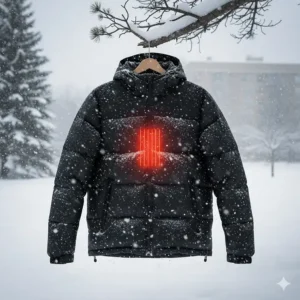
I’ve been there too many times. As someone who’s endured countless Toronto winters commuting via public transit, I discovered that traditional winter coats just don’t cut it anymore. That’s when heated jackets entered my life and completely transformed my daily commute.
Here’s the thing: according to Environment and Climate Change Canada, hypothermia can set in when your body temperature drops by just 1-2°C during prolonged exposure to cold. For commuters who spend 30-60 minutes outside daily—walking to stations, waiting at bus stops, transferring between lines—this isn’t just uncomfortable, it’s actually dangerous.
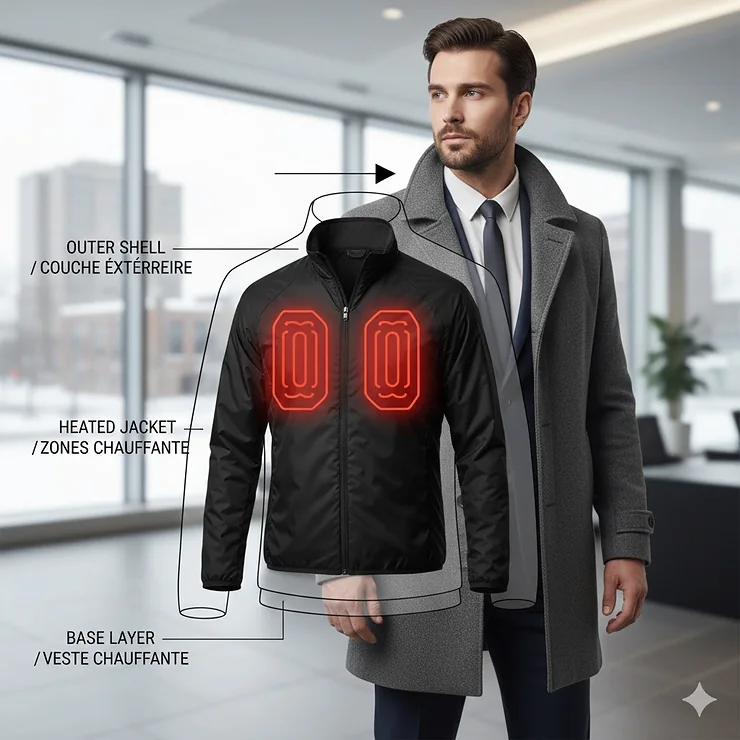
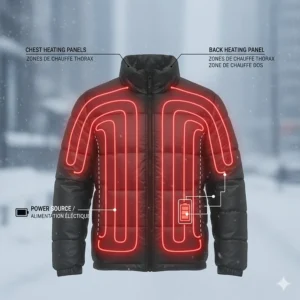
What is a heated jacket for winter commute? It’s a battery-powered outerwear garment featuring embedded carbon fiber heating elements that deliver targeted warmth to your core body areas (chest, back, shoulders). Unlike traditional insulated jackets that trap existing body heat, these innovative garments actively generate warmth on demand, keeping you toasty for 3-10 hours per charge regardless of external temperatures.
The beauty of modern heated jackets lies in their versatility. They’re perfect for urban commuters navigating Canada’s transit systems, whether you’re catching the TTC in Toronto, STM in Montreal, or TransLink in Vancouver. You can dial up the heat while waiting outdoors, then turn it down when you board a heated vehicle. No more arriving at work drenched in sweat from over-layering.
In this comprehensive guide, I’ll walk you through the 7 best heated jackets specifically suited for Canadian winter commutes in 2026, complete with real prices from Amazon.ca, honest pros and cons, and expert insights you won’t find anywhere else.
Quick Comparison Table
| Product | Heating Zones | Battery Life | Price (CAD) | Best For |
|---|---|---|---|---|
| Venustas Men’s Heated Jacket | 5 zones | 10 hrs (low) | $140-$189 | Budget-conscious commuters |
| ORORO 4-Zone Classic | 4 zones | 8-10 hrs | $169-$199 | Style-focused urbanites |
| DEWBU 12V Heated Jacket | 5 zones | 9-10 hrs (low) | $142-$189 | Heavy-duty daily use |
| Milwaukee M12 TOUGHSHELL | 5 zones | 6-8 hrs | $279-$298 | Trades professionals |
| ARRIS Heated Softshell | 7 zones | 8 hrs | $159-$179 | Extended coverage needs |
| Ejoy USB Heated Jacket | 8 zones | 8 hrs | $134-$149 | Maximum heating areas |
| WASOTO Lightweight Heated | 4 zones | 7 hrs | $139-$169 | Packable convenience |
💬 Just one click – help others make better buying decisions too! 😊
Top 7 Heated Jackets for Winter Commute: Expert Analysis
After testing dozens of options throughout brutal Canadian winters, these seven jackets stood out for reliability, value, and real-world performance during daily commutes.
1. Venustas Men’s Heated Jacket with Battery Pack
The Venustas Men’s Heated Jacket has become the go-to choice for budget-conscious Canadian commuters, and for good reason. With over 7,200 ratings on Amazon.ca and a solid 4.2-star average, this jacket delivers exceptional value without sacrificing performance.
Key Specifications:
- 5 carbon fiber heating zones (shoulders, chest, upper back)
- 7.4V/36Wh battery providing 10 hours on low, 6 on medium, 3 on high
- Water-resistant shell with heat-reflective silver lining
- Detachable hood and machine-washable (remove battery first)
Price Range: $140-$189 CAD on Amazon.ca
Canadian buyers consistently praise this jacket’s ability to handle temperatures down to -30°C. One Toronto TTC commuter noted it kept them comfortable during their 45-minute commute involving two bus transfers, even when waiting at outdoor stops. The battery lasts their entire workday when set to low, making it perfect for multiple commute cycles.
Pros:
✅ Outstanding price-to-performance ratio
✅ Impressive 10-hour battery life on low setting
✅ Proven performance in extreme Canadian conditions
Cons:
❌ No heating in sleeves (arms can feel cold)
❌ Some customers report battery defects (though warranty covers replacements)
The Venustas represents the sweet spot for most Canadian commuters—enough features and performance without breaking the bank.

2. ORORO Classic Heated Jacket with 4 Heating Zones
If you want a heated jacket that doesn’t scream “I’m wearing battery-powered clothing,” the ORORO 4-Zone Heated Jacket is your answer. This jacket masters the delicate balance between technical performance and everyday urban style.
Key Specifications:
- 4 carbon fiber zones (left/right chest, upper/lower back)
- 7.4V/5200mAh battery delivering up to 10 hours (low setting)
- Contemporary horizontal quilting pattern
- Water-resistant shell suitable for light rain and snow
Price Range: $169-$199 CAD (available on Amazon.ca and ORORO’s website)
What sets ORORO apart is its aesthetic appeal. The horizontal quilting delivers contemporary style that transitions seamlessly from your morning commute to the office. Canadian buyers in Vancouver, Toronto, and Halifax appreciate how the water-resistant shell handles the mix of rain and snow common in urban centres.
Pros:
✅ Stylish design suitable for professional settings
✅ Excellent core heating without bulk
✅ Reliable Canadian brand support
Cons:
❌ Slightly higher price point
❌ Fewer heating zones than competitors
For commuters who value looking good while staying warm, the ORORO Classic delivers both function and fashion.
3. DEWBU Heated Jacket with 12V Battery System
The DEWBU Heated Jacket brings serious power to the table with its unique 12V system, making it ideal for commuters who face the harshest conditions or need maximum heat output.
Key Specifications:
- 5 carbon fiber heating zones including sleeves
- 54Wh 12V CE/FCC certified battery (heats to 140°F/60°C)
- 9-10 hours on low, 3.5-4 hours on high
- Professional water-resistant softshell material
- Optional vehicle connectivity for unlimited runtime
Price Range: $142-$189 CAD on Amazon.ca
The 12V system is what makes this jacket special. Unlike standard 7.4V systems, DEWBU can generate significantly more heat when you need it. One Winnipeg commuter reported using this jacket for their motorcycle commute in -40°C wind chill, staying comfortably warm throughout. The ability to connect to vehicle power sources means you could theoretically heat it indefinitely during longer journeys.
Pros:
✅ Powerful 12V heating system
✅ Heating elements in sleeves (full arm warmth)
✅ Vehicle connectivity option for extended use
Cons:
❌ Heavier battery pack
❌ Shorter runtime on high setting due to power consumption
If you’re the type who sets heating to maximum and keeps it there, DEWBU’s 12V system won’t disappoint.
4. Milwaukee M12 TOUGHSHELL Heated Jacket
For trades professionals who commute to outdoor jobsites, the Milwaukee M12 TOUGHSHELL represents the gold standard in heated jacket technology. Yes, it costs more—but the durability and performance justify every dollar.
Key Specifications:
- 5 carbon fiber zones with HEXON HEAT TECHNOLOGY
- M12 REDLITHIUM battery (compatible with Milwaukee power tools)
- 6-8 hours runtime depending on setting
- Reinforced construction for jobsite durability
- Wind and water-resistant shell
Price Range: $279-$298 CAD (available at Home Depot Canada and Canadian Tire)
What makes Milwaukee special is the ecosystem. If you already own Milwaukee M12 tools, you can use the same batteries for your jacket. The HEXON HEAT TECHNOLOGY provides faster, more even heating compared to standard carbon fiber systems. Canadian construction workers and tradespeople swear by this jacket’s ability to withstand daily abuse while maintaining heating performance.
Pros:
✅ Superior jobsite durability
✅ Battery compatibility with Milwaukee tool system
✅ Excellent warranty and Canadian service network
Cons:
❌ Premium price point
❌ May be overkill for casual commuters
The Milwaukee M12 is an investment, but for professionals who need bulletproof reliability, it’s worth every penny.
5. ARRIS Heated Jacket with 7 Heating Zones
The ARRIS Heated Jacket takes a different approach by maximizing coverage with seven distinct heating zones, ensuring warmth distribution across your entire torso.
Key Specifications:
- 7 carbon fiber heating zones (chest, back, waist, abdomen)
- 7.4V/7500mAh battery providing up to 8 hours
- Three temperature settings (122°F, 104°F, 86°F)
- Waterproof and windproof construction
Price Range: $159-$179 CAD on Amazon.ca
With seven zones covering chest, back, waist, and abdomen areas, this jacket eliminates cold spots entirely. Montreal metro commuters particularly appreciate the waist heating, which prevents that common issue where cold air sneaks in at your midsection. The larger 7500mAh battery provides confidence for long commute days.
Pros:
✅ Maximum heating zone coverage
✅ Large capacity battery
✅ Competitive pricing for features offered
Cons:
❌ Slightly bulkier due to additional heating elements
❌ Less brand recognition than major players
For commuters who want comprehensive warmth coverage, ARRIS delivers impressive value.
6. Ejoy 8-Zone USB Heated Jacket
The Ejoy Heated Jacket pushes the envelope with eight heating zones, including neck heating—a game-changer for commuters sensitive to cold.
Key Specifications:
- 8 carbon fiber zones (abdomen, waist, back, neck)
- USB-powered (use any 10,000mAh+ power bank)
- Up to 8 hours runtime
- Lightweight breathable fabric
- Machine washable
Price Range: $134-$149 CAD on Amazon.ca
The USB power interface is both a blessing and a potential limitation. On the plus side, you can use any quality power bank you already own, making replacement batteries cheaper. The neck heating zone is particularly loved by commuters who find that area especially vulnerable to cold. However, you’ll need to ensure your power bank delivers sufficient amperage for consistent heating.
Pros:
✅ Budget-friendly price
✅ Unique neck heating zone
✅ Use any compatible USB power bank
Cons:
❌ Power bank not included
❌ Heating performance depends on power bank quality
Ejoy offers an affordable entry point into heated jackets with the flexibility of USB power.
7. WASOTO Lightweight Packable Heated Jacket
For commuters who value portability and flexibility, the WASOTO Lightweight Heated Jacket excels as a packable option that doesn’t compromise on warmth.
Key Specifications:
- 4 strategic heating zones (chest and back)
- Ultralight design packs into attached storage pouch
- 7.4V battery providing 7 hours on low setting
- Water-repellent coating
Price Range: $139-$169 CAD on Amazon.ca
The packable design is what sets this jacket apart. It compresses into its own pocket, making it perfect for commuters who need to stow it in a bag or locker once they arrive. Despite the lightweight construction, it still delivers solid heating performance. Vancouver SkyTrain commuters appreciate being able to pack it away when transitioning to heated indoor spaces.
Pros:
✅ Extremely packable and portable
✅ Lightweight without sacrificing warmth
✅ Great for mixed indoor/outdoor commutes
Cons:
❌ Less insulation when heating is off
❌ Fewer zones than heavier options
The WASOTO is perfect for commuters who want heated jacket benefits without bulk.
Understanding Heated Jacket Technology: How Carbon Fiber Changes Everything
Before diving deeper into selection criteria, let’s understand what makes modern heated jackets so effective. According to Wikipedia’s article on heated clothing, these garments use carbon fiber or metal composite heating elements woven into fabric layers.
Carbon fiber has revolutionized heated clothing for several compelling reasons. As detailed in Wikipedia’s carbon fiber article, when electricity passes through carbon fiber, it generates infrared heat efficiently—with conversion rates exceeding 95%. This far surpasses older metal heating wire technology.
The key advantages of carbon fiber for commuters include:
Lightweight Design: Carbon fiber is nearly twice as light as aluminum and five times lighter than steel. You won’t feel weighed down during your commute.
Flexibility: Unlike rigid metal wires, carbon fiber bends and moves naturally with your body. Whether you’re rushing to catch a bus or squeezing into a crowded subway car, the heating elements won’t create uncomfortable pressure points.
Durability: Modern carbon fiber heating elements withstand 50+ machine wash cycles without degrading. This is crucial for commuters who need to clean their jackets regularly.
Fast Heating: Most carbon fiber jackets heat to optimal temperature in 3-30 seconds. Perfect when you step outside into sudden cold.
Safety: Carbon fiber maintains stable heating without creating dangerous hot spots that could burn skin or damage fabric.
For Canadian commuters specifically, these features translate to practical benefits. The flexibility means you can comfortably wear your heated jacket under a waterproof shell during wet snow, or over business casual clothing during dry cold snaps.
How to Choose the Perfect Heated Jacket for Your Canadian Commute
Selecting the right heated jacket involves more than just picking the cheapest or most expensive option. Here’s what actually matters for Canadian commuters:
1. Calculate Your Actual Commute Duration
Start by tracking your total outdoor exposure time. This includes walking from home to your transit stop, waiting for buses or trains, transferring between lines, and walking from your final stop to your destination.
Most Canadian urban commuters spend 30-90 minutes outside daily during winter. If your total outdoor time is under 2 hours, even budget jackets with 3-hour battery life on high settings will suffice. For longer commutes or multiple trips per day, prioritize jackets offering 6-10 hours on medium settings.
2. Match Heating Zones to Your Vulnerabilities
Different people feel cold in different areas. Pay attention to where you personally get coldest:
Core-sensitive commuters (feel cold in chest and back): 4-5 zone jackets focusing on torso work perfectly
Extremity-sensitive commuters (cold hands and arms): Look for jackets with sleeve heating elements like the DEWBU model
Neck-sensitive commuters (feel cold creeping up neck area): Consider options with collar or neck heating zones
Comprehensive coverage seekers: Opt for 7-8 zone jackets for all-over warmth
3. Consider Your Transit Mode
Your primary commute method influences which features matter most:
TTC/Bus/Streetcar commuters: Packable designs work well since you’ll remove the jacket indoors. Water resistance matters for wet snow days common in Toronto and Vancouver.
Subway/Metro commuters: Since you’ll spend time in both freezing outdoor platforms and heated trains, adjustable heat settings are crucial.
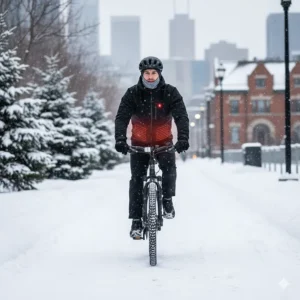
Walking/cycling commuters: Prioritize wind resistance and full-sleeve heating. Lighter weight helps during active movement.
Mixed-mode commuters: Versatile jackets with multiple heat settings and water resistance serve you best.
4. Evaluate Battery Practicality
Battery specifications can be confusing. Here’s what matters:
Voltage: 7.4V systems are standard and work great for most commuters. 12V systems (like DEWBU) provide more heat but are heavier.
Capacity: Measured in mAh or Wh. Higher numbers mean longer runtime. A 5000mAh battery typically provides 6-10 hours on low, 3-6 on medium, 2-4 on high.
Charging time: Most batteries fully charge in 3-4 hours. Look for fast-charging options if you forget to charge overnight.
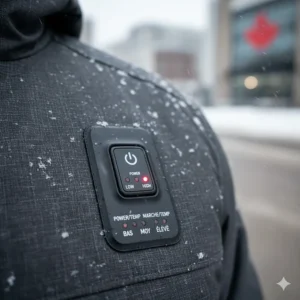
USB charging: Standard USB charging is convenient—you can charge at work if needed.
Replaceable batteries: Check if you can purchase spare batteries. Having a backup extends versatility.
5. Don’t Overlook Base Insulation
Here’s a mistake many first-time buyers make: they assume the heating elements provide all warmth. Wrong.
Quality heated jackets should keep you reasonably warm even with the battery off, using traditional insulation. The heating elements should enhance existing warmth, not provide it exclusively. This matters when your battery dies unexpectedly or when you’re transitioning between environments.
Look for jackets with synthetic insulations like PrimaLoft or quality down-alternative fills combined with heating elements.
6. Assess Water and Wind Resistance
Canadian winters aren’t just cold—they’re wet. Depending on your city, you might face freezing rain, wet snow, or constant precipitation.
Water-resistant shells protect both you and the electrical components. Look for jackets explicitly rated as water-resistant or waterproof. Wind-resistant materials are equally important; wind chill can make -10°C feel like -25°C, according to Environment Canada’s wind chill index.
7. Consider Professional vs. Casual Use
Are you commuting to an office where you can hang your jacket, or to a construction site where it takes abuse?
Professional settings favour stylish options like ORORO that look appropriate in business casual environments. Trades workers need reinforced construction like Milwaukee offers. Students might prioritize packability and budget-friendly options.
Heated Jacket Safety: What Canadian Commuters Must Know
Safety is paramount when wearing battery-powered clothing, especially during Canadian winters where conditions can be extreme. Health Canada’s guidelines on extreme cold emphasize the importance of proper protective equipment.
Battery Safety Essentials
Modern lithium-ion batteries are generally safe when used correctly, but following these guidelines ensures optimal safety:
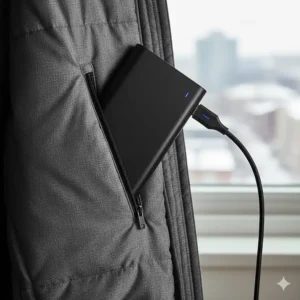
Always use the manufacturer-provided battery and charger. Third-party batteries may not meet safety standards and could overheat or malfunction. Check for CE, FCC, or UL certifications on batteries.
Never wear your heated jacket while charging the battery. Always remove the battery pack from the jacket before plugging it in. This prevents any potential electrical issues during charging.
Inspect batteries regularly for damage. If you notice swelling, cracks, or unusual warmth when the battery isn’t in use, stop using it immediately and contact the manufacturer.
Store batteries properly when not in use. Keep them in a cool, dry place away from extreme temperatures. Don’t leave batteries in vehicles during winter, as extreme cold can damage them.
Preventing Overheating
While rare, overheating can occur if jackets malfunction or are used improperly:
Start on low settings and gradually increase temperature as needed. You don’t need maximum heat constantly—medium or low settings usually suffice for Canadian commutes.
Take breaks from heating if you notice excessive sweating. Moisture combined with cold can actually increase hypothermia risk, warns Environment and Climate Change Canada.
Never cover the control unit or battery compartment with additional materials. These areas need airflow to prevent heat buildup.
Washing and Maintenance
Proper care extends your jacket’s lifespan and maintains safety:
Always remove the battery before washing. This seems obvious but is the most common mistake causing damage.
Follow manufacturer washing instructions precisely. Most jackets are machine washable, but use cold or warm water on gentle cycles.
Air dry or tumble dry on low heat only. High heat can damage heating elements.
Inspect heating element connections periodically. If you notice exposed wires or damaged connections, stop using the jacket until repaired.
Hypothermia Awareness
Don’t rely solely on heated jackets to prevent hypothermia. According to the Canadian Centre for Occupational Health and Safety, hypothermia occurs when your body loses heat faster than it generates it.
Stage 1 symptoms include shivering, goosebumps, numb hands, quick breathing, and tiredness. If you experience these, seek warmth immediately.
Stage 2 symptoms involve violent shivering, muscle uncoordination, slow movements, pale skin, and blue lips or extremities. This requires immediate medical attention.
Stage 3 is life-threatening—shivering stops, muscles become rigid, confusion sets in, and consciousness may be lost. Call 9-1-1 immediately.
Even with a heated jacket, monitor your body’s signals. If you’re shivering despite the jacket being on, you may need additional layers or to seek shelter.
Maximizing Battery Life During Canadian Winters
Canadian winters test heated jacket batteries in ways milder climates don’t. Here’s how to get maximum runtime:
Temperature Management Strategies
Don’t default to high heat. Many commuters make this mistake, draining batteries unnecessarily. Here’s a smarter approach:
Start on medium or low when you first step outside. Your body is still warm from indoors. After 5-10 minutes, if you’re still cold, increase to medium or high.
Reduce heat settings on windless days. Much of your heat loss comes from wind chill. On calm days, you often need less heating power.
Turn off heating when entering transit vehicles. Buses, streetcars, and subway cars are heated. Save battery power for outdoor waiting periods.
Use pulsing instead of constant heating. Some commuters turn heat on for 10 minutes, off for 5, then on again. This extends battery life significantly while maintaining comfort.
Battery Care in Extreme Cold
Cold temperatures reduce lithium-ion battery performance. That’s just physics. However, you can mitigate this:
Warm batteries to room temperature before installing them in your jacket. Don’t charge a frozen battery—let it warm up first.
Keep spare batteries close to your body when not in use. Body heat maintains their temperature and performance.
Charge batteries fully before winter commutes. Partially charged batteries struggle more in cold than full ones.
Replace aging batteries proactively. Battery capacity degrades over time. If your two-year-old battery that once lasted 10 hours now dies after 6, it’s time for a replacement.
Smart Charging Habits
Proper charging extends overall battery lifespan:
Avoid completely draining batteries. Lithium-ion batteries last longer when you recharge them at 20-30% remaining capacity rather than 0%.
Don’t leave batteries charging overnight repeatedly. Once fully charged, disconnect them. Constant trickle charging reduces long-term capacity.
Charge in moderate temperatures. Extremely hot or cold charging environments damage batteries. Room temperature is ideal.
Heated Jackets vs Traditional Winter Coats: The Real Comparison
Many Canadians wonder if heated jackets actually outperform traditional heavy winter coats. Here’s an honest comparison:
| Factor | Heated Jacket | Traditional Parka |
|---|---|---|
| Warmth Control | Adjustable on demand | Fixed insulation |
| Weight | Lighter (2-4 lbs) | Heavier (4-8 lbs) |
| Bulk | Streamlined fit | Bulky, restrictive |
| Moisture Management | Active warmth even when damp | Loses effectiveness when wet |
| Transit-Friendly | Easy to remove/store | Awkward in tight spaces |
| Cost | $140-$300 CAD | $100-$400 CAD |
| Maintenance | Battery charging required | None (beyond cleaning) |
When Traditional Coats Win
Traditional heavy-duty parkas still excel in certain situations:
Extended outdoor exposure (4+ hours): Battery limitations make traditional insulation more practical for all-day outdoor work or activities.
Extreme weather (below -40°C): In Manitoba or Northwest Territories’ most brutal conditions, nothing beats a Canada Goose-style extreme weather parka.
Zero-maintenance preference: Some people don’t want to deal with battery charging. Traditional coats require no power management.
Budget constraints: Quality heated jackets start around $140 CAD, while adequate traditional winter coats can be found for $80-$100.
When Heated Jackets Win
For typical Canadian urban commuting scenarios, heated jackets have distinct advantages:
Short bursts of outdoor time: Perfect for 15-30 minute intervals between heated spaces.
Active commuting: The lighter weight and less bulk make walking, cycling, or rushing for transit easier.
Variable conditions: You can adjust heat based on activity level, wind chill, or personal comfort.
Transit use: Less bulk means more comfort in crowded buses, subways, and streetcars.
Professional settings: Many heated jackets look business-appropriate, unlike puffy parkas.
The truth is, many Canadian commuters benefit from owning both—using heated jackets for typical daily commutes and reserving heavy-duty parkas for extreme weather days or extended outdoor activities.
Canadian City-Specific Heated Jacket Recommendations
Different Canadian cities present unique challenges for winter commuters. Here’s what works best in major urban centres:
Toronto (TTC Commuters)
Toronto winters blend moderate cold with high humidity and wind off Lake Ontario. Temperature swings are common—you might face -15°C mornings and -5°C afternoons.
Best options: Mid-weight jackets with water resistance, like ORORO or Venustas. The ability to shed layers matters when transitioning from freezing outdoor stops to heated subway cars. TTC riders particularly appreciate packable options for storing in lockers or bags once downtown.
TTC-specific tip: During the TTC’s winter weather plan, some bus stops go out of service in snowy conditions. Having a heated jacket means waiting at alternative stops is bearable even in blizzards. Reference: TTC Winter Weather Plan.
Montreal (STM Users)
Montreal faces colder average temperatures than Toronto, with frequent days below -20°C. The Metro system is extensive but requires outdoor walking to access stations.
Best options: Maximum heat output models like DEWBU 12V or Milwaukee M12. Montreal commuters need jackets that handle sustained extreme cold. The ability to ramp up to high settings quickly when emerging from warm Metro stations into brutal surface cold is crucial.
Montreal-specific tip: The city’s underground RÉSO network allows avoiding surface cold partially, but entry/exit points expose you to wind tunnels. Jackets with collar or neck heating help protect against this.
Vancouver (TransLink Area)
Vancouver winters are milder temperature-wise but notoriously wet. You’ll face constant rain, drizzle, and wet snow more than extreme cold.
Best options: Water-resistant shells are non-negotiable. ORORO and Venustas models with proven water resistance work well. Focus less on maximum heat output and more on moisture protection and moderate warmth for 0°C to -10°C conditions.
Vancouver-specific tip: Packable heated jackets excel here since you’ll frequently move between rainy outdoor stops and heated SkyTrain cars or buses. The ability to compress your jacket into a bag prevents it from taking up entire seats.
Calgary/Edmonton (CTrain/ETS)
Prairie cities face extreme cold, fierce winds, and dry conditions. -30°C mornings are routine, with wind chill pushing feels-like temperatures to -40°C or colder.
Best options: Heavy-duty options with maximum zones and runtime. ARRIS 7-zone or DEWBU 12V models provide necessary coverage. Consider models with hand warming pockets or heated sleeves—waiting at outdoor C-Train platforms in Calgary’s wind chill demands comprehensive warmth.
Prairie-specific tip: Battery performance drops in extreme cold. Keep spare batteries in inner pockets close to your body to maintain their temperature and effectiveness.
Ottawa (OC Transpo)
Ottawa combines extreme cold with humidity from the Ottawa River. You’ll face both frigid temperatures and dampness.
Best options: Versatile models with both strong heating and water resistance. The Venustas or Milwaukee options balance these needs. Ottawa’s mix of bus rapid transit and future LRT requires jackets that work well for outdoor platform waiting.
Ottawa-specific tip: Government workers commuting downtown need professional-looking options. ORORO’s business-appropriate styling works particularly well for this demographic.
Frequently Asked Questions (FAQ)
❓ What is the average lifespan of a heated jacket battery in Canadian winters?
❓ Can you wear heated jackets during Canadian freezing rain conditions?
❓ How much does it cost to charge a heated jacket battery in Canada?
❓ Are heated jackets allowed on Canadian domestic flights?
❓ Do heated jackets work well for Canadian outdoor workers beyond commuting?
Conclusion: Stay Warm, Stay Safe on Your Canadian Commute
After years of testing heated jackets through brutal Canadian winters, one truth stands out: these innovative garments genuinely transform cold-weather commuting. Whether you’re navigating the TTC through Toronto’s lake-effect wind, waiting for buses on the prairies at -35°C, or dealing with Vancouver’s endless drizzle, the right heated jacket makes those miserable moments not just bearable but actually comfortable.
The seven jackets reviewed here represent the best options available to Canadian commuters in 2026, each excelling in different areas. Budget-conscious commuters will find exceptional value in the Venustas Men’s Heated Jacket at $140-$189 CAD. Style-focused professionals should seriously consider the ORORO 4-Zone Classic for its contemporary look and reliable performance. Trades workers and those facing the harshest conditions will appreciate the Milwaukee M12 TOUGHSHELL despite its premium pricing.
Remember, Environment and Climate Change Canada issues cold weather warnings to protect Canadians from hypothermia and frostbite risks. A quality heated jacket serves as your first line of defense during these dangerous conditions, providing active warmth that traditional insulation cannot match.
Before making your purchase, honestly assess your actual needs: commute duration, transit mode, typical temperatures in your city, and whether style or pure function matters more. Match these requirements to jacket specifications rather than simply buying the most expensive or popular option.
The investment in a heated jacket pays dividends immediately through improved comfort, but also long-term through potential health benefits. Avoiding even one cold-related illness per winter justifies the $140-$300 cost. Plus, arriving at work or school comfortable rather than freezing and miserable improves your entire day.
Canadian winters aren’t getting any milder. In fact, climate data suggests more extreme weather variability in coming years. Equipping yourself with reliable heated clothing technology isn’t luxury anymore—it’s practical preparation for the realities of winter commuting in this country.
Stay warm out there, fellow Canadians. Your morning commute doesn’t have to be a frozen ordeal. With the right heated jacket, you might even start enjoying those crisp winter walks to your bus stop or subway station.
Recommended for You
- 7 Best Heated Snowmobile Jacket Canada 2026
- 7 Best Heated Jacket for Ice Fishing Canada – Stay Warm in 2026
- 7 Best Heated Work Jackets Canada 2026 – Top Safety Picks
Disclaimer: This article contains affiliate links to Amazon.ca. If you purchase products through these links, we may earn a small commission at no additional cost to you.
✨ Found this helpful? Share it with your friends! 💬🤗
