
In This Article
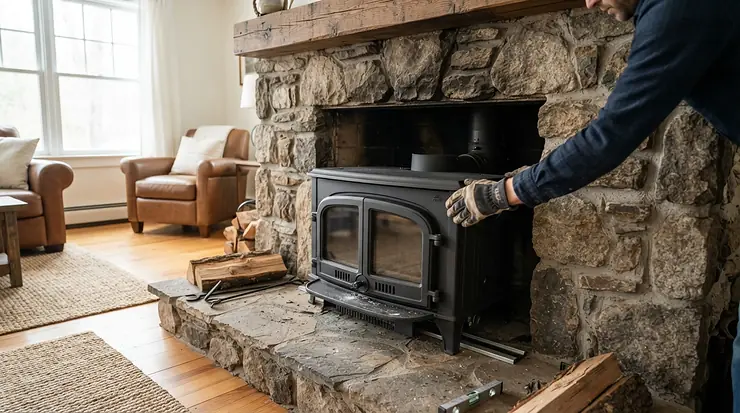
Picture the scene. Your living room has a handsome brick fireplace that hasn’t seen a log since the previous owners moved out. It sits there like an expensive picture frame: pretty, a bit drafty, and about as useful as a canoe in a cornfield.
Now picture the same opening glowing at the flick of a remote. No wood, no ash, no sweep. This is the promise of an electric fireplace insert for existing fireplace openings, and in a country where winter shows up in October and overstays its welcome, it’s an easy promise to like.
The idea isn’t new. Wikipedia’s overview of the electric fireplace credits Dimplex’s Optiflame effect, introduced in 1988, as an early commercial milestone. What has changed is the quality. Modern LED flame engines, resin log sets and smart-home controls make today’s units far more convincing than the spinning-ribbon novelties of old.
Still, a retrofit electric fireplace is not a plug-and-pray purchase. Openings vary wildly, chimneys leak, and a handful of centimetres can decide whether a unit slides in gracefully or sits there awkwardly. This guide covers seven real products, the measurements that matter, chimney considerations, and a clear installation process. Prices are Canadian-dollar ranges only.
What Is an Electric Fireplace Insert for Existing Fireplace Openings?
An electric fireplace insert for existing fireplace openings is a self-contained heater-and-flame unit that slides into your current firebox and plugs into a standard 120 V outlet. It creates the look of burning logs with LEDs and delivers supplemental warmth through a fan-forced heating element. No wood, gas, venting or chimney sweep is required.
Quick Comparison: Best Fireplace Conversion Insert Options at a Glance
Here’s the lineup before we dig in. Price ranges are approximate CAD estimates converted from retail listings at the time of research. Amazon.ca stock and model variants can differ, so check current price and availability.
| Product | Overall Width | Heat Output | Price Range (CAD) | Best For |
|---|---|---|---|---|
| PuraFlame Western 33-Inch | 89 cm (35″) | 1,500 W / ~5,100 BTU | C$480–C$600 | Most realistic brick-lined look |
| PuraFlame Klaus 33-Inch | 89 cm (35″) | 1,500 W / ~5,100 BTU | C$520–C$650 | Traditional glass-door look |
| Dimplex Multi-Fire XHD 28-Inch (XHD28L) | ~69.5 cm (27 3/8″) opening class | 1,465 W / 5,000 BTU | C$1,400–C$1,800 | Premium flame quality |
| Touchstone Fireplug Pro 29-Inch | 73.7 cm (29″) | 1,500 W | Premium; check current price | Smart controls, trim kits |
| Modern Ember Uptown 23-Inch | 23″ opening class | ~5,118 BTU | Mid-to-premium; check current price | Narrow openings with trim kit |
| Duraflame 20-Inch Electric Log Set | 52 cm (20.5″) | 4,600 BTU | Budget; check current price | Tiny firebox, minimal fuss |
| LegendFlame EF290 23-Inch | 58 cm (23″) | 750/1,500 W (~5,000 BTU) | C$330–C$420 | Budget small openings |
Look at the heat column. Nearly everything lands at roughly 5,000 BTU, because 1,500 W is the ceiling for a standard 120 V plug-in. So you’re not really paying for more warmth as you climb the price ladder. You’re paying for flame realism, fit, trim options and smart features. If the PuraFlame Western fits your opening, it’s hard to beat on value. If your opening is narrow, the LegendFlame EF290 and Modern Ember Uptown are the ones to look at.
💬 Just one click — help others make better buying decisions too!😊
Top 7 Electric Fireplace Insert for Existing Fireplace Options: Expert Analysis
Every pick below was chosen for retrofit suitability: a self-contained unit that drops into a traditional opening without a gas line or vent. Dimensions are listed in metric first. Review sentiment is summarized from customer reviews found during research and is never quoted or invented. Where I couldn’t verify a meaningful pool of independent reviews, I say so.
1. PuraFlame Western 33-Inch — brick-lined realism at a sensible price
The standout is the three-sided brick interior, which gives the firebox actual depth instead of the flat black cave you get from cheaper units.
The overall footprint is roughly 89 × 68.5 × 22 cm (35 1/16″ × 26 31/32″ × 8 25/32″). The firebox itself measures about 81.5 × 65 × 20 cm. That gap matters because the outer shell is what must slide into your opening, not just the glowing part. The 750/1,500 W heater (about 5,100 BTU on high) is rated for supplemental heat in rooms up to roughly 37 m² (400 sq ft). The resin log stands about 30 cm tall, and the flat base simply rests on your hearth. One firm limit: the manufacturer states it cannot be hard-wired, so an outlet has to be within cord reach.
Based on the spec comparison, this is the natural pick for a standard masonry opening around 90 cm wide or larger, especially if realism matters more than app control. What most buyers overlook is that the Western line comes in several sizes and heights, so match the exact variant to your measurements.
Reviewers whose openings matched the listed dimensions consistently describe the fit as exact and the ember effect as more convincing than expected. The recurring cautionary tale is buying a unit too small for the opening and living with visible gaps.
Pros:
- ✅ Brick-lined interior and resin log look convincing
- ✅ Drop-in setup with no tools or framing
- ✅ Independent flame and heat controls with thermostat
Cons:
- ❌ Plug-in only, so no hardwiring option
- ❌ Heat tops out around 400 sq ft
Expect roughly C$480–C$600 at the time of research (check current price). For brick-lined realism, that’s strong value.
2. PuraFlame Klaus 33-Inch — glass door and mesh screen for a “working fireplace” look
Where the Western feels open, the Klaus adds a glass door and mesh screen, so it reads like a real hearth rather than a glowing box.
Overall dimensions are about 89 × 57 × 22 cm (35.04″ × 22.44″ × 8.78″). It has the same three-sided brick interior, a 30 cm resin log and a 750/1,500 W heater. Some retail listings quote about 5,118 BTU on high. It’s plug-in only, with a thermostat and remote, and a one-year warranty is listed. The lower 57 cm height is the real differentiator. Many older fireplaces are wide but shallow in height, and the Klaus suits those proportions better than the taller Western.
Here’s a design point most people miss: if your fireplace once had a fireplace screen, the Klaus’s mesh effect keeps the familiar silhouette. That makes the retrofit feel like restoration rather than replacement. It costs slightly more than the Western for near-identical heat, so you’re paying for aesthetics, which is a legitimate reason.
On the retailer pages checked, ratings sat around 4.6 out of 5, though from a small review pool. Buyers who installed it in a former wood-burning fireplace praised the realism. As always, confirm the exact size variant before ordering.
Pros:
- ✅ Glass door and mesh screen sell the illusion
- ✅ Lower height suits wide, shallow openings
- ✅ Same 1,500 W heat and thermostat as the Western
Cons:
- ❌ Plug-in only, no hardwiring
- ❌ Costs more than the Western for similar heat
Plan on roughly C$520–C$650 (check current price). It’s good value if the door-and-screen look is what you’re after.
3. Dimplex Multi-Fire XHD 28-Inch (XHD28L) — tall, high-contrast flames you can tune
Flame quality is the whole story here: Dimplex’s Multi-Fire XHD technology lets you adjust flame speed and brightness independently.
The XHD28L is rated at 120 V, 1,465 W and 5,000 BTU, plugs into a standard outlet, and comes with Realogs and a multi-function remote. Hidden touch controls keep the front clean. The sell sheet lists a two-year limited warranty and published unit dimensions of about 69.5 cm wide × 59.7 cm high × 19 cm deep (27 3/8″ × 23 1/2″ × 7 1/2″). Confirm those against the installation manual’s framing drawing before ordering.
One honest wrinkle: the manufacturer cites coverage of up to 1,000 sq ft, yet the output is 5,000 BTU, the same as units rated for about 400 sq ft. Treat the larger number as a best case for mild climates and open layouts. Also, this is a firebox designed for built-in or framed installations. In a masonry opening you’ll likely need finishing work, and the manual’s clearance rules apply.
I couldn’t verify a large pool of independent reviews, so this verdict rests on specs and the brand’s long track record with flame effects.
Pros:
- ✅ Independent flame speed and brightness control
- ✅ Hidden touch controls plus multi-function remote
- ✅ Two-year limited warranty per spec sheet
Cons:
- ❌ Premium price for the same ~5,000 BTU
- ❌ Needs careful clearance and finishing in masonry
Expect roughly C$1,400–C$1,800 (check current price). It’s worth it only if flame realism is your top priority.
4. Touchstone Fireplug Pro 29-Inch — purpose-built for traditional openings, with smart controls
Touchstone designed the Fireplug family specifically for existing hearths, and it shows in the details: trim kits, multiple sizes and a hardwire option.
The 29-inch model measures 73.7 × 61 × 20 cm (29″ × 24″ × 7 7/8″), weighs around 24 kg (53 lb), and runs at 1,500 W. It plugs into a standard outlet or can be hardwired. Optional 5 cm and 10 cm (2″ and 4″) trim kits cover perimeter gaps, which is a lifesaver in old masonry where the opening is never perfectly square. It also works with Alexa, Google Home and Touchstone’s app. The line includes 24″, 33″ and larger sizes, so a narrow bedroom hearth and a wide living-room one are both covered.
The hardwire option deserves more attention than it gets. If you plan to mount a TV above the mantel, hiding the cord behind the wall is cleaner. Dealers also suggest leaving about 20 cm (8″) of clearance above the unit for anything mounted over it, so check your mantel plan.
I couldn’t verify a meaningful pool of independent reviews, so this assessment rests on published specs. Smart features depend on Wi-Fi setup, so factor that in.
Pros:
- ✅ Built and sized for traditional openings
- ✅ Plug-in or hardwired installation
- ✅ Optional trim kits hide uneven gaps
Cons:
- ❌ Premium pricing; trim kits sold separately
- ❌ Smart features require Wi-Fi setup
Pricing varies by size and retailer, and I couldn’t confirm a stable Amazon.ca price. Check current price and availability. It’s a good value if you want a finished, flush look.
5. Modern Ember Uptown 23-Inch — infrared heat and a trim kit for narrow hearths
Narrow openings are the awkward middle child of the retrofit world, and this unit is made for them.
The Uptown uses an infrared quartz heater rated at about 5,118 BTU for up to 400 sq ft. Listing details show a trim kit and plug converter included, plug-in or hardwired options, a timer, a blower, adjustable flame and lighting, and Alexa/Google compatibility. Safety features include automatic shutoff, thermal overload protection and a cool-touch exterior. The brick-style backdrop is a nice touch, since a plain black interior can look flat when the flames are off.
Infrared quartz tends to feel warmer on your skin at close range than a pure fan heater, though the wattage ceiling still caps total output. The included trim kit is the real selling point. It forgives measuring errors of a centimetre or two, which any retrofit eventually produces.
On one retailer’s page, roughly 150 reviews averaged about 4.5 out of 5. Buyers who framed the opening to spec and used the trim kit reported a perfect fit and liked the brick backdrop and flame colours. One wished for more heat, which fits the 400 sq ft rating.
Pros:
- ✅ Trim kit included for imperfect openings
- ✅ Plug-in or hardwired, with smart control
- ✅ Brick backdrop plus adjustable flame colours
Cons:
- ❌ Heat is modest for large rooms
- ❌ Narrow size limits placement options
Pricing sits in the mid-to-premium range (check current price). It’s good value for narrow openings where a trim kit saves headaches.
6. Duraflame 20-Inch Electric Log Set — the compact, grate-style budget option
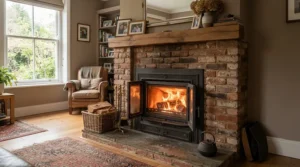
This isn’t a full insert. It’s a compact log set that sits on the hearth and projects flames against your firebox’s back wall.
Model DFI021ARU measures about 52 × 30.5 × 22 cm (20.5″ × 12″ × 8.66″), weighs around 5.5 kg (12.1 lb), and produces 4,600 BTU for up to 400 sq ft. A remote controls flame and heat, and installation is genuinely “set it down and plug it in.” Because it doesn’t fill the opening, it works best in a dark, deep firebox where the projected flames have a surface to reflect from.
Reviewers describe the heat as similar to a fan heater on low-to-medium, with fan noise comparable to a small space heater. The flames look surprisingly good at night, and the ember bed looks artificial to some up close. One practical flag: reviewers mention a short cord, and some suggest extension cords. Ontario’s electrical safety regulator advises against that for heaters (more in the safety section), so plan your outlet position instead.
Pros:
- ✅ Fits firebox openings too small for most inserts
- ✅ Ready in minutes: place and plug in
- ✅ Flame effect works with or without heat
Cons:
- ❌ Ember bed reads artificial up close
- ❌ Short cord limits placement
It sits at the budget tier (check current price). For small hearths or occasional use, the value is hard to argue with.
7. LegendFlame EF290 23-Inch — CSA-listed, drop-in log set for small openings
The standout here is the combination of a compact footprint and a safety certification listed right on the retail page.
The EF290 measures 23 × 20 × 10 in (about 58 × 51 × 25 cm), runs at 750/1,500 W with a fan-forced 5,000 BTU heater, and is rated for around 400 sq ft. Features include crackling sound, adjustable flame brightness and heat output, a multi-function remote, and a polarized plug. The listing states CSA approval, and you should still verify the mark on the unit itself when it arrives.
Compared with the Duraflame 20-Inch Electric Log Set, the LegendFlame has a slightly larger footprint and adds sound and fan-forced heat. Compared with full inserts, it skips the brick-lined interior in exchange for a lower price and easier fit in small or odd-shaped hearths. Reviewers describe the drop-in installation as simple and the feature set as mirroring larger LegendFlame units.
Pros:
- ✅ CSA approval listed by the retailer
- ✅ Simple drop-in install in small openings
- ✅ Crackle sound and adjustable flame levels
Cons:
- ❌ Doesn’t fill or seal the firebox opening
- ❌ Heat output is capped near 400 sq ft
Expect roughly C$330–C$420 (check current price). It’s good value for small hearths.
Spec-by-Spec: Comparing Existing Hearth Insert Heater Dimensions and Features
Dimensions are where purchases go wrong, so here’s the side-by-side. Always confirm figures against the current product page and manual.
| Product | Approx. Overall W × H × D (cm) | Wattage | Install Type | Best For |
|---|---|---|---|---|
| PuraFlame Western 33-Inch | 89 × 68.5 × 22 | 750/1,500 W | Plug-in only | Wide masonry openings |
| PuraFlame Klaus 33-Inch | 89 × 57 × 22 | 750/1,500 W | Plug-in only | Wide, low openings |
| Dimplex Multi-Fire XHD 28-Inch (XHD28L) | ~69.5 × 59.7 × 19 | 1,465 W | Plug-in | Framed or built-in openings |
| Touchstone Fireplug Pro 29-Inch | 73.7 × 61 × 20 | 1,500 W | Plug-in or hardwired | Smart, trimmed finish |
| Modern Ember Uptown 23-Inch | 23″ class (verify) | ~1,500 W class | Plug-in or hardwired | Narrow openings |
| Duraflame 20-Inch Electric Log Set | 52 × 30.5 × 22 | 1,500 W class | Plug-in | Small firebox |
| LegendFlame EF290 23-Inch | 58 × 51 × 25 | 750/1,500 W | Plug-in | Small budget hearths |
Notice how the PuraFlame Western and PuraFlame Klaus share the same width but differ by about 11 cm in height. That’s the difference between fitting a lower opening and not fitting at all. Meanwhile the Touchstone Fireplug Pro is the only unit here with both a hardwire option and a trim-kit ecosystem built for gap-hiding. If you’re choosing between sizes of the same family, the table is a reminder to measure height as carefully as width.
How to Choose an Electric Fireplace Insert for Existing Fireplace Openings
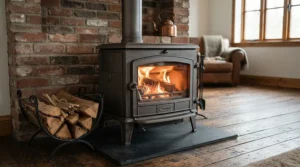
Choosing well comes down to six questions, asked in order.
- Measure before browsing. Width, height and depth of your opening decide which products are even eligible. Everything else is a tiebreaker.
- Decide how finished you want it. A bare drop-in is fine for a basement. If the unit will be the focal point of your living room, favour models with trim kits, like the Touchstone Fireplug Pro and Modern Ember Uptown.
- Check the install type. Plug-in is simplest, but some units (the PuraFlame Western and PuraFlame Klaus) can’t be hardwired. If you want the cord hidden, you need a model that offers it.
- Match heat to the room. About 1,500 W covers roughly 37 m² (400 sq ft) as supplemental heat. It’s not a furnace replacement.
- Look for certification marks. The University of Waterloo’s safety office notes that heaters should carry an Electrical Safety Authority-recognized certification marking and tip-over protection, and that the circuit must handle the added load. In Canada, look for a CSA or equivalent mark on the unit itself.
- Weigh flame realism against budget. Realism is subjective. Premium flame engines look better, but a brick-lined interior goes a long way for far less.
Fireplace Opening Measurements: The Five Numbers That Decide Everything
Think of your fireplace like a doorway for a very large piece of furniture. If the width is off by a couple of centimetres, you’ll know immediately.
Width: measure twice, front and back
Masonry openings often taper. Measure the front opening and the back wall, then use the smaller number. Record both in centimetres, since most Canadian tape measures show both units.
Height: check both sides and the lintel
Measure from the hearth floor to the lowest point of the lintel or damper frame. Old dampers sometimes drop lower than the visible opening. This is where the PuraFlame Klaus‘s 57 cm height can rescue a low opening.
Depth: the sneaky one
Measure from the front face to the back wall. Shallow fireboxes can’t take deeper units. Most inserts here are 19–22 cm deep (about 7.5–8.8 inches), but the LegendFlame EF290 reaches 25 cm.
Don’t forget the extras
- Hearth surface: Is it level? Any gas-key stub or lip in the way?
- Outlet location: Where’s the nearest grounded outlet? Remember, no extension cords for heaters.
- Mantel and TV clearances: Follow the manufacturer’s guidance on heat output above the unit.
A simple rule: your fireplace opening measurements should be at least 1–2 cm larger than the unit’s overall dimensions, or you should plan on a trim kit. And read the listing carefully. As we saw with the PuraFlame Western, “firebox” dimensions and “overall” dimensions are different numbers.
Chimney Considerations: What to Do With the Hole Above Your Insert
Here’s the surprise for first-timers: an electric insert doesn’t need your chimney, but your house still has one. Chimney considerations are the bit people skip, then spend a winter wondering why the room still feels drafty.
Venting isn’t required, but airflow is real
Electric units create no smoke, fumes or combustion gases. That’s why they need no vent. But an open flue is basically a large hole connecting your living room to the outdoors. Natural Resources Canada’s fireplace guidance, part of its Home Heating and Cooling Series, is a useful primer on how fireplace types, inserts and venting differ, and it makes the point that open fireplaces are rarely efficient heaters.
Practical fixes
- Close the damper whenever the insert is in use, and don’t remove it.
- Consider a chimney balloon or top-sealing cap. Both reduce drafts and stop animals getting in.
- Get the chimney inspected. A WETT-certified technician can check condition, since water intrusion in an unused chimney can cause problems over time.
- Keep your options open. If you might switch back to wood or gas someday, avoid permanent sealing.
Where an insert beats the alternatives
A plug-in insert leaves your chimney untouched. A wood or gas insert often requires a liner, while an electric one keeps costs and complexity low. That’s a big part of why a fireplace conversion insert suits renovators on a budget.
Insert Installation Process: A Step-by-Step Walkthrough
The insert installation process for plug-in units is refreshingly simple, but doing it in the right order avoids headaches. Always follow your specific manual’s clearances, since they override general advice.
- Confirm measurements and clearances. Re-check the opening against the overall dimensions, not the glowing part.
- Clear and clean the firebox. Remove the grate, andirons and ash. Vacuum soot with a dust mask on, and wipe down the back wall.
- Manage the chimney. Close the damper, and fit a chimney balloon or cap if you’ve decided to.
- Confirm the outlet. You need a grounded 120 V outlet within cord reach. If you don’t have one, hire a licensed electrician to add one rather than using an extension cord.
- Place the unit. Slide it in, check it’s level, and make sure nothing combustible touches it. Fit the trim kit if your model has one.
- Prep the remote and film. Remove protective films and add remote batteries.
- Run a first test. Run the heater for a short period and watch for odd smells or noises. A faint new-heater smell is common, but anything strong or persistent is a reason to stop and call support.
- Set the thermostat and timer. Lower the thermostat a few degrees and let the unit cycle.
For hardwired installs, such as the Touchstone Fireplug Pro or Modern Ember Uptown hardwired option, hire a licensed electrician. Avoid the temptation to improvise.
Retrofit Electric Fireplace vs Gas and Wood Alternatives
A retrofit electric fireplace sits at one end of the spectrum. Here’s how it compares to the usual alternatives.
| Option | Fuel / Venting | Install Complexity | Maintenance | Best For |
|---|---|---|---|---|
| Electric insert | Plug-in; no venting | Low | Dusting, occasional bulb/fan care | Renters, budget renovators, supplemental heat |
| Gas insert | Gas line plus venting | High | Annual service | Primary zone heating |
| Wood insert | Wood plus liner and chimney | High | Chimney cleaning, wood handling | Rural homes with a wood supply |
| Open masonry fireplace | Wood, open flue | None (existing) | Frequent sweeping | Ambience, occasional use |
An electric insert wins on simplicity: no gas line, no liner, no wood storage. Gas and wood inserts win on real heat output, since they can serve as serious zone heaters, which a 1,500 W plug-in cannot. If you want ambience, convenience and a modest warmth boost, electric is the practical choice. If heat is the priority, look at gas or wood and budget for professional installation.
What to Expect: Real-World Performance of an Existing Hearth Insert Heater
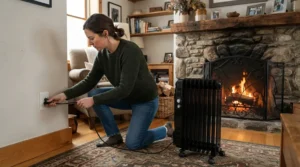
An existing hearth insert heater at 1,500 W produces about 5,100 BTU per hour. In practice that means a comfortable bump in a den, bedroom or small living room. It won’t heat a drafty great room on a –25°C night.
A few honest expectations:
- Warm-up: Fan-forced units warm the space near them quickly, but the whole room takes longer.
- Noise: Reviewers compare the fan to a small space heater. It’s low, not silent.
- Flame-only mode: The LED flame effect runs without heat, which makes the unit a year-round ambience piece.
- Daylight vs night: Flames look best in a dim room. In bright daylight, the effect can look flat on any model.
One last number to keep in mind: a 1,500 W unit draws about 12.5 A, which is most of a standard 15 A circuit. Don’t share that circuit with other big loads.
Real-World Scenarios: Three Homes, Three Inserts
These are illustrative scenarios, not real customer stories.
Scenario 1: The 1960s bungalow in Calgary. The opening is about 90 cm wide and 66 cm high, with a plain brick interior. The owners want realism on a mid-range budget. The PuraFlame Western is the logical fit, and if the opening is a bit lower, the PuraFlame Klaus is the alternative.
Scenario 2: The Ottawa row house. The opening is narrow and a little crooked, and the owners love Alexa routines. The Modern Ember Uptown 23-Inch with its trim kit hides the imperfect edges, while the Touchstone Fireplug Pro in a smaller size is the upgrade if the budget stretches.
Scenario 3: The Halifax basement den. The firebox is small, use is occasional, and the owner wants the cheapest sensible fix. The Duraflame 20-Inch Electric Log Set or LegendFlame EF290 drops in and plugs in with no fuss.
If you’re doing a full renovation with framing and finishes, the Dimplex Multi-Fire XHD 28-Inch is the flame-quality option. Match the product to the opening and the budget, not the other way around.
✨ Don’t Miss These Exclusive Deals!
🔍 Take your fireplace upgrade to the next level with these carefully selected inserts. Click on any highlighted product name to check current pricing and availability on Amazon.ca. These units will help you create a warm, cozy space your family will love! 🔥
Problem → Solution: Fixing the Common Retrofit Headaches
Problem 1: Visible gaps around the unit. Solution: choose a model with a trim kit (Touchstone Fireplug Pro, Modern Ember Uptown) or add a metal surround.
Problem 2: The room still feels drafty. Solution: close the damper and consider a chimney balloon or cap. Remember, the insert doesn’t seal the flue.
Problem 3: The breaker trips. Solution: don’t share the circuit with other big loads. A 1,500 W heater draws about 12.5 A. ESA’s extension cord factsheet also advises against using extension cords for portable heaters, because most cords aren’t built for long, heavy loads.
Problem 4: Flames look flat in daylight. Solution: dim room lighting, and favour models with brick backdrops like the PuraFlame Western or Modern Ember Uptown.
Problem 5: Fan noise is distracting. Solution: run flame-only mode in the evening and use heat in short bursts.
Long-Term Cost & Maintenance: What an Insert Really Costs You
Purchase price is only half the story. Running cost depends on your local electricity rate, which varies across Canada, so check your bill.
Here’s the arithmetic. A 1,500 W unit at full heat uses 1.5 kWh per hour. At an example rate of C$0.15/kWh, that’s about C$0.23 per hour, or roughly C$0.90 for four hours. At C$0.12 or C$0.20 per kWh, the same four hours costs about C$0.72 or C$1.20. Flame-only mode draws far less (check the manual).
Maintenance is minimal: dust the glass and log set, vacuum the fan vents, and replace remote batteries. LED flame engines generally outlast bulbs, but warranty terms vary. The Dimplex Multi-Fire XHD lists two years, while the PuraFlame units list one.
| Tier | Example Products | Price Range (CAD) | What the Extra Money Buys | Best For |
|---|---|---|---|---|
| Budget | Duraflame 20-Inch Electric Log Set, LegendFlame EF290 23-Inch | Roughly C$330–C$420 for the LegendFlame EF290; check current price for the Duraflame Log Set | Simplicity, small footprint | Small hearths, occasional use |
| Mid-range | PuraFlame Western 33-Inch, PuraFlame Klaus 33-Inch | C$480–C$650 | Brick interior, thermostat, realism | Standard masonry openings |
| Premium | Dimplex Multi-Fire XHD 28-Inch (XHD28L), Touchstone Fireplug Pro 29-Inch | C$1,400+ for the Dimplex XHD28L; check current price for the Touchstone Fireplug Pro | Flame tech, trim kits, smart controls | Finished renovations |
Since all seven deliver similar heat, the premium tier is a design purchase, not a heating one. If your goal is warmth per dollar, the mid-range PuraFlame Western is the sweet spot. If your goal is a flawless focal point, the premium picks earn their price. Budget units win when the opening is small or the use is occasional.
Safety, CSA Certification and Electrical Rules for Canadian Homes
Electric doesn’t mean risk-free. A few Canada-specific points:
- Look for recognized certification marks. The LegendFlame EF290 listing states CSA approval, and every unit you buy should carry a recognized mark. The Electrical Safety Authority lists accepted marks on its website.
- Use a dedicated outlet. Plug the unit directly into a wall outlet, not a power bar or extension cord.
- Keep clearances. Maintain manufacturer-specified distances from mantels, TVs and combustibles.
- Check provincial rules. Electrical codes and permit requirements vary by province, and hardwiring generally calls for a licensed electrician.
- Notify your insurer if in doubt. Heating changes can matter for home insurance, so ask.
None of this is complicated, but it’s where shortcuts bite. A few minutes of checking the outlet, the mark and the clearances keeps the cozy part cozy.
FAQ
❓ Can you put an electric fireplace insert in an existing wood-burning fireplace?
❓ Do I need to block the chimney when using an electric fireplace conversion insert?
❓ How much does it cost to run an electric fireplace insert for an hour?
❓ Does a retrofit electric fireplace need hardwiring or an electrician?
❓ Can an existing hearth insert heater warm a whole room?
Conclusion
An electric fireplace insert for existing fireplace openings is the rare home upgrade that delivers instant gratification: no fuel, no flue work, and a hearth that finally earns its keep. The tricky part isn’t the technology. It’s the fit.
So measure first, then choose. For realism on a sensible budget, the PuraFlame Western is the pick, with the PuraFlame Klaus for lower openings and a door-and-screen look. For tight openings, the Modern Ember Uptown and LegendFlame EF290 are the go-to options, while the Duraflame 20-Inch Electric Log Set handles the smallest hearths. If you want a finished, flush look with smart controls, the Touchstone Fireplug Pro and Dimplex Multi-Fire XHD are the premium routes. Whichever you choose, handle the chimney, respect the outlet, and confirm the certification mark. Do that, and your fireplace stops being a decorative frame and becomes the warmest spot in the house.
✨ Ready to bring your hearth back to life?
🔍 Check current pricing and availability on Amazon.ca for the inserts above, and pick the one that fits your opening and your style. Your coziest winter yet starts with one good measurement! 🔥
Recommended for You
- Wall Mount Electric Fireplace For Living Room: 7 Best Picks (2026)
- Modern Electric Fireplaces: 7 Stunning Picks For Canada In 2026
- TV Stand Electric Fireplace: 7 Best Picks For Canadian Homes (2026)
Disclaimer: This article contains affiliate links. As an Amazon Associate, I earn from qualifying purchases. If you purchase products through these links, we may earn a small commission at no additional cost to you.
✨ Found this helpful? Share it with your friends! 💬🤗
